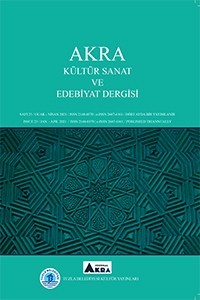
TR
EN
İdin Mahkûmiyeti: Esir Şehrin Mahpusu Romanında Kişilik Bozuklukları ve Parafili
Öz
Bu çalışmada, Kemal Tahir’in Esir Şehrin Mahpusu adlı romanındaki karakterlerin bireysel patolojiler doğrultusunda biçimlenen yapıları, psikanalitik kuram çerçevesinde çözümlenmiştir. Karakterlerin ruhsal süreçlerinin en belirgin biçimde görünür hâle geldiği mekân olarak cezaevi ortamı merkez alınmış, mahpus bireylerin psikolojik dinamikleri, içsel çatışmaları ve bilinçdışı süreçleri cinsiyet ayrımı gözetilmeksizin incelenmiştir. Makaledeki amaç, ilgili kişilerin psikodinamik yapılanmalarına odaklanarak kişilik bozukluklarını ve parafili eğilimlerini anlatı bağlamında çözümlemek ve davranış örüntülerinin psikoloji bilimiyle tutarlı ruhsal örgütlenmeler çerçevesinde değerlendirilebileceğini göstermektir. Bu doğrultuda, Esir Şehrin Mahpusu romanında tespit edilen ruhsal bozukluklar ve parafiliye ilişkin bulguların, psikoloji biliminin ortaya koyduğu kriterlerle yüksek düzeyde örtüştüğü görülmüştür. Roman kişilerinde saptanan bulgular arasında obsesif kompulsif, antisosyal, histrionik, narsisistik, şizotipal ve paranoid kişilik bozukluklarına yönelik eğilimlerin yanı sıra parafili grubuna dâhil edilen pedofili, sadizm, mazoşizm, voyerizm ve nekrofili olgularının bir eğilim biçimi olarak yer aldığı tespit edilmiştir. Ayrıca pedofili olgusunun, kadın roman kişilerinin kız ve erkek çocuklara yönelik eğilimleri ile yetişkin erkeklerin, erkek çocuklara eğilimi şeklinde farklı temsillerle ortaya çıktığı belirtilmiştir.
Anahtar Kelimeler
Kaynakça
- Aggrawal, A. (2009). A New Classification of Necrophilia, Journal of Forensic and Legal Medicine. 16(6):316-320.
- American Psychiatric Association (2013). Diagnostic and Statistical Manual of Mental Disorders. 5th ed. American Psychiatric Publishing.
- Baytimur, M. N. (Nisan, 2019). Cemil Süleyman’ın Siyah Gözler Romanından Hareketle Bir Kadının Paranoid Bozuklukları. SDÜ Fen-Edebiyat Fakültesi Sosyal Bilimler Dergisi, (46):61-72.
- Chang, Z., Larsson, H., Lichtenstein, P., & Fazel, S. (2015). Psychiatric Disorders and Violent Reoffending: A National Cohort Study of Convicted Prisoners in Sweden. The Lancet Psychiatry, 2(10), 891–900. https://doi.org/10.1016/S2215‑0366(15)00234‑5
- Cohen, L. J., & Galynker, I. (2002). Clinical Features of Pedophilia and Implications for Treatment. Journal of Psychiatric Practice, 8(5), 276–289. doi: 10.1097/00131746-200209000-00004
- Freud, S. (1989). Cinsel Yasaklar ve Normaldışı Davranışlar. (M. Sencer Çev.). Ara Yayıncılık, İstanbul.
- Freud, S. (1991). Cinselliğin Yeryüzü. (A. A. Öneş Çev.). Broy Yayınları, Ankara.
- Freud, S. (2018). Rüya Yorumu. (A. Kanat Çev). 2. Cilt, Lilith Yayınevi, İzmir.
Ayrıntılar
Birincil Dil
Türkçe
Konular
Türkiye Sahası Yeni Türk Edebiyatı
Bölüm
Araştırma Makalesi
Yayımlanma Tarihi
20 Eylül 2026
Gönderilme Tarihi
3 Temmuz 2026
Kabul Tarihi
27 Ağustos 2026
Yayımlandığı Sayı
Yıl 2026 Cilt: 14 Sayı: 40
APA
Özçelik, B., & Oktan, T. (2026). İdin Mahkûmiyeti: Esir Şehrin Mahpusu Romanında Kişilik Bozuklukları ve Parafili. AKRA Kültür Sanat ve Edebiyat Dergisi, 14(40), 275-305. https://doi.org/10.31126/akrajournal.1985805
AMA
1.Özçelik B, Oktan T. İdin Mahkûmiyeti: Esir Şehrin Mahpusu Romanında Kişilik Bozuklukları ve Parafili. Akra Journal. 2026;14(40):275-305. doi:10.31126/akrajournal.1985805
Chicago
Özçelik, Başak, ve Tarana Oktan. 2026. “İdin Mahkûmiyeti: Esir Şehrin Mahpusu Romanında Kişilik Bozuklukları ve Parafili”. AKRA Kültür Sanat ve Edebiyat Dergisi 14 (40): 275-305. https://doi.org/10.31126/akrajournal.1985805.
EndNote
Özçelik B, Oktan T (01 Eylül 2026) İdin Mahkûmiyeti: Esir Şehrin Mahpusu Romanında Kişilik Bozuklukları ve Parafili. AKRA Kültür Sanat ve Edebiyat Dergisi 14 40 275–305.
IEEE
[1]B. Özçelik ve T. Oktan, “İdin Mahkûmiyeti: Esir Şehrin Mahpusu Romanında Kişilik Bozuklukları ve Parafili”, Akra Journal, c. 14, sy 40, ss. 275–305, Eyl. 2026, doi: 10.31126/akrajournal.1985805.
ISNAD
Özçelik, Başak - Oktan, Tarana. “İdin Mahkûmiyeti: Esir Şehrin Mahpusu Romanında Kişilik Bozuklukları ve Parafili”. AKRA Kültür Sanat ve Edebiyat Dergisi 14/40 (01 Eylül 2026): 275-305. https://doi.org/10.31126/akrajournal.1985805.
JAMA
1.Özçelik B, Oktan T. İdin Mahkûmiyeti: Esir Şehrin Mahpusu Romanında Kişilik Bozuklukları ve Parafili. Akra Journal. 2026;14:275–305.
MLA
Özçelik, Başak, ve Tarana Oktan. “İdin Mahkûmiyeti: Esir Şehrin Mahpusu Romanında Kişilik Bozuklukları ve Parafili”. AKRA Kültür Sanat ve Edebiyat Dergisi, c. 14, sy 40, Eylül 2026, ss. 275-0, doi:10.31126/akrajournal.1985805.
Vancouver
1.Başak Özçelik, Tarana Oktan. İdin Mahkûmiyeti: Esir Şehrin Mahpusu Romanında Kişilik Bozuklukları ve Parafili. Akra Journal. 01 Eylül 2026;14(40):275-30. doi:10.31126/akrajournal.1985805