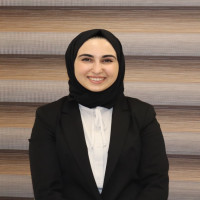
Editor
Assistant Editors

Field Editors
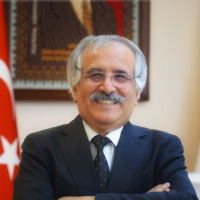


1985 yılında Yalova’da doğan Feyyaz Zeren; ilk, orta ve lise eğitimini bu ilde tamamladıktan sonra 2004 yılında Gaziosmanpaşa Üniversitesi İİBF İşletme Bölümü’nü kazandı. 2006 yılında Sakarya Üniversitesi İİBF İşletme Bölümü’ne yatay geçiş yaptı ve 2008 yılında buradan mezun oldu. 2010 yılında aynı üniversitenin Sosyal Bilimler Enstitüsü Muhasebe ve Finansman Anabilim Dalından yüksek lisans derecesi aldı ve yine aynı yıl Sakarya Üniversitesi Sosyal Bilimler Enstitüsü Muhasebe ve Finansman Anabilim Dalı’nda doktora programına başladı. Ağustos 2010’da Namık Kemal Üniversitesi’ne Öyp Araştırma Görevlisi olarak atandı. 2010-2011 eğitim döneminde Öyp Dil Eğitimi için iki yarıyıl boyunca İstanbul Teknik Üniversitesi Yabancı Diller Yüksekokulu’nda bulundu. 2011 ve 2014 yılları arasında Namık Kemal Üniversitesi'nden 35. madde görevlendirmesi ile Sakarya Üniversitesi İşletme Fakültesi, İşletme Bölümü, Muhasebe ve Finansman Anabilimdalı'nda Öyp Araştırma Görevlisi olarak çalıştı. Temmuz 2014'de doktora eğitimini tamamlayarak Finans alanında "Doktor Unvanı" aldı. 2014-2017 yılları arasında Namık Kemal Üniversitesi, İİBF, İşletme Bölümü, Muhasebe ve Finansman Anabilimdalı'nda Arş. Gör. Dr. olarak çalıştı. Ekim 2017'de Finans alanında "Doçent Unvanı" aldı. 2017-2018 yılları arasında Namık Kemal Üniversitesi, İİBF, İşletme Bölümü, Muhasebe ve Finansman Anabilimdalı'nda Arş. Gör. Doç. Dr. olarak çalıştı. 2018 yılında Yalova Üniversitesi, İİBF, Uluslararası Ticaret ve Finansman Bölümü'ne atandı. 2018-2023 yılları arasında Yalova Üniversitesi, İİBF, Uluslararası Ticaret ve Finansman Bölümü'nde Doç. Dr. olarak çalıştı. 2023 yılında Yalova Üniversitesi, İİBF, Uluslararası Ticaret ve Finansman Bölümü'nde Prof. Dr. olarak atanmıştır. Halen bu bölümdeki görevine devam etmektedir. Finans alanında bir çok makale ve bildirisi bulunmaktadır.







Prof. Dr. H. Nejat Basım is a faculty member in the Department of Business Administration at the Faculty of Economics and Administrative Sciences, Başkent University.
He completed his undergraduate, master’s, and doctoral studies in Business Administration and was awarded the title of Associate Professor in Management and Organization in 2008. Prior to joining Başkent University, he served as a faculty member at the Turkish Military Academy (National Defence University – Army War College). Following his retirement in 2008, he joined Başkent University.
Prof. Dr. Basım was promoted to Full Professor in 2013. Between 2015 and 2023, he served as the Dean of the Faculty of Economics and Administrative Sciences at Başkent University.
His teaching and research interests include organizational behavior, human resource management, strategic management, and organizational theory. In addition to his academic activities, he provides executive and professional training programs for public and private sector organizations in areas such as leadership and effective management, communication and human relations, teamwork, workplace motivation, organizational culture and commitment, protocol and social etiquette, and behavioral dynamics in organizations.
Prof. Dr. H. Nejat Basım has published numerous academic studies at both national and international levels.
Broadcasting/Scientific/Advisory Board


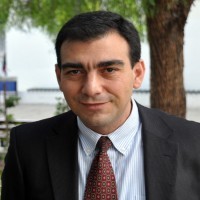


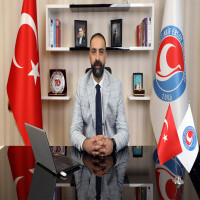
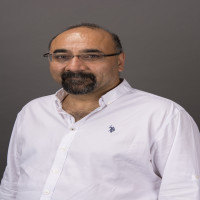
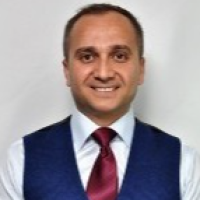




Nezihe figen Ersoy currently works at the Department of Economical and Administrative Programs, Anadolu University. Nezihe does research in Marketing. She is interesting especially B2B/Industrial Marketing. Also she has got a lot of articles and books on b2b/industrial marketing
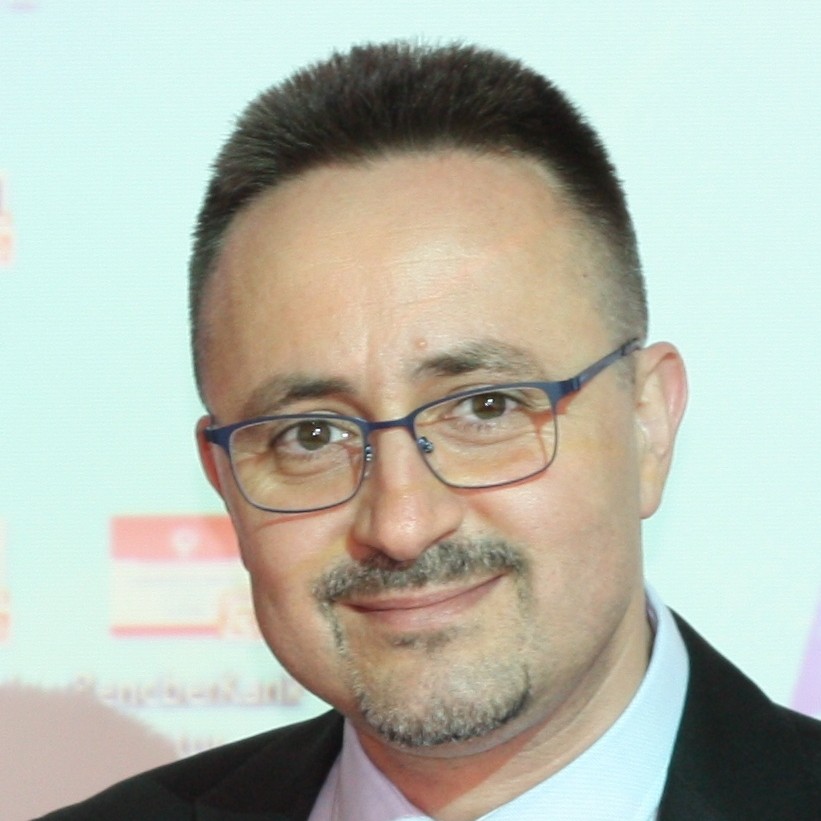
Max Gillman serves as Hayek Professor of Economic History at the University of Missouri – St. Louis. He currently serves as Associate Editor for Economic Modelling, part time Research Professor at Corvinus University of Budapest and Senior Researcher at European Research University (ERUNI), a Research Associate at CERGE-EI, Prague, and at CERS-EI, Budapest, and was in 2024-2025 a Visiting Professor at the National Bank of Slovakia,. Previously he served as full professor at Cardiff Business School, UK, and at Central European University (CEU) in Budapest, where he also served as visiting professor at CEU until 2020. Recent past positions include Senior Fellow at the Corvinus Institute for Advanced Studies, visiting professor at the Bank of Finland, and earlier visiting positions include the Federal Reserve Bank of St. Louis, Loughborough University, UK, New York University, the Federal Reserve Bank of Minneapolis, University of Minnesota, Federal Reserve Bank of Atlanta, The University of Chicago, International Monetary Fund, Monash University, and Melbourne University. Teaching monetary economics and macroeconomics, he has published over 50 research articles in Economics journals, focusing on inflation, financial intermediation, monetary policy, real business cycles, public finance, oil prices, economic growth, development and human capital. Gillman has published four books: The Spectre of Inflation (Columbia U Press, 2023); Principles of Macroeconomics: an Evolutionary Approach (KendallHunt, 2017); Advanced Modern Macroeconomics: Analysis and Application (Pearson, 2011); Inflation Theory in Economics: Welfare, Velocity, Growth and Business Cycles (Routledge, 2009) ; and is Editor of Collected Papers in Monetary Theory, by Robert E. Lucas, Jr. (Harvard U Press, 2013).

Junus Ganiev received his M.S. and PhD degree in Economics from the Kyrgyz - Turkish Manas University. He carried out his master’s thesis on inflation dynamics and doctoral thesis on corruption. He conducts research on monetary policy, international economic relations, economic growth and development. He has attended international conferences in many countries. He has journal articles, book chapters, books, conference papers. He is a full-time Associate Professor at Kyrgyz-Turkish Manas University, Department of Economics, Faculty of Economics and Management. ORCID: 0000-0001-8859-5464 (Djal, Campus of Chyngyz Aitmatov, Bishkek, 720038, Kyrgyzstan, +996772 331193, junus.ganiev@manas.edu.kg)
Dr. Muhammad Usman is an Associate Professor of Leadership and Organizational Behavior at the College of Business School, University of Sharjah, Sharjah, UAE. His research focuses on organizational leadership and employees’ work-related outcomes. His recent research has appeared in Human Resource Management, Human Resource Management Journal, Human Relations, Journal of Management Studies, Journal of Organizational Behavior, British Journal of Management, Tourism Management, Journal of Business Ethics, Public Management Review, and Journal of Public Administration Research and Theory, among others
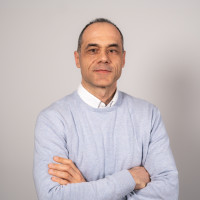
Dragan Pamucar is a Full Professor at the University of Belgrade, Faculty of Organizational Sciences. Dr. Pamucar received a PhD in Applied Mathematics specializing in Multi-criteria modeling and soft computing techniques from the University of Defence in Belgrade, Serbia, in 2013 and an MSc degree from the Faculty of Transport and Traffic Engineering in Belgrade in 2009. His research interests include computational intelligence, multi-criteria decision-making problems, neuro-fuzzy systems, fuzzy, rough, intuitionistic fuzzy set theory, and neutrosophic theory. Application areas include a wide range of logistics and engineering problems. Dr. Pamucar has five books and over 220 research papers published in SCI indexed International Journals, including Experts Systems with Applications, Applied Soft Computing, Soft Computing, computational Intelligence, Computers and Industrial Engineering, Engineering Applications of Artificial Intelligence, IEEE Transactions on Intelligent Transportation Systems, IEEE Transactions of Fuzzy Systems, IEEE Transactions on Transportation Electrification, Information Sciences and research and so on, and many more. According to Scopus and Stanford University, he is among the World's top 2% of scientists as of 2020 and 2021. According to WoS and Clarivate, he is among the top 1% of highly cited researchers in 2022 and 2023.


Language Editor