Owned by
Editor-in-Chief
Editor
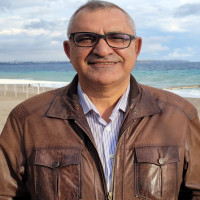
Prof. Dr. Tuncer Demir lisans eğitimini 1983-1987 yılları arasında Atatürk Üniversitesi, Edebiyat Fakültesi Coğrafya Bölümü’nde tamamladı. Ardından 1993 yılında Harran Üniversitesi Fen-Edebiyat Fakültesi’nde Araştırma Görevlisi olarak görevine başladı. Aynı yıl Milli Eğitim Bakanlığı bursu ile Yüksek Lisans eğitimini tamamlamak üzere İngiltere’ye gitti ve University of Wales, Swansea, Department of Geography, Fiziki Coğrafya alanında 1993-1996 arasında eğitimini tamamladı. Doktora eğitimini ise University of Durham, Geography Department, Fiziki Coğrafya alanında 2000 yılında İngiltere’de tamamladı. 2001-2006 yılları arasında Harran Üniversitesi Coğrafya Bölümü’nde Yardımcı Doçent olarak görev yaptı. 2006 yılında Doçentlik ve 2011 yılında da Profesörlük unvanına yine Harran Üniversitesi Coğrafya Bölümü’nde hak kazandı. 2015 yılından beri Akdeniz Üniversitesi Edebiyat Fakültesi Coğrafya Bölümü’nde görevini sürdürmektedir. 2003-2015 yılları arasında sırasıyla Harran Üniversitesi Hilvan Meslek Yüksekokulu, Şanlıurfa Meslek Yüksekokulu ve Şanlıurfa Sosyal Bilimler Meslek Yüksekokulu’nda müdürlük görevi yapmıştır. 2016 yılından beri Akdeniz Üniversitesi Akdeniz Uygarlıkları Araştırma Enstitüsü müdürü olarak görev yapmaktadır. 2017 yılında Jeopark Belediyeler Birliği- Kula-Salihli UNESCO Global Jeoparkı koordinatörü olarak atanmış ve görevine devam etmektedir. Ayrıca 2018 yılı itibariyle, UNESCO Türkiye Millî Komisyonu Jeolojik Miras ve Jeopark İzleme Grubu Üyesi olarak görevini sürdürmektedir.
Field Editors (Ancient History)

Field Editors (Medieval History)


He graduated from the Department of Archaeology and Art History at Selçuk University in 1989. In 1998, he completed his doctoral dissertation titled “The Development of the Urban Fabric of Kayseri in the Middle Ages.” Between 1996 and 2015, he served as Chair of the Department of Art History’s Division of Archaeology of the Turkic World and Medieval Cultures at Selçuk University; from 2015 to 2016, he served as Department Chair of the Department of Art History in the Faculty of Arts and Sciences at Uludağ University. Since 2016, he has been a faculty member in the Department of Art History, Faculty of Letters, at Akdeniz University, in the Division of Medieval Archaeology. From 2016 to 2021, he also served as Dean of the Faculty of Fine Arts at Akdeniz University.
In 2003, he conducted research in Berlin with a DAI fellowship on the use of spolia in Seljuk architecture and art. In 2011, he was invited as a visiting researcher at FIAF in New York to conduct research on Seljuk-period caravanserais. From 2015 to 2018, he served as a member of the Group Executive Board at TÜBİTAK SOBAG. From 2015 to 2020, he participated as a member of the Turkish Committee in the European Commission’s TÜBİTAK-UİDB Horizon 2020 Social Sciences and Humanities (SSH) sector commission meetings. She served as a panel member in a COST action.
In 1986, he participated as a member of the excavation team at the Knidos Excavation; in 1998 and 1999, he participated in the caravanserai excavations in and around Konya; and in 2001, he participated in the Alanya Castle excavation. From 2007 to 2013, he served as director of the “Alara Excavation” by decision of the Council of Ministers. Since 2015, he has continued to lead the Alanya Excavation with the permission of the Council of Ministers. In 2014, within the framework of the Turkmenistan-Turkey cooperation protocol and with the support of TIKA, he began serving as the director of archaeological excavations in the city of Merv, Turkmenistan, to locate the burial site of Sultan Alparslan. Between 2015 and 2018, with support from TIKA, he conducted archaeological excavations at a mausoleum structure dating to the Karakhanid period in Kochkor, Kyrgyzstan. Archaeological excavations were also carried out at a structure in Mazar-i-Sharif, Afghanistan, believed to be the birthplace of Mevlana. In addition to these excavations, he has participated in excavations and research focused on the archaeology of numerous small-scale structures and medieval settlements.
Some of these include the Sedre Seljuk Pavilion Excavation, the Aksaray 2nd Kılıçarslan Hamam Excavation, the Divriği Ulu Mosque (UNESCO World Heritage List) Excavation, the Antalya Mevlevihane Surroundings Research Excavation, and the Şehzade Korkut Mosque (Kesik Minare) Research Excavations.
He is the lead author and editor of the “Legacy of the Great Seljuk Empire” project, which began in 2009. As part of this project, two five-volume works based on these studies were published in 2013 in both Turkish and English. In 2018, following an invitation from the Kazakh Ministry of Culture, coordinated efforts between Turkey and Kazakhstan began regarding archaeological research in Kazakhstan and excavation work at Turkistan Yesi. These efforts are still ongoing. Between 2015 and 2016, he authored the book *Witnesses of the Roads* on the Anatolian Seljuk caravanserais. He taught courses and participated in research related to the field of museology. In Turkey, he served as a curator at numerous museums, including the Afyonkarahisar State Museum, the Ankara Machine and Chemical Industry Corporation Museum, and the Alanya Seljuk Palace Museum. He also served as Chair of the Antalya Cultural Heritage Preservation Board for 10 years. He served as both the chair and a team member of a research group guiding restoration efforts on numerous structures in Turkey and abroad (Kazakhstan, Kyrgyzstan, Afghanistan).
He is a member of the international scientific committee of the SOMA Symposium.
In his field of expertise, he presented papers at conferences and symposia at the Pergamon Museum in Berlin, the University of Oxford, the University of Leeds, the University of Trnava (Slovakia), Jamia Milliye University in India, the University of Wrocław in Poland, the University of Cádiz in Spain, the Spanish Ministry of Culture, the University of Mainz in Germany, and the IGNCA Institute in India. He has published five books and numerous articles in books and journals on his areas of research.
Field Editors (Early Modern and Modern History)
Advisory Board
1983 yılında Lisans;
1985 yılında Yüksek Lisans;
1989 yılında Doktora derecelerini Almanya, Bonn (Rheinische-Friedrich-Wilhelms) Üniversitesi’nde tamamlamıştır.
1989 yılında Doktora tezini Prof. Dr. Hanns GABELMANN danışmanlığında “Kilikia Bölgesi Kaya kabartmaları” üzerine vermiştir.
1989 – 1993 yılları arasına Bilkent Üniversitesinde Yardımcı Doçent;
1994 yılında Doçent ve 2000-2023 yılları arasında Profesör olarak Mersin Üniversitesi’nde görev yapmıştır ve emekli olmuştur.


Born 1955 in Copenhagen, studied history and art history at the University of Aarhus (gold medal 1980, M.A. degree 1981). Assistant editor of the popular archaeological journal SFINX 1981-83, research fellow at University of Aarhus 1984-1985, CEO of Aarhus University Press from 1985-2000 and external lecturer at the University of Bergen (Norway) 1983-2000. From 2000 until retirement in 2022 associate professor of ancient history at the University of Southern Denmark. Visiting professor at the Universities of Stuttgart, Nuuk (Greenland), Eichstätt and Samsun, and at the École Nomrale Supérieure, Paris.
Editorial Assistant

Language Editors (English)
Language Editors (German)
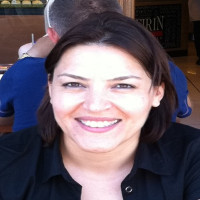



Safiye Genç is an Assistant Professor in the Department of German Language and Literature at the Akdeniz University Turkey. She completed her Ph.D. in 2011 at Istanbul University and her undergraduate studies at Marmara University. She is interested in German language and literature, bilingualism research, language contact, semantics and speech economy. For additional information see http://aves.akdeniz.edu.tr/safiyegenc/
Multimedia and Graphic Design
Our journal has decided to continue its publication under the Continuous Publication Model as of January 1, 2026. A maximum of 25 articles will be published in the relevant annual volume. As of October 2024, Cedrus accepts articles only in foreign languages.