 July 31, 2026
Page
88-108
July 31, 2026
Page
88-108
Volume
17
,
Number
2
Jul 31, 2026
6
Article
Publication Type
Articles
Research Article
Research Article
Sosyal Hizmet Alan Deneyiminin Sosyal Hizmetin Eğitim Süreçlerine Yansıması
July 31, 2026
Page
126-148
July 31, 2026
Page
126-148
Review
The Journal of Labour Relations aims to contribute to the literature by featuring academic publications on issues related to working life.
Scope of the Journal of Labor Relations:
- Studies on working life
- Labor and Social Security Law
- Social Policy
- Industrial Psychology
- Industrial Sociology
- Labor Economics
- Industrial Relations
- Human Resources Management
These fields are within the scope of the Journal of Labour Relations.
Journal of Labour Relations Author Guidelines
1) General Rules
• Manuscripts must be prepared in Word format, using Book Antiqua font, single-spaced, with 6 nk paragraph spacing, and 11-point font size for main sections. For the preparation of footnotes, abstracts, introduction, conclusion, references, tables, and similar sections, please refer to the relevant guidelines below.
• Visual materials included in the manuscript must be suitable for printing techniques. Submitted images must be in jpeg, tiff, or png format with a minimum resolution of 500 dpi.
• Tables and figures must be embedded within the text. All tables and figures should be given titles and sequential numbers. Equations must also be numbered, with the number placed in parentheses on the right side of the page.
• Numbers appearing in the text should be written in words if they consist of a single digit; numbers consisting of two or more digits should be written in numerals.
• When numbering within the text, a period (.) should be used instead of ordinal suffixes.
• The % symbol should be used instead of writing the word “percent.”
• When items are listed using symbols or numbers, the first word of each item should begin with a capital letter.
• Abbreviations such as see and et al. should be written in lowercase.
• Tables and figures must also be submitted separately in Excel format.
• The Introduction and Conclusion sections should not be numbered.
• If the articles are derived from a thesis or project, or were presented as a conference paper, this must be clearly stated on the first page of the article.
• For works with multiple authors, a statement of contribution and a declaration of conflict of interest must be submitted by the authors at the time of submission. For works derived from graduate theses, the author with the highest contribution must be a student.
• If the study received support from any institution, organization, or funding source during the submission process, this support must be clearly stated. Additionally, if there are individuals, institutions, or organizations to be acknowledged, the relevant information must be clearly included in the article file.
• If AI-based tools (e.g., ChatGPT, Grammarly, etc.) were used during the article production process, the specific stages in which they were utilized must be clearly stated. This information must be provided during the article submission process. All responsibility regarding the use of AI rests with the authors.
• Ethical committee approval is required for qualitative or quantitative research submitted for publication in our journal that involves collecting data from participants through methods such as surveys, interviews, focus groups, observations, and discussions, as well as for retrospective studies evaluated under the Law on the Protection of Personal Data (KVKK). In accordance with the ethics committee regulations of ULAKBİM TR Index effective as of 2020, for studies requiring ethics committee approval, the name of the relevant committee, the decision date, and the decision number must be clearly stated in the article text. Studies without an ethics committee decision will not be considered for evaluation.
• The legal responsibility for articles published in the journal rests with the authors.
2) Page Layout
Manuscripts should be formatted with 3 cm margins on the top, bottom, left, and right. The binding margin should be set to 0 cm and aligned to the left margin.
3) Title of the Manuscript
The title should be written with only the first letters capitalized, in 12-point, bold, single-spaced, centered, using the Book Antiqua font.
Example:
Problems of Migrant Domestic Worker Women in Istanbul Regarding Private Employment Agencies
4) Authors of the Manuscript
a) If the manuscript has a single author, the author’s name should be written one line below the title, aligned to the right, with the first letters of the first and last name capitalized, in 11-point bold font. A footnote number placed after the surname (not in parentheses) should be used to provide the author’s academic title, university, faculty, school or institution, department, and e-mail address in 10-point normal font, separated by commas.
b) If the manuscript has two authors, the authors’ names should be written one line below the title, the first aligned to the left and the second to the right, with corresponding footnotes indicated as described above.
c) If the manuscript has three authors, the authors’ names should be written one line below the title, aligned left, center, and right respectively, with footnotes numbered accordingly.
d) If the number of authors exceeds three, an appropriate layout consistent with the above rules should be applied.
5) Abstract and Keywords
Turkish and English Abstracts:
The abstract should be between 100 and 150 words, clearly stating the aim, methodology, and scope of the study. The headings “Öz” and “Abstract” should be written in 11-point bold, while the abstract text should be written in 11-point normal font (not italicized or bold).
Keywords:
Keywords should be placed immediately below the abstract, written in 11-point normal font, left-aligned, with the first letter of each keyword capitalized. A minimum of three and a maximum of five keywords should be provided.
6) First Page Layout Template
The order of elements on the first page should be as follows:
Turkish title, English title, author name(s), Turkish abstract, keywords, English abstract (with the heading “Abstract”), and English keywords.
7) Introduction
After the English keywords, two blank lines should be left. The Introduction heading should be written in 12-point, bold, uppercase letters, without numbering.
8) Structure of the Text
The main text should be written in Book Antiqua, single-spaced, with 6 nk paragraph spacing, and 11-point font size. The manuscript should be organized into sections and subsections according to the content, using a decimal numbering system.
Heading formats should be as follows:
Main headings: 12-point, bold, left-aligned, with the first letter of each word capitalized
Second-level headings: 11-point, bold, left-aligned, with the first letter of each word capitalized
Third-level headings: 11-point, bold and italic, left-aligned, with only the first letter capitalized
Fourth-level headings: 11-point, italic, left-aligned, with only the first letter capitalized
9) Conclusion
The Conclusion heading should be written in 12-point, bold, uppercase letters, without numbering.
10) In-text Citations
Authors must use in-text citation instead of footnotes. In-text citations should be shown in parentheses, and the reference list must be prepared in accordance with this citation system. All citations and references must comply with the rules specified in the Publication Manual of the American Psychological Association (APA), 6th edition. For examples, please refer to the sections titled “Reference Usage” and “Basic Citation Formats.”
11) References
The References section should appear at the end of the manuscript. The heading should be left-aligned, written in 12-point bold, with only the first letters capitalized. There should be one line of spacing between the heading and the first reference. References should be listed alphabetically by authors’ surnames, written in 11-point font, single-spaced, with 6 nk spacing before each paragraph. The first line of each reference should be left-aligned, and subsequent lines should be indented 1 cm.
All works cited in the text must appear in the reference list, and works not cited in the text should not be included.
12) Appendices
Appendices should be placed before the References section. References to appendices within the text should be made as “Appendix Table 1,” “Appendix Figure 7,” or “Appendix Graph 5.”
ETHICAL PRINCIPLES
The Journal of Labor Relations adheres to academic principles and ethical values in its publication policy. It maintains its publication activities in accordance with national and international standards regarding ethical principles and values. In this context, the standards established by the Committee on Publication Ethics (COPE) and the Directory of Open Access Journals (DOAJ), as well as the principles outlined in the YÖK “Guidelines on Scientific Research and Publication Ethics,” are taken into consideration.
If you encounter any behavior by editors, reviewers, or authors that violates ethical principles, or any situation contrary to ethical principles regarding a manuscript under review, in preprint, or already published, please report it via email to calismailiskileri@csgb.gov.tr.
Manuscripts found to violate accepted research and publication ethics standards during the review process will have their publication requests rejected. If such a violation is identified after the manuscript has been published, the manuscript will be retracted.
Actions Contrary to Scientific Research and Publication Ethics
• Plagiarism: Presenting the original ideas, methods, data or works of others as one's own, in whole or in part, without proper scientific attribution.
• Fabrication: Using data that does not actually exist or has been falsified in scientific research.
• Distortion: Altering research records or obtained data, presenting equipment or materials not used in the research as if they had been used, altering or shaping research results in line with the interests of the individuals and organisations providing support,
• Duplicate publication: Presenting duplicate publications as separate publications for academic appointment and promotion,
• Salami slicing: Dividing the results of a research study into parts in an inappropriate manner that compromises the integrity of the research and publishing them as multiple publications, presenting these publications as separate publications for academic appointments and promotions,
• Unfair authorship: Including individuals who have not made an active contribution among the authors or excluding those who have, changing the author order in an unjustified and inappropriate manner, removing the names of those who have made an active contribution from subsequent editions, or including one's name among the authors by using one's influence despite not having made an active contribution,
Other types of ethical violations include:
a) Failing to acknowledge the individuals, institutions, or organisations that provided support for research conducted with such support, or failing to acknowledge their contributions in publications resulting from such research,
b) Using theses or studies that have not yet been submitted or defended and accepted as a source without the permission of the owner,
c) Sharing information contained in a work assigned for review with others prior to publication without the express permission of the author,
ç) Using resources, premises, facilities, and equipment provided or allocated for scientific research for purposes other than those intended,
d) Making unfounded, inappropriate, and deliberate allegations of ethical violations,
e) Publishing data obtained without the explicit consent of participants in surveys and attitude studies conducted as part of scientific work, or without the additional permission of the institution if the research is to be conducted at an institution,
f) Failure to comply with the obligation to inform and warn those concerned about possible harmful practices related to scientific research conducted by researchers and officials,
g) In scientific studies, failing to use data and information obtained from other persons and institutions to the extent and in the manner authorised, failing to respect the confidentiality of this information and failing to ensure its protection,
h) Making false or misleading statements regarding scientific research and publications in academic appointments and promotions,
Principles of Research Ethics
The principles of scientific integrity, transparency, impartiality, and reliability must be adhered to at all stages of research. Participants must be adequately informed about the research, and informed consent must be obtained when necessary. Personal data must be processed and stored in accordance with the principles of confidentiality and data protection. Participation in research must be voluntary, and participants’ rights and safety must be protected. Researchers must clearly disclose conflicts of interest and financial support; they must avoid ethical violations such as plagiarism, fabrication, data manipulation, and unfair authorship. Research results must be presented with the public interest in mind, and if artificial intelligence or digital tools are used, this must be transparently disclosed.
Responsibilities of Stakeholders
Responsibilities of the Publisher
Ensuring that the publication process is conducted in an ethical, impartial, and transparent manner; safeguarding editorial independence; clearly communicating publication policies.
Editors’ Responsibilities
Making publication decisions based on scientific merit and peer review; ensuring the confidentiality and impartiality of the peer review process; managing conflicts of interest; and carrying out necessary procedures regarding ethical violations, corrections, and retractions.
Authors’ Responsibilities
Submit original, ethically sound, and previously unpublished work; list all contributors as authors; properly cite sources; disclose conflicts of interest; and respond to feedback during the publication process on a scientific basis.
Reviewers’ Responsibilities
To conduct reviews impartially, confidentially, and in a timely manner; to disclose conflicts of interest; to assess the scientific merit of the work; and to report any identified ethical violations to the editor.
Plagiarism Check
Articles submitted to our journal for publication are screened using iThenticate or Turnitin to confirm that they have not been previously published and do not contain plagiarism. Works with a similarity rate exceeding 20% or that do not adhere to proper citation methods will not be considered for review. If plagiarism is detected in an article submitted to or published by our journal, we will act in accordance with COPE guidelines.
Privacy Statement
All personal information regarding authors, reviewers, and other relevant individuals obtained in connection with articles submitted to the journal is protected in accordance with the principle of confidentiality. This data will not be shared with any person, institution, or organization except as required by law, and will be used solely for the purpose of carrying out the publication process.
Correction and Retraction Policy
If errors or omissions that do not affect the scientific results of a published study are identified, a correction may be published. In cases of serious errors or ethical violations that invalidate the study’s findings, interpretations, or conclusions, the retraction of the article is considered. Correction and retraction processes are conducted in accordance with COPE guidelines.
Intellectual Property Rights
The journal respects the intellectual property rights of published works and supports the protection of these rights. In cases of potential copyright infringement or intellectual property disputes, necessary actions are taken to protect the rights of both the authors and the journal.
Conflict of Interest
The journal encourages the transparent disclosure of any conflicts of interest that may arise among authors, editors, and reviewers. Necessary measures are taken to ensure that the publication process is conducted in a neutral, fair, and independent manner, and individuals with conflicts of interest are not involved in relevant evaluation or decision-making processes.
Use of Artificial Intelligence
In manuscripts submitted to the journal, the use of artificial intelligence tools for literature reviews, language editing, proofreading, or similar supportive processes is acceptable. However, artificial intelligence may not be used to fabricate, distort, or manipulate research data, or for practices that violate scientific ethical principles.
Authors are required to clearly disclose the use of artificial intelligence tools in their work during the manuscript submission process. Authors bear full responsibility for the accuracy, originality, and ethical appropriateness of content generated by artificial intelligence.
The Journal of Labor Relations does not charge any fees at any stage of the submission, review, or publication process. Authors are not required to pay any article processing charges or submission fees for manuscripts submitted to the journal. All expenses of the journal are covered by the publisher.




Managing Editor
ÖÖ
Ömer Faruk ÖZTÜRK
ÇALIŞMA VE SOSYAL GÜVENLİK EĞİTİM VE ARAŞTIRMA MERKEZİ
Labor Economics and Industrial Relations, Disabled Groups, Occupational Health and Safety
Editor in Chief
EG
Prof. Dr.
Elif GÖKÇEARSLAN
Ankara Üniversitesi
Counselling, Wellbeing and Community Services, Clinical Social Work Practice, Social Program Evaluation, Social Work (Other), Family Sociology
Editor

Dr.
Elif ÇELIK
ÇALIŞMA VE SOSYAL GÜVENLİK EĞİTİM VE ARAŞTIRMA MERKEZİ BAŞKANLIĞI

Occupational Health and Safety, Management Psychology, Human Resources Management, Organizasyon, Organisational Behaviour
English Language Editor

Assoc. Prof. Dr.
Burcu ÖZDEMIR OCAKLI
ANKARA ÜNİVERSİTESİ





Family and Household Studies, Social Work, Social Work (Other), Disabled Groups
Copy Editor
Dr.
Berna YAZAR ASLAN
Çalışma ve sosyal güvenlik eğitim ve araştırma merkezi
Econometrics, Econometric and Statistical Methods, Panel Data Analysis, Time-Series Analysis, Statistics, Statistical Analysis, Theory of Sampling, Applied Statistics
Editorial Board

OK
Mİ
Prof. Dr.
Mustafa Necmi İLHAN
GAZİ ÜNİVERSİTESİ, TIP FAKÜLTESİ
Drug Addiction Consultancy, Development of Vocational Education , Occupational Health and Safety, Health Sciences, Preventative Health Care, Human Resources Management
IK
Assoc. Prof. Dr.
Işıl KURNAZ
ANKARA HACI BAYRAM VELİ ÜNİVERSİTESİ
Labor Economics and Industrial Relations, Labor Economics and Economic Demography , Disabled Groups, Occupational Health and Safety, Social Exclusion, Social Security
ME
Dr.
Elif ÇELIK
ÇALIŞMA VE SOSYAL GÜVENLİK EĞİTİM VE ARAŞTIRMA MERKEZİ BAŞKANLIĞI
Occupational Health and Safety, Management Psychology, Human Resources Management, Organizasyon, Organisational Behaviour
EG
Prof. Dr.
Elif GÖKÇEARSLAN
Ankara Üniversitesi
Counselling, Wellbeing and Community Services, Clinical Social Work Practice, Social Program Evaluation, Social Work (Other), Family Sociology
National Advisory Board
HM
EY
Prof. Dr.
Erdinç YAZICI
ANKARA HACI BAYRAM VELİ ÜNİVERSİTESİ
Labor Economics and Industrial Relations, Labor Sociology
TF
Asst. Prof. Dr.
Tayfun FINDIK
GAZİ ÜNİVERSİTESİ
Materials Science and Technologies, Resource Technologies, Corrosion, Powder Metallurgy
AM
MÖ
Prof. Dr.
Mehmet Merve ÖZAYDIN
Ankara Hacı Bayram Veli Üniversitesi
Social Policy, Labor Economics and Industrial Relations, Disabled Groups, Social Welfare Policies
BY
Assoc. Prof. Dr.
Buğra YILDIRIM
MANİSA CELÂL BAYAR ÜNİVERSİTESİ
Social Work (Other), Disabled Groups, Nursing Services in Social Policy, Welfare Studies, Social Welfare Policies
AY
Prof. Dr.
Alp Erinç YELDAN
KADİR HAS ÜNİVERSİTESİ
Heterodox Economics, Growth, Development Economics - Macro, Political Economy
EK
Prof. Dr.
Erdal Tanas KARAGÖL
ANKARA YILDIRIM BEYAZIT UNIVERSITY, FACULTY OF POLITICAL SCIENCE
Employment, Development Economics - Macro, Informal Economy, Social Justice, Social Welfare Policies
AB

Prof. Dr.
Bülent ERDEM
SİVAS CUMHURİYET ÜNİVERSİTESİ
Mine Design, Management and Economy, Mining Methods and Mine System Analysis, Occupational Health and Safety in Mines
MB
Prof. Dr.
Mehmet BARCA
SOCIAL SCIENCES UNIVERSITY OF ANKARA, FACULTY OF POLITICAL SCIENCES
Public Administration, Policy and Administration (Other), Strategy, Management and Organisational Behaviour, Organizational Culture

Assoc. Prof.
Volkan MEDENI
GAZİ ÜNİVERSİTESİ, TIP FAKÜLTESİ, DAHİLİ TIP BİLİMLERİ BÖLÜMÜ, HALK SAĞLIĞI ANABİLİM DALI
Work and Occupational Diseases , Occupational Health and Safety, Public Health, Preventative Health Care, Health Promotion, Social Determinants of Health, Community Child Health, Public Health (Other)

Assoc. Prof. Dr.
Nergis DAMA
ANKARA YILDIRIM BEYAZIT UNIVERSITY
Social Policy, Labor Economics and Industrial Relations, Disabled Groups
İI
Prof. Dr.
İdil IŞIK
BAHCESEHIR UNIVERSITY
Occupational Health and Safety, Labor Psychology, Personality and Individual Differences, Intercultural Psychology, Social Psychology, Industrial and Organisational Psychology (Incl. Human Factors), Psychological Methodology, Design and Analysis
CK
YU
Prof. Dr.
Yücel UYANIK
ANKARA HACI BAYRAM VELİ ÜNİVERSİTESİ, İKTİSADİ VE İDARİ BİLİMLER FAKÜLTESİ
Labor Economics and Industrial Relations
SB
Prof. Dr.
Suna BALCI
GAZİ ÜNİVERSİTESİ
Catalytic Activity, Materials Science and Technologies, Material Characterization

Assoc. Prof. Dr.
Yasin Erdem ÇEVIK
ANKARA HACI BAYRAM VELİ ÜNİVERSİTESİ
Finance, Financial Markets and Institutions
İT
Prof. Dr.
İnsan TUNALI
KOÇ ÜNİVERSİTESİ
Panel Data Analysis, Applied Microeconometrics, Cross-Sectional Analysis, Labor Economics and Economic Demography

Prof. Dr.
Süleyman ÖZDEMIR
İSTANBUL ESENYURT ÜNİVERSİTESİ, SAĞLIK BİLİMLERİ FAKÜLTESİ
Labor Economics and Industrial Relations, Labor Economics and Economic Demography , Disabled Groups, Welfare Studies, Social Welfare Policies

Prof. Dr.
Dilaver TENGILIMOĞLU
ATILIM ÜNİVERSİTESİ
Health Economy, Health Management, Hospital Management
EE
Prof. Dr.
Enver Murat ENGIN
GALATASARAY ÜNİVERSİTESİ, HUKUK FAKÜLTESİ
Labour and Social Security Law
International Advisory Board

Prof. Dr.
Shahrokh Waleck DALPOUR
University of Maine at Farmington
Human Resources Management, International Business
YY
Prof. Dr.
Yıldıray YILDIRIM
Zicklin School of Business
Economic Theory (Other), Financial Economy, Real Estate Financing
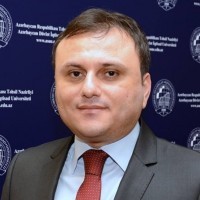
Assoc. Prof. Dr.
Elşen BAĞIRZADE
Azerbaijan State University of Economics (UNEC)
Development Economics - Macro, Informal Economy, Development Economics, International Economics, International Economic Foundation, Regional Development and Globalisation in International Economics, International Economics (Other), Economics of Education, Political Economy and Social Change

Assoc. Prof. Dr.
Saadet MAMMADOVA
Azerbaycan Bilimler Akademisi Felsefe ve Sosyoloji Enstitüsü
Social and Community Informatics
Layout Editor

Esra TAŞÇI
ÇALIŞMA VE SOSYAL GÜVENLİK EĞİTİM VE ARAŞTIRMA MERKEZİ BAŞKANLIĞI
Industrial Engineering, Ergonomi and Human Factors Management