Grantee

Editor-in-Chief
Deputy Editor-in-Chief




Editorial Board

Murat Aydın is an associate professor at Erciyes University. He began his academic career in 2007, graduating from the Department of Mechanical Engineering at Erciyes University. He completed his master's and doctoral degrees at the same university. His doctoral thesis focused on "Ballistic behavior of functionally graded sandwich plates."
Between 2009 and 2010, Aydın worked as a research assistant at the Erciyes University School of Civil Aviation. From 2010 to 2014, he served as a lecturer at the same institution. In 2014, he was appointed as an assistant professor in the Faculty of Aviation and Space Sciences at Erciyes University. He was promoted to associate professor in 2022.
Aydın's research interests include composite materials, ballistics, impact mechanics, and functionally graded materials. He has authored numerous articles and papers published in international peer-reviewed journals. He has also participated in various projects supported by TÜBİTAK and the European Union.
In addition to his academic work, Aydın holds administrative positions, including Director of the Erciyes University Aviation Studies Application and Research Center and Head of the Department of Aeronautical Engineering.





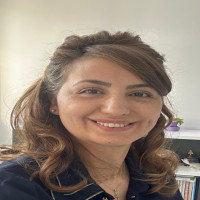
I am a physicist and faculty member specializing in nanomaterials, quantum technologies, and semiconductor physics. My research focuses on the synthesis and characterization of carbon quantum dots, perovskite nanocrystals, and their hybrid structures for use in optoelectronic devices, photodetectors, and radiation detection systems. I have coordinated and contributed to several national and international research projects, including TÜBİTAK-funded studies on carbon-based nanomaterials for scintillators, luminescent solar concentrators, and hybrid photodetectors. In addition to my work in experimental nanotechnology, I am deeply involved in science communication and teaching. I offer courses on quantum computing, nanostructures, and modern physics, and have authored and co-authored numerous papers in peer-reviewed journals. I also regularly present my research at international conferences. My professional interests lie at the intersection of nanophotonics, sustainable energy materials, and advanced radiation detection technologies, with a particular focus on environmentally friendly and water-soluble nanomaterials.
T. Ozcan received the B.S. degree in computer engineering from Istanbul Kültür University, Istanbul, Türkiye, in 2010, and the M.Sc. and Ph.D. degrees from the Department of Computer Engineering, Erciyes University, in 2016 and 2020, respectively. He joined the Department of Computer Engineering, Erciyes University, as a Research Assistant, in 2013. His research interests include intelligent optimization algorithms, image processing, machine learning, deep learning, and Kalman filtering. His application areas focus on human action recognition, human-computer interaction, and artificial intelligence in healthcare and agriculture.
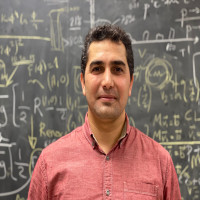
I am an Assoc. Prof. in the Physics Department and vice-Dean of Research at Erciyes University. I am working on the neutrino experiments, ANNIE, NOvA, and DUNE at Fermi National Accelerator Laboratory (Fermilab) and EOS experiment at UC-Berkeley. I am also holding an affiliated scientist and adjunct faculty position at the University of Iowa in the USA and affiliated with the CMS experiment on the LHC at CERN.
From January 2017 to October 2020, I worked on the neutrino experiments, ANNIE, and NOvA at Fermilab as a postdoctoral research associate for Iowa State University. I worked as a Run Coordinator and Phase II Upgrade and installation Manager for ANNIE. I completed my M.Sc. degree in August 2012 and my Ph.D. in December 2016 at the University of Iowa on the CMS experiment on the LHC at CERN.


Section Editors
Ethics and Compliance Requirements
✯ For all studies that require ethics committee approval, such approval must be obtained, clearly stated within the manuscript, and properly documented.
✯ In research requiring ethics approval, detailed information—the name of the ethics committee, approval date, and approval number—must be included in the Methods section, and additionally on either the first or last page of the manuscript. For case reports, the manuscript must include a statement confirming that written informed consent was obtained from the participant(s).
✯ The journal’s website must include a clear statement confirming that all manuscripts comply with Research and Publication Ethics.
✯ Ethical responsibilities and guidelines for authors, reviewers, and editors must be presented under separate headings on the journal’s website.
✯ Ethical principles must be explicitly stated in the journal and/or on the journal website, with reference to national and international standards. For instance, scientific manuscripts submitted to the journal should follow the recommendations of the ICMJE (International Committee of Medical Journal Editors) and the COPE (Committee on Publication Ethics) International Standards for Editors and Authors.
✯ Compliance with relevant copyright regulations is mandatory for all intellectual and artistic works used within the manuscript.