Review Article
Research Article
Issue Editorial Board




Aim & Scope
Ankara University Journal of Social Sciences is an international, scientific, and peer-reviewed journal published by the Ankara University Institute of Social Sciences.
The journal aims to contribute to the advancement and dissemination of scientific studies in all disciplines within the fields of social and human sciences both in Turkey and globally.
Submissions to the journal should deeply examine developments and issues related to its scope, present scientific literature with an objective perspective, propose measurable and applicable solutions to developments and issues based on scientific methods, and provide direct contributions to the field.
Authors submitting to the journal must hold an academic title or be enrolled as a PhD student in a doctoral program.
Studies that are not related to the aims, focus, and scope of the journal are not published. However, the Editorial Board may evaluate submissions and redirect them to other journals published under Ankara University.
The journal encompasses all disciplines within the fields of social and human sciences in Turkey and all over the world.
Author Guidelines
Requirements for Submissions to the Ankara University Journal of Social Sciences
Submissions to be published in the Ankara University Journal of Social Sciences must meet the following criteria:
- Submissions should be written in either Turkish or English. For articles written in Turkish, an extended abstract in English (700–1500 words) must be added at the end of the article.
- Submissions must not have been published elsewhere or be under consideration for publication in another journal.
- Authors must upload a similarity report (e.g., Turnitin, iThenticate) alongside their submission.
- Submissions not adhering to the journal's writing guidelines will not be considered.
Formatting Requirements for Submissions
a) Submissions should be prepared on A4 paper size, with single spacing and 2.5 cm margins on all sides.
b) The main text (excluding the title, abstract, keywords, and references) should be between 4,000 and 15,000 words. It must be typed in Bookman Old Style, 11-point font, with 1.5 line spacing, and saved as a Microsoft Word file.
Submissions must be structured with the following sections (in order) and adhere to the formatting guidelines provided for each:
Turkish Title
The Turkish title must be written in **12-point bold uppercase letters** and centered on the page.
English Title
The English title must follow the Turkish title and also be written in **12-point bold uppercase letters** and centered.
Author(s)
After the titles, the author’s name (initial letter capitalized) and surname (in uppercase) should be written in **12-point bold**. Additional information about the author (title, institution, and email address) should be provided. High-resolution photos of the author(s) and their ORCID information must also be uploaded to the system.
Abstract
The Turkish abstract should be written in "10-point italic font" with single line spacing, and should not exceed 300 words.
Keywords
At least four and at most eight Turkish keywords reflecting the subject matter of the study must be provided. Each keyword's first letter should be capitalized, separated by semicolons, and written in italic.
English Abstract
The text of the Turkish abstract should also be provided in "English italic font".
English Keywords
The English keywords should correspond to the Turkish keywords, provided in the same order and meaning. The first letter of each keyword should be capitalized, separated by semicolons, and written in italic.
Additional Sections for Applied Research
Introduction
The introduction should include summary information about the sections of the study, its relevance in the scientific literature, the importance of the research, the research problem, and objectives. This section may be structured with main or subheadings. Bold or underlined text should not be used in this section.
Methodology
The methodology section should cover the type and model of the research, questions and hypotheses, research group, data collection techniques, validity and reliability, data analysis, limitations, and, if applicable, ethical committee approval. Subheadings such as Research Questions, Research Model, Hypotheses, Data Analysis, and Data Collection Techniques may be used.
Findings
Findings should support the study’s objectives and problems while maintaining coherence. Tables, figures, graphics, or images used must be referenced within the text. Graphics or figures should be of high quality for publication clarity, and tables must follow APA formatting guidelines. All tables, figures, graphics, and images must be titled. Subheadings may be used to improve readability and comprehension.
Conclusion
The conclusion section should explain the results derived from the findings.
Recommendations
Recommendations should align with the study’s findings and suggest contributions to the literature, future research directions, and practical applications in the field.
Acknowledgments
Acknowledgments (if necessary) should be provided as a footnote at the bottom of the page.
Referencing
In-text citations and references must adhere to the "6th edition of APA" guidelines and align with the language of the text. For Turkish manuscripts, Turkish citation standards should be followed, and for English manuscripts, English citation standards should be used.
Appendices
Appendices (tables, figures, graphics, and images) should be placed on a new page after the References section. Each appendix should be labeled (e.g., Appendix 1, Appendix 2) and titled individually. If an appendix is used, corresponding references must be provided within the text.
Additional Formatting Guidelines
- Subheadings in the main text should be in "11-point bold font" with the first letters of words capitalized.
- Direct short quotations within the text should be placed in "italics within quotation marks (“...”)". Long quotations (over 40 words) should be formatted as a block, indented 2 cm from both the left and right margins, written in 10-point font, without quotation marks, and concluded with a period.
- Visual materials such as photos, diagrams, etc., must include proper attribution. Legal responsibilities regarding permissions and copyrights rest with the authors.
Post-Review Process
Authors are not permitted to make significant changes to their work after the peer review process is complete (except for revisions suggested by reviewers). This includes adding or removing sections, paragraphs, tables, images, or authors.
Ethical Principles and Publication Policy
PUBLICATION FREQUENCY AND LANGUAGE
The Ankara University Journal of Social Sciences is published twice a year, in January and July.
The journal accepts articles in Turkish or English. Submissions must be prepared in accordance with the grammatical rules and scholarly conventions of the language in which they are written (Turkish or English) and must be clear and comprehensible. Submissions that fail to meet these criteria will not be considered for evaluation.
EVALUATION PROCESS
Blind Review Method
The Ankara University Journal of Social Sciences employs a double-blind peer review process for all submissions, ensuring the anonymity of both authors and reviewers throughout the evaluation.
Pre-Evaluation Process
Submissions are first reviewed by the Editorial Board to determine their alignment with the journal's aims and scope, as well as compliance with Turkish and English language and writing standards. Submissions that lack originality, fail to adhere to the journal's policies, or are otherwise deemed unsuitable are rejected. Authors of rejected submissions are notified by the Editorial Board within two weeks of the submission date. Suitable submissions proceed to the peer review process.
Peer Review Process
Submissions are assigned to reviewers based on their content. A member of the Editorial Board examines the work and recommends at least two reviewers from the journal's pool of experts or suggests new reviewers suitable for the subject area. These recommendations are evaluated by the Editor, who finalizes reviewer assignments. Reviewers must commit to maintaining the confidentiality of the review process and the materials they assess.
Peer Review Timeline
Reviewers are given 21 days to complete their evaluations. Authors are required to address any suggested revisions within 21 days. Reviewers may request up to two rounds of revisions for a submission. Following these revisions, reviewers must decide whether the submission is "publishable" or "unpublishable."
Evaluation Outcome
Reviewer feedback is reviewed by the responsible Editorial Board member within two weeks. The board member provides their recommendations to the Editor based on the peer review results.
Editor’s Decision
The Editor makes the final decision on submissions deemed "publishable" by reviewers and the Editorial Board, based on plagiarism reports generated through iThenticate software. Submissions deemed "unpublishable" are returned to the authors without plagiarism checks.
Submission Guidelines
Authors submitting to the Ankara University Journal of Social Sciences must register with the Journal Management System and follow the instructions in the "Submission Guide."
Revision Policy and Upload Guidelines
For submissions under review, the Editor, Editorial Board, and/or reviewers may request up to two rounds of revisions or improvements. Authors are required to address these requests fully, clearly, and promptly.
Withdrawal of Submissions
In accordance with the journal's policies, authors wishing to withdraw their submissions must notify the Editor via email. The Editor will review the withdrawal request and respond to the authors within one week. Authors transfer the copyright of their submissions to the Ankara University Institute of Social Sciences upon submission. Until withdrawal requests are approved, authors may not submit their work to another journal.
Appeals Against Evaluation Outcomes
Authors may appeal the evaluation outcomes of their submissions. Appeals must be submitted via the Journal Management System and include a scientifically reasoned argument with supporting references. Appeals are reviewed by the Editorial Board within 30 days, and authors are notified of the outcome. If an appeal is upheld, the Editorial Board reassigns the submission to a different set of reviewers for a new evaluation.
PRIVACY STATEMENT
All personal data (e.g., names, email addresses) entered into the Ankara University Journal of Social Sciences Management System are used solely for the journal’s operations and the university’s scholarly activities. These data are not shared with third parties or used for other purposes.
COPYRIGHT AND LICENSING
Authors are responsible for the accuracy of the ideas, suggestions, and sources cited in their articles.
No royalties are paid for articles published in the journal.
By submitting their work to the journal, authors agree to transfer the copyright of their articles to the Ankara University Institute of Social Sciences.
The Editorial Board is authorized to make publication decisions. However, authors retain the following rights:
All rights not covered by copyright.
The right to reproduce the article for personal use, provided it is not for sale.
The right to include the article, in whole or part, in other works such as books or articles, provided proper citation to the journal is made.
The Ankara University Journal of Social Sciences makes its content available under a [Creative Commons Attribution-NonCommercial-NoDerivatives (CC BY-NC-ND)] license, allowing users to link to, copy, print, reproduce, or distribute the content in any non-commercial medium, provided proper citation is made and no modifications are made to the content. For commercial use, prior permission is required.
OPEN ACCESS STATEMENT
The Ankara University Journal of Social Sciences is an open-access journal, providing unrestricted access to its content to support and promote the Open Access Policy in science.
PLAGIARISM CHECK
The journal mandates plagiarism checks for all submissions that pass the "Blind Peer Review Process" to ensure the integrity of scholarly content. Plagiarism checks are conducted using iThenticate software.
The plagiarism report is carefully reviewed by the Editorial Board, which examines the matches and eliminates those with proper citations. Remaining matches are analyzed to identify potential errors, which are documented in a report.
The Editorial Board makes the final decision on each submission based on the plagiarism report. Authors may be required to address identified issues, or submissions may be returned if deemed inappropriate.
Price Policy
Ankara Üniversitesi Sosyal Bilimler Dergisi, yazar/yazarlardan yayın işlemlerine yönelik olarak hiçbir aşamada ücret almamaktadır.
Ayrıca, sponsorluk ve reklâm tekliflerini de kabul etmemektedir.
Indexes




Journal Boards
Editor
Asistant Editors
Editorial Boards

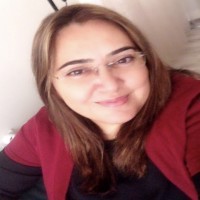
master's and doctorate degrees in the Department of History of Islam, Ankara University Institute of
Social Sciences. She functioned as a research assistant, lecturer, assistant professor, and associate
professor at the Department of History of Islam, Ankara University Faculty of Divinity, She worked at
the Presidency of Religious Affairs for a while. She is currently an academic member at Ankara
University Faculty of Divinity, where she teaches undergraduate and graduate courses and supervises
undergraduate and graduate students.
In addition to her studies in the field of Islamic History in general, she specializes in the field
of Ottoman History in particular. Proceeding her studies on the Ottoman Archives, Aslan conducted
research at The National Archive in London, England with a TÜBİTAK project. She continues her
studies at LAMER (Centre for Latin American Studies) within Ankara University. Also she lectured at
Universidad de Nacional in Bogotá, Colombia for a while.
Projects: She was involved in the projects such as Turkey's Theological Heritage: 70 Years of
Ankara University Faculty of Divinity (1949-2019) (a multi-output project in books, symposiums,
exhibitions, and other areas to reveal the historical background of the faculty), Muslims in History
(multi-volume book project) and History of Muslim Women (multi-volume book project). She still
continues to work in the Editorial Board of the Themed Sirah Project (under the auspices of the
Presidency of Religious Affairs).
She is a member of organizations such as ISTAD, LAMER, and CİEPO and has provided support
such as lecturing and consultancy in institutions such as The Anatolian Theology Academy and
KAGEM (Turkey’s Diyanet Foundation, Women, Family and Youth Center). She has given interviews
to AA (Agencia Anadolu) on many subjects.
Books; She wrote the books titled Concealed Religion Carry in Ottoman Late Period (pressed
in 2012 and 2017), The Life of Prophet Muhammad 5 for Imam Hatip Secondary School (pressed in
2014 and 2016), Ottoman Guesthouses and Guests (pressed in 2016).
Also her doctoral thesis was found worthy of publication by ranking in the Holy Birth Week,
Scientific Works Competition organized by the Presidency of Religious Affairs and it is published in
2010 titled Religious Change Movements in Tanzimat Period 1839-1876.
Articles and Papers; In addition to her books, she has many book chapters (45 chapters in 26
works), articles in scientific journals (11 refereed articles, 5 non-refereed articles and book reviews),
papers in national and international symposiums and congresses (30 papers) and translation articles.
Editorships; She worked as an editor in Journal of Academic History and Thought and Ankara
University Journal of Social Sciences. She currently continues to be an editor in Journal of Religious
Research and also to be a member of the Advisory Board of Journal of Islamic Research. She edited
the books Turkey's Theological Heritage: 70 Years of Ankara University Faculty of Divinity (1949-
2019), Interdisciplinary and Thematic Islamic History Writings I, and A Lifetime Dedicated to
Historiography: The Present Book Prof. Nesimi Yazici. Since 2012, she continues to referee Turkish
and English articles in many different journals. Also she is a panelist and external panelist at TUBITAK
and takes charge in various examination commissions, especially OSYM (Student Selection And
Placement Center)
She presented at the Certified Religion and Human Rights Workshop and moderated the
sessions (In this workshop, which was organized with the support of SWEDEN, Selcuk University,
Raoul Wallenberg Institute, and KONTV institutions in 2013, the subject of Human Rights: Its
Conceptual, Theoretical and Historical Development was discussed by 25 international participants
from many different fields)
Administrative duties; She was the assistant director of Ankara University Institute of Social
Sciences. Currently she is a member of the Board of Directors in Ankara University Faculty of Divinity
and also in LAMER (Centre for Latin American Studies)
Discipline Editors
Professor Dr. Selçuk Burak Haşıloğlu, whose area of expertise is marketing information systems, has been conducting academic studies since 1993. He holds a bachelor's degree in mathematics and two master's degrees in business and computer engineering, and completed his doctorate in 2006 at Gazi University's Department of General Business. The focus of both his master's and doctoral theses is on e-commerce and marketing information systems, with their research being among the first of its kind in the country.In 2009, he successfully completed his postdoctoral studies, which he conducted for a period of one year at the Henley Business School Informatics Research Centre at the University of Reading in England. During this period, he was awarded the Science Award by the Undersecretariat of Foreign Trade of the Prime Ministry of the Republic of Turkey.He has received six scholarships/awards to date, and has authored over 10 books on digital marketing, business and marketing information systems.He has conducted over 100 scientific studies, and played an active role in over 20 projects, including three TUBITAK and two ministry projects. He was awarded associate professorship in marketing science in 2011 and became a professor in 2017.His research is focused on marketing research, marketing analytics, data science and mining, decision analysis, decision sciences and digital marketing.He has served as president of the Marketing and Marketing Research Association and the Chess Clubs Federation, and has participated in numerous social responsibility projects. He has been serving as the general secretary at Pamukkale University since 1995, and has held administrative positions such as faculty management and faculty board memberships, technopark board memberships, department heads, university commission memberships. Haşıloğlu is a consultant in the private sector, specialising in blockchain, game world, mathematical economy and dynamics, big data analysis and analytics, marketing research, business intelligence and information systems management. He is currently employed at the Pamukkale University Department of Management Information Systems, which he established.
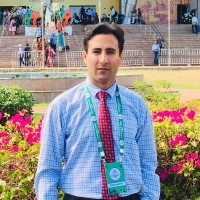
Prof. Dr. Cenker GÖKER
Ankara Üniversitesi Hukuk Fakültesi
Mali Hukuk Anabilim dalı Başkanı
ÖZGEÇMİŞ
Doğum Yeri ve Tarihi : İstanbul – 1978
Lisans : Ankara Üniversitesi Hukuk Fakültesi - 2001
Yüksek Lisans : Ankara Üniversitesi Sosyal Bilimler Enstitüsü Kamu Hukuku Yüksek
Lisans Programı - 2004
Doktora : Ankara Üniversitesi Sosyal Bilimler Enstitüsü Kamu Hukuku Doktora
Programı - 2011
Doçentlik Alanı : Mali Hukuk - 2014
Profesörlük: 2021
Language Editor

