Easing the Burden: How Does Teacher Self-Efficacy Mediate the Association Between Occupational Stress and Job Satisfaction? International Evidence from PISA 2022
Abstract
While teaching is a rewarding profession, its inherent stress often undermines job satisfaction, highlighting the need to understand factors that influence this relationship. This study investigated the mediating role of teacher self-efficacy (TSE) in the association between occupational stress and job satisfaction using data from the Program for International Student Assessment (PISA). Drawing on the Transactional Model of Stress and Social Cognitive Theory, the study analyzed responses from 68054 teachers across 18 countries. Linear regression and structural equation modeling (SEM) analyses were employed to investigate direct and indirect effects. The findings revealed that while occupational stress significantly and negatively predicted both TSE and job satisfaction, TSE was found as a significant and positive predictor of job satisfaction. Mediation analysis confirmed the partial mediator role of TSE, accounting for %14.6 of the total effect. These findings highlighted the buffering role of TSE in mitigating the adverse impact of occupational stress on job satisfaction. The findings offer key implications for teacher training, policy, and leadership by emphasizing the role of TSE.
References
- Acar, Ö. F. (2021). Examination of job satisfaction, occupational burnout and job stress levels of special education teachers (Publication No. 659991) [Master’s Thesis, Marmara University]. Council of Higher Education Thesis Center.
- Bandura, A. (1977). Social learning theory. Prentice-Hall.
- Bandura, A. (1986). Social foundations of thought and action: A social cognitive theory. Prentice-Hall.
- Benmansour, N. (1998). Job satisfaction, stress and coping strategies among Moroccan high school teachers. Mediterranean Journal of Educational Studies, 3(1), 13–33.
- Boe, E. E., Cook, L. H., & Sunderland, R. J. (2008). Teacher turnover: Examining exit attrition, teaching area transfer, and school migration. Exceptional Children, 75(1), 7–31. https://doi.org/10.1177/00144029080750010
- Büyükşahin Çevik, G. (2017). The roles of life satisfaction, teaching efficacy, and self-esteem in predicting teachers’ job satisfaction. Universal Journal of Educational Research, 5(3), 338–346. https://doi.org/10.13189/ujer.2017.050306
- Caprara, G. V., Barbaranelli, C., Borgogni, L., & Steca, P. (2003). Efficacy beliefs as determinants of teachers' job satisfaction. Journal of Educational Psychology, 95(4), 821–832. https://doi.org/10.1037/0022-0663.95.4.821
- Cohen, J. (1988). Statistical power analysis for the behavioral sciences (2. ed.). Routledge. https://doi.org/10.4324/9780203771587
- Demirdağ, S. (2015). Assessing teacher self-efficacy and job satisfaction: Middle school teachers. Journal of Educational and Instructional Studies in the World, 5(3), 35–43.
- Demirtas, Z. (2010). Teachers’ job satisfaction levels. Procedia-Social and Behavioral Sciences, 9, 1069–1073. https://doi.org/10.1016/j.sbspro.2010.12.287
- Ekins, A., Savolainen, H., & Engelbrecht, P. (2016). An analysis of English teachers’ self-efficacy in relation to SEN and disability and its implications in a changing SEN policy context. European Journal of Special Needs Education, 31(2), 236–249. https://doi.org/10.1080/08856257.2016.1141510
- Evans, L. (2001). Delving deeper into morale, job satisfaction and motivation among education professionals: Re-examining the leadership dimension. Educational Management & Administration, 29(3), 291–306. https://doi.org/10.1177/2F0263211X010293004
- Fang, J., & Qi, Z. (2023). The influence of school climate on teachers’ job satisfaction: The mediating role of teachers’ self-efficacy. PLOS ONE, 18(10), e0287555. https://doi.org/10.1371/journal.pone.0287555
- Field, A. (2012). Discovering statistics using SPSS: and sex and drugs and rock’n’roll (3. ed.). Sage.
- Guo, Y., Connor, C. M., Yang, Y., Roehrig, A. D., & Morrison, F. J. (2012). The effects of teacher qualification, teacher self-efficacy, and classroom practices on fifth graders' literacy outcomes. The Elementary School Journal, 113(1), 3–24. https://doi.org/10.1086/665816
- Hanif, R., Tariq, S., & Nadeem, M. (2011). Personal and job related predictors of teacher stress and job performance among school teachers. Pakistan Journal of Commerce and Social Sciences (PJCSS), 5(2), 319–329.
- Herman, K. C., Hickmon-Rosa, J., & Reinke, W. M. (2018). Empirically derived profiles of teacher stress, burnout, self-efficacy, and coping and associated student outcomes. Journal of Positive Behavior Interventions, 20(2), 90–100. https://doi.org/10.1177/1098300717732066
- Holgado–Tello, F. P., Chacón–Moscoso, S., Barbero–García, I., & Vila–Abad, E. (2010). Polychoric versus Pearson correlations in exploratory and confirmatory factor analysis of ordinal variables. Quality & Quantity, 44(1), 153-166. https://doi.org/10.1007/s11135-008-9190-y
- Hu, L., & Bentler, P. M. (1999). Cutoff criteria for fit indexes in covariance structure analysis: Conventional criteria versus new alternatives. Structural Equation Modeling: A Multidisciplinary Journal, 6(1), 155. https://doi.org/10.1080/10705519909540118
- Iannone, R., & Roy, O. (2024). DiagrammeR: Graph/Network Visualization (Versioon 1.0.11). https://doi.org/10.32614/CRAN.package.DiagrammeR
- Jorgensen, T. D. (2025). lavaan.mi: Fit structural equation models to multiply imputed data (Version 0.1-0). https://doi.org/10.32614/CRAN.package.lavaan.mi
- Kasalak, G., & Dagyar, M. (2020). The relationship between teacher self-efficacy and teacher job satisfaction: A meta-analysis of the teaching and learning international survey (TALIS). Educational Sciences: Theory and Practice, 20(3), 16–33. http://dx.doi.org/10.12738/jestp.2020.3.002
- Katsantonis, I. G. (2019). Investigation of the impact of school climate and teachers’ self-efficacy on job satisfaction: A cross-cultural approach. European Journal of Investigation in Health, Psychology and Education, 10(1), 119–133. https://doi.org/10.3390/ejihpe10010011
- Klassen, R. M., & Chiu, M. M. (2010). Effects on teachers’ self-efficacy and job satisfaction: Teacher gender, years of experience, and job stress. Journal of Educational Psychology, 102(3), 741–756. https://doi.org/10.1037/a0019237
- Klassen, R. M., Usher, E. L., & Bong, M. (2010). Teachers’ collective efficacy, job satisfaction, and job stress in cross-cultural context. The Journal of Experimental Education, 78(4), 464–486. https://doi.org/10.1080/00220970903292975
- Klusmann, U., Kunter, M., Trautwein, U., Lüdtke, O., & Baumert, J. (2008). Teachers’ occupational wellbeing and quality of instruction: The important role of self-regulatory patterns. Journal of Educational Psychology, 100(3), 702–715. https://doi.org/10.1037/0022-0663.100.3.702
- Kyriacou, C. (2001). Teacher stress: Directions for future research. Educational Review, 53(1), 27–35. https://doi.org/10.1080/00131910120033628
- Lazarides, R., & Warner, L. M. (2020). Teacher self-efficacy. In R. Lazarides & L. M. Warner, Oxford Research Encyclopedia of Education. Oxford University Press. https://doi.org/10.1093/acrefore/9780190264093.013.890
- Lazarus, R. S., & Folkman, S. (1984). Stress, appraisal, and coping. Springer Publishing Company.
- Li, C. H. (2015). Confirmatory factor analysis with ordinal data: Comparing robust maximum likelihood and diagonally weighted least squares. Behavior Research Methods, 48(3), 936–949. https://doi.org/10.3758/s13428-015-0619-7
- Mrozek, K. (2005). Teacher stress presentation. [Unpublished conference presentation].
- OECD. (2024). PISA 2022 Technical Report. OECD Publishing. http://dx.doi.org/10.1787/01820d6d-en
- Ortan, F., Simut, C., & Simut, R. (2021). Self-efficacy, job satisfaction and teacher well-being in the K-12 educational system. International Journal of Environmental Research and Public Health, 18(23), 12763. https://doi.org/10.3390/ijerph182312763
- Reilly, E., Dhingra, K., & Boduszek, D. (2014). Teachers’ self-efficacy beliefs, self-esteem, and job stress as determinants of job satisfaction. International Journal of Educational Management, 28(4), 365–378. https://doi.org/10.1108/IJEM-04-2013-0053
- Rhemtulla, M., Brosseau-Liard, P. É., & Savalei, V. (2012). When can categorical variables be treated as continuous? A comparison of robust continuous and categorical SEM estimation methods under suboptimal conditions. Psychological Methods, 17(3), 354–373. https://doi.org/10.1037/a0029315
- Rimm-Kaufman, S. E., & Sawyer, B. E. (2004). Primary-grade teachers’ self-efficacy beliefs, attitudes toward teaching, and discipline and teaching practice priorities in relation to the responsive classroom approach. Elementary School Journal, 104(4), 321–341. https://doi.org/10.1086/499756
- Rosseel, Y. (2012). Lavaan: An R package for structural equation modeling. Journal of Statistical Software, 48(1), 1–36. https://doi.org/10.18637/jss.v048.i02
- Rubin, D. B. (1987). Multiple Imputation for Nonresponse in Surveys (1st ed.). Wiley. https://doi.org/10.1002/9780470316696
- Scheopner, A. J. (2010). Irreconcilable differences: Teacher attrition in public and catholic schools. Educational Research Review, 5(3), 261–277. https://doi.org/10.1016/j.edurev.2010.03.001
- Skaalvik, E. M., & Skaalvik, S. (2010). Teacher self-efficacy and teacher burnout: A study of relations. Teaching and Teacher Education, 26(4), 1059–1069. https://doi.org/10.1016/j.tate.2009.11.001
- Skaalvik, E. M., & Skaalvik, S. (2011). Teacher job satisfaction and motivation to leave the teaching profession: Relations with school context, feeling of belonging, and emotional exhaustion. Teaching and Teacher Education, 27(6), 1029–1038. https://doi.org/10.1016/j.tate.2011.04.001
- Skaalvik, E. M., & Skaalvik, S. (2015). Job satisfaction, stress and coping strategies in the teaching profession-What do teachers say? International Education Studies, 8(3), 181–192. https://doi.org/10.5539/ies.v8n3p181
- Skaalvik, E. M., & Skaalvik, S. (2017). Teacher stress and teacher self-efficacy: Relations and consequences. In T. M. McIntyre, S. E. McIntyre, & D. J. Francis (Eds.), Educator Stress (pp. 101–125). Springer International Publishing. https://doi.org/10.1007/978-3-319-53053-6_5
- Shah, A. D., Bartlett, J. W., Carpenter, J., Nicholas, O., & Hemingway, H. (2014). Comparison of random forest and parametric imputation models for imputing missing data using MICE: A CALIBER study. American Journal of Epidemiology, 179(6), 764-774. https://doi.org/10.1093/aje/kwt312
- Sosa, T., & Gomez, K. (2012). Connecting teacher efficacy beliefs in promoting resilience to support of Latino students. Urban Education, 47(5), 876–909. https://doi.org/10.1177/0042085912446033
- Stipek, D. (2012). Context matters: Effects of student characteristics and perceived administrative and parental support on teacher self-efficacy. The Elementary School Journal, 112(4), 590–606. https://doi.org/10.1086/664489
- Sun, A., & Xia, J. (2018). Teacher-perceived distributed leadership, teacher self-efficacy and job satisfaction: A multilevel SEM approach using the 2013 TALIS data. International Journal of Educational Research, 92, 86–97. https://doi.org/10.1016/j.ijer.2018.09.006
- Tierney, N., & Cook, D. (2023). Expanding tidy data principles to facilitate missing data exploration, visualization and assessment of imputations. Journal of Statistical Software, 105, 1–36. https://doi.org/10.18637/jss.v105.i07
- Tipi, B. (2022). The effect of job stress in teachers on job satisfaction and work alienation: The case of Ankara Yenimahalle district (Publication No. 722427) [Master’s Thesis, Gazi University]. Council of Higher Education Thesis Center.
- Tschannen-Moran, M., Hoy, A. W., & Hoy, W. K. (1998). Teacher efficacy: Its meaning and measure. Review of Educational Research, 68(2), 202–248.
- Turner, K., & Garvis, S. (2023). Teacher educator wellbeing, stress and burnout: A scoping review. Education Sciences, 13(4), 351. https://doi.org/10.3390/educsci13040351
- Wickham, H., Francois, R., Henry, L., Muller, K., & Vaughan, D. (2023). dplyr: A grammar of data manipulation. https://CRAN.R-project.org/package=dplyr
- Wickham, H., Miller, E., & Smith, D. (2023). haven: Import and export ’SPSS’, ’stata’ and ’SAS’ files. https://CRAN.R-project.org/package=haven
- Woods, S., Sebastian, J., Herman, K. C., Huang, F. L., Reinke, W. M., & Thompson, A. M. (2023). The relationship between teacher stress and job satisfaction as moderated by coping. Psychology in the Schools, 60(7), 2237–2256. https://doi.org/10.1002/pits.22857
- Yıldız, Z. (2016). The relationship of organizational stress sources with job satisfaction and life satisfaction among technical teachers (Publication No. 458584) [Master’s Thesis, Okan University]. Council of Higher Education Thesis Center.
- Zee, M., & Koomen, H. M. Y. (2016). Teacher self-efficacy and its effects on classroom processes, student academic adjustment, and teacher well-being: A synthesis of 40 years of research. Review of Educational Research, 86(4), 981–1015. https://doi.org/10.3102/0034654315626801
- Zimmerman, B. J. (1995). Self-regulation involves more than metacognition: A social cognitive perspective. Educational Psychologist, 30(4), 217–221.
Details
| Primary Language | English |
|---|---|
| Subjects | Other Fields of Education (Other) |
| Journal Section | Research Article |
| Authors | |
| Submission Date | September 2, 2025 |
| Acceptance Date | January 29, 2026 |
| Publication Date | March 25, 2026 |
| DOI | https://doi.org/10.51535/tell.1776536 |
| IZ | https://izlik.org/JA87YH25KZ |
| Published in Issue | Year 2026 Volume: 8 Issue: 1 |
Aim & Scope
The primary purpose of the Journal of Teacher Education and Lifelong Learning (TELL) is to bring together all teacher education areas and lifelong learning-themed studies with readers.
Journal of Teacher Education and Lifelong Learning (TELL) publishes research employing a variety of qualitative and quantitative methods and mixed approaches which take account of how participants can become involved in research processes in all areas of the education field, amongst others, inclusive education, curriculum issues and the like instructional technology, educational psychology, guidance and counseling, educational administration, science education, social science education, art education… The journal aims to increase understanding of all teacher education areas and lifelong learning-themed studies with readers.
TELL is an open-access journal that publishes high-quality articles in English. All articles published in TELL will be peer-reviewed.
TELL is a free academic journal, and it is published twice a year (one volume per year) in June and December.
TELL is now a Crossref member. The DOI number will be available now.
*TELL has been accepted into the EBSCO H.W. Wilson Education Fulltext database, and the agreement was signed on 21 June 2022.
The scope of the Journal of Teacher Education and Lifelong Learning (TELL) ;
• Related to Teacher Education studies, implementations, problems, solutions, experiences, etc.
• Lifelong Learning studies
Author Guidelines
Manuscript Docs
📝 Tell_2026_final_Template.docx
Originality Report and Title Page must be uploaded with the manuscript.
GENERAL GUIDELINES
The material must be original, reflect the integrity expected of scholarly communication, and demonstrate coherence and unity, making the paper understandable and interesting. Before submitting an article, please review the following suggestions. Original manuscripts received in the correct form serve to expedite the review process; others will be returned to the author. Spelling, punctuation, sentence structure, and the mechanical elements of arrangements, spacing, length, and consistency of usage in form and descriptions should be studied before submission. Written manuscripts should be in English. Manuscript must conform to the style of the Publication Manual of the American Psychological Association (APA), 7th Edition. Manuscripts should be double-spaced, and font face must be Cambria 10 point. Paper Size must be A4 (21×29.7) (top, bottom, left, and right 1cm space).
Manuscript Title
12 Font Size, Bold, Cambria Font Style, No More Than 15 Words, and Capitalize Each Word except the Conjunctions.
Author's Name
Centered, Bold, 11 Font Size, Cambria Font
1. INTRODUCTION (LEVEL 1 TITLE: CAMBRIA, 11 FONT SIZE, BOLD, ALIGN LEFT, CAPITAL LETTER)
1.1. Statement of the Problem (Level 2 Title: Cambria, 11 Font Size, Bold, Align Left, Capitalize Each Word)
1.1.1. Sub-problems of the study (Level 3 Title: Cambria, 11 Font Size, bold, italics, align left, sentence case)
Language
Manuscript language must be English
***If the author(s) wishes, after the referee process is completed, the article can be published in 2 languages, provided that the priority is English.
Copyright
All published articles in TELL are published under a Creative Commons Attribution License.
Format
Submit your manuscript in Microsoft Word (.doc or docx ). Do not use word processing options/tools, such as strike-through, hidden text, comments, merges, etc. Due to the academic focus of this publication, the use of personal pronouns (I, we, etc.) and present tense is strongly discouraged.
Length
Because this is an electronic journal, the length of papers may vary. The size of your essay should be appropriate to the topic and focus.
Originality
All manuscripts must be original. No manuscript that has already been published or is being considered by another magazine or journal will be considered. However, it will be regarded as if the work described in conference proceedings is substantially revised and extended. Submission of a manuscript represents certification by the author that the article is not being considered nor has been published elsewhere.
Abstract
Each article should include an informative, comprehensive abstract of 150 to 250 words. This abstract should briefly summarize the paper's major points and the author’s summary and conclusions.
Keywords
Each article should include five keywords.
Credits and Acknowledgments
Acknowledgments or appreciation to individuals for assistance with the manuscript or the material reported should be included in the Acknowledgment at the end of the article.
Tables/Figures
All tables (composed according to APA 7th) and figures must be embedded in the manuscript near the first reference to the corresponding table. Tables and figures MUST be no wider than 500 pixels (5.25″).
References must conform to the style of the Publication Manual of the APA 7th Edition. All reference titles from other languages should be translated into English and accompanied by the original title.
Cite references in the text.
References are cited in the text in alphabetical order (the same way they appear in the reference list), separated by a semi-colon. (Korkmaz, 2013; Nel, 2012). Name both authors in the signal phrase or the parentheses each time you cite the work. Use the word ‘and’ between the authors’ names within the text and use ‘&’ in the parentheses. Research by Korkmaz and Nel (2001) showed… (Korkmaz & Nel, 2004)
Three or more authors
When using the reference the first time, all other names need to be listed, and after that, use the first author’s name followed by et al. in the signal phrase or parentheses. Usta et al. (2011) argued… (Usta et al., 2011)
Citing indirect sources
If you use a source cited in another source, name the source in your signal phrase. List the secondary source in your reference list and include the secondary source in the parentheses. Johnson argued that… (as cited in Korkmaz, 2009, p. 71) (Note: The use of secondary sources should be limited).
Organize references
References are listed in alphabetical order.
Book.
Author, A.A. (Year of publication). Title of work: Capital letter also for subtitle. Location: Publisher.
Author, A.A. (Year of publication). Title of work: Subtitle. Retrieved from http://www.xxxxxx
Author, A.A. (Year of publication). Title of work: Subtitle. doi:xxxxxxxxxxx
Chapter in an edited book
Author, A.A., & Author, B.B. (Year of publication). Title of chapter. In A. Editor & B. Editor (Eds.), Title of book (pages of chapter). Location: Publisher.
Author, A.A., & Author, B.B. (Year of publication). Title of chapter. In A. Editor & B. Editor (Eds.), Title of book (pages of chapter). Retrieved from http://www.xxxxx
Author, A.A., & Author, B.B. (Year of publication). Title of chapter. In A. Editor & B. Editor (Eds.), Title of book (pages of chapter). Location: Publisher. doi:xxxxxxxxxx
Journal article.
Author, A.A., Author, B.B., & Author, C.C. (Year). Title of article. Title of Periodical, volume number, pp–pp. Doi:xx.xxxxxxxxxx
Authors are named by last name followed by initials (closed up); publication year goes between parentheses, followed by a full stop (period). Only the first word and proper nouns in the title and subtitle are capitalized. The periodical title has the main words capitalized, followed by the volume number, which, with the title, is also italicized, and then the DOI. Provide the issue number ONLY if each journal issue begins on page 1. In such cases, it goes in parentheses: Journal, 4(1), pp–pp. If the DOI is unavailable and the reference was retrieved online, give the URL of the journal home page. No retrieval date is needed.
Symposium
Contributor, C. (Year, Month). Title of contribution. In C. Chairperson (Chair), Title of the symposium. The symposium was conducted at the organization's name and location meeting.
The conference paper abstract was retrieved online
Author, A.A. (2010, June). Title of article. The paper was presented at the conference's name and location. Abstract retrieved from http://www.conference.org/abstracts_2007.htm
Dissertation or thesis.
Author, A.A. (Year). Title of thesis. (Unpublished master’s thesis). University of Missouri, Columbia.
Ethical Principles and Publication Policy
Journal of Teacher Education and Lifelong Learning (TELL) is a double-blind, peer-reviewed international academic journal. TELL is committed to the academic community; in this regard, it stands for meeting the highest standards of publication ethics. In contrast, publication malpractice is strictly prohibited by all possible measures. That’s why it is necessary to agree upon standards of expected ethical behavior for all parties involved in publishing: the author, the journal editor, the peer reviewer, and the publisher. Our ethical statements are based on COPE’s Best Practice Guidelines for Journal Editors.
For Editors
The journal editor is responsible for deciding which of the articles submitted to the journal should be published. The editor may be guided by the policies of the journal’s editorial board and constrained by such legal requirements as shall then be in force regarding libel, copyright infringement, and plagiarism. The editor may confer with other editors or reviewers in making this decision. An editor will evaluate manuscripts for their intellectual content without regard to the author's race, gender, sexual orientation, religious belief, ethnic origin, citizenship, or political philosophy. The editor and any editorial staff must not disclose any information about a submitted manuscript to anyone other than the corresponding author, reviewers, potential reviewers, other editorial advisers, and the publisher, as appropriate. Disclosure and conflicts of interest unpublished materials disclosed in a submitted manuscript must not be used in an editor’s own research without the author's express written consent.
For Reviewers
Peer review assists the editor in making editorial decisions and, through the editorial communications with the author, may also assist the author in improving the paper. Any selected referee who feels unqualified to review the research reported in a manuscript or knows its prompt review will be impossible should notify the editor and excuse himself from the review process. Any manuscripts received for review must be treated as confidential documents. They must not be shown to or discussed with others except as authorized by the editor. Reviews should be conducted objectively. Personal criticism of the author is inappropriate. Referees should express their views clearly with supporting arguments. Acknowledgment of Sources Reviewers should identify relevant published work that the authors have not cited. Any statement that an observation, derivation, or argument had been previously reported should be accompanied by the appropriate citation. A reviewer should also call to the editor’s attention any substantial similarity or overlap between the manuscript under consideration and any other published paper they know personally. Privileged information or ideas obtained through peer review must be kept confidential and not used for personal advantage. Reviewers should not consider manuscripts with conflicts of interest resulting from competitive, collaborative, or other relationships or connections with any authors, companies, or institutions connected to the papers.
For Authors
Authors of reports of original research should present an honest account of the work performed and a discussion of its significance in the field of Teacher Education and Lifelong Learning. Underlying data and ways of interpreting these should be represented transparently in the paper. A paper should contain sufficient detail and references to permit others to judge the value of the work. Fraudulent or knowingly inaccurate statements constitute unethical behavior and are unacceptable. Authors are asked to provide the raw data in connection with a paper for editorial review and should be prepared to provide public access to such data (consistent with the ALPSP-STM Statement on Data and Databases), if practicable, and should, in any event, be designed to retain such data for a reasonable time after publication. The authors should ensure that they have written entirely original works, and if the authors have used the work and words of others, that this has been appropriately cited or quoted. Multiple, redundant, or concurrent publications: an author should not generally publish manuscripts describing essentially the same research in more than one journal or primary magazine. Submitting the same manuscript to multiple journals concurrently constitutes unacceptable publishing behavior. Proper acknowledgment of the work of others must always be given. Authors should cite publications that have influenced the nature of the reported work. Authorship should be limited to those who have contributed significantly to the conception, design, execution, or interpretation of the reported study. All those who have made significant contributions should be listed as co-authors. Where others have participated in certain substantive aspects of the research project, they should be acknowledged or listed as contributors. The corresponding author should ensure that all appropriate co-authors and no inappropriate co-authors are included in the paper and that all co-authors have seen and approved the final version of the paper and have agreed to its submission for publication. All authors should disclose in their manuscript any financial or other substantive conflict of interest that might be construed to influence the results or interpretation of their manuscript. All sources of financial support for the project should be disclosed. Authors can not make any changes to the published manuscript electronically. Therefore, authors must carefully review and correct any errors on galley proof.
Author/s declare that:
The author/s declares the presence of ethics statements needed for ethical research using human subjects. Otherwise, they provide the necessary documents.
a) Conflict of Interest: They have no conflict of interest.
b) Research involving human participants and animals: This study contains no studies with human participants or animals performed by authors. This article does not contain any studies involving animals performed by any of the authors.
c) Informed consent: Informed consent was obtained from all participants involved in the study.
Publication Policy
Journal of Teacher Education and Lifelong Learning (TELL) is published in June and December; articles with completed review processes can be published in advance in the form of an early preview, along with DOI (Digital Object Identifier), volume, issue, and page numbers. The early view version is the final version; no changes are made after publication.
Related to Plagiarism
Journal of Teacher Education and Lifelong Learning (TELL) is a peer-reviewed and indexed journal with ISSN: 2687-5713 published online since 2019. The journal is strictly against any unethical act of copying or plagiarism. All manuscripts submitted for publication to TELL are cross-checked for plagiarism using iThenticate software. Manuscripts found plagiarized during the initial stages of review are outright rejected and not considered for publication in the journal. If a manuscript is found to be plagiarized after publication, the Editor-in-Chief will conduct a preliminary investigation, possibly with the help of a suitable committee. If the manuscript is found to be plagiarized beyond the acceptable limits, the journal will contact the author’s Institute / College / University and Funding Agency, if there is any. A determination of misconduct will lead TELL to run a bi-directional link online to the original paper to note the plagiarism and provide a reference to the plagiarized material. The document containing the plagiarism will also be marked on each page of the PDF. Upon determination of the extent of plagiarism, the paper may also be formally retracted.
Price Policy
Journal of Teacher Education and Lifelong Learning (TELL) does not charge any fees for the submission, evaluation and publication of the articles. Authors do not pay article processing fee for the studies they submit to the journal.
Indexes
Other Indexes

Journal Boards
Editor in Chief







Publishing Board
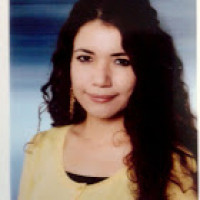
Dr. Hatice YILDIZ DURAK lisans ve Yüksek Lisans eğitimlerini Hacettepe Üniversitesinde, doktora eğitimini de Gazi Üniversitesinde tamamlamıştır. Dr. YILDIZ DURAK Necmettin Erbakan Üniversitesinde öğretim üyesi olarak görev yapmaktadır. Dr. YILDIZ DURAK’ın çalışma alanları eğitim teknolojileri, üstün yetenekli öğrenciler, üstün yetenekli öğrencilere erken yaşta programlama eğitimi, problemli teknoloji kullanımı ve öğretmen ve öğretmen adaylarının teknolojik alandaki mesleki gelişimleri konularından oluşmaktadır.
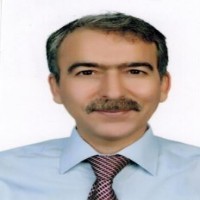
Özgen Korkmaz is a professor at the Faculty of Engineering and Natural Science at Bandırma Onyedi Eylül University. Dr. Korkmaz's area of expertise is educational technology. His research interests include computer education, programming education and thinking skills. He is also an expert in scale development.
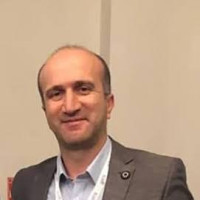
Serkan İzmirli, Çanakkale Onsekiz Mart Üniversitesi'nde Öğretim teknolojileri alanında doçenttir.
Ondokuz Mayıs Üniversitesi Eğitim Fakültesi Matematik ve Fen Bilimleri Eğitimi Bölümü Fen Bilgisi Eğitimi Anabilim Dalı öğretim üyesidir.
Otomatik Oluşturulan Kurul - Başlığı Düzenleyiniz





Lisans eğitimini Hacettepe Üniversitesi BÖTE Bölümü, Yüksek Lisans Eğitimini Gazi Üniversitesi BÖTE Bölümü ve Doktora eğitimini Sakarya Üniversitesi BÖTE Bölümünde tamamladı. Şuan Amasya Üniversitesi Teknik Bilimler Meslek Yüksekokulu Bilgisayar Teknolojileri Bölümünde Doç. Dr. olarak görev yapmaktadır. Aynı zamanda Tübitak Yurt içi Doktora Sonrası Araştırma Burs Programı kapsamında Orta Doğu Teknik Üniversitesi BÖTE Bölümünde doktora sonrası araştırmacı olarak çalışmaktadır. Araştırma alanları Eğitimde Artırılmış Gerçeklik (Doktora tez konusu), siber güvenlik farkındalığı, ciddi oyunlar, bibliyometrik analiz, bilişim teknolojileri eğitimi, eğitim materyali geliştirme, eğitim teknolojiler, öğretim tasarimi ve öğretmen eğitimidir.
Editorial Assistants

Dr. Veysel Bilal Arslankara Lisans ve Yüksek Lisans eğitimini Necmettin Erbakan Üniversitesi, Doktora eğitimini ise Hacettepe Üniversitesi Bilgisayar ve Öğretim Teknolojileri alanında tamamlamıştır. Çevrimiçi öğrenme ortamları, sanal riskler, öğretim tasarımı, materyal geliştirme, dijital oyunlar, robotik kodlama, düşünme becerileri ve eğitimde üretken yapay zeka konuları üzerine bilimsel çalışmalar yürütmektedir.

Necmettin Erbakan Üniversitesi, Sosyal Bilgiler Öğretmenliği, (2016-Lisans)
Aksaray Üniversitesi Sosyal Bilgiler Eğitimi, (2020- Yüksek Lisans)
Anadolu Üniversitesi Sosyal Bilgiler Eğitimi, (2022- Doktora)
Arş. Gör. (2021- Aksaray Üniversitesi)