Issue: 16 , 12/30/23

Year: 2023

Research Article

Research Article

2. Örgün Din Eğitiminde “Öteki” Problemi

Translation

Book Review

Book Review

1. Kur’an’a Giriş
Religious Education, Religion, Society and Culture Studies
Recep Emin Gül
Assoc. Prof. Dr. Recep Emin GÜL YALOVA ÜNİVERSİTESİ, İSLAMİ İLİMLER FAKÜLTESİ

He was born in 1990 in Istanbul. He graduated from Kartal Anatolian Imam Hatip High School in 2008 and from Marmara University, Faculty of Theology in 2012. He worked as a research assistant at Van Yuzuncu Yil University, Faculty of Theology between 2012-2017 and at Izmir Katip Çelebi University, Faculty of Islamic Sciences, Department of Hadith between 2017-2020. He completed his MA in 2014 with his thesis titled The Use of Hadith in Shia Tafsir -The Example of Al-Ayyashi Tafsir- and his PhD in 2019 with his thesis titled The Effect of Geography and Culture on Hadith Narration during the Period of the Companions. He currently works as a faculty member at Balıkesir University, Faculty of Theology, Department of Hadith.

Hadith
Default avatar
Asst. Prof. Dr. Ali İNAN YALOVA ÜNİVERSİTESİ
Sociology of Religion
Münir Ecer
Assoc. Prof. Dr. Münir ECER Division of Religious Education, Van Yüzüncü Yıl University, Faculty of Theology, Van, Türkiye Web
Religious Education

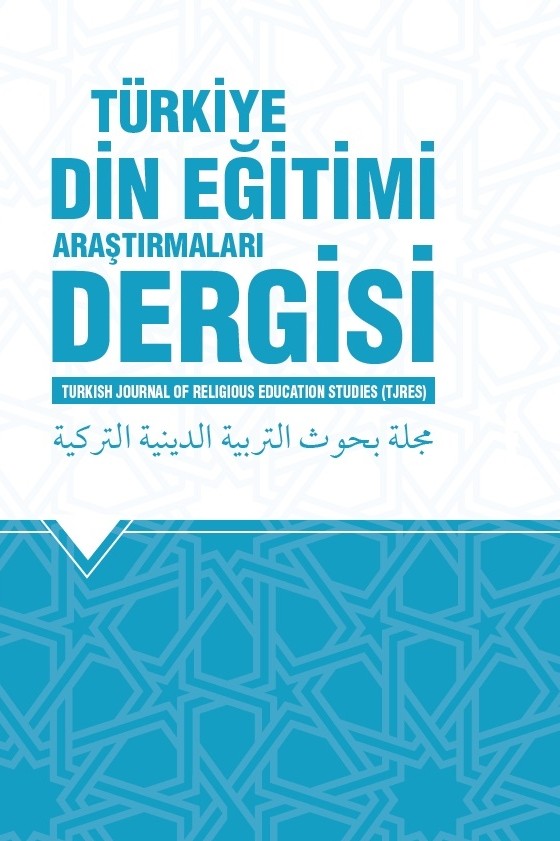
Turkish Journal of Religious Education Studies (TUDEAR) is published semi-annually with content of Turkish, English and German articles being evaluated by academics expert in the field.

In addition, TUDEAR has made it a duty to publish different types of articles from different fields in addition to scientific studies on education and religious education.

TUDEAR, the science of religious education in the basic field of Theology; researches on the philosophy, approach and models of education and religious education, history, methodology and its problems as well as scholarly works such as introduction of books and theses along with news on symposiums, seminars, conferences, panels, news on those who have passed away as well as evaluations.

The prerequisite for acceptance of the articles sent for review is that they should not have been printed anywhere else. The presented articles are first evaluated by the editorial board. If the article meets the desired content and stylistic conditions, it is subject to further evaluation with regard to whether it is suited for publication or not.

All articles are evaluated by two referees and are sent to a third referee if required. The publication of an article is subject to referee approval. The authors are obliged to make the required revisions on their texts.

The target audience of TUDEAR is professionals who continue their research in the field of Religious Education and students, readers and institutions interested in this field.

The copyrights of the works published in TUDEAR belong to their authors. Authors give permission for TUDEAR to publish their intellectual work under the Creative Commons Attribution-NonCommercial 4.0 International (CC BY-NC 4.0) license.

Please send your articles to our journal by including them in the "TUDEAR Article Template".

Turkish Journal of Religious Education Studies (TUDEAR), which is published semi-annually, has a structure in which both Turkish and English articles are evaluated by expert academics.
In order for the articles submitted for evaluation to be accepted, it is required that they have not been published anywhere before. Submitted articles are first reviewed by the editorial board. If an article meets the necessary conditions in terms of content and style, the reviewers then review the article for suitability for publication.

All articles are evaluated by two referees and, if deemed necessary, are sent to a third referee. Publication of an article is subject to the approval of the referees. Authors are obliged to make the necessary corrections requested by the referees.
In general, submitted manuscripts should be in the following format:

Articles Articles should be at least 5000 and at most 8000 words.
Manuscripts should be typed in MS Word processor with normal margins, 9.5 point Calibri font and 1.15 line spacing, justified on both sides.
Tables, figures, illustrations and charts should be of a size appropriate to the page of the journal. If necessary, they may be typed in smaller font size and single-spaced.

Tables and charts should be numbered sequentially according to their appearance in your manuscript. Footnotes to the tables should be placed just below the body of the table and should be identified by lowercase identifying letters. Avoid using vertical rulers. As few tables as possible should be used and care should be taken to ensure that the data presented in the tables are not identical to results already presented elsewhere in the article.

A separate page should be created and should include the full name(s) and institutional title(s) of the author(s) and the postal address(es), work/mobile telephone number(s), e-mail address(es) of the corresponding author(s).
The manuscript should include the following sections:

A 150-200 word abstract with a title in Turkish and 5-8 keywords.
A title in English and a 150-200 word abstract containing 5-8 keywords.
In addition, articles written in Turkish should be accompanied by an Extended English Abstract. This extended abstract should be between 1500-2000 words and should include the title, subheadings and all references of the article. This section can also be submitted after the manuscript has been accepted for publication.

The format used by TUDEAR for referencing is APA (American Psychological Association) Style 7th Edition. In both the citation and bibliography sections, authors should follow the spelling rules and format specified in the Publication Manual of the American Psychological Association, published by the American Psychological Association.

For the first step of the publication process, manuscripts should be submitted through the Online Application System. A confirmation message will be automatically sent to your e-mail address immediately after submission. If you do not receive this message, please contact us via e-mail at mehmetbahcekapili@gmail.com and emingul08@gmail.com.

All transactions must be followed through the online system. Please follow the instructions provided to you during these procedures.

TUDEAR does not charge any submission or publication fee to authors.

Publication Ethics Principles

Publication Ethics can be defined as a self-regulatory mechanism that insists on integrity on behalf of authors, reviewers and publishers to establish higher standards of editorial processing. Ethical standards for publication exist to ensure high-quality scientific publications, public trust in scientific findings, and respect for people's opinions.
 Honest researchers do not plagiarize.
 They do not misattribute sources.
 They do not hide objections they cannot refute.
• They do not distort opposing views.
• They do not destroy or hide data.

Peer-reviewed studies are studies that support and actualize the scientific method. At this point, it is of great importance that all parties involved in the publication process (authors, readers and researchers, publisher, referees and editors) comply with ethical principles. Turkish Journal of Religious Education Studies (TUDEAR) adheres to national and international standards in research and publication ethics. It complies with the Press Law, the Law on Intellectual and Artistic Works and the Directive on Scientific Research and Publication Ethics of Higher Education Institutions. TUDEAR has adopted the International Ethical Publishing Principles published by the Committee on Publication Ethics (COPE), Directory of Open Access Journals (DOAJ), Open Access Scholarly Publishers Association (OASPA) and World Association of Medical Editors (WAME). It is also committed to abide by the decisions of the Turkish Editors' Workshop.
Press Law (National Legislation)
 Law on Intellectual and Artistic Works (National Legislation)
• Higher Education Institutions Scientific Research and Publication Ethics Directive (National Legislation)
 Transparency and Best Practice Principles in Academic Publishing (International Criteria)
 Turkey Editors' Workshop Decisions (National Criteria)

Replay
Republishing is the publication of the same article or substantially similar articles in more than one journal. The editor sends such an article back without review. The editor may then impose an embargo on the author who has attempted to republish for a certain period of time, make a public announcement in the journal in which the author has previously published (perhaps in a simultaneous announcement with the editor of the journal that published the previous article), or all of these measures together.

Simultaneous submission of the same work to more than one journal
Authors may not submit the same article to more than one journal at the same time. If the editor learns of possible simultaneous submission, he/she reserves the right to consult with the other editor(s) receiving the manuscript. In addition, the editor may return the manuscript without review or reject the manuscript without considering the reviews, or take this decision in discussion with the other editor(s) involved, and may decide not to accept submissions from authors for a certain period of time. It may also write to the authors' employers or take all of these measures together.

Control to Prevent Plagiarism
Plagiarism is presenting the ideas, methods, data, applications, writings, figures or works of others as one's own work, in whole or in part, without citing the authors in accordance with scientific rules.
TUDEAR screens all submitted articles to prevent plagiarism. Studies submitted for review are checked for plagiarism using Ithenticate software. The similarity rate is expected to be less than 15%. The main measure of similarity is the author's compliance with the citation and citation rules. If the similarity rate is 1%, but the citation and quotation are not done properly, plagiarism may still be in question. In this respect, citation and quotation rules should be known and carefully applied by the author.
Plagiarism, duplication, false authorship/ denied authorship, research/data fabrication, article slicing, slicing and dicing, copyright infringement and concealment of conflict of interest are considered unethical behaviors. All articles that do not comply with accepted ethical standards are removed from publication. This includes articles that contain possible irregularities or non-compliances detected after publication.

Forgery
Producing data that is not based on research, editing or modifying the submitted or published work based on untrue data, reporting or publishing them, and presenting a research that has not been conducted as if it has been conducted.
Falsifying research records and data obtained, showing methods, devices and materials that were not used in the research as if they were used, not evaluating data that do not comply with the research hypothesis, manipulating data and/or results to fit the relevant theory or assumptions, falsifying or shaping the research results in line with the interests of the persons and organizations supported.

Protection of Participants' Personal Data
TUDEAR requires that all research involving personal or sensitive data or materials relating to human participants that are not legally publicly available be subject to formal ethical review.
Addressing Allegations of Research Misconduct
TUDEAR adheres to COPE's Ethical Toolkit for a Successful Editorial. TUDEAR editors will take measures to prevent the publication of manuscripts in which plagiarism, citation manipulation, data falsification, data fabrication, and other research misconduct has occurred. In no case will TUDEAR editors knowingly allow such misconduct to occur. In the event that TUDEAR editors become aware of any allegations of research misconduct related to an article published in their journal, they will follow COPE's guidelines regarding allegations.

Ethical Violation Notifications
If readers notice a significant error or inaccuracy in an article published in TUDEAR or have any complaints about the editorial content (plagiarism, duplicate articles, etc.), they can send an e-mail to tudearjournal@gmail.com. We welcome submissions and will respond quickly and constructively, as they provide an opportunity for improvement.

Correction, Retraction, Expression of Concern
Editors may consider publishing a correction if minor errors are identified in the published article that do not affect the findings, interpretations and conclusions. Editors should consider retracting the manuscript if there are major errors/violations that invalidate the findings and conclusions. Editors should consider issuing a statement of concern if there is a possibility of research or publication misconduct by the authors; there is evidence that the findings are unreliable and that the authors' institutions have not investigated the incident; or the potential investigation seems unfair or inconclusive. COPE and ICJME guidelines are followed regarding correction, retraction or expression of concern.

Publication of Studies Based on Surveys and Interviews
TUDEAR adopts the Committee on Publication Ethics' (COPE) "Code of Conduct and Best Practice Guidelines for Journal Editors" and "Code of Conduct for Journal Publishers" in order to provide ethical assurance in scientific periodical publishing. In this context, the following points should be followed in the studies submitted to the journal:
1) For research in all disciplines that require ethics committee approval (ethics committee approval must be obtained, this approval must be stated and documented in the article.
2) In studies requiring ethics committee approval, information about the permission (name of the committee, date and number) should be included in the method section and on one of the first/last pages of the article; in case reports, information on the signing of the informed consent form should be included in the article.

Special Issue Publication Policy
A special issue may be published once a year upon the request of the Editorial Board. Articles submitted for inclusion in the special issue are first subjected to a preliminary editorial review. Then they are examined for compliance with the journal's spelling rules and similarity screening is performed to prevent plagiarism. After these stages, they are taken into the peer review process in which the double blind model is used.

Editorial Confidentiality Obligation
TUDEAR editors treat all submitted manuscripts as confidential documents, which means that they will not disclose information about a manuscript to anyone without the authors' permission. During the manuscript review process, the following people have access to the manuscripts: Editors, Reviewers, Editorial Board Members. The only situation in which details about a manuscript may be passed to a third party without the authors' permission is if the editor suspects serious research misconduct.

Allegations-Suspicions of Scientific Misconduct
There are different definitions of scientific misconduct. We address these issues on a case-by-case basis as TUDEAR follows guidance established by major publication ethics bodies. If the editor suspects or alleges an ethical violation, they are obliged to take action. This duty extends to both published and unpublished articles. The editor should not simply reject articles raising concerns about possible misconduct. They are ethically obliged to follow up on alleged cases. The editor should follow COPE flowcharts where appropriate. Editors should first seek a response from those suspected of misconduct. If they are not satisfied with the response, they should ask the relevant employer or organization to investigate. The editor should make all reasonable efforts to ensure that an appropriate investigation into the alleged misconduct is conducted; if this fails, the editor should make all reasonable attempts to insist on a resolution to the problem. This is an onerous but important task.
TUDEAR follows COPE's Ethical Toolkit for a Successful Editorial Office. TUDEAR editors will take measures to prevent the publication of articles in which plagiarism, citation manipulation, data falsification, data fabrication, and other research misconduct have occurred. Under no circumstances will TUDEAR or its editors knowingly allow such misconduct to occur. If TUDEAR editors become aware of any allegations of research misconduct related to an article published in their journal, they will follow COPE's guidelines regarding allegations.
Reviewers should inform the Editor if they suspect research or publication misconduct. The Editor is responsible for taking appropriate action, following COPE recommendations.
TUDEAR is committed to following the COPE flowcharts when faced with allegations of misconduct on the following or similar issues.
• What to do when republication is suspected
• What to do when plagiarism is suspected
• What to do when fabricated data is suspected
• What to do when requesting a change of authorship
• What to do when an undisclosed conflict of interest is suspected
• What to do when unfair or gift authorship is suspected
• What to do when an ethical problem is suspected in an article
• What to do when directly notified of a suspected ethical violation by e-mail, etc.
• What to do when a suspected ethical violation is announced via social media

Complaint Procedure
This procedure applies to complaints about content, procedures or policies that are the responsibility of TUDEAR or our editorial staff. Complaints can provide an opportunity and incentive for improvement, and we aim to respond quickly, courteously and constructively.
The complaint must relate to content, procedures or policies that are the responsibility of TUDEAR or our editorial team. Complaints should be emailed directly to tudearjournal@gmail.com and will be treated confidentially. The editor responds to complaints immediately. The editor follows the procedure outlined in the COPE flowchart regarding complaints.
Complaints are reviewed by the relevant member of the editorial team and, if not resolved, the following processes are followed:
• If this initial response is deemed inadequate, the complainant may request that the complaint be escalated to a more senior member of the journal.
• If the complainant is not satisfied, the complaint may be forwarded to the editor-in-chief.
• A full response will be provided within two weeks, if possible.
COPE publishes a code of practice for editors of scientific journals. This will facilitate the resolution of disputes with editors, journals and publishers, but only after the journal's own complaints procedures have been exhausted.

Appeal Process
We welcome serious objections to the evaluations made by editors and reviewers. If you feel that we have rejected your paper because we misunderstood its scientific content, please send an appeal message to our editorial team at tudearjournal@gmail.com. Do not attempt to submit a revised version of your article at this stage. If, after reading your appeal letter, we realize that your appeal is justified, we may invite you to submit a revised version of your manuscript. Your paper will then be resubmitted to the external reviewer process. Please include as much detail as possible in the appeal letter. Finally, we can only consider one appeal per article, so please take the time and effort to write a detailed letter to make your appeal clear - you have one chance, so use it well. We have found that prolonged deliberation over rejected papers is often unsatisfactory for both authors and editors, so we do not process multiple appeals for the same study.

Conflicts of Interest
A conflict of interest occurs when professional judgment about a primary interest may be influenced by a secondary interest (such as financial gain or personal competition). We believe that we need to know the competing interests of the authors in order to make the best decision about how to handle an article, and that if we publish the article, readers need to know them too.
Any interest, financial or otherwise, that could cause one to be conflicted in one's work, significantly impair one's objectivity, or give an unfair advantage to any person or organization. All sources of financial support received during the conduct of the research and preparation of the manuscript and the role of sponsors in the study should be disclosed. If there is no source of funding, this should also be indicated. Examples of potential conflicts of interest that should be disclosed include consultancies, salaries, grants. Potential conflicts of interest should be disclosed at the earliest possible stage.
TUDEAR has a set process for handling submissions from editors, staff or editorial board members to ensure impartial review. Such submissions are first referred to other journals. If this is not possible, the author of the submission is suspended from the journal. These submissions are reviewed in a double blind process.
The editor should not be involved in decisions about manuscripts written by him/herself or family members. Furthermore, such a paper should be subject to all the usual procedures of the journal. The editor should follow ICMJE guidelines on disclosure of potential conflicts of interest by authors and reviewers.

Principles of Research Ethics
TUDEAR observes the highest standards in research ethics and adopts the international principles of research ethics defined below. It is the responsibility of the authors to ensure that manuscripts comply with ethical guidelines.
• The principles of integrity, quality and transparency must be ensured in the design, review of the design and conduct of the research.
• The research team and participants should be fully informed about the purpose of the research, its methods and possible anticipated uses, and the requirements and risks, if any, of participation in the research.
• Confidentiality of information provided by research participants and confidentiality of respondents must be ensured. The research should be designed to protect the autonomy and dignity of the participants.
• Research participants should take part in the research voluntarily and should not be under any coercion.
• Harm to participants should be avoided. The research should be planned in a way that does not put participants at risk.
• Research independence must be clear and explicit; any conflict of interest must be disclosed.
• In experimental studies with human subjects, the written informed consent of the participants who decide to participate in the research must be obtained. Consent must be obtained from the legal guardian of children and those under guardianship or with a confirmed mental illness.
• If the study will be conducted in any institution or organization, approval must be obtained from this institution or organization that the study will be conducted.
• In studies with a human element, it should be stated in the "method" section that "informed consent" has been obtained from the participants and ethics committee approval has been obtained from the institution where the study is conducted.

All expenses of the Journal of Turkish Religious Education Studies are covered by the publisher. The publication of articles in the journal and the execution of article processes are not subject to any fee. No processing or submission fee is charged for articles submitted to the journal or accepted for publication.

Editor

Religious Education, Religion, Society and Culture Studies

Assistant Editors

Recep Emin Gül
Assoc. Prof. Dr. Recep Emin GÜL YALOVA ÜNİVERSİTESİ, İSLAMİ İLİMLER FAKÜLTESİ

He was born in 1990 in Istanbul. He graduated from Kartal Anatolian Imam Hatip High School in 2008 and from Marmara University, Faculty of Theology in 2012. He worked as a research assistant at Van Yuzuncu Yil University, Faculty of Theology between 2012-2017 and at Izmir Katip Çelebi University, Faculty of Islamic Sciences, Department of Hadith between 2017-2020. He completed his MA in 2014 with his thesis titled The Use of Hadith in Shia Tafsir -The Example of Al-Ayyashi Tafsir- and his PhD in 2019 with his thesis titled The Effect of Geography and Culture on Hadith Narration during the Period of the Companions. He currently works as a faculty member at Balıkesir University, Faculty of Theology, Department of Hadith.

Hadith
Default avatar
Asst. Prof. Dr. Ali İNAN YALOVA ÜNİVERSİTESİ
Sociology of Religion

Field Editors

Abdurrahman Hendek
Assoc. Prof. Dr. Abdurrahman HENDEK SAKARYA UNIVERSITY, FACULTY OF THEOLOGY Web
Çanakkale Onsekiz Mart Üniversitesi İlahiyat Fakültesi (2008) King's College London, MA in Religious Education (2011) University of Oxford, DPhil in Education (2018)
Religious Education
Default avatar
Asst. Prof. Dr. Samet YAĞCI İZMİR KATİP ÇELEBİ ÜNİVERSİTESİ, İSLAMİ İLİMLER FAKÜLTESİ
Religious Education, Other Fields of Education (Other), Religious Studies (Other)
Münir Ecer
Assoc. Prof. Dr. Münir ECER Division of Religious Education, Van Yüzüncü Yıl University, Faculty of Theology, Van, Türkiye Web
Religious Education
Ahmet Çakmak
Assoc. Prof. Dr. Ahmet ÇAKMAK KOCAELİ ÜNİVERSİTESİ, İLAHİYAT FAKÜLTESİ
Religious Education

Language Editors

Default avatar
Asst. Prof. Dr. Ali İNAN YALOVA ÜNİVERSİTESİ
Sociology of Religion

Editorial Board

Muhsin AKBAŞ, İzmir Kâtip Çelebi Üniversitesi (TÜRKİYE)
Hamza AKTAŞ, Düzce Üniversitesi (TÜRKİYE)
Nurullah ALTAŞ, Yalova Üniversitesi (TÜRKİYE)
Sümeyra ARICAN, Yalova Üniversitesi (TÜRKİYE)
Ednan ASLAN, Universität Wien (AUSTRIA)
Mehmet BAHÇEKAPILI, Yalova Üniversitesi (TÜRKİYE)
İrfan BAŞKURT, İstanbul Üniversitesi (TÜRKİYE)
Ahmet Ali ÇANAKÇI, Balıkesir Üniversitesi (TÜRKİYE)
Mohammed DERRADJ, University of Algeria II (ALGERIA)
Recai DOĞAN - Ankara Üniversitesi (TÜRKİYE)
Ayşe Zişan FURAT, İstanbul Üniversitesi (TÜRKİYE)
Christopher G. ELLISON, The University of Texas at San Antonio (USA)
Ahmet GEDİK, İzmir Kâtip Çelebi Üniversitesi (TÜRKİYE)
Süleyman GÜMÜŞ, Kırklareli Üniversitesi (TÜRKİYE)
Recep Emin GÜL, Balıkesir Üniversitesi (TÜRKİYE)
Nazlı KARABULUT, Yalova Üniversitesi (TÜRKİYE)
Recep KAYMAKCAN, Millî Eğitim Müşaviri (TÜRKİYE)
Ahmet KOÇ, 29 Mayıs Üniversitesi (TÜRKİYE)
Siebren MIEDEMA, VU University Amsterdam (HOLLAND)
Michael NIELSEN, Georgia Southern University (USA)
Mahiyenur OĞUZ, Yalova Üniversitesi (TÜRKİYE)
Muhittin OKUMUŞLAR, Necmettin Erbakan Üniversitesi (TÜRKİYE)
Mehmet Furkan ÖREN, Millî Eğitim Bakanlığı (TÜRKİYE)
Friedrich SCHWEITZER, Eberhard Karls University (GERMANY)
Murat ŞİMŞEK, Marmara Üniversitesi (TÜRKİYE)
Cemal TOSUN, Ankara Üniversitesi (TÜRKİYE)
Bülent UÇAR, Universität Osnabrück (GERMANY)
Mustafa USTA, Marmara Üniversitesi (TÜRKİYE)
Edmund WEBER, Universität Frankfurt am Main (GERMANY)
Ayşenur YILDIRIM IŞIKER, Yalova Üniversitesi (TÜRKİYE)
Mahmut ZENGİN, Sakarya Üniversitesi (TÜRKİYE)
Zeki Salih ZENGİN, Yıldırım Beyazıt Üniversitesi (TÜRKİYE)
Rümeysa ZOR, Yalova Üniversitesi (TÜRKİYE)
Muhsin Akbaş
Prof. Dr. Muhsin AKBAŞ İzmir Kâtip Çelebi Üniversitesi, İlahiyat Fakültesi Web
Philosophy of Religion
Süleyman Akyürek
Prof. Dr. Süleyman AKYÜREK ERCİYES ÜNİVERSİTESİ, İLAHİYAT FAKÜLTESİ, FELSEFE VE DİN BİLİMLERİ BÖLÜMÜ Web
Religious Education
History of Islam
Default avatar
Prof. Dr. Muhammet Şevki AYDIN NEVŞEHİR HACI BEKTAŞ VELİ ÜNİVERSİTESİ
Religious Education
Religious Education, Religion, Society and Culture Studies
Default avatar
Prof. Dr. İrfan BAŞKURT İSTANBUL ÜNİVERSİTESİ, HASAN ALİ YÜCEL EĞİTİM FAKÜLTESİ
Education
Default avatar
Assoc. Prof. Dr. Ahmet Ali ÇANAKCI BALIKESİR ÜNİVERSİTESİ
Instructional Design, Religious Education
Recai Doğan
Prof. Dr. Recai DOĞAN KIRGIZİSTAN-TÜRKİYE MANAS ÜNİVERSİTESİ
Religion, Society and Culture Studies
Hamit Er
Prof. Dr. Hamit ER ORDU ÜNİVERSİTESİ, İLAHİYAT FAKÜLTESİ
Religious Education
Recep Emin Gül
Asst. Prof. Dr. Recep Emin GÜL YALOVA ÜNİVERSİTESİ, İSLAMİ İLİMLER FAKÜLTESİ

He was born in 1990 in Istanbul. He graduated from Kartal Anatolian Imam Hatip High School in 2008 and from Marmara University, Faculty of Theology in 2012. He worked as a research assistant at Van Yuzuncu Yil University, Faculty of Theology between 2012-2017 and at Izmir Katip Çelebi University, Faculty of Islamic Sciences, Department of Hadith between 2017-2020. He completed his MA in 2014 with his thesis titled The Use of Hadith in Shia Tafsir -The Example of Al-Ayyashi Tafsir- and his PhD in 2019 with his thesis titled The Effect of Geography and Culture on Hadith Narration during the Period of the Companions. He currently works as a faculty member at Balıkesir University, Faculty of Theology, Department of Hadith.

Hadith
Default avatar
Assoc. Prof. Dr. Hakkı KARAŞAHİN İZMİR KATİP ÇELEBİ ÜNİVERSİTESİ, İSLAMİ İLİMLER FAKÜLTESİ
Sociology of Religion
Default avatar
Prof. Dr. Mustafa KÖYLÜ ONDOKUZ MAYIS UNIVERSITY
Default avatar
Asst. Prof. Dr. Ahmet GEDİK izmir katip çelebi üniversitesi
Political and Civilization History of Islam
Default avatar
Dr. Samet YAĞCI İZMİR KATİP ÇELEBİ ÜNİVERSİTESİ, İSLAMİ İLİMLER FAKÜLTESİ
Religious Education, Other Fields of Education (Other), Religious Studies (Other)
Abdurrahman Hendek
Assoc. Prof. Dr. Abdurrahman HENDEK SAKARYA UNIVERSITY, FACULTY OF THEOLOGY Web
Çanakkale Onsekiz Mart Üniversitesi İlahiyat Fakültesi (2008) King's College London, MA in Religious Education (2011) University of Oxford, DPhil in Education (2018)
Religious Education

Editorial Board

Muhammet Fatih Genç
Prof. Dr. Muhammet Fatih GENÇ KOCAELİ ÜNİVERSİTESİ
Values ​​education, Religious Education, Religion, Society and Culture Studies
Religious Education
Default avatar
Res. Assist. Nazlı YILMAZ YALOVA ÜNİVERSİTESİ, İSLAMİ İLİMLER FAKÜLTESİ, İSLAM TARİHİ VE SANATLARI BÖLÜMÜ, İSLAM TARİHİ ANABİLİM DALI
History of Islam
Sociology of Religion, Religious Studies (Other)
Religious Education, Religion, Society and Culture Studies
Default avatar
Res. Assist. Ayşenur IŞIKER YALOVA ÜNİVERSİTESİ, İSLAMİ İLİMLER FAKÜLTESİ, İSLAMİ İLİMLER PR.
Religious Studies (Other)
Default avatar
Res. Assist. Rumeysa ZOR YALOVA ÜNİVERSİTESİ, İSLAMİ İLİMLER FAKÜLTESİ, FELSEFE VE DİN BİLİMLERİ BÖLÜMÜ, DİN EĞİTİMİ ANABİLİM DALI
Religious Education
Default avatar
Prof. Dr. Michael NIELSEN Georgia Southern University

Professor of Psychology, Georgia Southern University

Psychological Foundations of Education, Psychology of Religion, Applied and Developmental Psychology
Default avatar
Asst. Prof. Dr. Süleyman GÜMÜŞ KIRKLARELİ ÜNİVERSİTESİ Web

1988 Yılında Konya’nın Hadim ilçesinde doğdu. İlköğretimi Bademli İlköğretim Okulu’nda, liseyi Karaman Anadolu İmam-Hatip Lisesi’nde tamamladı. 2010’da Marmara Üniversitesi Atatürk Eğitim Fakültesi Din Kültürü ve Ahlak Bilgisi Öğretmenliği Bölümünü bitirdi. 2010-2012 yılları arasında MEB’e bağlı Kağıthane Ziyapaşa İlköğretim Okulu’nda Din Kültürü ve Ahlak Bilgisi dersi öğretmeni olarak çalıştı. 2012-13 yılları arasında Kahramanmaraş Sütçü İmam Üniversitesi İlahiyat Fakültesi İlköğretim Din Kültürü ve Ahlak Bilgisi Eğitimi Anabilim Dalı’nda araştırma görevlisi olarak bulundu. 2013’te yüksek lisans eğitimini “İlköğretim Din Kültürü ve Ahlak Bilgisi Programının (2010) Program Geliştirme İlkeleri Açısından Bir Değerlendirmesi” isimli teziyle İstanbul Üniversitesi Sosyal Bilimler Enstitüsü Felsefe ve Din Bilimleri Anabilim Dalı’nda tamamladı. 2013-2019 tarihleri arasında, İstanbul Üniversitesi İlahiyat Fakültesi Din Eğitimi Anabilim Dalı’nda araştırma görevlisi olarak çalıştı. 2019 Yılında “Güvenlik Toplumunda Dindarlık ve Din Eğitimi: Soybilimsel Bir Analiz” isimli çalışması ile İstanbul Üniversitesi Sosyal Bilimler Enstitüsü Felsefe ve Din Bilimleri Anabilim Dalı’nda doktora eğitimini tamamladı. 2020 yılından beri Kırklareli Üniversitesi İlahiyat Fakültesi Din Bilimleri ABD’de çalışmaktadır. Din eğitimi nazariyatı, öğretim programları, eğitim felsefeleri alanlarında çalışmalar yapmaktadır. Evli ve bir çocuk babasıdır.  

Religious Education
Mahmut Zengin
Prof. Dr. Mahmut ZENGİN Sakarya Üniversitesi, İlahiyat Fakültesi, Felsefe ve Din Bilimleri Bölümü / Sakarya University, Faculty of Theology, Department of Philosophy and Religious Sciences Web

Prof. Mahmut Zengin completed his undergraduate education in the field of Theology (2000), his master's degree (2004) and his doctorate (2010) in Religious Education at Marmara University. In 2011, he was appointed to Sakarya University, Faculty of Theology, Department of Philosophy and Religious Sciences as an Assistant Professor. Zengin, who became an Associate Professor in 2016, became a Professor in the field of Religious Education in 2023. Prof. Zengin currently works for Sakarya University, Faculty of Theology, Department of Philosophy and Religious Sciences. Prof. Zengin has many articles published in journals indexed in national and international directories. Prof. Zengin's research areas include religious studies, Islamic education, values ​​education, religious teaching in curricula and textbooks, and religious teaching methods.


Curriculum and Instration , Religious Education

1976 yılında Hendek/Sakarya’da doğdu. Hendek Şehit Mahmut Bey İlköğretimi (1987), Hendek İmam-Hatip Lisesi (1996) ve Uludağ Üniversitesi İlahiyat Fakültesi (2002) mezunudur. Yüksek Lisansını, Marmara Üniversitesi Sosyal Bilimler Enstitüsü İlahiyat Anabilim Dalı Din Eğitimi Bilim Dalı’nda “Ömer Çam Hoca Hayatı, Eserleri ve Eğitim Anlayışı” adlı teziyle 2005’te tamamladı. 2002 yılından 2012 yılının Haziran ayına kadar Diyanet İşleri Başkanlığı’nda Din Görevlisi olarak vazifesini sürdürdü. 2012 yılının mart ayında Marmara Üniversitesi Sosyal Bilimler Enstitüsü İlahiyat Anabilim Dalı Din Eğitimi Bilim Dalı’nda “Din Eğitimi Açısından Kur’ân’da Nefis Kavramı” adlı tezini savunarak Doktorasını tamamladı. 2012 yılının Haziran ayında, Gümüşhane Üniversitesi İlahiyat Fakültesi Din Sosyolojisi Anabilim Dalına öğretim üyesi olarak atandı. 2012 yılının Eylül ayında, Gümüşhane Üniversitesi İlahiyat Fakültesi İlköğretim Din Kültürü ve Ahlak Bilgisi Öğretmenliği Bölümü öğretim üyeliğine atandı. 2013-2019 yılları arasında Gümüşhane Üniversitesi İlahiyat Fakültesi İlköğretim Din Kültürü ve Ahlak Bilgisi Öğretmenliği Bölüm Başkanlığını yürütmüştür. 2019-2021 yılları arasında Gümüşhane Üniversitesi İlahiyat Fakültesi Felsefe ve Din Bilimleri Bölüm Başkanlığı yapmıştır. 16.02.2022 tarihinde Düzce Üniversitesi İlahiyat Fakültesi'nde yeni görevine başlamıştır. 16.08.2023 tarihinden itibaren Düzce Üniversitesi Çocuk ve Gençlik Eğitimi Uygulama ve Araştırma Merkez Müdürlüğünü yürütmektedir. Evli ve dört çocuk babası olan Aktaş’ın ulusal ve uluslararası dergi ve kitaplarda yayınlanmış olan çeşitli eser ve makaleleri bulunmaktadır.

Religious Education
Recep Kaymakcan
Prof. Dr. Recep KAYMAKCAN It is not affiliated with an institution

Prof. Dr. Recep KAYMAKCAN
1990 yılında Marmara Üniversitesi İlahiyat Fakültesinden mezun oldu. YÖK bursiyeri olarak gittiği İngiltere Leeds Üniversitesinde doktorasını 1998’de tamamladı. Aynı yıl Sakarya Üniversitesi İlahiyat Fakültesine Din Eğitimi Anabilim Dalına öğretim üyesi olarak atandı. 2002 yılında doçent ve 2007 yılında profesör unvanını aldı. 2013 yılında KYK Genel Müdürü olarak atanan Kaymakcan daha sonra GSB Bakanlık Müşaviri oldu. 2003-2018 yılları arasında akademik “Değerler Eğitimi Dergisi” editörlüğünü yaptı. Uluslararası Din ve Değerler Eğitimcileri Derneği üyesidir.
Akademik uzmanlık ve ilgi alanları:

Karşılaştırmalı din eğitimi, din eğitiminde program geliştirme, eğitim politikaları, değerler ve gençlik, insan hakları ve din eğitimi, okul öncesi din ve ahlak eğitimi, Diyanet ve din algısı.
Akademik çalışmalarından seçmeler:
Günümüz İngilteresinde Din Eğitimi, DEM Yayınları: İstanbul, 2004; Yeni Ortaöğretim Din Kültürü ve Ahlak Bilgisi Program İnceleme ve Değerlendirme Raporu, Sabancı Üniversitesi Eğitim Reformu Girişimi, Myra Yapım: İstanbul, 2007; Ahlak, Değerler ve Eğitimi, DEM Yayınları: İstanbul, 2020, 3. basım (H. Meydan’la birlikte); Türkiye’de Okul Öncesi Din ve Ahlak Eğitimi Raporu, EBSAM Stratejik Araştırmalar Merkezi, Ankara, 2021; Gençlerin Dine Bakışı ve Okullarda Din-Değerler Öğretimi, DEM Yayınları: İstanbul, 2021; Diyanet Çalışanlarının Sorunları Beklentileri, Din-Diyanet Algıları Araştırması, Diyanet-Sen, Ankara, 2023 (S. Yurdakul ile), Erken Çocuklukta Dini-Ahlaki Gelişim ve Öğrenme (Ed), DEM Yayınları, İstanbul, 2023.
"Christianity in Turkish Religious Education" Islam and Muslim Christian Relationship, vol. 10, no. 3, ss. 279-293, 1999; “İlahiyat Öğrencilerinin Kopya Çekmeye Karşı Yaklaşımları”, Sakarya Üniversitesi İlahiyat Fakültesi Dergisi, sayı 5, ss. 121-138, 2002; “Religious Education Culture in Modern Turkey”, ed. Marian de Souza et al., International Handbook of Religious, Spiritual and Moral Dimensions of Education, Springer, Dortrect (Hollanda), ss. 449-460, 2006; “Turkish Adolescents: High Islamic Faith in Secular State”, eds. H. G. Ziebertz & W. Kay, Religion and Youth in Europe, Lit Verlag, Berlin, ss. 230-245, 2006; “Islam in Turkish Religious Education: From Traditional Understanding to Modern”, ed. E. Aslan, Islamic Textbooks and Curricula in Europe, Peter Lang, New York, ss. 251-272, 2011; “A Model for Islamic Education from Turkey: the Imam-Hatip Schools, British Journal of Religious Education, 29:3, 279-292, 2017 (İ. Aşlamacı ile), “Europen court of human right’ judgements and compulsory religious educatiın in Turkey”, British Journal of Religious Education, 44:1, 2022 (A. Hendek ile), “Cumhuriyetin 100. Yılında Din Eğitimi Mirasımız”, eds. İ. Aşlamacı ve diğerleri (eds), İslam ve Yorum VII İnönü Üniversitesi, Ensar Neşriyat, İstanbul, ss. 11-27.

Education, Values ​​education, Religious Education, Religion, Society and Culture Studies
Psychology of Religion
Nurullah Altaş
Prof. Dr. Nurullah ALTAŞ YALOVA ÜNİVERSİTESİ, İSLAMİ İLİMLER FAKÜLTESİ Web
Education, Religious Education, Philosophy, Social Work, Sociology, Religion, Society and Culture Studies, Islamic Studies (Other)
Ahmet Koç
Prof. Dr. Ahmet KOÇ İstanbul 29 Mayıs Üniversitesi
Religious Education, Islamic Studies (Other)
Muhsin Akbaş
Prof. Dr. Muhsin AKBAŞ İzmir Kâtip Çelebi Üniversitesi, İlahiyat Fakültesi Web
Philosophy of Religion
Recai Doğan
Prof. Dr. Recai DOĞAN KIRGIZİSTAN-TÜRKİYE MANAS ÜNİVERSİTESİ
Religion, Society and Culture Studies
Muhiddin Okumuşlar
Prof. Dr. Muhiddin OKUMUŞLAR NECMETTİN ERBAKAN ÜNİVERSİTESİ, İLAHİYAT FAKÜLTESİ
Religious Education, Islamic Studies (Other)
Zeki Salih Zengin
Prof. Dr. Zeki Salih ZENGİN ANKARA YILDIRIM BEYAZIT UNIVERSITY, FACULTY OF ISLAMIC SCIENCES, DEPARTMENT OF PHILOSOPHY AND RELIGIOUS SCIENCES
Education, Religious Education, History of Ottoman Education, Religion, Society and Culture Studies
Default avatar
Assoc. Prof. Dr. Ahmet Ali ÇANAKCI BALIKESİR ÜNİVERSİTESİ
Instructional Design, Religious Education
Cemal Tosun
Prof. Dr. Cemal TOSUN Ankara Üniversitesi Web
Adult Education, Values ​​education, Other Fields of Education (Other), Religious Studies (Other)
Dina Sijamhodžić-nadarević
Prof. Dr. Dina SİJAMHODžİć-NADAREVİć University of Sarajevo, Faculty of Islamic Studies

Dr. Dina Sijamhodžić-Nadarević is an associate professor teaching pedagogy/religious
pedagogy group of courses and the head of the Chair of Religious Pedagogy and Religious
Psychology at the Faculty of Islamic Studies, University of Sarajevo. She graduated in 2004
from the Faculty of Islamic Studies (Islamic Theology study program) and in 2006 from the
Faculty of Philosophy at the University of Sarajevo, Department of Pedagogy. She completed
her master's degree in Religious Pedagogy at the Faculty of Islamic Studies in Sarajevo in 2009
and obtained her doctorate in 2013 from the Faculty of Philosophy at the University of Sarajevo,
Department of Pedagogy.
She has published four books and over 40 scientific papers (book chapters and articles) in
Bosnian, English, and German. Some of the works she has published include:
A Study on the Competencies of Personnel of the Islamic Community in Bosnia and
Herzegovina: From Acquired to Necessary Competencies (El-Kalem, Sarajevo, 2022);
Evaluation in the System of Quality Assurance of Higher Education (El-Kalem, Sarajevo,
2013); Self-evaluation of Educational Work in Bosnian-Herzegovinian Madrasas (Ilum and
CNS, Sarajevo, 2009); "Research-Based Reform of Madrasa Curriculum in Bosnia and
Herzegovina and its Implications for Fostering Teachers’ Professional Development" (Chapter
14 in the book Supporting Modern Teaching in Islamic Schools Pedagogical Best Practice for
Teachers, Routledge, Taylor & Francis Group, 2022, UK and USA, Scopus index); "Die
Islamische Religionspädagogik in Tradition und Theologie, Eine Spurensuche nach
Merkmalen" (Chapter in the book "Religionspädagogische und fachdidaktische Ansätze,"
Vandenhoeck & Ruprecht, Brill, Germany, 2022); "Bringing The World into University
Educator and Leadership Classes with Virtual Exchange: A Practical Guide for Faculty"
(Chapter in the book "Recipes to Combat the Isms: Volume One: Equity," ICPEL Publications
USA, 2022); "Madrasa Education in Bosnia, Herzegovina" (Chapter in the book "Rethinking
Madrasa Education in a Globalized World," Routledge Taylor & Francis Group, London &
New York, 2018, Scopus index); "Philosophy and Pedagogy of Islamic Education in Today’s
Europe". Journal of Muslims in Europe, BRILL, 2024,13, 365–378. (Scopus index);
"Contribution of Islamic Religious Education to Intercultural Values in Pluralistic European
Cultures: Insights from Bosnia and Herzegovina", Religions 14 (MPDI), no. 4:453 (Scopus,
Web of Science – Q1).

Psychology of Religion, Islamic Studies (Other)

Turkish Journal of Religious Education Studies is licensed under a Creative Commons Attribution-NonCommercial 4.0 International (CC BY-NC 4.0) License.