Current Issue

Issue: 36 , 12/12/25

Year: 2025

Research Article

Review

Sosyal Bilimler alanlarında bilimsel bilgi üretimine katkı sağlamaktır. Bilime yenilik getiren, yeni bir bilimsel yöntem geliştiren veya bilinen bir yöntemi yeni bir alana uygulama niteliğinde olan özgün makalelere yer vermeyi amaçlamaktadır.

Sosyal Bilimler ile ilgili konuları kapsamaktadır. Dergide, Sosyal Bilimlerin alanlarının kapsamına giren tüm konulardaki çalışmalar yayımlanır.

YAZIM KURALLARI

Sosyal Bilimler Enstitüsü Dergisi’nde yayımlanmak üzere gönderilen yazılar sayfanın tek yüzüne yazılmalıdır.
Eserler yazım kurallarına ve makale şablonuna uygun şekilde hazırlandıktan sonra yüklenmelidir.
Yazılar, aşağıda belirtilen yazım kurallarına uyularak hazırlanmalı ve 20 sayfayı geçmemelidir (fotoğraf ve çizimler hariç).
Eserlerin başlangıç sayfasında bulunması gereken bilgiler: Yazar ad(lar)ı, Yazarın Adres(ler)i, E-Posta adres(ler)i, Makalenin Türkçe/İngilizce adı, Makalenin Türkçe/İngilizce özü, Anahtar kelimeler (İngilizce ve Türkçe 3-5 adet)
Eserin kaydedildiği otomasyonda bulunması gereken bilgiler: Yazar Adı ve Unvanı, Makale Adı, Yazar Adresi, E-Posta Adresi, Bağlantı Telefonu
Gönderilen yayınlarda kaynaklardan önce en az 750 kelimelik genişletilmiş özet "SUMMARY" yazılmalıdır.
Yazı karakteri
* Makale başlığı, tamamı büyük harflerle, sayfaya ortalanmış olarak Times New Roman 11 punto-kalın normal
* İngilizce başlık, kelime baş harfleri büyük, sayfaya ortalanmış olarak Times New Roman 10 punto-kalın normal
* Yazar Adı, unvan belirtilmeden, sayfaya ortalanmış olarak Times New Roman 10 punto-bold
* Yazar unvanı, Adresi ve E-Posta, sayfaya ortalanmış olarak Times New Roman 9 punto
* Öz ve Abstract, sayfaya ortalanmış olarak Times New Roman 9 punto-italik (150-200 kelime)
* Bölüm başlıkları ve alt başlıklar, 1 cm boşluk kullanılarak Times New Roman 11 punto-bold
* Metin, Times New Roman 11 punto
*Tablo, Fotoğraf, Harita, Grafik başlıkları, Times New Roman 10 punto
*Tablo içi, Times New Roman 7-9 punto
*Tablo, Fotoğraf, Harita, Grafik kaynağı, Times New Roman 9 punto


Sayfa Düzeni
*Kenar boşlukları Üst:6,5 cm, Alt:5 cm, Sağ:4,5, Sol:4,5
*Girinti sol:0, sağ:0, Paragraf başıboşluğu:1 cm, Aralık Önce: 0 nk, Sonra: 6 nk, Satır Aralığı: tek, Üst bilgi: 5 cm, Alt Bilgi:1,25 cm

Fotoğraf, Harita, Şekil

*Metin içerisinde yer alan fotoğraf, harita ve şekiller 300 dpi çözünürlükte taranmış ve ilgili bölüme yerleştirilmiş olmalıdır

*Metin içerisinde yer alan fotoğraf, harita ve şekiller 300 dpi çözünürlükte taranmış ve ilgili bölüme yerleştirilmiş olmalıdır
*Grafikler hazırlanırken, iç bölümlerde yer alan yazıların okunabilirliğine dikkat edilmeli ve grafik içi taramalarda gri tonlama uygulanmalıdır
Alıntılar
* Alıntılar Metin içinde APA 6 olarak verilmelidir.
* Kaynaklar makalenin son bölümünde “KAYNAKLAR” adı altında verilmelidir.
NOT: Yazım kurallarına uygun olarak yazılmayan yayınlar Editör tarafından reddedilir.

KAYNAKLAR (10 Punto)
-Kaynakça içeriği kitap, dergi ayrımı yapmaksızın soyadı harf sırasına göre sıralanmalıdır ve sonuna nokta konmalıdır (10 Punto).
Brockner, J., Ackerman, G. ve Greenberg, J. (2001). Culture and procedural justice: The influence of power distance on reactions to voice.
Journal of Experimental Social Psychology, 37(4), 300-315. doi: 10.1037/1076-8998.13.1.10.
Tonta, Y., Bitirim, Y. ve Sever, H. (2002). Türkçe arama motorlarında performans değerlendirme (5.b).
Ankara: Total Bilişim.
Yıldız, S. (2011). Entelektüel sermaye. İstanbul: Türkmen Kitabevi.
Yıldız, S. ve Baştürk, F. (2013). Kars ili marka varlıklarının tüketici temelli değer ölçümü araştırması. TODAİE Çağdaş Yerel Yönetimler, 22(4), 75-90.

Ethical Principles and Publication Policy

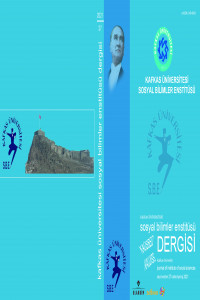
The Journal of the Institute of Social Sciences of Kafkas University applies the internationally accepted principles on the subject of ethical situations, mistakes or renunciations. It is among the critical responsibilities of the editorial board to prevent the publication of scientific studies submitted to the journal from being discontinued. Any example of unethical behavior that can be observed in scientific studies is unacceptable. It has been declared by the authors that the content of scientific research sent to the journal was prepared by using original sources.
Kafkas University Journal of Social Sciences Institute has adopted the basic principle of fulfilling its publishing responsibilities based on the "Code of Conduct for Journal Editors" (COPE Code of Conduct for Journal Editors). In line with this principle, the editorial board, referees and authors are obliged to comply with the procedures in the journal application and evaluation processes within the scope of ethical committees. The Journal of the Institute of Social Sciences of Kafkas University states that any unethical work that includes ethical violations such as misuse of other people's work and conflict of interest is unacceptable and all legal rights are reserved. In this context, the articles sent to the journal are accepted after passing through the plagiarism program (Ithenticate). The similarity rate of the article sent to the journal should not be more than 20%.
This is an open access journal meaning that all content is freely available to the user or institution at no cost. Users may read, download, copy, distribute, print, search, or link to the full texts of the articles, or use them for any other lawful purpose, without prior permission from the publisher or author. This conforms to BOAI's definition of open access.
Kafkas University Institute of Social Sciences DBu is an open access journal meaning that all content is freely available to the user or institution at no cost. Users may read, download, copy, distribute, print, search, or link to the full texts of the articles, or use them for any other lawful purpose, without prior permission from the publisher or author. This conforms to BOAI's definition of open access. It is an open access journal, meaning that all content is freely available to the user or institution at no cost. Users may read, download, copy, distribute, print, search, or link to the full texts of the articles, or use them for any other lawful purpose, without prior permission from the publisher or author. This conforms to BOAI's definition of open access. The editorial board of the Journal of the Institute of Social Sciences of Kafkas University took one by one under the headings of referee and author responsibilities and scientific principles and stated the "Journal Editors' Code of Conduct for Journal Editors" under the title of publication ethics and abuse declaration, in accordance with the "Code of Conduct for Journal Editors".
Editors' Responsibilities
Editor, editorial board, publication decisions to be followed by the field editor, responsibilities for confidentiality, information and differences of opinion are listed below.
Publishing Decisions: The editor is responsible for making the publication decision as a result of the review of the articles sent to the journal by the field editors and the evaluation of the referees. Editors evaluate the publications without considering the ethnicity, race, gender, sexual orientation, religious belief, sect, nationality, political view or article suggestions of the authors in their decisions taken during the publication process. The editor's decision is based on the journal's purpose, scope, originality and importance of the study, validity and relevance of the study stated by the Journal of the Institute of Social Sciences of Kafkas University.
Confidentiality: The Editorial Board cannot share scientific studies sent to the Journal of the Institute of Social Sciences of Kafkas University with any person or institution other than the author responsible for the study, referees, members of the editorial board and the publisher.
Information and differences of opinion: The unpublished content of the scientific study sent to the Journal of the Institute of Social Sciences of Kafkas University cannot be used for their own research purposes by the members of the editorial board and the persons responsible for the publication of the relevant study, without the permission of the author.
Responsibilities of the Referees
The responsibilities regarding the time required to be followed by the referees, confidentiality, impartiality standards, references, information and differences of opinion are stated below. The referees who accept the evaluation process of the articles accepted by the editor / editorial board of the Journal of the Institute of Social Sciences of Kafkas University are obliged to comply with the following responsibilities.
Duration: In cases where the referees do not consider the article proposal submitted for evaluation to be sufficient in terms of its content or they think that they cannot evaluate within the evaluation period suggested to the referee, the editor should be notified and withdrawn from the evaluation process.
Confidentiality: The article proposal sent to the referees should be considered as a confidential document and third parties should not be informed about its content.
Impartiality standards: The evaluations made by the referees should be made in accordance with the standards of impartiality. Personal criticism of the author is not appropriate. The opinions and suggestions made by the referees should be supported by arguments in accordance with scientific principles and should be expressed clearly and comprehensibly.
Representation of references: If the previously published scientific researches about the recommendation articles sent to the referees are not included in the recommendation article, the referees may be asked to include the relevant studies in the recommendation article. The references of the references in accordance with the scientific principles and spelling rules should be examined by the referees and the erroneous cases should be indicated. Reviewers evaluating the recommendation article should inform the editor, editorial board or field editors about the similarity or originality between previously published studies and the recommendation article.
Information and differences of opinion: Unpublished articles recommended for review by the referees, data or opinions specific to the research content after review by the referees should not be used for personal benefit. Referees should not take into account the conflict of interest with the author, company, institution in the studies sent for evaluation, due to benefit or harm.
Authors Responsibilities
Reporting standards to be followed by the authors, originality, multiple, dysfunctional or repetitive studies, reference, authorship, data access and protection, responsibilities for basic errors in published studies are listed below. The authors are obliged to comply with the following responsibilities.
Reporting standards: Authors should state the originality of their work as well as emphasizing its purpose and importance. The recommendation articles submitted to the journal must comply with the journal reporting standards.
Originality: Authors should state that all of the articles they recommend for publication in the journal are original.
Multiple, dysfunctional or repetitive studies: Authors should not submit the recommendation articles submitted to the Journal of the Institute of Social Sciences of Kafkas University to more than one journal simultaneously. In addition, it is expected that the articles sent to the Journal of the Institute of Social Sciences of Kafkas University will not be published in any other journal in the future after they are published.
Representation of sources: Authors should indicate the sources of the data they use in their articles in accordance with the spelling rules in the text and in the bibliography.
Authorship: Persons who undertake the authorship of the proposal articles sent to the Journal of the Institute of Social Sciences of Kafkas University should contribute significantly to the formation of the article in the design, conceptualization, design, application or interpretation of the ideas. The authors undertake the responsibility for the accuracy of the names and communication information of all authors who contributed to the proposal article.
Data Access and Protection: Unanalyzed data for the articles submitted by the authors should be protected and stored for presenting to the editor when necessary.

Our journal is open access and free of charge, and there is no fees are charged for article sample and publication.

Citation Indexes

Other Indexes

Baş Editör

Default avatar
Prof. Dr. Akın BİNGÖL KAFKAS ÜNİVERSİTESİ
History of Old Asia Minor, Old Anatolian History, Ancient History

Editör Yardımcıları

Default avatar
Asst. Prof. Dr. Ersin DOĞANTEKİN KAFKAS ÜNİVERSİTESİ
Ottoman history, Early Modern Ottoman History, Early Modern Urban History, Early Modern Asian History, Early Modern History

Editör Kurulu

Remzi Kuzuoğlu
Prof. Dr. Remzi KUZUOĞLU Aksaray Üniversitesi
Old Anatolian History, Ancient History
Default avatar
Prof. Dr. Salahaddin BEKKİ KIRSEHIR AHI EVRAN UNIVERSITY
13 Haziran 1967’de Sivas’ta doğdu. İlk ve orta öğrenimini aynı şehirde tamamladı. Yüzüncü Yıl Üniversitesi Fen-Edebiyat Fakültesi Türk Dili ve Edebiyatı Bölümünden mezun oldu (1991). “Sivas Türküleri Üzerine Bir İnceleme” adlı çalışmasıyla yüksek lisansını (1994), “Altay-Türk Destanı Maaday-Kara, İnceleme-Metin” adlı teziyle doktorasını tamamladı (2001). 25 Haziran 2002’de Gazi Üniversitesi Kırşehir Fen-Edebiyat Fakültesine yardımcı doçent olarak atandı. 17 Mart 2006’da Ahi Evran Üniversitesinin kurulmasıyla kadrosu bu üniversiteye aktarıldı. 06 Ekim 2011’de doçent ünvanını aldı.
Çok sayıda makalesi, tebliği ve ansiklopedi maddesi yayımlanan S. Bekki, üç yıl (Güz/2012- Güz/2014) süreyle Türklük Bilimi Araştırmaları (TÜBAR) Dergisinin Yazı İşleri Müdürlüğünü yürüttü.
14 Mart 2017’de profesörlüğe yükseltilen Bekki, hâlihazırda Kırşehir Ahi Evran Üniversitesi Fen-Edebiyat Fakültesi Türk Dili ve Edebiyatı Bölüm başkanlığını yürütmekte olup İLESAM üyesi, evli ve üç çocuk babasıdır.
Prof. Dr. Salahaddin Bekki’nin on biri telif ikisi editörlük olmak üzere yayımlanan on üç kitabı bulunmaktadır.
Language Studies, Turkish Folk Literature, Alawism Bektashism Studies, Turkish Folklore Outside Türkiye, Turkish Folklore in the Türkiye Field, Composition in Turkish Folk Music
Ali Tilbe
Prof. Dr. Ali TİLBE İSTANBUL ÜNİVERSİTESİ-CERRAHPAŞA
Language Studies, French Language, Literature and Culture
Default avatar
Prof. Dr. Orhan Kemal TAVUKÇUOĞLU RECEP TAYYİP ERDOĞAN ÜNİVERSİTESİ
Classical Turkish Literature of Ottoman Field

Alan Editörleri

Hüseyin Metin
Prof. Dr. Hüseyin METİN KAFKAS ÜNİVERSİTESİ, FEN-EDEBİYAT FAKÜLTESİ
Arkeoloji
Archaeological Science
Mustafa Karageçi
Assoc. Prof. Dr. Mustafa KARAGEÇİ KAFKAS ÜNİVERSİTESİ, FEN-EDEBİYAT FAKÜLTESİ, TARİH BÖLÜMÜ, ESKİÇAĞ TARİHİ ANABİLİM DALI
Old Anatolian History, History of Old Asia Minor, Classical Greek and Roman History, Ancient History (Other)
Ülhak Çimen
Assoc. Prof. Dr. Ülhak ÇİMEN Ataturk University, Faculty of Communication, Department of Radio, Cinema and Television, Erzurum, Türkiye

Doç. Dr. 

Communication Sociology, Philosophy of Communication, New Media, Communication Technology and Digital Media Studies, Communication Theories, Communication Studies
Ali Tilbe
Prof. Dr. Ali TİLBE İSTANBUL ÜNİVERSİTESİ-CERRAHPAŞA
Language Studies, French Language, Literature and Culture
Mustafa Cevat Atalay
Prof. Dr. Mustafa Cevat ATALAY ANKARA HACI BAYRAM VELI UNIVERSITY, FACULTY OF ART AND DESIGN
Namık Kemal Univesty Assoc. Prof. Ph.D.
Painting, Plastic Arts, Creative Arts and Writing, Philosophy of Art, Aesthetics

Dil Editörleri

Dr. Senturk holds a BA in English Language and Literature from Kafkas University as the top student (class of 2010). Having pursued his MA studies in Postcolonial Literary and Cultural Studies at the University of Leeds in 2013, he received his PhD in English Literature from the University of Leicester, UK in 2019. Dr. Senturk was selected to represent the University of Leicester in a HeForShe United Nations project (2016-2019) against gender-based violence on campus. He was also the recipient of an award for "The Best Graduate Student Essay" contest organised by the Doris Lessing Society in 2017. His research interests lie in issues relating to gender, race and class in contemporary British fiction. He is specifically interested in critical social theory and critical literature pedagogy. He currently acts as the vice chair of the department, and as the deputy director in the School of Foreign Languages.

British and Irish Language, Literature and Culture, Modernist/Postmodernist Literature, Postcolonial Studies
Default avatar
Asst. Prof. Dr. Turan Ozgur GUNGOR Kafkas Üniversitesi Fen Edebiyat Fakültesi
British and Irish Language, Literature and Culture

Yazım Editörleri

Modern Turkish Literature in Turkiye Field
Gürhan Çopur
Assoc. Prof. Gürhan ÇOPUR ARDAHAN ÜNİVERSİTESİ, ARDAHAN İNSANİ BİLİMLER VE EDEBİYAT FAKÜLTESİ, TÜRK DİLİ VE EDEBİYATI BÖLÜMÜ, YENİ TÜRK EDEBİYATI ANABİLİM DALI

1984 yılında Tarsus/Mersin’de dünyaya gelen Gürhan Çopur, ilköğrenimini Tarsus’ta, ortaöğrenimini Mersin, Adana ve Antalya’da tamamladı. 2011 yılında Doğu Akdeniz Üniversitesi Fen Edebiyat Fakültesi Türk Dili ve Edebiyatı Bölümünü bitirdi. 2013 yılında Ardahan Üniversitesi İnsani Bilimler ve Edebiyat Fakültesi Türk Dili ve Edebiyatı Bölümünde Araştırma Görevlisi olarak görevine başladı. Ardahan Üniversitesi Sosyal Bilimler Enstitüsünde, “Gürsel Korat’ın Romanlarında Yapı ve İzlek” adlı çalışmasıyla Yüksek Lisans (2014); “Ayla Kutlu’nun Romanlarında Yapı ve İzlek” başlıklı çalışmasıyla da Doktora öğrenimini tamamladı (2018). Gürhan Çopur, 2015-16 yılları arasında Yunus Emre Enstitüsünün görevlendirmesiyle Gürcistan Batum Shota Rustaveli Devlet Üniversitesinde Türkçe okutmanlığı yaptı. Lisans ve lisansüstü eğitimi süresince çeşitli dergilerde makaleleri yayımlanan Çopur, Yeni Türk Edebiyatı alanında çalışmalarına devam etmektedir. Tarihî Roman, Millî Romantik Türk Şiiri, Türk Öyküsü konularında yayımlanmış tebliğleri, kitap bölümleri ve makaleleri vardır. Gürhan Çopur, Ardahan Üniversitesi İnsani Bilimler ve Edebiyat Fakültesi Türk Dili ve Edebiyatı Bölümünde Doç. Dr. olarak görevini sürdürmektedir.

Modern Turkish Literature in Turkiye Field