Research Article
Aim & Scope
The Journal of Sport Education (SED) is a reputable and International peer-reviewed publication (Scientific Journal) that presents the latest research in the fields of Movement and Training Science, Sport Education, Sport Health and Nutrition, Exercise Physiology, Exercise and Sport Psychology, Sport Information Technology, Sport Management and Physical Education and Sport sciences.
SED publishes letters to the editor, reviews, research and original research. Scientific articles submitted to the journal for publication should contain new data on theoretical or experimental research or practical applications in the field of sports sciences.
Scope
SED welcomes submissions that contain new data related to theoretical or experimental research, as well as practical applications in the field of sports sciences. The journal publishes editorials, reviews, research articles, and original studies.
The journal covers a broad range of topics including, but not limited to:
- Movement and Training Science: Training methodology, performance analysis, and motor control.
- Exercise Physiology: Acute and chronic adaptations to exercise, physiology of athletic performance.
- Sport Health and Nutrition: Sports injuries, rehabilitation strategies, and athlete nutrition.
- Exercise and Sports Psychology: Motivation, anxiety management, mental toughness, and psychological factors in sports.
- Sports Information Technology: Data analytics, artificial intelligence in sports, and sports informatics.
- Sports Management: Sports organizations, marketing, leadership, and sports economics.
- Physical Education and Sports: Pedagogical approaches, curriculum development, and teaching models.
- Movement Education: Early childhood movement development and physical literacy.
- Recreation: Leisure management, active living, and community recreation.
- Adapted Sports (Sports for Individuals with Disabilities): Sports and exercise strategies for individuals with special needs.
Author Guidelines
It is a "PREREQUISITE" that the articles to be submitted to our journal are written on Word templates. The Referee Evaluation process of the articles uploaded to the system without being written in this template will NOT START.
CLICK HERE FOR ARTICLE TEMPLATE.
Top and Bottom Information will be updated by the journal management during the typesetting phase after acceptance and should not be changed by the authors.
Page Layout: A4 Margins (Normal) (2.5cm on 4 sides)
Font: Times New Roman, Vertical,
Article Title: 14 font size, capitalising the initial letter of each word except conjunctions, aligned to the left.
Oral presentations, studies produced from PhD thesis or supported studies are given with a footnote in the form of * in the title. A space and footnote should be given after the title. Footnote 8 font size,
Author/s: 11 font size, Author's Name Surname (Surname, capitalised) Footnote is given as 1 - 2..., left justified, one space and number.
Abstract Title: 10 pt. and bold, left justified.
Abstract: 9 font size, justified on both sides, not to exceed 250 words.
Keywords Title: 10 pt. Bold,
Keywords: 9 Punto, Maximum 6 keywords should be written. (Words that are not included in the title should be used).
Information About the Article: It is carried out by us after acceptance.
CrossMark and DOI: It is carried out by us after acceptance.
Main Headings: Introduction, Method, Discussion, etc., 11 pt, bold and left-aligned, 3 pt space after and 12 pt space before
Subheadings: 11 Point, Bold, Italic, Left-aligned
Paragraphs 11 pt, Justified, 3 pt space between paragraphs
Tables - Figures
In the preparation of Tables and Figures, the information in William G Hopkins' "GUIDELINES ON STYLE FOR SCIENTIFIC WRITING" (http://www.sportsci.org/jour/9901/wghstyle.html) and the following sample Table structures should be taken into consideration.
Table and Figure title and text specifications should be given by considering the structures in the examples in the Turkish - English Article Template.
Tables and Figures should be preceded and followed by 12 spaces. Table titles and texts within the table should be written in 10-point characters.
EXAMPLE TABLE 1 (Independent Groups)
Ethical Principles and Publication Policy
Ethical Guidelines and Publication Policy
Sports Education Journal (SEJ) adheres to the highest standards of publication ethics and adopts the guidelines established by the Committee on Publication Ethics (COPE), the World Association of Medical Editors (WAME), and the International Committee of Medical Journal Editors (ICMJE).
1. Publication Ethics and Malpractice Statement
Prevention of publication malpractice is the responsibility of every author, editor, and reviewer.
Originality and Plagiarism: SEJ has a zero-tolerance policy for plagiarism. All submitted manuscripts are screened using plagiarism detection software (e.g., iThenticate/Turnitin). Manuscripts with a similarity rate above the acceptable threshold (typically 15-20%, excluding references) are rejected immediately.
Duplicate Submission: Authors must not submit the same manuscript to more than one journal concurrently.
2. Ethical Responsibilities of Authors
Authorship: Authorship should be limited to those who have made a significant contribution to the conception, design, execution, or interpretation of the reported study. All authors must approve the final version of the manuscript.
Data Access and Retention: Authors may be asked to provide the raw data in connection with a paper for editorial review and should be prepared to provide public access to such data.
Conflict of Interest: All authors must disclose any financial or personal relationships with other people or organizations that could inappropriately influence (bias) their work.
Human and Animal Rights: For research involving human subjects, authors must state that the study was conducted in accordance with the Declaration of Helsinki. Approval from a relevant Ethics Committee is mandatory and must be clearly stated in the "Methods" section, including the committee name, date, and approval number.
3. Ethical Responsibilities of Editors
Fair Play: Editors evaluate manuscripts for their intellectual content without regard to race, gender, sexual orientation, religious belief, ethnic origin, citizenship, or political philosophy of the authors.
Confidentiality: The editor and any editorial staff must not disclose any information about a submitted manuscript to anyone other than the corresponding author, reviewers, potential reviewers, and the publisher.
Decision on Publication: The Editor-in-Chief is responsible for deciding which of the articles submitted to the journal should be published, based on the validation of the work and its importance to researchers and readers.
4. Ethical Responsibilities of Reviewers
Contribution to Editorial Decisions: Peer review assists the editor in making editorial decisions and may also assist the author in improving the paper.
Promptness: Any selected referee who feels unqualified to review the research or knows that its prompt review will be impossible should notify the editor and excuse themselves from the review process.
Objectivity: Reviews should be conducted objectively. Personal criticism of the author is inappropriate. Referees should express their views clearly with supporting arguments.
5. Continuous Publication Policy
SEJ publishes articles under a Continuous Publication Model. Articles are published online immediately after final acceptance and production steps are completed, within a single annual volume. This policy ensures rapid dissemination of research findings.
Price Policy
Article Submission & Processing Charges
To maintain the quality of the peer-review process and sustain the open-access publication model, the Sports Education requires an Editorial Processing Charge (EPC) for all submitted manuscripts.
Fee Policy
Submission Fee: A non-refundable fee of 250 USD is charged at the time of submission.
Processing Condition: The editorial assessment and peer-review process will strictly not commence until the payment is confirmed.
Non-Refundable Policy: This fee covers the administrative costs of the editorial process. Therefore, payment of the fee does not guarantee acceptance or publication. The fee is non-refundable regardless of the final editorial decision (acceptance or rejection).
Payment Instructions Please make the payment via bank transfer using the details below. Ensure that international transfers cover all bank charges (OUR mode), so the net amount received is 250 USD.
INTERNATIONAL PAYMENTS
SWIFT CODE : TCZBTR2A
BANK : TURKIYE CUMHURIYETI ZIRAAT BANKASI A.S.
ADDRESS : ATATURK BLV 8 ANAFARTALAR MH, ANKARA
IBAN : TR31 0001 0003 6040 5491 4650 04
Indexes
Citation Indexes



Other Indexes







Journal Boards
Yayıncı

Balıkesir Üniversitesi Spor Bilimleri Fakültesi,
Çağış, Balıkesir Uşak Yolu, 10463 Bigadiç/Balıkesir
Spor Eğitim Dergisi - SEDER
Uluslararası Spor, Egzersiz ve Antrenman Bilimi Dergisi - USEABD
Baş Editör



E-mail: iboerdemir@icloud.com
orcid.org/0000-0002-5279-6907

Alan Editörleri


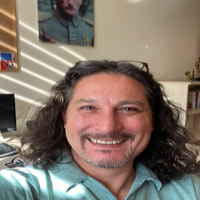
I grew in a sports environment. I am currently a senior researcher at the University of Extremadura Spain. I have won ranked 1st place in physical fitness in Iran and now I work in several professional clubs as a sports scientist. My interests in researches: Sports Nutrition and supplement; growth youth and maturation; strength and conditioning; sports performance; soccer training; injury prevention; training load, quality of life; reliability, and validity.
İstatistik Editörü
Yayın Kurulu

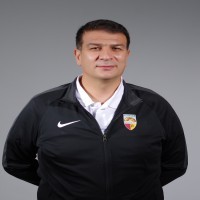
I am a football/futsal coach educator and a full-time academic professor with a specificity in neuromuscular and cardiovascular physiology. My current research interests focus on the effects of training load monitoring, exercise recovery intervention on autonomic nervous function, effects of biofeedback training on cardiovascular adaptation, and effects of ageing on neuromuscular function, physical activity and health, and football/futsal sciences.

Prof.Dr. Gözde ERSÖZ, Marmara Üniversitesi Beden Eğitimi ve Spor Öğretmenliği Bölümü'nde spor ve egzersiz psikolojisi, spor yönetimi konularında uzmanlaşmıştır. Dr. Ersöz'ün 30 araştırma makalesi ve 6 kitap bölümü yayınlanmış olup, bilimsel kongrelerde 100'ün üzerinde bildiri sunmuştur. Dr. Ersöz, Research in Sport Science ile The Journal of Eurasia Sport Sciences Medicine ve Research in Sport Science dergilerinin spor ve egzersiz pskolojisi alan editörüdür. Ayrıca Spor ve Egzersiz Psikolojisi, Spor Bilimleri ve Rekreasyon alanlarında yayınlanan birçok derginin yayın kurulunda görev yapmaktadır. Ersöz, Türkiye Milli Olimpiyat Komitesi, Türkiye Milli Paralimpik Komitesi, Basketbol Federasyonu, Egzersiz ve Spor Psikolojisi Derneği, Spor Bilimleri Derneği, Kadınlar için Spor ve Fiziksel Aktivite Derneği gibi kurum ve kuruluşların komite ve kurullarında görev yapmaktadır.

Matthew Muscat-Inglott, MCAST Toplum Hizmetleri Enstitüsü'nde Kıdemli Öğretim Görevlisidir. Enstitüdeki görevleri arasında araştırma yöntemleri konusunda ders vermek, lisans ve lisansüstü araştırma projelerini üstlenen öğrencilere ders vermek ve araştırma yürütmek yer almaktadır. Matthew mesleki eğitim, spor ve sağlık için egzersiz alanlarında araştırmalar yürütmekte ve çeşitli yerel ve uluslararası dergilerde düzenli olarak yayınlar yapmaktadır.
I grew in a sports environment. I am currently a senior researcher at the University of Extremadura Spain. I have won ranked 1st place in physical fitness in Iran and now I work in several professional clubs as a sports scientist. My interests in researches: Sports Nutrition and supplement; growth youth and maturation; strength and conditioning; sports performance; soccer training; injury prevention; training load, quality of life; reliability, and validity.
Bilim Kurulu


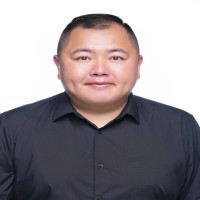
Andy Lin is an Associate Professor at the Center for Teacher Education, National Taiwan Sport University in Taoyuan, Taiwan. His research focuses on PETE and PE curriculum and instruction. He has published works on preservice teacher development and educational policies in sport pedagogy.
https://orcid.org/my-orcid?orcid=0000-0002-8841-9847
Dergi Sekreterya