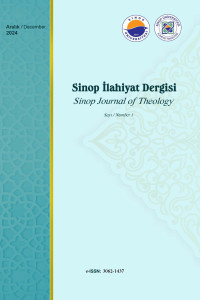

Sinop Journal of Theology aims to publish original research articles, translation articles, book reviews, scientific conference reviews in the field of social sciences, theology and religious studies and to share them with the public. The aim of the journal is to contribute to science by publishing original and qualified studies. Articles submitted for publication are subjected to double blind peer review by at least two reviewers. In addition, a special program used in plagiarism detection confirms that the articles have not been published before and do not contain plagiarism. Sinop Journal of Theology Editorial Board acts in accordance with the Scientific Research and Publication Ethics Directive of the Council of Higher Education.
Sinop Journal of Theology publishes qualified research articles in the fields of social sciences and religious sciences.
Subject Category:
Basic Islamic Sciences: Tafsir, Hadith, Kalam, Islamic Law, History of Islamic Sects, Sufism, Arabic Language and Literature.
Philosophy and Religious Sciences: Islamic Philosophy, Philosophy of Religion, Psychology of Religion, Sociology of Religion, Religious Education, History of Religions, Logic.
Islamic History and Arts: Islamic History, History of Islamic Arts, Turkish-Islamic Literature, Religious Music.
Social and Human Sciences: Religion, Literature, Philosophy, Psychology, Sociology, History
Keywords:
Religion, Philosophy, Literature, History, Tafsir, Hadith, Kalam, Islamic Law, History of Islamic Sects, Sufism, Arabic Language and Literature, Islamic Philosophy, Philosophy of Religion, Psychology of Religion, Sociology of Religion, Religious Education, History of Religions, Logic, Islamic History, History of Islamic Arts, Turkish-Islamic Literature, Religious Music.
Sinop Journal of Theology aims to publish original research articles, translations, articles, book reviews, book reviews, scientific meeting reviews in the field of theology and religious studies and to share them with the public. Submitted articles should be appropriate to the purpose and scope of the journal.
The writing language of Sinop Journal of Theology is Turkish. Articles in Turkish, English and Arabic languages can also be included in our journal.Publication Ethics Principles
Sinop Journal of Theology is a peer-reviewed journal published two (2) times a year, in June and December, and adheres to national standards of research and publication ethics. Sinop Journal of Theology is prepared in accordance with the guidelines and policies published by the Committee on Publication Ethics (COPE) https://publicationethics.org/ as open access for ethical duties and responsibilities.
Responsibilities of Stakeholders
All parties involved in the publication process must comply with scientific research and publication ethics.
Responsibilities of the Editors
- The editors evaluate the submitted article proposals in an impartial manner, taking into account the relevance of the scope of the journal and the importance and originality of the studies. The editors take care that the published articles contribute to the reader, researcher, practitioner and scientific field and are original.
- The relationship between the editors and the publisher and journal owner is based on the principle of editorial independence.
- Editors do not share information about a submitted manuscript with anyone other than the corresponding author, referees and the editorial board.
- Editors do not have any conflict of interest regarding accepted or rejected manuscripts.
- Editors ensure that all articles accepted for publication are peer-reviewed by at least two referees who are experts in their fields.
- The editors are responsible for deciding which manuscript to publish from the manuscripts submitted to the journal based on the validity of the work in question, its importance to researchers and readers, the comments of the referees, and other legal requirements.
- Editors have the responsibility and authority to accept or reject manuscripts. It is essential that the responsibility and authority are exercised appropriately and in a timely manner.
- Editors ensure that all Advisory Board members carry out the processes in accordance with the publication policies.
- The editors organize periodic meetings with the Editorial Board for publication policies and journal development.
Responsibilities of Authors
- Authors should not include plagiarized or falsified data, and the list of footnotes and bibliography should be complete.
- They should keep the raw data of their work and submit it for editorial review if requested by the journal.
- The names of all authors who actively contributed to the research should be included.
- Those who did not actively contribute to the research should not be included among the authors, and those who contributed to the research other than authorship should be thanked for their contribution to the relevant research.
- Disclose conflicts of interest at the earliest possible stage (usually by submitting a disclosure form at the time of manuscript submission and including a statement in the manuscript).
- All authors are obliged to make editorial corrections.
Responsibilities of Reviewers
- Reviewers should be impartial in their assessment.
- Reviewers should not have any conflict of interest with the research, the authors and/or the research funders.
- Reviewers are expected not to give only yes or no answers, but to elaborate on negative opinions and give reasons for them.
- Reviewers are expected to make a text-centered evaluation only. It is important that they do not use expressions that may damage the reputation and personal rights of the author/authors.
- Reviewers should indicate the works published but not cited related to the research.
- Reviewers should keep the manuscripts they check confidential.
i is to present it as one's own work in whole or in part without citing the owners in accordance with scientific rules.
Sinop Journal of Theology scans all submitted manuscripts with intihal.net to prevent plagiarism. The similarity rate is expected to be less than 15%. If the similarity rate of the scanned article is above the specified level, the article is rejected by the Editorial Board without going through the referee process. The plagiarism report of the rejected article is also shared with the author. The rejected article will not be re-evaluated in any way. Research articles are accepted to the referee process; translation and book introduction articles are reviewed by the editorial board. Sinop Journal of Theology is based on ISNAD 2nd Edition for citations and references.
Our journal does not charge any fee to the authors for the article evaluation and publication process. Authors are also not paid any fee.
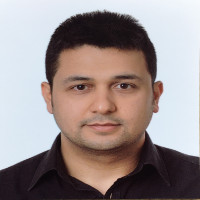
1985 yılında Samsun’da doğdu. 2001 yılında Samsun Merkez İmam-Hatip Lisesi’nden, 2007 yılında Ankara Üniversitesi İlahiyat Fakültesi’nden mezun oldu. 2007-2016 yılları arasında Diyanet İşleri Başkanlığı bünyesinde imam-hatip ve müezzin olarak görev yaptı. 2007 senesinde Selçuk Üniversitesi Sosyal Bilimler Enstitüsü Temel İslam Bilimleri Anabilim Dalı, Kelam Bilim Dalı’nda başladığı yüksek lisans eğitimini 2010 yılında “Cennet ve Cehennemin Ebedîliği” isimli teziyle tamamladı. 2014 yılında Necmettin Erbakan Üniversitesi Temel İslam Bilimleri Anabilim Dalı, Kelam Bilim Dalı’nda başladığı doktora eğitimini 2020 yılında “Hz. Muhammed’in Nübüvvetine Delil Olan İnsanî Özellikler” isimli çalışmasıyla tamamladı. 2016 yılında Sinop Üniversitesi İlahiyat Fakültesi’ne Araştırma Görevlisi olarak atandı ve halen bu görevi sürdürmektedir. Arapça ve İngilizce bilmektedir. Evli ve iki çocuk babasıdır.
Dr. Öğr. Üyesi Şengül Özdemir, lisans eğitimini 2006 yılında Ondokuz Mayıs Üniversitesi İlahiyat Fakültesi’nde tamamlamış, aynı üniversitede 2014 yılında yüksek lisansını, 2021 yılında ise “Gazâlî ve Levinas Felsefelerinde Yüzleşme Ahlakı” başlıklı teziyle doktorasını tamamlamıştır. 2016 yılından itibaren Sinop Üniversitesi İlahiyat Fakültesi Felsefe ve Din Bilimleri Bölümü’nde görev yapmakta olup, 2021 yılından bu yana İslam Felsefesi Anabilim Dalı’nda Dr. Öğr. Üyesi olarak çalışmaktadır. Çalışma alanları arasında İslam felsefesi, ahlak felsefesi ve karşılaştırmalı felsefe yer almakta olup, bu alanlarda akademik yayın ve projeleri bulunmaktadır.
1978 yılında Trabzon’un Of ilçesi Bölümlü Mahallesi’nde doğdum. Hafızlığımı rahmetli kurrâ hafız İsmail Bayraktar hocadan tamamlayarak 1989 yılında icazet aldım. Of İmam Hatip Lisesi’nden mezun olduktan sonra Diyanet İşleri Başkanlığı’nda imam-hatip, Kur’an kursu öğreticisi ve murakıp olarak görev yaptım.
2016 yılında Almanya’da uzun süreli din görevlisi olarak bulunduğum sırada Sinop Üniversitesi İlahiyat Fakültesi’ne atandım. Halen Kıraat Anabilim Dalı Başkanı, Mahmut Kefevi İslâmi İlimler Uygulama ve Araştırma Merkezi Müdürü ve İlahiyat Fakültesi Dekan Yardımcısı olarak görev yapmaktayım.
Evli ve üç çocuk babasıyım.
14 Şubat 1976’da Trabzon ili Şalpazarı ilçesi Çetrik Mahallesi’nde doğdu. İlkokulu köyünde, hafızlığını Şalpazarı Sütpınar Kur’ân Kursu’nda tamamladı. 1995‘te Samsun İmam Hatip Lisesi’nden, 2000’de Anadolu Üniversitesi İktisat Fakültesi Kamu Yönetimi Bölümü’nden, 2006’da da Ondokuz Mayıs Üniversitesi İlahiyat Fakültesi’nden mezun oldu. Haziran 2011’de Ondokuz Mayıs Üniversitesi Sosyal Bilimler Enstitüsü Temel İslam Bilimleri Bölümü Tefsir Anabilim Dalı’nda “Bireysel ve Toplumsal Açıdan Kur’ân Kıssaları” adlı teziyle Doktorasını tamamladı. 19 Aralık 2018 tarihinde Temel İslam Bilimleri Anabilim Dalı Tefsir Bilim Dalı’nda Doçent unvanını aldı.
Sütpınar Kur’ân Kursu’nda fahri Kur’ân kursu öğreticiliği ve Sütpınar Yeni Câmii’de vekil imam-hatiplik yaptı (1995). Memuriyete 1996 yılında Şalpazarı Ağırtaş Köyü İlkokulu’nda vekil öğretmen olarak başladı. Giresun Alucra ve Görele ilçelerinde imam-hatiplik yaptı (1997-2003). 2003-2012 yılları arasında Ondokuz Mayıs Üniversitesi Kampüs Câmii İmam Hatipliği görevinde bulundu. Fransa Lyon Din Hizmetleri Ataşeliği’ne bağlı Oyonnax’ta din görevlisi olarak çalıştı (2009-2010). Şubat 2012’de Ondokuz Mayıs Üniversitesi Eğitim Fakültesi Din Kültürü ve Ahlâk Bilgisi Eğitimi Bölümü’ne Yrd. Doç. Dr. olarak atandı. Eylül 2012’de Ondokuz Mayıs Üniversitesi İlahiyat Fakültesi Din Kültürü ve Ahlâk Bilgisi Öğretmenliği Bölümü’nde göreve başladı. Kasım 2017’de aynı fakültenin Temel İslâm Bilimleri Bölümü Kur’ân-ı Kerîm Okuma ve Kıraat İlmi Anabilim Dalı’na atandı. Bu fakültede dekan yardımcılığı ve bölüm başkanlığı yaptı. 6 Mart 2018’den itibaren aynı fakültede Dr. Öğr. Üyesi, 19 Aralık 2018'den itibaren Doçent, 7 Ekim 2024 tarihinden itibaren de Profesör olarak görevini sürdürmektedir. Evli ve üç çocuk babası olup, Arapça ve İngilizce bilmektedir.
1985 yılında Samsun’da doğdu. 2001 yılında Samsun Merkez İmam-Hatip Lisesi’nden, 2007 yılında Ankara Üniversitesi İlahiyat Fakültesi’nden mezun oldu. 2007-2016 yılları arasında Diyanet İşleri Başkanlığı bünyesinde imam-hatip ve müezzin olarak görev yaptı. 2007 senesinde Selçuk Üniversitesi Sosyal Bilimler Enstitüsü Temel İslam Bilimleri Anabilim Dalı, Kelam Bilim Dalı’nda başladığı yüksek lisans eğitimini 2010 yılında “Cennet ve Cehennemin Ebedîliği” isimli teziyle tamamladı. 2014 yılında Necmettin Erbakan Üniversitesi Temel İslam Bilimleri Anabilim Dalı, Kelam Bilim Dalı’nda başladığı doktora eğitimini 2020 yılında “Hz. Muhammed’in Nübüvvetine Delil Olan İnsanî Özellikler” isimli çalışmasıyla tamamladı. 2016 yılında Sinop Üniversitesi İlahiyat Fakültesi’ne Araştırma Görevlisi olarak atandı ve halen bu görevi sürdürmektedir. Arapça ve İngilizce bilmektedir. Evli ve iki çocuk babasıdır.
Sinop İlahiyat Dergisi © 2024 by Sinop University is licensed under CC BY-NC-ND 4.0