



Düşünmeyi Görünür Kılma Yaklaşımının Yabancı Dil olarak İngilizce Öğrenen Öğrencilerin Eleştirel Yazma ve Kaygı Düzeylerine Etkisi
Öz
Bu çalışma, Düşünmeyi Görünür Kılma Rutinleri aracılığıyla uygulanan Düşünmeyi Görünür Kılma yaklaşımıyla zenginleştirilmiş İngilizce öğretiminin, yabancı dil olarak İngilizce öğrenen hazırlık okulu öğrencilerinin eleştirel yazma becerileri ve yabancı dil kaygı düzeyleri üzerindeki etkisini araştırmaktadır. Bu araştırma, deney ve kontrol gruplu yarı deneysel bir ön test-son test çalışması olarak tasarlanmıştır. Deney grubu, Düşünmeyi Görünür Kılma yaklaşımıyla zenginleştirilmiş Yabancı Dil Olarak İngilizce öğretimi alırken, kontrol grubu mevcut programı takip etmiştir. 2x2 karışık desen ANOVA içeren istatistiksel analizler, deney grubundaki öğrencilerin eleştirel yazma becerilerinde istatistiksel olarak anlamlı düzeyde daha fazla gelişme gösterdiğini ve yabancı dil kaygısında istatistiksel olarak anlamlı bir azalma olduğunu ortaya koymuştur. Deney grubundaki öğrencilerle yapılan görüşmelerden elde edilen nitel bulgular da, Düşünmeyi Görünür Kılma Rutinlerinin İngilizce öğretimi ile bütünleştirilmesinin olumlu etkisini vurgulamaktadır. Bu çalışma, Düşünmeyi Görünür Kılmanın, yabancı dil olarak İngilizce öğrenme ortamında dil gelişimi ve duygusal olgunluğu teşvik etmek için umut verici bir öğretim stratejisi olduğunu göstermektedir.
Anahtar Kelimeler
görünür düşünme eleştirel yazma kaygı hazırlık programı yabancı dil
Kaynakça
- Aydın, B. (1999). A study of sources of foreign language classroom anxiety in speaking and writing classes [Unpublished doctoral dissertation]. Anadolu University.
- Can Aran, Ö., (2020). Düşünmeyi görünür kılma yaklaşımı.In İ. Kozikoğlu (Eds.) Eğitimde Güncel Yaklaşımlar (pp.55-68). Pegem Yayıncılık.
- Cheng, Y.-S. (2002). Factors associated with foreign language writing anxiety. Foreign Language Annals, 35(5), 647–656. https://doi.org/10.1111/j.1944-9720.2002.tb01903.x
- Cheng, Y. S. (2004). A measure of second language writing anxiety: Scale development and preliminary validation. Journal of Second Language Writing, 13(4), 313–335. https://doi.org/10.1016/j.jslw.2004.07.001
- Craswell, G. (2005). Writing for academic success: A postgraduate guide. Sage Publications.
- Cronbach, L. J., Gleser, G. C., Nanda, H., & Rajaratnam, N. (1972). The dependability of behavioral measurements: Theory of generalizability for scores and profiles. Wiley.
- Dajani, M. (2016). Using thinking routines as a pedagogy for teaching English as a second language in palestine. Journal of Educational Research and Practice, 6 (1), 1-18.
- Davies, M. (2008). Study skills for international postgraduates. Palgrave Macmillan.
- Dörnyei, Z. (2005). The psychology of the language learner: Individual differences in second language acquisition. Routledge.
- Facione, P. A. (2011). Critical thinking: What it is and why it counts. Insight Assessment.
- Field, A. (2013). Discovering statistics using IBM SPSS statistics (4th ed.). Sage Publications.
- Glass, G., Peckham, P., & Sanders, J. (1972). Consequences of failure to meet assumptions underlying the fixed effects analyses of variance and covariance. Review of Educational Research, 42 (3), 237 - 288. https://doi.org/10.3102/00346543042003237
- Gholam, A. (2018). Student engagement through visual thinking routines. Athens Journal of Education, 5(2), 161–172.
- Hooper, T. (2016). Improving academic writing through thinking routines. Kwansei Gakuin University Humanities Review, 20, 47–63.
- Horwitz, E. K., Horwitz, M. B., & Cope, J. (1986). Foreign language classroom anxiety. The Modern Language Journal, 70(2), 125–132. https://doi.org/10.2307/327317
- Koo, T. K., & Li, M. Y. (2016). A guideline of selecting and reporting intraclass correlation coefficients for reliability research. Journal of Chiropractic Medicine, 15(2), 155–163. https://doi.org/10.1016/j.jcm.2016.02.012
- Krashen, S. D. (1985). The input hypothesis: Issues and implications. Longman.
- Lei, Y., & Jeyaraj, J. J. (2023). Developing critical thinking in EFL through visible thinking routines: Experiences of instructors in a Chinese international school. International Journal of English Language Education, 11(1), 111. https://doi.org/10.5296/ijele.v11i1.20894
- Lillis, T., & Turner, J. (2001). Student writing in higher education: Contemporary confusion, traditional concerns. Teaching in Higher Education, 6(1), 57–68. https://doi.org/10.1080/13562510020029608
- MacIntyre, P. D., & Gardner, R. C. (1991). Language anxiety: Its relationship to other anxieties and to processing in native and second languages. Language Learning, 41(4), 513–534. https://doi.org/10.1111/j.1467-1770.1991.tb00691.x
- Manurung, M. R., Masitoh, S., & Arianto, F. (2022). How thinking routines enhance critical thinking of elementary students. International Journal of Recent Educational Research, 3(6), 1–10. https://doi.org/10.46245/ijorer.v3i6.260
- Mertens, C. (2018). Thinking routines in the EFL classroom. Journal of the Institute for Language and Culture, 22, 191–202. https://doi.org/10.14990/00003090
- Miles, M. B., & Huberman, A. M. (1994). Qualitative data analysis: An expanded sourcebook (2nd ed.). Sage Publications.
- Nussbaum, E. M., & Schraw, G. (2007). Promoting argument–counterargument integration in students’ writing. Journal of Experimental Education, 76 (1), 59–92. https://doi.org/10.3200/JEXE.76.1.59-92
- OECD. (2018). The future of education and skills: Education 2030. OECD Publishing. https://www.oecd.org/education/2030/
- Ölmez, E. (2023). The effect of digital storytelling on high school students' English writing skills and foreign language anxiety levels [Unpublished master’s thesis]. Hacettepe University. https://openaccess.hacettepe.edu.tr/xmlui/handle/11655/29593
- Patton, M. Q. (2002). Qualitative research and evaluation methods (3rd ed.). Sage Publications.
- Pekrun, R. (2006). The control-value theory of achievement emotions: Assumptions, corollaries, and implications for educational research and practice. Educational Psychology Review, 18 (4), 315–341. https://doi.org/10.1007/s10648-006-9029-9
- Piaget, J. (1972). The psychology of the child. Basic Books.
- Project Zero. (2025). PZ’s thinking routines toolbox: Introduction. Harvard Graduate School of Education. https://pz.harvard.edu/thinking-routines
- Ritchhart, R., Church, M., & Morrison, K. (2011). Making thinking visible: How to promote engagement, understanding, and independence for all learners. Jossey-Bass.
- Ritchhart, R., & Church, M. (2020). The power of making thinking visible: Practices to engage and empower all learners. Jossey-Bass.
- Ruan, Z. (2005). Exploring the role of metacognition in the process of writing. RELC Journal, 36 (3), 299–317. https://doi.org/10.1177/0033688205060050
- Salmon, A. K. (2008). Young English language learners making thinking and language visible. Colombian Applied Linguistics Journal, 10, 126–133.
- Shrout, P. E., & Fleiss, J. L. (1979). Intraclass correlations: Uses in assessing rater reliability. Psychological Bulletin, 86 (2), 420–428. https://doi.org/10.1037/0033-2909.86.2.420
- Tabachnick, B. G., & Fidell, L. S. (2019). Using multivariate statistics (7th ed.). Pearson.
- Taşbakan, G., & Koç, K. (2022). The effect of thinking routines and textbook activities on students’ ability to express themselves in writing: An action research. Milli Eğitim, 51 (234), 1567–1590.
- Teng, F. (2020). The benefits of metacognitive awareness in EFL writing: A path analysis. The Language Learning Journal, 48 (4), 483–496. https://doi.org/10.1080/09571736.2018.1451912
- Tuan, L. T. (2011). Enhancing EFL learners’ writing skill via critical thinking activities. Journal of Language Teaching and Research, 2 (3), 489–497. https://doi.org/10.4304/jltr.2.3.489-497
- Tung, C. A. J. (2026). Integrating visible thinking routines into an EFL writing class to scaffold and foster critical thinking and writing. Thinking Skills and Creativity, 61. https://doi.org/10.1016/j.tsc.2026.102141.
- Vygotsky, L. S. (1978). Mind in society: The development of higher psychological processes. Harvard University Press.
- Wingate, U. (2011). Argument! Helping students understand what essay writing is about. Journal of English for Academic Purposes, 10 (2), 146–156. https://doi.org/10.1016/j.jeap.2011.01.001
- Yıldırım, A., & Şimşek, H. (2022). Sosyal bilimlerde nitel araştırma yöntemleri (13th edition). Seçkin Yayıncılık.
The Effect of Making Thinking Visible Approach on the Levels of EFL Students’ Critical Writing and Anxiety
Öz
This study investigates the impact of English instruction enriched with Making Thinking Visible approach—implemented through Visible Thinking Routines on EFL preparatory school students’ critical writing skills and the levels of their foreign language anxiety. This research was designed as a quasi-experimental pre-test-post-test study with experimental and control groups. The experimental group received English as a Foreign Language instruction enriched with Making Thinking Visible approach, while the control group followed the existing curriculum. Statistical analyses, including a 2x2 mixed-design ANOVA, revealed that students in the experimental group exhibited a statistically significantly greater improvement in critical writing skills and demonstrated a statistically significant reduction in foreign language anxiety. Qualitative findings from interviews conducted with the students in the experimental group also highlight the positive impact of integrating Visible Thinking Routines into English language instruction. This study suggests that Making Thinking Visible offers a promising instructional strategy to promote linguistic growth and emotional maturity in EFL learning environment.
Anahtar Kelimeler
visible thinking critical writing anxiety preparatory program foreign language
Etik Beyan
All procedures performed in this study involving human participants were in accordance with the ethical standards and approved by the ethics board of Hacettepe University Graduate School of Educational Sciences (Date: 23.07.2024, and Decision Number: E-51944218-050-00003665568). Informed consent was obtained from all individual participants
Destekleyen Kurum
The first author was awarded a scholarship from the Presidency for Turks Abroad and Related Communities (YTB) during the preparation of their master’s thesis that formed the basis of the current study
Teşekkür
This article is based on the master’s thesis of the first author, conducted at the Graduate School of Educational Sciences, Hacettepe University, under the supervision of Assoc. Prof. Özge Can Aran.
Kaynakça
- Aydın, B. (1999). A study of sources of foreign language classroom anxiety in speaking and writing classes [Unpublished doctoral dissertation]. Anadolu University.
- Can Aran, Ö., (2020). Düşünmeyi görünür kılma yaklaşımı.In İ. Kozikoğlu (Eds.) Eğitimde Güncel Yaklaşımlar (pp.55-68). Pegem Yayıncılık.
- Cheng, Y.-S. (2002). Factors associated with foreign language writing anxiety. Foreign Language Annals, 35(5), 647–656. https://doi.org/10.1111/j.1944-9720.2002.tb01903.x
- Cheng, Y. S. (2004). A measure of second language writing anxiety: Scale development and preliminary validation. Journal of Second Language Writing, 13(4), 313–335. https://doi.org/10.1016/j.jslw.2004.07.001
- Craswell, G. (2005). Writing for academic success: A postgraduate guide. Sage Publications.
- Cronbach, L. J., Gleser, G. C., Nanda, H., & Rajaratnam, N. (1972). The dependability of behavioral measurements: Theory of generalizability for scores and profiles. Wiley.
- Dajani, M. (2016). Using thinking routines as a pedagogy for teaching English as a second language in palestine. Journal of Educational Research and Practice, 6 (1), 1-18.
- Davies, M. (2008). Study skills for international postgraduates. Palgrave Macmillan.
- Dörnyei, Z. (2005). The psychology of the language learner: Individual differences in second language acquisition. Routledge.
- Facione, P. A. (2011). Critical thinking: What it is and why it counts. Insight Assessment.
- Field, A. (2013). Discovering statistics using IBM SPSS statistics (4th ed.). Sage Publications.
- Glass, G., Peckham, P., & Sanders, J. (1972). Consequences of failure to meet assumptions underlying the fixed effects analyses of variance and covariance. Review of Educational Research, 42 (3), 237 - 288. https://doi.org/10.3102/00346543042003237
- Gholam, A. (2018). Student engagement through visual thinking routines. Athens Journal of Education, 5(2), 161–172.
- Hooper, T. (2016). Improving academic writing through thinking routines. Kwansei Gakuin University Humanities Review, 20, 47–63.
- Horwitz, E. K., Horwitz, M. B., & Cope, J. (1986). Foreign language classroom anxiety. The Modern Language Journal, 70(2), 125–132. https://doi.org/10.2307/327317
- Koo, T. K., & Li, M. Y. (2016). A guideline of selecting and reporting intraclass correlation coefficients for reliability research. Journal of Chiropractic Medicine, 15(2), 155–163. https://doi.org/10.1016/j.jcm.2016.02.012
- Krashen, S. D. (1985). The input hypothesis: Issues and implications. Longman.
- Lei, Y., & Jeyaraj, J. J. (2023). Developing critical thinking in EFL through visible thinking routines: Experiences of instructors in a Chinese international school. International Journal of English Language Education, 11(1), 111. https://doi.org/10.5296/ijele.v11i1.20894
- Lillis, T., & Turner, J. (2001). Student writing in higher education: Contemporary confusion, traditional concerns. Teaching in Higher Education, 6(1), 57–68. https://doi.org/10.1080/13562510020029608
- MacIntyre, P. D., & Gardner, R. C. (1991). Language anxiety: Its relationship to other anxieties and to processing in native and second languages. Language Learning, 41(4), 513–534. https://doi.org/10.1111/j.1467-1770.1991.tb00691.x
- Manurung, M. R., Masitoh, S., & Arianto, F. (2022). How thinking routines enhance critical thinking of elementary students. International Journal of Recent Educational Research, 3(6), 1–10. https://doi.org/10.46245/ijorer.v3i6.260
- Mertens, C. (2018). Thinking routines in the EFL classroom. Journal of the Institute for Language and Culture, 22, 191–202. https://doi.org/10.14990/00003090
- Miles, M. B., & Huberman, A. M. (1994). Qualitative data analysis: An expanded sourcebook (2nd ed.). Sage Publications.
- Nussbaum, E. M., & Schraw, G. (2007). Promoting argument–counterargument integration in students’ writing. Journal of Experimental Education, 76 (1), 59–92. https://doi.org/10.3200/JEXE.76.1.59-92
- OECD. (2018). The future of education and skills: Education 2030. OECD Publishing. https://www.oecd.org/education/2030/
- Ölmez, E. (2023). The effect of digital storytelling on high school students' English writing skills and foreign language anxiety levels [Unpublished master’s thesis]. Hacettepe University. https://openaccess.hacettepe.edu.tr/xmlui/handle/11655/29593
- Patton, M. Q. (2002). Qualitative research and evaluation methods (3rd ed.). Sage Publications.
- Pekrun, R. (2006). The control-value theory of achievement emotions: Assumptions, corollaries, and implications for educational research and practice. Educational Psychology Review, 18 (4), 315–341. https://doi.org/10.1007/s10648-006-9029-9
- Piaget, J. (1972). The psychology of the child. Basic Books.
- Project Zero. (2025). PZ’s thinking routines toolbox: Introduction. Harvard Graduate School of Education. https://pz.harvard.edu/thinking-routines
- Ritchhart, R., Church, M., & Morrison, K. (2011). Making thinking visible: How to promote engagement, understanding, and independence for all learners. Jossey-Bass.
- Ritchhart, R., & Church, M. (2020). The power of making thinking visible: Practices to engage and empower all learners. Jossey-Bass.
- Ruan, Z. (2005). Exploring the role of metacognition in the process of writing. RELC Journal, 36 (3), 299–317. https://doi.org/10.1177/0033688205060050
- Salmon, A. K. (2008). Young English language learners making thinking and language visible. Colombian Applied Linguistics Journal, 10, 126–133.
- Shrout, P. E., & Fleiss, J. L. (1979). Intraclass correlations: Uses in assessing rater reliability. Psychological Bulletin, 86 (2), 420–428. https://doi.org/10.1037/0033-2909.86.2.420
- Tabachnick, B. G., & Fidell, L. S. (2019). Using multivariate statistics (7th ed.). Pearson.
- Taşbakan, G., & Koç, K. (2022). The effect of thinking routines and textbook activities on students’ ability to express themselves in writing: An action research. Milli Eğitim, 51 (234), 1567–1590.
- Teng, F. (2020). The benefits of metacognitive awareness in EFL writing: A path analysis. The Language Learning Journal, 48 (4), 483–496. https://doi.org/10.1080/09571736.2018.1451912
- Tuan, L. T. (2011). Enhancing EFL learners’ writing skill via critical thinking activities. Journal of Language Teaching and Research, 2 (3), 489–497. https://doi.org/10.4304/jltr.2.3.489-497
- Tung, C. A. J. (2026). Integrating visible thinking routines into an EFL writing class to scaffold and foster critical thinking and writing. Thinking Skills and Creativity, 61. https://doi.org/10.1016/j.tsc.2026.102141.
- Vygotsky, L. S. (1978). Mind in society: The development of higher psychological processes. Harvard University Press.
- Wingate, U. (2011). Argument! Helping students understand what essay writing is about. Journal of English for Academic Purposes, 10 (2), 146–156. https://doi.org/10.1016/j.jeap.2011.01.001
- Yıldırım, A., & Şimşek, H. (2022). Sosyal bilimlerde nitel araştırma yöntemleri (13th edition). Seçkin Yayıncılık.
Ayrıntılar
| Birincil Dil | İngilizce |
|---|---|
| Konular | İkinci Bir Dil Olarak İngilizce |
| Bölüm | Araştırma Makalesi |
| Yazarlar | |
| Gönderilme Tarihi | 3 Eylül 2025 |
| Kabul Tarihi | 26 Şubat 2026 |
| Yayımlanma Tarihi | 1 Mart 2026 |
| DOI | https://doi.org/10.31464/jlere.1777436 |
| IZ | https://izlik.org/JA67DH38SB |
| Yayımlandığı Sayı | Yıl 2026 Cilt: 12 Sayı: 1 |
Amaç ve Kapsam
Dil Eğitimi ve Araştırma Dergisi (JLERE), okul öncesinden yükseköğretime dek her düzeye ilişkin anadili ve yabancı dil eğitimi ve öğrenimi alanlarında özgün ve bilimsel makaleler yayımlayarak alanyazın birikimi oluşturmayı ve ilgililerin akademik gelişimlerine katkıda bulunmayı amaçlamaktadır.
Dil Eğitimi ve Araştırma Dergisi okul öncesinden yükseköğretime dek her düzeyde dil eğitimiyle ilgili özgün ve bilimsel makaleler yayınlama amacı doğrultusunda dil eğitimi ve buna dönük araştırmalarla ilgili herhangi bir konuda İngilizce ya da Türkçe yazılmış her türlü özgün, kuramsal, kavramsal ya da yöntem bilimsel makaleleri değerlendirmeye almaktadır. Dergiye gönderilecek yazıların daha önce yayınlanmamış veya başka bir yayınevine değerlendirilmek üzere gönderilmemiş olması gerekmektedir.
Yazım Kuralları
Authors are kindly asked to refer to Author Guidelines and Manuscript Templates for detailed information on the formatting issues. All manuscripts to be submitted should be written based on the author guidelines and formatted on the manuscript templates and APA referencing style. Author(s) cannot submit previously submitted but rejected manuscripts at the end of the review process.
Yazarların, biçimlendirme sorunlarına ilişkin ayrıntılı bilgi için Yazar Kılavuzu ve Makale Şablonlarına başvurmaları rica olunur. Gönderilecek tüm yazılar yazım kurallarına uygun olarak yazılmalı, makale şablonları APA referans stiline göre düzenlenmelidir. Yazar(lar) daha önce gönderilmiş ancak reddedilmiş çalışmalarını değerlendirme süreci sonunda gönderemezler.
Etik İlkeler ve Yayın Politikası
Journal of Language Education and Research follows the guidelines of the Committee on Publication Ethics (COPE), which are available on www.publicationethics.org.
Code of Conduct and Best Practice Guidelines for Journal Editors
https://publicationethics.org/files/Code%20of%20Conduct_2.pdf
Ücret Politikası
Dizinler





Dergi Kurulları
Baş Editör
Editörler Kurulu


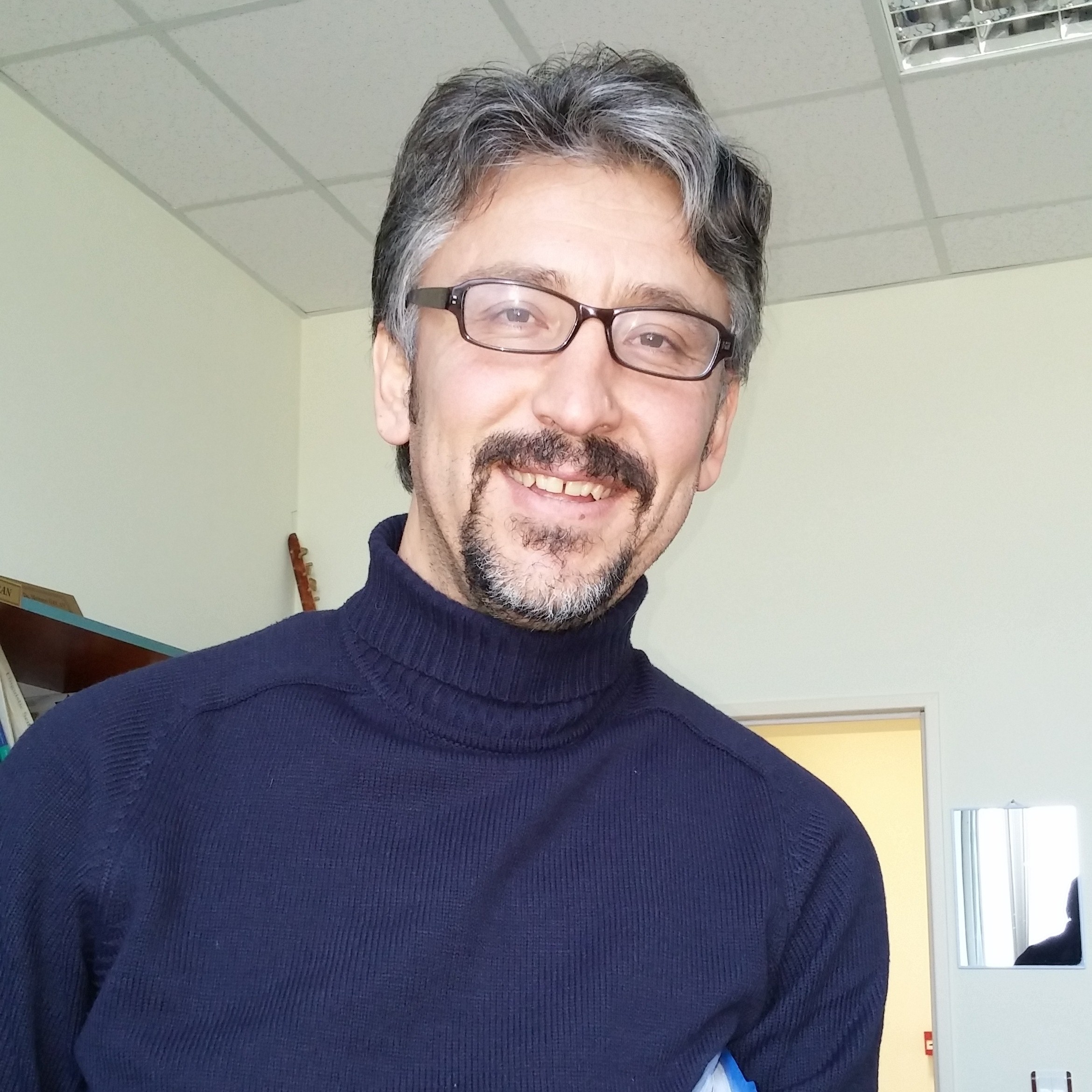
Ferit Kılıçkaya, Burdur Mehmet Akif Ersoy Üniversitesi Yabancı Diller Eğitimi Bölümünde İngilizcenin Yabancı Dil olarak öğretimi alanında Profesör olarak çalışmaktadır. Teknolojinin dil eğitiminde kullanımı, olası faydaları ve zararları ve ayrıca ölçme ve değerlendirme başlıca çalışma alanlarıdır. Bu alanlarla ilgili ulusal ve uluslararası yayımlanmış makale ve kitap bölümleri bulunmaktadır. İleti adresi: ferit.kilickaya@gmail.com

Yardımcı Editör
Yayım Danışma Kurulu
Ferit Kılıçkaya earned his Bachelor of Arts degree in English Language Teaching (ELT) from Boğaziçi University, where he also pursued coursework in educational technology to complement his degree. He subsequently worked as an English language teacher at various institutions before furthering his academic pursuits. He obtained his Master of Arts and Doctor of Philosophy degrees in ELT from Middle East Technical University in Ankara, Turkey. Currently, Kılıçkaya is a teacher educator and researcher in TESOL (Teaching English to Speakers of Other Languages) at the Department of Foreign Language Education at Burdur Mehmet Akif Ersoy University, Turkey. His research interests encompass a broad range of topics related to language learning and technology, with particular focus on the potential benefits and drawbacks of using technology in language teaching and learning. Additionally, he is interested in language testing and evaluation and has conducted research on topics such as peer feedback, online quizzes, and washback. Kılıçkaya has an extensive publication record in prestigious international academic journals such as ReCALL, Computer-Assisted Language Learning, British Journal of Educational Technology, and Journal of Teaching English with Technology. Furthermore, he has authored several book chapters in internationally recognized publishers.
Ph.D. Lecturer of English (TEFL certified)
Editor-in-Chief - HyperCultura (2012-2025)
Network Editor - H-Slavery (2023-present); Executive Council Member - H-Net (January 2025-)
Researcher and blogger at Discussing Slavery: Conferences, Articles, Book Reviews, Translations
https://orcid.org/0000-0003-0595-2767
Dil Editörü
I am a seasoned educator and researcher with a Ph.D. in Foreign and Second Language Education from SUNY Buffalo, supported by a prestigious Fulbright Scholarship. My research focuses on multilingualism, translanguaging, and second-language socialization. I have extensive experience teaching EFL, ESL, and Turkish as a second language across diverse educational contexts, including U.S., Turkey, and China higher education institutions. I am passionate about promoting language learning through socially just and inclusive pedagogies. I have also contributed to numerous publications in indexed journals and presented my work at international conferences.
________________________________________________
Journal of Language Education and Research (JLERE)
Dil Eğitimi ve Araştırmaları Dergisi
https://dergipark.org.tr/en/pub/jlere
ISSN: 2149-5602
Facebook Grup
Copyright © Journal of Language Education and Research