Cilt: 6 Sayı: 2 , 21.12.2022

Yıl: 2022

İnceleme Makalesi

İnceleme Makalesi

1. Investigation of the Effect of Window and Shading Elements on Building Energy Needs

Araştırma Makalesi

Araştırma Makalesi

2. Mimari Bağlamda Walt Disney Konser Binası

Araştırma Makalesi

3. Erzurum’un Girişimcilik, Yenilik ve Ekonomik Durumunun Analizi

PLANARCH - Design and Planning Research is a scientific, open access, online-only periodical published in accordance with independent, unbiased, and double-blinded peer-review principles. The journal is official publication of the Atatürk University, Faculty of Architecture and Design and published biannually in March and September. The publication languages of the journal are Turkish and English.

PLANARCH - Design and Planning Research aims to contribute to the literature by publishing manuscripts at the highest scientific level in architecture, planning and design. The journal publishes original articles, and reviews that are prepared in accordance with ethical guidelines. The scope of the journal includes but not limited to relevant to the topics of planning and design, conservation and renovation, building, technology and design of building systems, industrial product design and technologies, and all other related interdisciplinary theoretical, implementation and historical researches.

The target audience of the journal includes researchers and specialists who are interested or working in all fields of architecture, planning and design.

PLANARCH - Design and Planning Research is currently indexed in TUBITAK ULAKBIM TR Index and China National Knowledge Infrastructure (CNKI).

The editorial and publication processes of the journal are shaped in accordance with the guidelines of the Council of Science Editors (CSE), Committee on Publication Ethics (COPE), European Association of Science Editors (EASE), and National Information Standards Organization (NISO). The journal is in conformity with the Principles of Transparency and Best Practice in Scholarly Publishing (doaj.org/bestpractice).

All expenses of the journal are covered by the Atatürk University. Processing and publication are free of charge with the journal. No fees are requested from the authors at any point throughout the evaluation and publication process. All manuscripts must be submitted via the online submission system, which is available at https://planningdesign-ataunipress.org/. The journal guidelines, technical information, and the required forms are available on the journal’s web page.

Disclaimer
Statements or opinions expressed in the manuscripts published in the journal reflect the views of the author(s) and not the opinions of the editors, editorial board, and/or publisher; the editors, editorial board, and publisher disclaim any responsibility or liability for such materials.

Open Access Statement
PLANARCH - Design and Planning Research is an open access publication, and the journal’s publication model is based on Budapest Access Initiative (BOAI) declaration. All published content is available online, free of charge at https://planningdesign-ataunipress.org/. Authors retain the copyright of their published work in the PLANARCH - Design and Planning Research. The journal’s content is licensed under a Creative Commons Attribution-NonCommercial (CC BY-NC) 4.0 International License which permits third parties to share and adapt the content for non-commercial purposes by giving the appropriate credit to the original work.

Editor in Chief: Fatma Zehra ÇAKICI
Address: Atatürk University, Faculty of Architecture and Design, Erzurum, Turkey
E-mail: fzehra.cakici@atauni.edu.tr

Publisher: Atatürk University
Address: Atatürk University, Yakutiye, Erzurum, Turkey

Publishing Service: AVES
Address: Büyükdere Cad., 105/9 34394 Şişli, İstanbul, Turkey
Phone: +90 212 217 17 00
E-mail: info@avesyayincilik.com
Webpage: www.avesyayincilik.com

How to Submit a Manuscript?

Copyright Agreement and Acknowledgement of Authorship Form

PLANARCH - Design and Planning Research is a scientific, open access, online-only periodical published in accordance with independent, unbiased, and double-blinded peer-review principles. The journal is official publication of the Atatürk University, Faculty of Architecture and Design and published biannually in March and September. The publication languages of the journal are Turkish and English.

PLANARCH - Design and Planning Research aims to contribute to the literature by publishing manuscripts at the highest scientific level in architecture, planning and design. The journal publishes original articles, and reviews that are prepared in accordance with ethical guidelines. The scope of the journal includes but not limited to relevant to the topics of planning and design, conservation and renovation, building, technology and design of building systems, industrial product design and technologies, and all other related interdisciplinary theoretical, implementation and historical researches.

The target audience of the journal includes researchers and specialists who are interested or working in all fields of architecture, planning and design.

EDITORIAL AND PUBLICATION PROCESS
The editorial and publication processes of the journal are shaped in accordance with the guidelines of the Council of Science Editors (CSE), the Committee on Publication Ethics (COPE), the European Association of Science Editors (EASE), and National Information Standards Organization (NISO). The journal conforms to the Principles of Transparency and Best Practice in Scholarly Publishing (doaj.org/bestpractice).

Originality, high scientific quality, and citation potential are the most important criteria for a manuscript to be accepted for publication. Manuscripts submitted for evaluation should not have been previously presented or already published in an electronic or printed medium. The journal should be informed of manuscripts that have been submitted to another journal for evaluation and rejected for publication. The submission of previous reviewer reports will expedite the evaluation process. Manuscripts that have been presented in a meeting should be submitted with detailed information on the organization, including the name, date, and location of the organization.

PEER REVIEW PROCESS
Manuscripts submitted to PLANARCH - Design and Planning Research will go through a double-blind peer-review process. Each submission will be reviewed by at least two external, independent peer reviewers who are experts in their fields in order to ensure an unbiased evaluation process. The editorial board will invite an external and independent editor to manage the evaluation processes of manuscripts submitted by editors or by the editorial board members of the journal. The Editor in Chief is the final authority in the decision-making process for all submissions.

ETHICAL GUIDELINES
The authors are expected to submit researches that comply with the general ethical principles which include; scientific integrity, objectivity, collegiality, data integrity, institutional integrity and social responsibility.

The Editorial Board of the journal handles all appeal and complaint cases within the scope of COPE guidelines. In such cases, authors should get in direct contact with the editorial office regarding their appeals and complaints. When needed, an ombudsperson may be assigned to resolve cases that cannot be resolved internally. The Editor in Chief is the final authority in the decision-making process for all appeals and complaints.

ERRATUM
The correction requests submitted by the authors are reviewed by the Editorial Board and the corrections are applied based on the decision of the Editorial Board. In case of corrections in the published text, the readers are informed by publishing the Erratum text in the number following the correction. The edited article is updated on the journal web page and in the indexes when the journal is scanned.

PLAGIARISM AND ETHICAL MISCONDUCT
PLANARCH - Design and Planning Research is extremely sensitive about plagiarism. All submissions are screened by a similarity detection software (iThenticate by CrossCheck) at any point during the peer-review and/or production process.

Even if you are the author of the phrases or sentences, the text should not have unacceptable similarity with the previously published data. When you are discussing others' (or your own) previous work, please make sure that you cite the material correctly in every instance.

Authors are strongly recommended to avoid any form plagiarism and ethical misconduct that are exemplified below.

Self- plagiarism (text-recycling): Overlapping sections or sentences with the author’s previous publications without citing them. Even if you are the author of the phrases or sentences, the text should not have unacceptable similarity with the previously published data.
Salami slicing: Using the same data of a research into several different articles. Reporting the same hypotheses, population, and methods of a study is into different papers is not acceptable.
Data Fabrication: It is the addition of data that never occurred during the gathering of data or the experiments. Results and their interpretation must be based on the complete data sets and reported accordingly.
Data Manipulation/Falsification: It means manipulating research data with the intention of giving a false impression. This includes manipulating images (e.g. micrographs, gels, radiological images), removing outliers or ‘inconvenient’ results, changing data points, etc.

In the event of alleged or suspected research misconduct, e.g., plagiarism, citation manipulation, and data falsification/fabrication, the Editorial Board will follow and act according to COPE flowcharts.

PREPRINT
PLANARCH - Design and Planning Research does not consider preprint publications as prior publication. In other words, authors are allowed to present and discuss their findings on a non-commercial preprint server before submission to a journal.

Authors must provide the journal with the pre-print server deposition of their article accompanying its DOI during initial submission.

If the article is published in the PLANARCH - Design and Planning Research, it is the responsibility of the authors to update the archived preprint and link it to the published version of the article.

AUTHORSHIP
Being an author of a scientific article mainly indicates a person who has a significant contribution to the article and shares the responsibility and accountability of that article. To be defined as an author of a scientific article, researchers should fulfill below criteria:
Making a significant contribution to the work in all or some of the following phases: Research conception or design, acquisition of data, analysis and interpretation.
Drafting, writing or revising the manuscript
Agreeing on the final version of the manuscript and the journal which it will be submitted
Taking responsibility and accountability of the content of the article
Outside the above mentioned authorship criteria, any other form of specific contribution should be stated in the Acknowledgement section.

In addition to being accountable for the parts of the work he/she has done, an author should be able to identify which co-authors are responsible for specific other parts of the work. Also, authors should have confidence in the integrity of the contributions of their co-authors.

If an article is written by more than one person, one of the co-authors should be chosen as the corresponding author for handling all the correspondences regarding the article. Before submission, all authors should agree on the order of the authors and provide their current affiliations and contact details. Corresponding author is responsible for ensuring the correctness of these information.

PLANARCH - Design and Planning Research requires corresponding authors to submit a signed and scanned version of the Copyright Agreement and Acknowledgement of Authorship form (available for download at https://planningdesign-ataunipress.org/) during the initial submission process to act appropriately on authorship rights and to prevent ghost or honorary authorship. If the editorial board suspects a case of “gift authorship,” the submission will be rejected without further review. As part of the submission of the manuscript, the corresponding author should also send a short statement declaring that he/she accepts to undertake all the responsibility for authorship during the submission and review stages of the manuscript.

CHANGE OF AUTHORSHIP
PLANARCH - Design and Planning Researchn reviews the authorship according to the author’s declaration in the Title Page, thus it is the authors responsibility to send the final order of the complete author names. Requests in the change of authorship (e.g. removal/addition of the authors, change in the order etc) after submission are subject to editorial approval. Editorial Board will investigate this kind of cases and act following COPE flowcharts.

Change of authorship requests should be submitted to the Editorial Office with an official letter stating the reasons of the change. The letter must be signed by all authors and include their approval on the change in authorship. If the request is approved by the Editorial Board, authors need to submit a new Copyright Agreement Form according to the final order list.

APPEALS AND COMPLAINT
The Editorial Board of the journal handles all appeal and complaint cases within the scope of COPE guidelines. In such cases, authors should get in direct contact with the editorial office regarding their appeals and complaints. When needed, an ombudsperson may be assigned to resolve claims that cannot be resolved internally. The Editor in Chief is the final authority in the decision-making process for all appeals and complaints.

COPYRIGHT AND LICENSE
PLANARCH - Design and Planning Research requires each submission to be accompanied by a Copyright Agreement and Acknowledgement of Authorship form (available for download at https://planningdesign-ataunipress.org/). By signing this form, authors retain the copyright of their work and agree that the article, if accepted for publication by the PLANARCH - Design and Planning Research will be licensed under a Creative Commons Attribution-NonCommercial (CC BY-NC) 4.0 International License which permits third parties to share and adapt the content for non-commercial purposes by giving the appropriate credit to the original work.

From January 2022 onwards, content is licensed under a Creative Commons CC BY-NC 4.0 license. The journal’s back content was published under a traditional copyright license however the archive is available for free access.

When using previously published content, including figures, tables, or any other material in both print and electronic formats, authors must obtain permission from the copyright holder. Legal, financial and criminal liabilities in this regard belong to the author(s).

DISCLAIMER
Statements or opinions expressed in the manuscripts published in PLANARCH - Design and Planning Research reflect the views of the author(s) and not the opinions of the editors, the editorial board, or the publisher; the editors, the editorial board, and the publisher disclaim any responsibility or liability for such materials. The final responsibility regarding the published content rests with the authors.

MANUSCRIPT PREPARATION
Manuscripts can only be submitted through the journal’s online manuscript submission and evaluation system, available at https://planningdesign-ataunipress.org/. Manuscripts submitted via any other medium and submissions by anyone other than one of the authors will not be evaluated.

Manuscripts submitted to the journal will first go through a technical evaluation process where the editorial office staff will ensure that the manuscript has been prepared and submitted in accordance with the journal’s guidelines. Submissions that do not conform to the journal’s guidelines will be returned to the submitting author with technical correction requests.

Authors are required to submit the following:
· Copyright Agreement and Acknowledgement of Authorship Form during the initial submission. These forms are available for download at https://planningdesign-ataunipress.org/.

Preparation of the Manuscript
Title page: A separate title page should be submitted with all submissions and this page should include:
· The full title of the manuscript as well as a short title (running head) of no more than 50 characters,
· Name(s), affiliations, highest academic degree(s), and ORCID IDs of the author(s),
· Grant information and detailed information on the other sources of support,
· Name, address, telephone (including the mobile phone number), and email address of the corresponding author,
· Acknowledgment of the individuals who contributed to the preparation of the manuscript but who do not fulfill the authorship criteria.

Abstract: An abstract should be submitted with all submissions except for Letters to the Editor. The abstract of Research Articles should be unstructured. Please check Table 1 below for word count specifications.

Keywords: Each submission must be accompanied by a minimum of three to a maximum of five keywords for subject indexing at the end of the abstract. The keywords should be listed in full without abbreviations.

Manuscript Types
Research Articles: This is the most important type of article since it provides new information based on original research. Acceptance of original papers will be based upon the originality and importance of the investigation. The main text of original articles should be structured with Introduction, Methods, Results, Discussion, Conclusion and Recommendations subheadings. Please check Table 1 for the limitations for Original Articles.

Review Articles: Reviews prepared by authors who have extensive knowledge on a particular field and whose scientific background has been translated into a high volume of publications with a high citation potential are welcomed. These authors may even be invited by the journal. Reviews should describe, discuss, and evaluate the current level of knowledge of a topic in clinical practice and should guide future studies. The subheadings of the review articles should be planned by the authors. However, each review article should include an “Introduction” and a “Conclusion” section. Please check Table 1 for the limitations for Review Articles.

Table 1. Limitations for each manuscript type

Type of manuscript Word limit* Abstract word limit Reference limit Table limit Figure limit
Research Article 4000 250 (Structured) 40 6 5 or total of 10 images
Review Article 7000 250 50 6 10 or total of 15 images
*Word limit should not include the abstract, references, tables, and figure legends.

Tables
Tables should be included in the main document, presented after the reference list, and they should be numbered consecutively in the order they are referred to within the main text. A descriptive title must be placed above the tables in title case in italics. Abbreviations used in the tables should be defined below the tables by footnotes (even if they are defined within the main text). Tables should be created using the “insert table” command of the word processing software and they should be arranged clearly to provide easy reading. Data presented in the tables should not be a repetition of the data presented within the main text but should be supporting the main text.
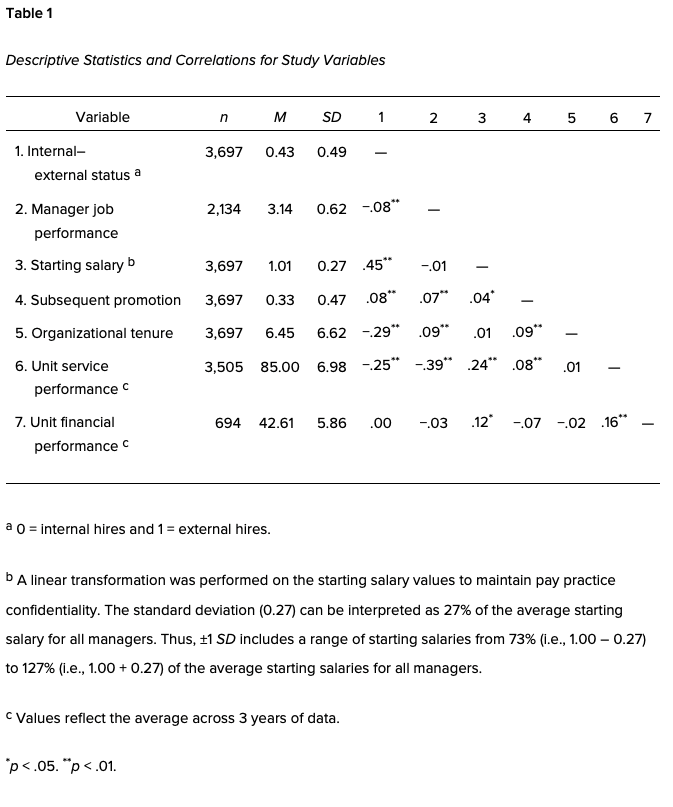
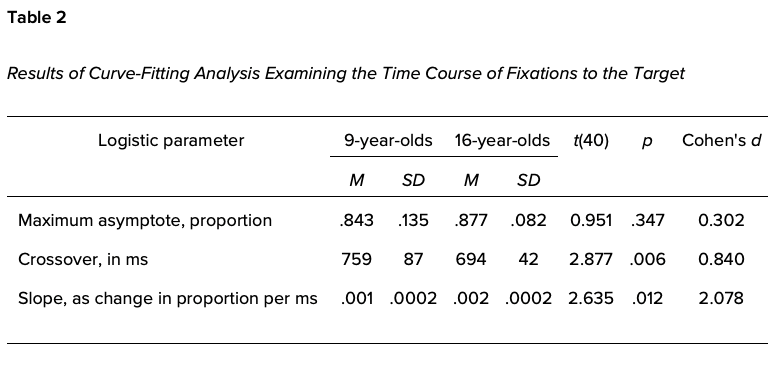
26167

26166

Source: Sample Tables, APA accessed https://apastyle.apa.org/style-grammar-guidelines/tables-figures/sample-tables

Figures and Figure Legends
Figures, graphics, and photographs should be submitted as separate files (in TIFF or JPEG format) through the submission system. The files should not be embedded in a Word document or the main document. When there are figure subunits, the subunits should not be merged to form a single image. Each subunit should be submitted separately through the submission system. Images should not be labeled (a, b, c, etc.) to indicate figure subunits. Thick and thin arrows, arrowheads, stars, asterisks, and similar marks can be used on the images to support figure legends. Like the rest of the submission, the figures too should be blind. Any information within the images that may indicate an individual or institution should be blinded. The minimum resolution of each submitted figure should be 300 DPI. To prevent delays in the evaluation process, all submitted figures should be clear in resolution and large in size (minimum dimensions: 100 × 100 mm). Figure legends should be listed at the end of the main document.

All acronyms and abbreviations used in the manuscript should be defined at first use, both in the abstract and in the main text. The abbreviation should be provided in parentheses following the definition.


All references, tables, and figures should be referred to within the main text, and they should be numbered consecutively in the order they are referred to within the main text.

Limitations, drawbacks, and the shortcomings of original articles should be mentioned in the Discussion section before the conclusion paragraph.


References
Both in-text citations and the references must be prepared according to the APA Manual Seventh Edition.

While citing publications, preference should be given to the latest, most up-to-date publications. Authors are responsible for the accuracy of references. In the main text of the manuscript, references should be cited by author’s name and the publication year in parenthesis. In the case of direct citations in the main text, only publication year should be stated in parenthesis after the name of the author. Please see below the examples.
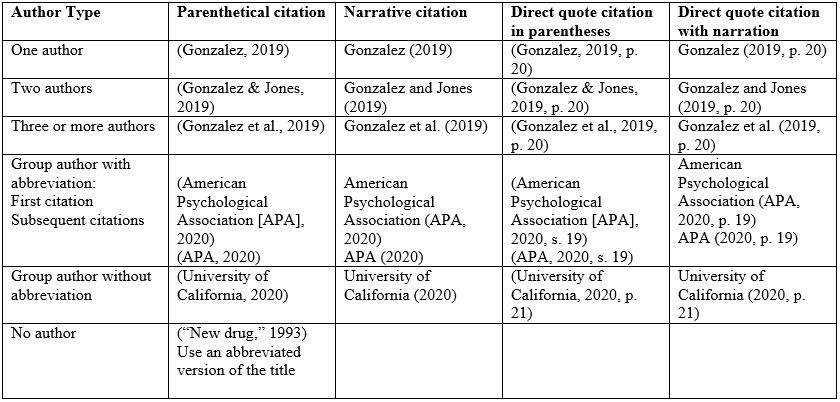
26165

Reference List
The reference styles for different types of publications are presented in the following examples.

Journal Article: Klimonske, R., & Palmer, S. (1993). The ADA and the hiring process in organizations. Consulting Psychology Journal: Practice and Research, 45(2), 10-36.

Journal Article with more than one author: Jerrentrup, A., Mueller, T., Glowalla, U., Herder, M., Henrichs, N., Neubauer, A., & Schaefer, J. R. (2018). Teaching medicine with the help of “Dr. House.” PLoS ONE, 13(3), Article e0193972. https://doi.org/10.1371/journal.pone.0193972

Article in Turkish: Mutlu, B., & Savaşer, S. (2007). Çocuğu ameliyat sonrası yoğun bakımda olan ebeveynlerde stres nedenleri ve azaltma girişimleri [Source and intervention reduction of stress for parents whose children are in intensive care unit after surgery]. Istanbul University Florence Nightingale Journal of Nursing, 15(60), 179–182.

Books
By a Single Author: Kimmel, M. S. (2007). The gendered society. Oxford University Press.
By Two or More Authors: DiFonzo, N., & Bordia, P. (2007). Rumor psychology: Social and organizational approaches. American Psychological Association.
By a Corporate (Group) Author: American Sociological Association. (1975). Approaches to the study of social structure. Free Press.
Edited Book : Rhodewalt, F. (Ed.). (2008). Personality and social behavior. Psychology Press.
Book Chapter with Editor(s): McCormack, B., McCance, T., & Maben, J. (2013). Outcome evaluation in the development of person-centred practice. In B. McCormack, K. Manley, & A. Titchen (Eds.), Practice development in nursing and healthcare (pp. 190-211). John Wiley & Sons.

Dissertation or Thesis: Valentin, E. R. (2019, Summer). Narcissism predicted by Snapchat selfie sharing, filter usage, and editing [Master's thesis, California State University Dominguez Hills]. CSU ScholarWorks. https://scholarworks.calstate.edu/concern/theses/3197xm925?locale=en
No Author: The universal declaration of human rights. (1974). U.S. Catholic Conference, Division of Latin America.
Web sites: Sparks, Dana. (2018, September 12). Mayo mindfulness: Practicing mindfulness exercises. Mayo Clinic.

In the seventh edition, up to 20 authors should now be included in a reference list entry. For sources with more than 20 authors, after the 19th listed author, any additional authors' names are replaced with an ellipsis (…) followed by the final listed author's name:
Author, A. A., Author, B. B., Author, C. C., Author, D. D., Author, E. E., Author, F. F., Author, G. G., Author, H. H., Author, I. I., Author, J. J., Author, K. K., Author, L. L., Author, M. M., Author, N. N., Author, O. O., Author, P. P., Author, Q. Q., Author, R. R., Author, S. S., . . . Author, Z. Z.

REVISIONS
When submitting a revised version of a paper, the author must submit a detailed “Response to the reviewers” that states point by point how each issue raised by the reviewers has been covered and where it can be found (each reviewer’s comment, followed by the author’s reply and line numbers where the changes have been made) as well as an annotated copy of the main document. Revised manuscripts must be submitted within 30 days from the date of the decision letter. If the revised version of the manuscript is not submitted within the allocated time, the revision option may be canceled. If the submitting author(s) believe that additional time is required, they should request this extension before the initial 30-day period is over.

Accepted manuscripts are copy-edited for grammar, punctuation, and format by professional language editors. Once the publication process of a manuscript is completed, it is published online on the journal’s webpage as an ahead-of-print publication before it is included in its scheduled issue. A PDF proof of the accepted manuscript is sent to the corresponding author and their publication approval is requested within 2 days of their receipt of the proof.

Editor in Chief: Fatma Zehra ÇAKICI
Address: Atatürk University, Faculty of Architecture and Design, Erzurum, Turkey
E-mail: fzehra.cakici@atauni.edu.tr

Publisher: Atatürk University
Address: Atatürk University, Yakutiye, Erzurum, Turkey

Publishing Service: AVES
Address: Büyükdere Cad., 105/9 34394 Şişli, İstanbul, Turkey
Phone: +90 212 217 17 00
E-mail: info@avesyayincilik.com
Webpage: www.avesyayincilik.com

ETHICAL GUIDELINES
All authors who submit articles to the journal are expected to comply with universal ethical principles in their studies. These principles are; accuracy in scientific method, data and analysis accuracy, corporate honesty, impartiality and social responsibility.

PLAGIARISM AND ETHICAL MISCONDUCT
Journal of ATA Planning and Design is extremely sensitive about plagiarism. All submissions are screened by a similarity detection software (iThenticate by CrossCheck) at any point during the peer-review and/or production process.

When you are discussing others' (or your own) previous work, please make sure that you cite the material correctly in every instance.

Authors are strongly recommended to avoid any form plagiarism and ethical misconduct that are exemplified below.

Self- plagiarism (text-recycling): Overlapping sections or sentences with the author’s previous publications without citing them. Even if you are the author of the phrases or sentences, the text should not have unacceptable similarity with the previously published data.
Salami slicing: Using the same data of a research into several different articles. Reporting the same hypotheses, population, and methods of a study is into different papers is not acceptable.
Data Fabrication: It is the addition of data that never occurred during the gathering of data or the experiments. Results and their interpretation must be based on the complete data sets and reported accordingly.
Data Manipulation/Falsification: It means manipulating research data with the intention of giving a false impression. This includes manipulating images (e.g. micrographs, gels, radiological images), removing outliers or ‘inconvenient’ results, changing data points, etc.

In the event of alleged or suspected research misconduct, e.g., plagiarism, citation manipulation, and data falsification/fabrication, the Editorial Board will follow and act according to COPE flowcharts.

PLANARCH - Design and Planning Research is an open access publication, and the journal’s publication model is based on Budapest Access Initiative (BOAI) declaration. All published content is available online, free of charge at https://planningdesign-ataunipress.org/. Authors retain the copyright of their published work in the PLANARCH - Design and Planning Research. The journal’s content is licensed under a Creative Commons Attribution-NonCommercial (CC BY-NC) 4.0 International License which permits third parties to share and adapt the content for non-commercial purposes by giving the appropriate credit to the original work.

Editör Kurulu

Aslı Er Akan
Prof. Dr. Aslı ER AKAN Çankaya University, Department of Architecture, Ankara, Türkiye
Yapı Endüstrisi Çalışmaları, Teknoloji ve Sistemleri, Yapısal Bütünlük ve Hasar
Ertu Unver
Prof. Ertu UNVER University of Huddersfield, Department of Design & The Built Environment, Huddersfield, United Kingdom
Endüstriyel Ürün Tasarımı
Fatma Zehra Çakıcı
Prof. Dr. Fatma Zehra ÇAKICI Atatürk University, Department of Architecture, Erzurum, Türkiye
Mimari ve Tasarım, Mimarlık, Mimari Tasarım, Fiziksel Çevre Kontrolü, Yapı Endüstrisi Çalışmaları, Teknoloji ve Sistemleri, Yapı, Çevre, Yerleşim ve Ürünlerde Koruma, Restorasyon, Yenileme, Yapısal Bütünlük ve Hasar
Default avatar
Dr. Öğr. Üyesi Defne DURSUN Atatürk University, Department of Urban and Regional Planning, Erzurum, Türkiye
Şehir Ekonomisi ( Kent Ekonomisi), Mimari ve Tasarım, Bölge Planlamada Kent Coğrafyası, Katılım ve Yönetişim, Kent Morfolojisi, Kent Tarihi, Kentsel Planlama ve Sağlık, Kentsel Tasarım, Şehir ve Bölge Planlama, Bölgesel Planlama
Manu P. Sobti
Prof. Dr. Manu P. SOBTİ University of Queensland, Design and Planning, Queensland, Australia
Mimarlık Tarihi
Default avatar
Yun GAO University of Huddersfield
Kent Morfolojisi
Hilal Tuğba Örmecioğlu
Prof. Dr. Hilal Tuğba ÖRMECİOĞLU Akdeniz University, Department of Architecture, Antalya, Türkiye
Mimari Tarih, Teori ve Eleştiri
Bilge Çakır
Dr. Öğr. Üyesi Bilge ÇAKIR Hatay Mustafa Kemal University, Department of Urban and Regional Planning, Hatay, Türkiye
İklim Değişikliği-Etkiler ve Adaptasyon, Beşeri Coğrafya, Çevresel Etki Değerlendirmesi, Ekoloji, Sürdürülebilirlik ve Enerji, Şehir ve Bölge Planlama Eğitimi, İklim ve Su Politikaları, Risk Politikası, Kırsal Kalkınma, Arazi Kullanımı ve Çevre Planlaması, Bölge Planlamada Kent Coğrafyası, Kent Morfolojisi, Şehir ve Bölge Planlama, Peyzaj Planlama, Doğal Afetler
Şeyma Yiğit Uzunali
Dr. Öğr. Üyesi Şeyma YİĞİT UZUNALİ Hatay Mustafa Kemal University, Department of Landscape Architecture, Hatay, Türkiye
Makine Öğrenmesi Algoritmaları, Sınıflandırma algoritmaları, Mimari ve Tasarım, Peyzaj Planlama, Coğrafi Bilgi Sistemleri
Ceren Katipoğlu Özmen
Doç. Dr. Ceren KATİPOĞLU ÖZMEN Çankaya University, Department of Architecture, Ankara, Türkiye
Mimari ve Tasarım, Mimari Miras ve Koruma, Mimari Tarih, Teori ve Eleştiri, Mimarlık Tarihi, Sanat Tarihi
Default avatar
Doç. Dr. Susana ALVES Sapienza University of Rome
Mimarlık ve Çevre Psikolojisi

Editör Kurulu

Cihad Bilge
Arş. Gör. Cihad BİLGE Atatürk University, Department of Landscape Design, Erzurum, Türkiye
Peyzaj Mimarlığı
Aslı Er Akan
Prof. Dr. Aslı ER AKAN Çankaya University, Department of Architecture, Ankara, Türkiye
Yapı Endüstrisi Çalışmaları, Teknoloji ve Sistemleri, Yapısal Bütünlük ve Hasar
Default avatar
Dr. Öğr. Üyesi Defne DURSUN Atatürk University, Department of Urban and Regional Planning, Erzurum, Türkiye
Şehir Ekonomisi ( Kent Ekonomisi), Mimari ve Tasarım, Bölge Planlamada Kent Coğrafyası, Katılım ve Yönetişim, Kent Morfolojisi, Kent Tarihi, Kentsel Planlama ve Sağlık, Kentsel Tasarım, Şehir ve Bölge Planlama, Bölgesel Planlama
Ertu Unver
Doç. Dr. Ertu UNVER University of Huddersfield, Department of Design & The Built Environment, Huddersfield, United Kingdom Web
Endüstriyel Ürün Tasarımı
Hilal Tuğba Örmecioğlu
Prof. Dr. Hilal Tuğba ÖRMECİOĞLU Akdeniz University, Department of Architecture, Antalya, Türkiye Web
Mimari Tarih, Teori ve Eleştiri
Manu P. Sobti
Prof. Dr. Manu P. SOBTİ University of Queensland, Design and Planning, Queensland, Australia
Mimarlık Tarihi
Default avatar
Prof. Dr. Yun GAO University of Huddersfield
Kent Morfolojisi
Bilge Çakır
Dr. Öğr. Üyesi Bilge ÇAKIR Hatay Mustafa Kemal University, Department of Urban and Regional Planning, Hatay, Türkiye Web
İklim Değişikliği-Etkiler ve Adaptasyon, Beşeri Coğrafya, Çevresel Etki Değerlendirmesi, Ekoloji, Sürdürülebilirlik ve Enerji, Şehir ve Bölge Planlama Eğitimi, İklim ve Su Politikaları, Risk Politikası, Kırsal Kalkınma, Arazi Kullanımı ve Çevre Planlaması, Bölge Planlamada Kent Coğrafyası, Kent Morfolojisi, Şehir ve Bölge Planlama, Peyzaj Planlama, Doğal Afetler
Fatma Zehra Çakıcı
Prof. Dr. Fatma Zehra ÇAKICI Atatürk University, Department of Architecture, Erzurum, Türkiye Web
Mimari ve Tasarım, Mimarlık, Mimari Tasarım, Fiziksel Çevre Kontrolü, Yapı Endüstrisi Çalışmaları, Teknoloji ve Sistemleri, Yapı, Çevre, Yerleşim ve Ürünlerde Koruma, Restorasyon, Yenileme, Yapısal Bütünlük ve Hasar

Baş Editör

Fatma Zehra Çakıcı
Prof. Dr. Fatma Zehra ÇAKICI Atatürk University, Department of Architecture, Erzurum, Türkiye Web
Mimari ve Tasarım, Mimarlık, Mimari Tasarım, Fiziksel Çevre Kontrolü, Yapı Endüstrisi Çalışmaları, Teknoloji ve Sistemleri, Yapı, Çevre, Yerleşim ve Ürünlerde Koruma, Restorasyon, Yenileme, Yapısal Bütünlük ve Hasar

Yardımcı Editörler

Aslı Er Akan
Prof. Dr. Aslı ER AKAN Çankaya University, Department of Architecture, Ankara, Türkiye
Yapı Endüstrisi Çalışmaları, Teknoloji ve Sistemleri, Yapısal Bütünlük ve Hasar
Default avatar
Dr. Öğr. Üyesi Defne DURSUN Atatürk University, Department of Urban and Regional Planning, Erzurum, Türkiye

Defne Dursun, Atatürk Üniversitesi Şehir ve Bölge Planlama Bölümü'nde Dr. Öğr. Üyesi olarak görev yapmaktadır ve 2016 yılından beri Mimarlık ve Tasarım Fakültesi'nde öğretim üyesidir. Lisans derecesini Gazi Üniversitesi'nde aynı bölümde, Yüksek Lisans derecesini ise Orta Doğu Teknik Üniversitesi'nde Kentsel Politika Planlaması ve Yerel Yönetimler Bölümü'nde almıştır. Kent Üniversitesi'nde Erasmus Öğrencisi olarak Chris Pickvance ile bir yıl (2008-2009 akademik yılı) çalışmıştır. Fakülteye katılmadan önce iki yıl boyunca özel bir planlama şirketinde çalışmıştır. Şehir planlama alanındaki araştırma ilgi alanları çocuk dostu şehirler, yürünebilirlik, iklime duyarlı şehir planlama ve kentsel politikalardır.

Şehir Ekonomisi ( Kent Ekonomisi), Mimari ve Tasarım, Bölge Planlamada Kent Coğrafyası, Katılım ve Yönetişim, Kent Morfolojisi, Kent Tarihi, Kentsel Planlama ve Sağlık, Kentsel Tasarım, Şehir ve Bölge Planlama, Bölgesel Planlama

Alan Editörleri

Default avatar
Dr. Nur Maizura AHMAD NOORHANİ Universiti Teknologi MARA, Faculty of Architecture, Planning and Surveying, Department of Interior Architecture, Selangor, Malaysia
İç Mimarlık
Default avatar
Doç. Dr. Elif GÜNEŞ Atılım Üniversitesi
Mimari ve Tasarım, İç Mimarlık , Mimarlık ve Çevre Psikolojisi
Ertu Unver
Prof. Ertu UNVER University of Huddersfield, Department of Design & The Built Environment, Huddersfield, United Kingdom Web
Endüstriyel Ürün Tasarımı
Şeyma Yiğit Uzunali
Dr. Öğr. Üyesi Şeyma YİĞİT UZUNALİ Hatay Mustafa Kemal University, Department of Landscape Architecture, Hatay, Türkiye Web
Makine Öğrenmesi Algoritmaları, Sınıflandırma algoritmaları, Mimari ve Tasarım, Peyzaj Planlama, Coğrafi Bilgi Sistemleri
Ceren Katipoğlu Özmen
Doç. Dr. Ceren KATİPOĞLU ÖZMEN Çankaya University, Department of Architecture, Ankara, Türkiye
Mimari ve Tasarım, Mimari Miras ve Koruma, Mimari Tarih, Teori ve Eleştiri, Mimarlık Tarihi, Sanat Tarihi
Hilal Tuğba Örmecioğlu
Prof. Dr. Hilal Tuğba ÖRMECİOĞLU Akdeniz University, Department of Architecture, Antalya, Türkiye Web
Mimari Tarih, Teori ve Eleştiri
Manu P. Sobti
Prof. Dr. Manu P. SOBTİ University of Queensland, Design and Planning, Queensland, Australia

Dr. Manu P. Sobti is a landscape historian and urban interlocutor of the Global South with research specialisations in South Asia, South East Asia, Central Asia, and the Middle East. Within the gamut of the Global, the Islamic, and the Non-Western, his continuing work examines borderland transgressions and their intertwinement with human mobilities, indigeneities, and the narratives of passage across these liminal sites. From his perspective, ‘land-centered’ and ‘deep’ place histories replete with human actors serve as critical and de-colonizing processes that negate the top-down master-narratives wherein borders and boundaries simplistically delineate nation states and their scalar range of internal geographies. He was previously Associate Professor at the School of Architecture & Urban Planning (SARUP), University of Wisconsin-Milwaukee USA (2006-16). He has a B.Dipl.Arch. from the School of Architecture-CEPT (Ahmedabad - INDIA), an SMarchS. from the Massachusetts Institute of Technology (Cambridge - USA), and a Ph.D. from the College of Architecture, Georgia Institute of Technology (Atlanta - USA).

As a recognized scholar and innovative educator, Sobti served as Director of SARUP-UWM’s India Winterim Program (2008-15). This foreign study program worked intensively with local architecture schools in Ahmedabad, Delhi and Chandigarh, allowing students and faculty to interact actively, often within the gamut of the same project. He also set up a similar, research-focused program in Uzbekistan, engaging advanced undergraduate and graduate students to undertake field research at sites, archives and cultural landscapes. In partnership with the Art History Program at the University of Wisconsin-Madison, and SARUP colleagues, Sobti also co-coordinated the Building-Landscapes-Cultures (BLC) Concentration of SARUP-UWM’s Doctoral Program (2011-13), creating opportunities for student research in diverse areas of architectural and urban history and in multiple global settings. He served as the Chair of SARUP's PhD Committee between 2014-16, leading an area of BLC's research consortium titled Urban Histories and Contested Geographies.

Sobti's research has been supported by multiple funding bodies, including the Graham Foundation of the Arts (USA), the Architectural Association (UK), the National Council for Eurasian and East European Research (USA), the French Institute of Central Asian Studies (UZBEKISTAN), the US Department of State Fulbright Foundation (USA), the Aga Khan Foundation (SWITZERLAND), the Andrew W. Mellon Foundation (USA), the Massachusetts Institute of Technology (USA), the Centre for 21st Century Studies University of Wisconsin-Milwaukee (USA), the Institute for Research in the Humanities University of Wisconsin-Madison (USA), Stanford University (USA), in addition to collaborations with institutions in New Delhi/Chandigarh/Ahmedabad (INDIA), Samarqand/Bukhara (UZBEKISTAN), Erzurum (TURKEY) and New Orleans (USA). He has also served as a United States Department of State Fulbright Senior Specialist Scholar and received 7 Research Fellowships at important institutions worldwide. He is a nominated Expert Member of the ICOMOS-ICIP (Interpretation and Presentation of Cultural Heritage Sites) International Committee, responsible for debate and stewardship on contentious cultural heritage issues globally.

Mimarlık Tarihi
Default avatar
Prof. Dr. Ruzica S BOGDANOVİC University of Union-Nikola Tesla Web

http://strand.rs/2017/architecture/organization/

Biography
Ružica Bogdanović, Phd is a Professor Emeritus of Urban planning and Sustainable development. Main areas of interest in research and teaching include: design – architecture & urban design, new media approach to architecture, concept of smart city.
She has initiated, conducted and implemented a number of scientific research projects as team leader and principal investigator. Has organized and moderated numerous panel discussions, round tables, national and international symposia. Author of numerous books and articles in professional journals. Presented papers at numerous national and international congresses and symposia.
Ružica Bogdanović contributes to the profession by active engagement in different professional organizations. She is a member of IsoCaRp, a delegate of Serbia in the ECTP, member of the Association of Serbian Town Planners, Society of Belgrade Urban Planners (was a Chairperson for 8 years, in two terms), Belgrade Association of Architects.
She received several awards for projects and books, as well as the Lifetime Achievement Award “Emilijan Josimovic Grand Award”.

Kentsel Estetik, Mimari Tasarım
Aleksa Bijelovic
Dr. Aleksa BİJELOVİC Curtin University, School of Design and the Built Environment, Perth, Australia Web
İç Mimarlık , Tasarım Kültürü ve Toplumsal Bağlam, Tasarım Uygulaması ve Yöntemleri
Bilge Çakır
Dr. Öğr. Üyesi Bilge ÇAKIR Hatay Mustafa Kemal University, Department of Urban and Regional Planning, Hatay, Türkiye Web
İklim Değişikliği-Etkiler ve Adaptasyon, Beşeri Coğrafya, Çevresel Etki Değerlendirmesi, Ekoloji, Sürdürülebilirlik ve Enerji, Şehir ve Bölge Planlama Eğitimi, İklim ve Su Politikaları, Risk Politikası, Kırsal Kalkınma, Arazi Kullanımı ve Çevre Planlaması, Bölge Planlamada Kent Coğrafyası, Kent Morfolojisi, Şehir ve Bölge Planlama, Peyzaj Planlama, Doğal Afetler
Default avatar
Doç. Dr. Susana ALVES Sapienza University of Rome

Susana Alves is an Environmental Psychologist with a Ph.D. in Architecture (Environment-Behavior Studies). Her work examines how natural landscapes can promote health and psychological well-being. Her research has focused on diverse groups of people, including older adults, migrants, and urban residents under stress. Through the assessment of landscape perceptions and activities, her research has addressed quality-of-life issues in neighbourhood outdoor spaces and in institutional settings for older populations. Key elements of her work include a multi-method approach to research, an emphasis on policy-related social issues, and a commitment to promoting culturally relevant social and environmental interventions for diverse communities.

Research topics of interest involve examining nature-based interventions in school settings, risk behavior in contexts of natural disasters, tangible and intangible aspects of historic
landscapes, and atmospheres in architecture. Dr. Alves has engaged in research and teaching activities in Brazil, the United States, the United Kingdom, Turkey, and Italy.

Mimarlık ve Çevre Psikolojisi
Default avatar
Prof. Dr. Krystyna JANUSZKİEWİCZ West Pomeranian University of Technology, Department of Architectural Design, Szczecin, Poland Web

General information
Assoc. Prof. Krystyna Januszkiewicz PhD, Eng. Of Architecture West Pomeranian University of Technology at Szczecin Department of  Architecture (Poland).
Fields of Research
The main field of my research is architecture and its design as an area of knowledge and skills integrally related to the history, theory and practice i.e. digital technology in architectural design and an experimental exploration of topological and computational geometry, robotics orchestration; environmentally sensitive architecture; structural engineering complex geometry; new technologies and materials; theory and history of contemporary architecture.
Research work
221 articles, papers, chapters in Edited Volumes, 3 books
Author book titled: “On designing Architecture in the Age of Digital Tools. Current status and development prospects”. This is the first in Poland compendium of knowledge regarding the theory and history of architecture created in co-operation with digital technologies. And also, this is the first in Poland presentation of the achievements of Buckminster Fuller (1895-1983) in the context of modern information technologies, scientific research and increasing awareness of the need to  protect the Planet Earth, what makes a significant contribution to the state of research in the world. This book provides research tools necessary for architectural theory, extending its cognitive range, and sets a new approach.
Bridge structures are a secondary field of my interest and of my research studies. The results of these studies were included in two books published by the Publishing House of Cracow University of Technology (2005 and 2012), one of which was awarded by the Minister of Infrastructure. The test results which were presented in these books proved to be extremely useful, especially for the design of bridges, since these books were published during the reconstruction of the national transport infrastructure supported by the EU funds.

A subject of my research is architecture and its design as an area of knowledge and skills integrally related to the history, theory and practice. This subject is further defined by digital technology CAD/CAM/CAE being involved in its development. It is not only about forms of complex geometry which require specific material and construction solutions. However, new geometrical forms and ecological concerns triggered the search for new materials and new structural solutions. Following Fuller's idea, my attention is directed towards those areas that concern the designing of eco-efficient architecture, where digital processes are miming natural formation and adaptation. My current research also includes a building envelope as building envelope as the physical separator between  the conditioned and unconditioned environment of a building. It is the key element of building that determines the quality and controls the indoor conditions irrespective of transient outdoor conditions. With the use of parametric and multi-criteria optimization digital tools, the building envelopes can be designed to respond to various requirements. Methods, techniques and strategies currently used in this field are now in the center my interest. The subject of designing the architecture which is sensitive both to the environment and sustainable development has often been discussed in my current research papers and articles.
My future work will primarily focus on the built environment - on climate change adopted architecture and building structures. Global climate change is expected to pose increasing challenges for cities in the following decades, placing greater stress and impacts on multiple social and biophysical systems, including population health, coastal development, urban infrastructure, energy demand, and water supplies. In the past decade, there has been growing evidence that activities to mitigate climate change can have beneficial impacts on public health as a result of changes to environmental pollutants and health-related behaviors. Understanding the interrelation between these impacts and the built environment put forth to architects and engineers to develop innovative materials, components and systems, with the goal of designing to building envelopes more active i.e.
responsive, adaptive, as well as protective to variable and extreme climate conditions. My future research will be concentrated on building envelopes which are active to both internal and external conditions, and which should act as a protector of human health.

Mimari Tasarım
Default avatar
Doç. Dr. Bartosz CZARNECKİ Białystok University of Technology, Faculty of Architecture, Department of Architecture, Poland
Mimari Tasarım
Roberta Ferritto
Dr. Roberta FERRİTTO Alma Mater Studiorum - Università di Bologna Web

Dr. Roberta Ferritto is a classical archaeologist specialising in the architectural, environmental and socio-economic history of the Roman world. Currently, she is a Marie Skłodowska-Curie Global Fellow and Principal Investigator (PI) of the EU-funded project CLaRMaV - Coastal Landcsapes and Roman Maritime Villas: A Comparative Regional Study of Architectural Models and Environmental Settings, at the University of Bologna (Italy) and UPenn (USA). She worked as assistant researcher at Kiel University (Germany) and University of Reading (UK), where also was Sessional Lecturer while doing her PhD in Classics. She completed her BA at the University of Florence and her MA studies at La Sapienza University of Rome in Archaeology, followed by a MA-II Level in Architecture. Dr. Ferritto participated in archaeological fieldwork for almost two decades in Italy and Tunisia. She is currently the Ancient Architectural Specialist of The Casa della Carolina Project at Pompeii.

Mimari Miras ve Koruma, Mimari Tarih, Teori ve Eleştiri, Mimari Tasarım
Kentsel Alan Yönetimi, Kentsel Tasarım, Mimari Tasarım
Gonca Zeynep Tunçbilek
Dr. Öğr. Üyesi Gonca Zeynep TUNÇBİLEK NEVSEHIR HACI BEKTAS VELI UNIVERSITY Web
Mimari ve Tasarım, Mimarlık, Mimari Tarih, Teori ve Eleştiri, Mimari Tasarım, Mimarlık (Diğer), Tasarım, Tasarım Kültürü ve Toplumsal Bağlam, Tasarım Tarihi, Teorisi ve Eleştiri, Mimarlık Tarihi, Mimarlıkta Estetik, Eleştirel Miras, Müze ve Arşiv Çalışmaları, Kültürel Miras, Arşiv ve Müze Çalışmaları (Diğer)
Default avatar
Yrd. Doç. Dr. Gülçin TUNÇ Bursa Uludağ Üniversitesi Web
Cinsiyet, Politika ve Yönetim, Ekonomik Kalkınma Politikası, Kentleşme Politikaları, Kentsel Politika, Kent Sosyolojisi ve Toplum Çalışmaları
Meslek Etiği, Ekoloji, Sürdürülebilirlik ve Enerji, Kent Tarihi, Mimari Tasarım, Yeşil Yapılar ve Çevreler

Mantha Zarmakoupi is the Williams Assistant Professor in Roman Architecture at the University of Pennsylvania. She has published widely on Greek and Roman architecture and art – including monographs Shaping Roman Landscape (Getty 2023) and Designing for Luxury on the Bay of Naples (Oxford 2014), edited volumes The Villa of the Papyri at Herculaneum (De Gruyter 2010) and Hermogenes and Hellenistic-Roman Temple Building in Greece and Asia Minor (forthcoming) – as well as on the urban development and harbor infrastructure of late Hellenistic Delos. She currently conducts an archaeological project in collaboration with Ankara University at the Bouleuterion of Teos in Turkey (2022-). Mantha systematically fosters conversations across the fields of architecture and archaeology on ancient urbanism, ecology and diversity – for instance, in her edited volumes Looking at the City (Melissa 2023) and The Delos Symposia and Doxiadis (Lars Müller 2025) and exhibition An Archaeology of Disability (Venice Biennale 2021, Pisa 2022, Athens 2023, Thessaloniki 2024). 

Arkeoloji Bilimi, Yunan ve Roma Dönemi Arkeolojisi

Yabancı Dil Editörü

Default avatar
Dr. Öğr. Üyesi Defne DURSUN Atatürk University, Department of Urban and Regional Planning, Erzurum, Türkiye

Defne Dursun, Atatürk Üniversitesi Şehir ve Bölge Planlama Bölümü'nde Dr. Öğr. Üyesi olarak görev yapmaktadır ve 2016 yılından beri Mimarlık ve Tasarım Fakültesi'nde öğretim üyesidir. Lisans derecesini Gazi Üniversitesi'nde aynı bölümde, Yüksek Lisans derecesini ise Orta Doğu Teknik Üniversitesi'nde Kentsel Politika Planlaması ve Yerel Yönetimler Bölümü'nde almıştır. Kent Üniversitesi'nde Erasmus Öğrencisi olarak Chris Pickvance ile bir yıl (2008-2009 akademik yılı) çalışmıştır. Fakülteye katılmadan önce iki yıl boyunca özel bir planlama şirketinde çalışmıştır. Şehir planlama alanındaki araştırma ilgi alanları çocuk dostu şehirler, yürünebilirlik, iklime duyarlı şehir planlama ve kentsel politikalardır.

Şehir Ekonomisi ( Kent Ekonomisi), Mimari ve Tasarım, Bölge Planlamada Kent Coğrafyası, Katılım ve Yönetişim, Kent Morfolojisi, Kent Tarihi, Kentsel Planlama ve Sağlık, Kentsel Tasarım, Şehir ve Bölge Planlama, Bölgesel Planlama

Mizanpaj Editörleri

Cihad Bilge
Arş. Gör. Cihad BİLGE Atatürk University, Department of Landscape Design, Erzurum, Türkiye
Peyzaj Mimarlığı
Beyza Nur Çalışkan Keleş
Arş. Gör. Beyza Nur ÇALIŞKAN KELEŞ Atatürk University, Department of Architecture, Erzurum, Türkiye Web
İç Mimarlık , Mimari Tasarım, Sürdürülebilir Mimari

İstatistik Editörü

Default avatar
Doç. Dr. Özlem TÜRKER BAYRAK ÇANKAYA ÜNİVERSİTESİ, REKTÖRLÜK, ORTAK DERSLER BÖLÜMÜ
İstatistiksel Analiz, İstatistiksel Kalite Kontrol, İstatistiksel Teori, Uygulamalı İstatistik, İstatistik (Diğer)

Content of this journal is licensed under a Creative Commons Attribution NonCommercial 4.0 International License

29929