Volume: 9 Issue: 34 , 1/1/26

Year: 2025

Research Article

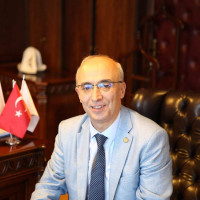
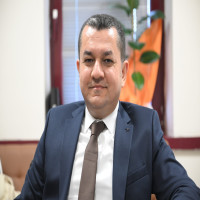
Serdar Bulut
Prof. Dr. Serdar BULUT ALANYA ALAADDİN KEYKUBAT ÜNİVERSİTESİ
Lisans: 2005-2009 yılları arası 19 Mayıs Üniversitesi Fen -Edebiyat Fak. Türk Dili ve Edebiyatı Bölümü Yüksek Lisans: 2009-2012 yılları arası Ordu Üniversitesi Sosyal Bilimler Enstitüsü Türk Dili Anabilim Dalı Pedagojik Formasyon: 2011-2012 yılları arası 19 Mayıs Üniversitesi Eğitim Fakültesi Doktora: 2012-2017 yılları arası Adıyaman Üniv. Sosyal Bilimler Enstitüsü Eski Türk Dili Anabilim Dalı 2012-2018 yılları arasında Giresun Üniversitesi'nde görev yaptım. 2018 yılından beri Alanya Alaaddin Keykubat Üniversitesi'nde görev yapmaktayım.
Language Studies, Old Turkic Language (Orhon, Uyghur, Karahan), Historical North East Turkish Language (Khwarezm, Kipchak, Chagatai), New Turkish Language (Turkish of Old Anatolia, Ottoman, Turkiye), Turkish Education

The aim of Asya Studies is to make a modest contribution to the field of social sciences in order to develop all regions that will be the subject of scientific studies, especially the Asian geography, and to make qualified productions that can shed light on societies in scientific terms. Without ignoring the problem of institutionalization and continuity in the journals in the field of social sciences in Turkey, the most important goal of our journal, which has embarked on this path without ignoring the problem of institutionalization and continuity in the journals in the field of social sciences in Turkey, without forgetting the responsibility of publishing a qualified publication as a young academic community and the main thing is social progress, is to maintain a qualified publication line throughout its publication life and to take a place in a reliable and respected point in the field of social sciences. On this occasion, many studies in the fields of social sciences, philology and educational sciences related to Asian and European geography are evaluated in our journal.

Asya Studies is a journal founded in 2017 and publishes articles and book reviews in the field of social sciences. The journal publishes original research articles, reviews, research summaries and book reviews. In this context, our journal does not publish “Review and Case Report” articles.
Our journal is a peer-reviewed, international and free of charge journal published four times a year (March, June, September, December) electronically. Articles submitted to our journal are reviewed by spelling and language editors after editorial control and then sent to field referees. No fee is charged for the articles submitted to our journal, and no fee is charged for access to the articles published in our journal. Articles submitted to our journal are subjected to plagiarism scanning. In addition, our journal applies a waiver policy for authors from developing countries.

Our journal accepts articles in seven different languages: Turkish, English, German, Russian, French, Arabic and Persian. If deemed necessary and appropriate by the editorial board, articles in different languages can also be evaluated within the scope of our journal.

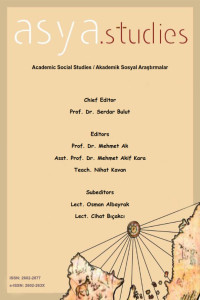
Asia Studies

Academic Social Studies / Akademik Sosyal Araştırmalar

Manuscripts should be uploaded to the system in accordance with the writing and publishing rules of Asian Studies.

Click here for Article Template.
Click here for Copyright Transfer Form.
Click here for Title Page Form.
Click here for the Referee Response File.

1. At the beginning of the article, Turkish abstract and English abstract consisting of at least 200 and at most 250 words, 5-word keywords and keywords, Turkish and English title should be included. The referee process of articles that do not fulfill these conditions is not initiated. After the referee evaluations, articles that are found not to comply with these rules are not included in the publication process.
2. Since the manuscripts sent to Asya Studies will enter the referee process, the author's name or author-identifying information should not be added in the full text file uploaded to the system. After the refereeing process of the article is completed, information about the author(s) will be requested to be added. If necessary, it can be added by the editors.
3. The works cited under the heading REFERENCES at the end of the study should be arranged in the order of the author's surname. APA 7 (American Psychological Association) system should be used in referencing. All references in the text should be included in the bibliography. Likewise, each source in the bibliography must also be cited in the text.
4. Studies with a similarity rate of more than 20% are not included in the publication process.

Page Layout

Manuscripts should be written in Microsoft Word program and page structures should be arranged as follows.
Paper Size: A4 Vertical
Top Edge Gap : 4 cm
Bottom Edge Gap: 3 cm
Left Margin: 3 cm
Right Margin: 3 cm
Font Type Times New Roman
Number of Article Pages (Maximum): 25
Font Size (main text): 10 point
Footnote Text: 8 pt.
Paragraph Spacing: 0 nk before - 0 nk after
Paragraph Indent: 1.25 cm
Line Spacing Tek (1)

Sample Reference Citation

Articles
-In article names, only the first letter of the first word should be capitalized (except for proper names, suffixes and conjunctions).
-The journal name should be italicized. Except for conjunctions (if any) in the journal name, the first letter of each word should be capitalized.
-Volume number should be italicized. Journal Name, 4(12), 15-23.
-The issue number should be straight and in parentheses. Journal Name, 4(12), 15-23.
-If there is no volume number, it should be left blank. Journal Name, (12), 15-23.
-If there is no issue number, there should be no parenthesis. Journal Name, 4, 15-23.
-If the page number is unknown, it should be left blank. Journal Name, 4(12).
-If there is a Digital Object Identifier (DOI) number, it should be written after the page number. DOI should not be written at the beginning.

Single Authored Article
Sarıkaya, B. (2024). Determining the digital literacy levels of Turkish teachers. Van Yüzüncü Yıl University Journal of Faculty of Education, 21(1), 212-229. https://doi.org/10.33711/yyuefd.1415874
Citation: (Sarıkaya, 2024).

Article with Two Authors
Kavan, N., & Özdaş, F. (2022). Evaluation of teachers' views on the construction of democratic learning environment. Journal of Inonu University Faculty of Education, 23(3), 1598-1623. https://doi.org/10.17679/inuefd.1139458
Reference: (Kavan and Özdaş, 2022: 1618)

Articles with Three and Up to 20 Authors
Tarman, B., Acun, İ., & Yüksel, Z. (2010). Evaluation of theses in the field of social studies education. Gaziantep University Journal of Social Sciences, 9(3), 725-746.
Reference: (Tarman et al., 2010: 728)

Newspaper Article
Ergün, M., Akdağ, M., & Duruhan, K. (1989, October 4). Problems of the Turkish education system and some solution proposals. Dünya Newspaper.
Cited in: (Erdem et al., 1989)

Citing More Than One Work of the Author from the Same Year in the Bibliography:
Uysal, İ. N. (2018a). Dictionaries are richer and more functional with witnesses: Witnesses to the Turkish Dictionary. Journal of Turkish Language, CXIV(793), 9-46.
Uysal, İ. N. (2018b). Witnessing in lexicology and Salâh Birsel's contributions to Turkish dictionary as a witness. Journal of Gümüşhane University Institute of Social Sciences, 9(22), 109-118.
Submission-1: (Uysal, 2018a)
Submission-2: (Uysal, 2018b)

Books
-In book titles, only the first letter of the first word should be capitalized (except for proper names, suffixes and conjunctions).
-The book title should be written in italics. Other parts should be written plain.
-The name of the publishing house should be written.
-The city of publication should not be written.
-If there is a publication number, it should be written.

Single Authored Book
Bulut, S. (2018). Gümüşhane province and region dialects vocabulary. Gazi Bookstore.
Citation: (Bulut, 2018)

Book with Two Authors
Çağdaş, A., & Şahin, Z. S. (2002). Social and moral development in children and adolescents (1st edition). Nobel Publications.
Reference: (Çağdaş and Şahin, 2002: 46)

Book with Three and Up to 20 Authors
Işın, M. A., Tatlıcan, İ., & Işın, M. (1989). Sinop. Sinop Museum Publications.
Citation: (Işın et al., 1989)

Chapter in an Edited Book
Bulut, S. (2016). Bilge Kagan. In S. Maden (Ed.), Those who serve Turkish from past to present 1 (pp. 3-12). Nobel Scientific Works Publishing House.
Reference: (Bulut, 2016: 10)

Translation Book
Bolman, L., & Deal, T. (2008). Restructuring organizations (Trans.: A. Aypay and A. Tanrıöğen). Seçkin Publishing.
Citation: (Bolman and Deal, 2008)

Books in Two or More Volumes
Moran, B. (1995). A critical look at the Turkish novel (3rd volume). İletişim Publications.
Reference: (Moran, 1995: 103)

Encyclopedia
Akün, Ö. F. (1992). Divan literature. In Diyanet Foundation Encyclopedia of Islam (pp. 398-422). Turkey Religious Foundation.
Reference: (Akün, 1992: 401)

Author Unknown Book
The 1995 NEA Almanac of Highereducation. (1995). Washington DC: National education association.
Reference: (The 1995 NEA Almanac, 1995: 78)

Graduate Thesis
According to -APA, if theses and projects can be accessed from a database, an archive or a repository, they are considered published theses and should be cited accordingly. If there is no open access to the thesis or projects, it should be treated as an unpublished thesis. For detailed information, please see APA reference examples.

Kavan, N. (2020). The effect of technology-supported education on special education students' reading comprehension skills (Thesis No: 648374) [Master's Thesis, Siirt University]. National Thesis Center.
Reference: (Kavan, 2020: 32)

Declaration
Telli, B., Bulut, S., & Bulduk, T. B. (2014, April 03-04). Contributions to the compilation dictionary from Adıyaman dialect [Full text paper]. Adıyaman University Science, Culture and Art Symposium-I, Adıyaman, Turkey.
Reference: (Telli et al., 2014: 122)

Printed Dictionary
Turkish Language Association. (2005). Turkish dictionary. Turkish Language Association Publications.
Sending: (Turkish Language Association, 2005: 255).

Electronic Dictionary
Turkish Language Association. (no date). Türk Dil Kurumu dictionaries. https://sozluk.gov.tr/ Accessed on July 2, 2024.
Citation: (Turkish Language Association, no date)

A Report Prepared by the Organization
Turkish Statistical Institute. (2023). National education statistics. Turkish Statistical Institute Data. https://data.tuik.gov.tr/Bulten/Index?p=Ulusal-Egitim-Istatistikleri-2023-53444
Sending: (Turkish Statistical Institute, 2023)

Web Page
UNESCO. (2013). World heritage list. http://whc.unesco.org/en/list accessed on April 14, 2015.
Reference: (UNESCO, 2013)

For details beyond these points and examples of references, see the APA website link: https://apastyle.apa.org/style-grammar-guidelines/references/examples

JOURNAL PUBLICATION POLICY
1. The publishing and editorial team of Asya Studies is committed to adhering to ethical standards at all stages of the publication process. The Editorial Board oversees the compliance of the articles in the journal with ethical principles. Manuscripts submitted to the journal must not have been previously published or submitted for publication in another journal. Other works of the authors of the duplication attempts detected by the Editorial Board will not be included in the journal. The publication of unpublished symposium proceedings is possible provided that the symposium participation is specified in the study.
2. Ethics Committee Certificate is requested for studies with humans and animals.
3. The period between the date of receipt of the manuscript and the date of publication is not less than 45 days.
4. Studies accepted for publication cannot be withdrawn.
5. Articles submitted to the journal are checked by Turnitin, iThenticate or plagiarism.net similarity program at the beginning of the editorial process. Manuscripts with a similarity rate of more than 20% cannot be published. This rate should not be exceeded during the initial uploading of the article to the journal system and the referee + editor's acceptance for publication.
6. In articles with multiple authors, the contribution of each author to the article should be indicated.
7. In the articles sent for evaluation, information such as the author's name under the title, his/her title in the footnote, the institution where he/she works and the e-mail address where he/she can be reached should not be included. This information should be indicated on the Title Page Form. Author information of the articles accepted after the referee process is added during the publication process. For this reason, no information identifying the author(s) should be included in the full text file uploaded to the system. This is important in terms of allowing the referees who will review the article to move more easily and to apply ethical principles.
8. The articles included in the publication process are published in order by the editorial team according to their subject areas. The publication order is not changed for any reason.
9. Only one study by one author (even if he/she is a co-author of another study) can be published in one issue.


Under the heading of ethical rules, the following points must be complied with.
1. Separate ethics committee approval must be obtained for research in all disciplines, including social sciences, and for clinical and experimental human and animal studies that require ethics committee approval, and this approval must be stated and documented in the article.
2. Under this heading, information on ethical rules should be given under separate headings for referees, authors and editors.
3. Articles should include a statement that Research and Publication Ethics are complied with.
4. By referring to national and international standards, ethical principles should be stated under a separate heading in the journal and/or on the web page. For example, the recommendations of the International Committee of Medical Journal Editors (ICMJE) and the International Standards for Editors and Authors of the Committee on Publication Ethics (COPE) should be taken into consideration in scientific manuscripts submitted to journals.
5. In studies requiring ethics committee approval, information about the approval (name of the committee, date and document number) should be included in the method section and also on the first/last page of the article. In case reports, information on the signature of the informed consent form should be included in the article.
6. Copyright regulations must be respected for the intellectual and artistic works used.

The following ethical duties and responsibilities have been written in the light of the guidelines and policies prepared by the Committee on Publication Ethics (COPE).
The publication of an article in a peer-reviewed journal is a fundamental building block in the development of a coherent and respected knowledge network. It is a direct reflection of the quality of the work of the authors and the institutions that support them. Peer-reviewed articles support and embody the scientific method. It is therefore important to agree on expected standards of ethical behavior for all parties involved in the act of publishing: author, journal editor, referee and publisher.


1. Publication and authorship
Reference list, financial support;
No plagiarism and fraudulent data;
Not publishing the same research in more than one journal.

2. Author responsibilities
Studies with more than four authors are not accepted.
Only one work by an author can be published in an issue, regardless of whether it is individual or joint.
Authors are obliged to participate in the peer review process.
All authors must have contributed to the research.
A statement that all data in the manuscript are true and authentic must be provided.
All authors must ensure that errors are retracted or corrected.

3. Reviewers' evaluation/responsibility
The referee(s) must have at least a PhD degree (Dr. title).
Referee(s) working at the same institution as the author(s) cannot be sent an evaluation invitation. If such a situation is detected, the refereeing process will be canceled and new referee(s) will be added if the evaluation has been made.
Decisions must be objective.
Reviewers should not have any conflicts of interest related to the research, authors and/or research funders.
Reviewers should point to relevant published work that has not yet been cited.
Reviewed studies should be kept confidential.

4. Editorial responsibilities
Editors have full responsibility and authority to reject/accept a study.
Editors should not have any conflict of interest in relation to the studies they reject/accept. A manuscript should be accepted only when they are reasonably certain.
When errors are found, they should encourage the publication of a correction or withdrawal of the publication.
The anonymity of reviewers should be protected.
Plagiarism and fraudulent data should be avoided.

5. Publication ethics issues
Monitoring/protecting publishing ethics by the editorial board;
Setting guidelines for the retraction of manuscripts;
Maintaining the integrity of the academic record;
Preventing business needs from compromising intellectual and ethical standards;
Always be willing to publish corrections, clarifications, retractions and apologies when necessary.


INFORMATION ON ETHICS COMMITTEE APPROVAL:
QUESTIONS: Is ethics committee approval required for all articles?
Answer: No. In the criteria, it is stated as articles that “require Ethics Committee Permission”.

Research requiring Ethics Committee permission is as follows.
- All kinds of research conducted with qualitative or quantitative approaches that require data collection from participants using survey, interview, focus group study, observation, experiment, interview techniques
- Use of humans and animals (including materials/data) for experimental or other scientific purposes,
- Clinical trials in humans,
- Research on animals,
- Retrospective studies in accordance with the law on the protection of personal data,
Also;
- Stating that the “informed consent form” has been obtained in case presentations,
- Obtaining and indicating permission from the owners for the use of scales, questionnaires, photographs belonging to others,
- Indication of compliance with copyright regulations for the intellectual and artistic works used

QUESTION: Should retrospective Ethics Committee Permission be obtained for publications produced from studies and theses completed in previous years?
Before 2020, retrospective ethics committee permission is not required for articles that used research data, produced from master's / doctoral studies (must be specified in the article), applied for publication to the journal in the previous year, accepted but not yet published. (In addition, for studies with research data from before 2020 and submitted to the journal in 2020, an ethics report is not required from these articles, provided that the author states in the method section that the study data belongs to before 2020).

QUESTION: Are these rules of the TR Index restricting publications outside universities?
No, it is not. Non-university researchers can also apply to the Ethics Committees in their regions.
Also;
- For articles to be published in journals, it should be stated in the article whether ethics committee permission and/or legal/private permission is required. If it is necessary to obtain these permissions, it should be clearly presented from which institution, on which date and with which decision or number number the permission was obtained.
- If the study requires the use of human and animal subjects, it should be declared that the study was carried out in accordance with international declarations, guidelines, etc.

Sincerely.

Authors are not charged any fee for the publications of our journal.

Baş Editör

Serdar Bulut
Prof. Dr. Serdar BULUT ALANYA ALAADDİN KEYKUBAT ÜNİVERSİTESİ
Language Studies, Old Turkic Language (Orhon, Uyghur, Karahan), Historical North East Turkish Language (Khwarezm, Kipchak, Chagatai), New Turkish Language (Turkish of Old Anatolia, Ottoman, Turkiye), Turkish Education

Editörler

Econometric and Statistical Methods, Time-Series Analysis, Operations Research, Multiple Criteria Decision Making
Default avatar
Prof. Dr. Mehmet AK ALANYA ALAADDİN KEYKUBAT ÜNİVERSİTESİ
History Education, Ottoman history

Editör Yardımcıları

South-West (Oghuz) Turkic Dialects and Literatures

Sekreterya

Default avatar
Post Graduate Meryem TUFAN Alanya Alaaddin Keykubat Üniversitesi
Specialist Studies in Education (Other)

Yazım Editörleri

Econometric and Statistical Methods, Time-Series Analysis, Operations Research, Multiple Criteria Decision Making
English As A Second Language, Social Work (Other)
Default avatar
Assoc. Prof. Dr. Gökhan EŞEL ERCİYES ÜNİVERSİTESİ, EĞİTİM FAKÜLTESİ
History Education, Social Antropology, Cultural Anthropology, Intellectual History of Politics, American Studies, Globalisation, History of The Republic of Turkiye, European Political History, Türkish Political Hİstory, Ataturk's Principles History of Revolution
Default avatar
Post Graduate Meryem TUFAN Alanya Alaaddin Keykubat Üniversitesi
Specialist Studies in Education (Other)

Yabancı Dil Editörleri

Default avatar
Res. Assist. Dicle ÇİÇEK MARDİN ARTUKLU ÜNİVERSİTESİ
Curriculum and Instration , Curriculum Development in Education, Curriculum Design Instructional Theories, Instructional Technologies, Curriculum and Instration (Other)
Translation Studies
Mehmet Kılınç
Instructor Mehmet KILINÇ SİİRT ÜNİVERSİTESİ
English As A Second Language, Translation Studies, Language Acquisition, Turkish and Social Sciences Education
Default avatar
Dr. Ozan Deniz YALÇINKAYA DİCLE ÜNİVERSİTESİ
Linguistics
İnönü Korkmaz
Assoc. Prof. Dr. İnönü KORKMAZ TRAKYA ÜNİVERSİTESİ
Language Studies, Translation Studies, Education

Alan Editörleri

Şafak Ünüvar
Prof. Dr. Şafak ÜNÜVAR Selçuk Üniversitesi
Tourism Economics, Hospitality Management, Tourism, Sustainable Tourism, Tourism Marketing, Tourism Planning, Tourism Management, Environmental Management in Tourism
Default avatar
Prof. Dr. Soyalp TAMÇELİK ANKARA HACI BAYRAM VELİ ÜNİVERSİTESİ
Turkish Foreign Policy
Default avatar
Asst. Prof. Dr. Mürşet ÇAKMAK MARDİN ARTUKLU ÜNİVERSİTESİ
Education, Open and Distance Learning, Curriculum and Instration , Biology Education
Default avatar
Prof. Dr. Sare ŞENGÜL Atatürk Eğitim Fakültesi
Mathematics Education
Mustafa Aça
Assoc. Prof. Dr. Mustafa AÇA İZMİR DEMOKRASİ ÜNİVERSİTESİ
Turkish Folklore, Social and Cultural Anthropology, History of Religion
Default avatar
Assoc. Prof. Ahmet ŞAHİN Alanya Alaaddin Keykubat Üniversitesi
Education Management
Güliz Kaymakcı
Asst. Prof. Dr. Güliz KAYMAKCI TOKAT GAZİOSMANPAŞA ÜNİVERSİTESİ, EĞİTİM FAKÜLTESİ
Education, Science and Mathematics Education, Special Talented Education
Default avatar
Assoc. Prof. Dr. Hilal ŞAHİN ANKARA HACI BAYRAM VELİ ÜNİVERSİTESİ
Early Modern Asian History, History Methodology
Default avatar
Prof. Dr. Mehmet ÇERİBAŞ nevsehir hadji bektas veli university
Turkish Folklore Outside Türkiye, Turkish Folklore in the Türkiye Field
Default avatar
Prof. Dr. İlknur MEŞE Giresun Üniversitesi
Sociology of Gender, Educational Sociology, Youth Sociology , Women's Studies
Sima Pouya
Assoc. Prof. Dr. Sima POUYA İNÖNÜ ÜNİVERSİTESİ
Landscape Planning, Landscape Design, Landscape Management, Universal and Unobstructed Design
Şuayip Özdemir
Prof. Dr. Şuayip ÖZDEMİR Amasya Üniversitesi İlahiyat Fakültesi
Religious Education
Yusuf Genç
Prof. Dr. Yusuf GENÇ SAKARYA ÜNİVERSİTESİ
Communication and Media Studies, Policy and Administration (Other), Social Work, Counselling, Wellbeing and Community Services, Sociology
Ali Temizel
Prof. Dr. Ali TEMİZEL SELÇUK ÜNİVERSİTESİ
Language Studies, Comparative Language Studies, Linguistics, Turkish Islamic Literature, Turkish Folklore Outside Türkiye, History of Seljuk, History of Muslim Turkish Countries and Societies, Turkish and Islamic Intellectual History, Islamic Intellectual History
Default avatar
Prof. Dr. Haci Abdullah ŞENGÜL NEVŞEHİR HACI BEKTAŞ VELİ ÜNİVERSİTESİ
Modern Turkish Literature in Turkiye Field
Ceyhun Ersan
Assoc. Prof. Dr. Ceyhun ERSAN Alanya Alaaddin Keykubat Üniversitesi
Education, Early Childhood Education
Applied Linguistics and Educational Linguistics, Open and Distance Learning, Curriculum and Instration , Instructional Technologies, Multicultural Education, Gender, Sexuality and Education, Philosophy of Education, Educational Sociology, Educational Psychology
Rasim Bayraktar
Asst. Prof. Dr. Rasim BAYRAKTAR Giresun üniversitesi
Sociology of Religion
Hamdi Alper Güngörmüş
Prof. Dr. Hamdi Alper GÜNGÖRMÜŞ ALANYA ALAADDİN KEYKUBAT ÜNİVERSİTESİ, SPOR BİLİMLERİ FAKÜLTESİ, REKREASYON BÖLÜMÜ
Sports Science and Exercise, Sports Activity Management, Sports and Recreation, Sport and Leisure Management

Danışma Kurulu

Chuvash Language and Literature, South-West (Oghuz) Turkic Dialects and Literatures, South-East (Latest Uyghur/Uzbek) Turkic Dialects and Literatures, North-West (Kipczak) Turkic Dialects and Literatures, North-East (Altai, Khakas, Tuva, Sakha/Yakut) Turkic Dialects and Literatures, Dialectology, Modern Turkic Languages and Literatures (Other), Language Studies (Other), Old Turkic Language (Orhon, Uyghur, Karahan), Historical North East Turkish Language (Khwarezm, Kipchak, Chagatai), New Turkish Language (Turkish of Old Anatolia, Ottoman, Turkiye), Anatolian Languages
Mustafa Altun
Prof. Dr. Mustafa ALTUN SAKARYA ÜNİVERSİTESİ
Linguistics, Turkish Language and Literature, New Turkish Language (Turkish of Old Anatolia, Ottoman, Turkiye), Turkish Education
Hayrettin Gümüşdağ
Prof. Dr. Hayrettin GÜMÜŞDAĞ Bozok Üniversitesi, Spor Bilimleri Fakültesi
Education, Sociology, Applied and Developmental Psychology, Health Sciences, Sports Science and Exercise, Sports Training, Physical Training and Sports Pedagogy, Exercise Physiology, Physical Training, Sports and Physical Activity For Disabled, Physical Activity and Health, Motor Control, Exercise and Sports Psychology
Ayşe Özcan Buckley
Prof. Dr. Ayşe ÖZCAN BUCKLEY GİRESUN ÜNİVERSİTESİ
Climate Change Law, Research, Science and Technology Policy, Environment Policy, Climate and Water Policies, Public Policy, Public Administration, Urbanization Policies, Urban Policy, Housing Policy, Turkiye's Regional Policy and Planning, Political Ecology
Abdullatif Tüzer
Prof. Dr. Abdullatif TÜZER ESKİŞEHİR OSMANGAZİ ÜNİVERSİTESİ
Epistemology, Philosophy of Religion, Philosophy of Education, Ethics, Contemporary Philosophy
Default avatar
Assoc. Prof. Dr. Beşir MUSTAFAYEV SİİRT ÜNİVERSİTESİ, FEN-EDEBİYAT FAKÜLTESİ, TARİH BÖLÜMÜ
General Turkish History (Other)
Default avatar
Prof. Dr. Funda TOPRAK YILDIRIM BEYAZIT ÜNİVERSİTESİ
Historical North East Turkish Language (Khwarezm, Kipchak, Chagatai), New Turkish Language (Turkish of Old Anatolia, Ottoman, Turkiye), Turkish Education
Default avatar
Prof. Dr. Leyla KARAHAN TOBB EKONOMİ VE TEKNOLOJİ ÜNİVERSİTESİ, FEN-EDEBİYAT FAKÜLTESİ
Dialectology, Old Turkic Language (Orhon, Uyghur, Karahan), New Turkish Language (Turkish of Old Anatolia, Ottoman, Turkiye)

Yayın Kurulu

Salim Küçük
Prof. Dr. Salim KÜÇÜK ORDU ÜNİVERSİTESİ
Language Studies, Linguistics, Historical North East Turkish Language (Khwarezm, Kipchak, Chagatai), Curriculum and Instration , Turkish Education, Social Studies Education
Default avatar
Assoc. Prof. Ahmet ŞAHİN Alanya Alaaddin Keykubat Üniversitesi
Education Management
History of The Republic of Turkiye
Mihalis (michael) Kuyucu
Prof. Dr. Mihalis (michael) KUYUCU İSTANBUL GALATA ÜNİVERSİTESİ
Internet Publishing
Default avatar
Prof. Dr. Serkan GÜZEL Pamukkale Üniversitesi
Sociology, Communication Sociology
Burak Telli
Prof. Dr. Burak TELLİ Kahramanmaraş Sütçü İmam Üniversitesi, İnsan Ve Toplum Bilimleri Fakültesi, Türk Dili ve Edebiyatı Bölümü
Turkish Language and Literature, Old Turkic Language (Orhon, Uyghur, Karahan), New Turkish Language (Turkish of Old Anatolia, Ottoman, Turkiye)
Language Studies, New Turkish Language (Turkish of Old Anatolia, Ottoman, Turkiye)
Ali Murat Kırık
Prof. Dr. Ali Murat KIRIK MARMARA ÜNİVERSİTESİ
Communication and Media Studies
İrem Altan Aksu
Asst. Prof. Dr. İrem ALTAN AKSU İSTANBUL GEDİK ÜNİVERSİTESİ
Early Childhood Education, Child Development Education, Special Education and Disabled Education, Education for Autistic Children, Mental Disability Education, Autism and Spectrum Disorder Education, Cognitive Development, Clinical Psychology, Sport and Exercise Psychology, Physical Training, Sports and Physical Activity For Disabled
Default avatar
Dr. Zeynep TAŞKIN TC MİLLİ EĞİTİM BAKANLIĞI VAN
Early Childhood Education

800px-Cc_by-nc_icon.svg.png Works published in the journal Asian Studies are licensed under a Creative Commons Attribution 4.0 International License.