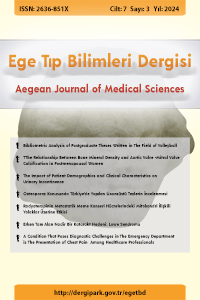
The Aegean Journal of Medical Sciences is the official, peer-reviewed, open-access, and scholarly publication of the Uşak Surgical Association.
Since its second issue in 2018, the journal has adopted the Creative Commons Attribution-NonCommercial 4.0 International (CC BY-NC 4.0) license, ensuring free, permanent, and unrestricted access to all published articles.
The journal is published three times a year (April, August, December) and accepts manuscripts in Turkish and English.
Scope
The journal covers all fields of medical sciences, with a particular focus on experimental and clinical research in basic, internal, and surgical disciplines.
The following article types are considered for publication:
• Original research articles
• Invited reviews
• Case reports
• Letters to the editor
Aim
The primary aim of the Aegean Journal of Medical Sciences is to be a leading academic platform that contributes to the national and international scientific community by publishing high-quality, ethical, and innovative research. The journal is dedicated to fostering evidence-based medical knowledge, supporting interdisciplinary collaboration, and encouraging the translation of research findings into clinical practice.
Mission
The mission of the journal is to expand the scientific understanding of medicine by uniting researchers from diverse disciplines in a supportive and dynamic academic environment.
In doing so, the Aegean Journal of Medical Sciences is committed to promoting ethical integrity, editorial independence, transparency, and open access in scientific publishing.
Ethical and Editorial Standards
The Editorial Board adheres to the principles and best practices set forth by the following international organizations:
• Committee on Publication Ethics (COPE)
• International Committee of Medical Journal Editors (ICMJE)
• World Association of Medical Editors (WAME)
• Consolidated Standards of Reporting Trials (CONSORT)
• Strengthening the Reporting of Observational Studies in Epidemiology (STROBE)
Aligned with the Budapest Open Access Initiative (BOAI), the Aegean Journal of Medical Sciences is dedicated to ensuring that scientific knowledge remains freely accessible and universally available.
1. General Principles
The Aegean Journal of Medical Sciences (Ege Tıp Bilimleri Dergisi) adopts the international publishing principles set forth by the Committee on Publication Ethics (COPE), the Open Access Scholarly Publishers Association (OASPA), the Budapest Open Access Initiative (BOAI), the World Association of Medical Editors (WAME), and the International Committee of Medical Journal Editors (ICMJE).
The journal also publishes in accordance with the ethical and publishing principles of the DergiPark system, under the umbrella of TÜBİTAK ULAKBİM.
2. Human and Animal Rights
For all research involving human subjects, ethics committee approval and a declaration that the study was conducted in accordance with the principles of the Declaration of Helsinki (2013 revision) are mandatory.
For animal experiments, authors must demonstrate compliance with the “Guide for the Care and Use of Laboratory Animals” and submit animal ethics committee approval.
The ethics committee approval certificate must be uploaded to the DergiPark system along with the manuscript submission.
Ethical approval, informed consent, and compliance with guidelines must be explicitly stated in the Materials and Methods section.
If data that could reveal the identity of subjects is used, written informed consent must be obtained from the patients. For individuals under the age of 18, consent from a parent or legal guardian is required.
3. Plagiarism and Publication Ethics Violations
All manuscripts are screened using iThenticate similarity software. The similarity rate must not exceed 20%.
In accordance with the principle of transparency, authors are obliged to provide the raw data sets used in the manuscript upon the request of the Editorial Board.
Acts such as plagiarism, data fabrication, data falsification, salami slicing, gift authorship, or ghost authorship are considered ethical violations.
The Editor or Editorial Board has the right to reject, request corrections for, or perform formal editing on manuscripts that do not comply with ethical standards. Requesting an author to correct an ethical violation does not guarantee that the manuscript will be published.
Corrections requested from authors must be completed within 30 days. Otherwise, the submission will be considered a new application.
4. Declarations and Conflicts of Interest
All sources of financial support and potential conflicts of interest must be clearly declared. Authors must complete the ICMJE Conflict of Interest Disclosure Form.
Authors should avoid entering into sponsorship agreements that may restrict their ability to access all study data or to analyze, interpret, and publish the manuscript.
Potential conflicts of interest among editors, authors, and reviewers are evaluated within the framework of COPE and ICMJE guidelines.
Editors who make final decisions on manuscripts must not have personal, professional, or financial ties to the manuscripts they are evaluating. Any editor, reviewer, or author with a conflict of interest is excluded from the manuscript evaluation process.
5. Authorship and Contribution Declaration
Authorship is based on the ICMJE criteria (JAMA 1997;277:927–934). Every author must:
1. Make substantial contributions to the conception or design of the work; or the acquisition, analysis, or interpretation of data;
2. Draft the work or revise it critically for important intellectual content;
3. Read and approve the final version to be published.
All three of these conditions must be met. Manuscripts must be submitted for evaluation only after receiving written approval from all contributing authors.
The cover letter accompanying the manuscript submission must confirm that all authors have met these three criteria. Individuals who contributed to the work but do not meet the authorship criteria should be listed in the Acknowledgments section.
6. Editors’ Authorship and Editorial Independence
Editors may only submit their own manuscripts to the journal as editorial articles. Section Editors may submit manuscripts, but these articles are evaluated through a double-blind peer-review process, and the editor has no involvement in the process management.
The journal management, publisher, or the institution that owns the journal may not make suggestions to the editors regarding manuscripts submitted to the Aegean Journal of Medical Sciences and/or exert pressure on editorial decisions. Editorial independence is essential.
7. Language Use
The journal adopts the use of inclusive, non-discriminatory, and impartial language. Language that discriminates based on gender, race, ethnicity, age, disability, or belief must not be used.
8. Artificial Intelligence (AI) Use Policy
Artificial Intelligence (AI) tools cannot be listed as an author.
If authors used AI tools (in text, image generation, or analysis), they must transparently declare this in both the Methods section and the cover letter.
Suggested wording:
“During the preparation of this manuscript, the authors used [Tool Name, e.g., ChatGPT, OpenAI] for [specified purpose]. The authors have reviewed and approved the content and take full responsibility for the publication.”
Non-transparent use of AI is considered an ethical violation.
9. Advertising Policy and Publisher
The Aegean Journal of Medical Sciences is the periodic, peer-reviewed, open-access, official scientific publication of the Uşak Surgical Association.
The journal operates independently of all commercial advertising and sponsorship. All editorial decisions are based solely on scientific merit and academic quality. The journal operates in accordance with the financial and publishing policies of the Uşak Surgical Association, while maintaining its editorial independence.
10. Appeals and Complaints Process
Appeals and complaints are evaluated by the Editorial Board according to COPE guidelines. Appeals must primarily be based on the scientific content of the manuscript or concrete errors in the review process.
The Editor-in-Chief makes the final decision on appeals. In necessary cases (unresolved disputes), an independent ethics editor or mediator may be appointed.
Authors should send their requests to egetipbilimleridergisi@gmail.com.
11. Handling Unethical Conduct
In cases of scientific fraud, plagiarism, or misconduct, the Publisher, in collaboration with the Editorial Board, will publish a corrigendum, expression of concern, or retraction. Such violations are not tolerated under any circumstances.
12. Errors in Published Works
If authors discover a significant error in their published work, they must immediately inform the journal and cooperate in its correction.
If editors or the publisher learns from a third party that a published work contains a material error, the authors must promptly correct the article, provide grounds for its retraction, or provide the journal editors with proof of the article’s accuracy.
13. Digital Archiving and Preservation
All content is stored on primary and backup servers. In the event of potential data loss, archive access is ensured through national and international third-party systems.
The journal ensures long-term preservation through indexing services and open-access archives such as LOCKSS and PKP PN.
In the event of the journal’s cessation of publication, authors may contact egetipbilimleridergisi@gmail.com to access the existing archive.
14. Authors’ Archiving Policy
Authors may freely share the abstract and citation information of their articles.
Open-access articles may be shared on any platform immediately after publication; however, a backlink to the original publication on the Aegean Journal of Medical Sciences website must be provided.
Dergimizde makale gönderim, değerlendirme süreci yada yayın süreci esnasında yazarlardan herhangi bir ücret talep edilmemektedir.
Ege Tıp Bilimleri Dergisi "Ücretsiz" dergi kapsamında yer almaktadır.
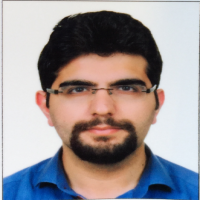
EĞİTİM
1. Aralık 2013- Aralık 2017 Sağlık Bilimleri Üniversitesi, Ankara Eğitim ve Araştırma
Hastanesi, Deri ve Zührevi Hastalıkları İhtisas Eğitimi
2. Ekim 2007- Haziran 2013 Ankara Üniversitesi Tıp Fakültesi, Ankara. Diploma derecesi 3,29/
Onur öğrencisi
3. Eylül 2004- Haziran 2007 İzmir Fen Lisesi, İzmir. Diploma derecesi 95.52/100
4. Eylül 2002- Haziran 2003 Mustafa Kemal İlköğretim Okulu, Diyarbakır. Diploma derecesi
5.00/5.00
5. Eylül 1995-Haziran 2002 Arif Eminoğlu İlköğretim Okulu, Diyarbakır. Diploma derecesi
5.00/5.00
BAŞARILAR
1. 2001 yılında Türkiye Devlet Parasız ve Yatılı Bursluluk Sınavında Türkiye’de ilk 100’e girerek
67.olmak
2. 2001 yılı Diyarbakır İl Milli Eğitim Müdürlüğü Sınavında İl birinciliği
3. 2003 yılı Liselere Giriş Sınavında Türkiye’de 616.164 aday arasından 1036 puan arasından 988
puan alarak ilk 1000’e girerek İzmir Fen Lisesi’ne yerleşme
4. 2007 yılı Öğrenci Seçme ve Yerleştirme Sınavında Sayısal alanında 1.615.534 öğrenci
arasında 1000’de 1’lik dilime girerek 1232. Olmak
5. Genel tıbbi bilgi değerlendirme amaçlı yapılan 2012 yılı Ankara Üniversitesi Gelişim
Sınavında 300 kişi arasından Dönem 5.si olmak
6. Eylül 2013 Sonbahar Tıpta Uzmanlık Sınavında 8458 kişi arasında Türkiye 44.sü olmak
7. 2017 yılı “Dermatoloji ve Dermatopatoloji Vakfı Akademisi Sürekli Tıp Eğitimi
Sorularında Doğru yanıtlar nedeniyle” IX.Dermatoloji ve Dermatopatoloji Sempozyumunda
“Dermatolojide İyi Klinik Uygulamalar Beratı”nı almak
8. Türkiye 22. Zeka Oyunları Yarışması “Oyun 2017”de 29.584 kişi arasında finalist olma
sertifikasını kazanmak
9. 2017 Ağustosta European Academy of Dermatology and Venereology (EADV)’nin
Danimarka’da düzenlenen Psoriasis Fostering Course bursunu kazanmak
10. 2017 Ekim’de European Academy of Dermatology and Venereology (EADV)’nin,
Hırvatistan’da düzenlenen Pregnancy Dermatosis Fostering Course bursunu kazanmak
11. 2017 European Academy of Dermatology and Venereology (EADV) Gebelik
Dermatozları Fostering kursuna seçilen dünyanın farklı ülkeleri arasında katılım yapan
dermatologlar arasından Türkiye adına En İyi Bilimsel Sunum Ödülünü kazanmak
12. 2017 Kasım’da European Academy of Dermatology and Venereology (EADV)’nin,
Belçika’da düzenlenen Basic Surgery Fostering Course bursunu kazanmak
13. Kasım 2017’de düzenlenen Yüksek Öğretim Kurumu Yabancı Dil Sınavında (YÖKDİL) 100
üzerinden 90 puan almak
14. 2017 yılı Türk Dermatoloji Derneği Yeterlilik Sınavı Sertifikasını almak
15. 2018 yılı Akademik Personel ve Lisansüstü Eğitimi Giriş Sınavı (ALES)’de Sayısal 100
üzerinden 85,34 almak
16. Mayıs 2018’de İşyeri Hekimliği sınavında 84 puan alıp Türkiye’de ilk 100’e girerek
79.olmak ve İşyeri Hekimliği Serifikası almak
17. Ekim 2018’de Royal Colleges of Physicians Specialty Certificate Examination in
Dermatology’de dünya ortalaması 136/200 olan sınavdan 170/200 puan alarak
Dermatoloji’de Royal Collages of Physicians Sertifikası almaya hak kazanmak
18. Haziran 2019’da İtalya Milan’da düzenlenen The 25th World Congress of
Dermatology, “WCD RISING STARS SCHOLARSHIP” kongre katılım bursunu almak
19. Ağustos 2019’de Almanya Frankfurt’ta düzenlenen Avrupa Dermatoloji&
Venereoloji Yeterlilik Sertifikası’nı almak
20. Ocak 2020’de Uluslararası “Professional Certificate of Dermoskopi” sertifikasını almak
21. Aralık 2020’de 2 yayın için Tübitak Bilimsel Yayın Akademik Teşvik Ödülü
“The Effect of Narrowband Ultraviolet B Phototherapy on Antinuclear Antibody Status: A
Case‐Control Study.” Photodermatol Photoimmunol Photomed.
“A cross-sectional analysis of skin cancer risk in patients receiving narrow-band ultraviolet B
phototherapy: an evaluation of 100 patients.” Arch Dermatol Res.
22. Demirel Öğüt N, Kutlu Ö, Khachemoune A. Maske altında gizlenen dermatolojik
hastalıklar ve hasta farkındalığın değerlendirilmesi. Dermatoimmünoloji ve Allerji 8. Güz
Okulu. En iyi sözel sunum ikincilik ödülü.
23. Ekim 2022’de yayınlanan “The effect of COVID-19 on development of hair and nail disorders:
a Turkish multicenter, controlled study” isimli makale ile Türk dermatoloji tarihinin en geniş
kapsamlı çalışmaların birinde -30 merkez 45 araştırmacı-yürütücü araştırmacı olmak
24. 2019-2021 yılındaki yayın-atıf kalite ve hacim analizinin yapıldığı 2023 Tübitak Üniversite
Yetkinlik Analizinde Uşak üniversitesinde gerçekleştirilen çalışmalarının kalite/hacim noktasında
Türkiye’nin ilk üç üniversitesi arasına girmesi
25. 2025 yılında basılan Dünyaca ünlü “Textbook of Cosmetic Dermatology” kitabının
6.edisyonunda 3 bölümde bölüm yazarlığı yapmak
DENEYİM
09-2013/12-2013 : 112 Acil Komuta ve Kontrol Merkezi, Batman
12-2013/03-2018 : Sağlık Bilimleri Üniversitesi, Ankara Eğitim ve Araştırma
Hastanesi, Deri ve Zührevi Hastalıkları Bölümü, Ankara
03-2018/07-2018 : Beytepe Murat Erdi Eker Devlet Hastanesi, Deri ve Zührevi
Hastalıkları Bölümü, Ankara
08-2018/03-2020 : Kayseri Develi Devlet Hastanesi, Deri ve Zührevi Hastalıkları
Bölümü, Kayseri
03-2020/ 03-2021 : Uşak Üniversitesi Tıp Fakültesi, Deri ve Zührevi Hastalıkları
Bölümü, Uşak
03-2021/ halen : Tokat Gazisomanpaşa Üniversitesi, Deri ve Zührevi Hastalıkları
Bölümü, Tokat
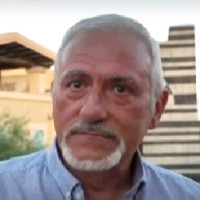
Giovanni Mario Pes is an Associate Professor at the Department of Medical, Surgical, and Experimental Sciences at the University of Sassari, Italy. His
pioneering work inspired research on the critical role lifestyle plays in health and longevity and inspired the concept of Blue Zones. He began
studying longevity in 1996. He originally hypothesized that he would discover a genetic variant supporting longevity but instead found that close
family/social bonds, daily physical activity, and a plant-based diet were key. He has expertise in nutrition, dietetics, diabetology, and geriatrics
and continues to focus on nutritional and lifestyle factors associated with a long life. He has published over 200 scientific articles on various topics,
from coronary disease to glucose intolerance to celiac disease. He co-authored the book Longevity and Identity in Sardinia: The Discovery of the
Sardinian Blue Zone, published by Franco Angeli Press in 2014. He is also the founder of the Blue Zone Projects, wellness communities across the US
designed to boost overall quality of life and activity levels.
Sakarie Mustafe Hidig, hepatobiliyer ve pankreas cerrahisinde uzmanlaşmış bir genel cerrahtır. Hargeisa Group Hastanesi Araştırma Merkezi ve Zhejiang Üniversitesi Dördüncü Bağlı Hastanesi Hepatobiliyer ve Pankreas Cerrahisi Bölümü'ne bağlıdır. CMA, SMA, SAS, SYRFM, AAFP ve IOASD dahil olmak üzere çeşitli mesleki kuruluşların üyesidir. Dr. Hidig, saygın uluslararası dergilerde 50'den fazla makale yayınlamıştır. Araştırma ilgi alanları arasında genel cerrahi, hepatobiliyer ve pankreas cerrahisi, gastrointestinal cerrahi, travma cerrahisi ve kanser araştırması yer alır ve bu alanlardaki gelişmelere önemli ölçüde katkıda bulunur.
He is a distinguished surgeon and academic at Chernihiv Medical Academy, specializing in minimally invasive surgical techniques. With over 20 years of experience, he has published numerous research papers on laparoscopic and robotic-assisted surgeries, earning international recognition in the field. He is also a passionate educator, mentoring the next generation of surgeons in Ukraine and beyond.
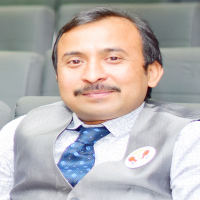
Abduzhappar Gaipov, MD, PhD, Associate Professor at the Nazarbayev University School of Medicine, Program director of Internal Medicine residency program and nephrology fellowship program, Senior nephrologist at the CF University Medical Center.
Fellow and current member of the European Renal Association (ERA Research Fellow 2011–2012, Konya, Turkey) and the International Society of Nephrology (ISN Research Fellow 2017-2018, Memphis, Tennessee, USA). Winner of the MSHE 2022 “Best Scientist” award, recognition of the Elsevier Scopus Award KZ 2018 & 2021 for publication activity and productive contribution to medical science of the Republic of Kazakhstan, calling of the Web of Science Award “Leader of Science” 2020 from the company Clarivate Analytics for the nomination of the top best reviewers in scientific magazines.
Author of more than 200 articles, editor in chief and member of the editorial board of peer-reviewed journals. Principal Investigator of the scientific projects (about 1.5M USD funding), scientific supervisor of several doctoral and master's students.
Dr Chandan Kumar is a distinguish Professor of Physiotherapy Department, Amity University, Noida, Amity Institute of Health Allied Sciences is BPT, MPT in Neurology from university of Pune and Ph.D. in Physiotherapy and having more than 20 years of Academic & Clinical and Administrative experience. His Research and Clinical Interests include Stroke, Parkinson’s disease, Head Injury, Spinal Cord Injury, Cerebral Palsy and other Adult & Pediatrics Neurological Disorders. He has published more than 30 research papers in national & international peer reviewed journals, chaired many scientific sessions and presented research findings in various national & international conferences on the field of Stroke, Cerebral Palsy, Geriatrics, and Clinical Practice and has several research projects on Stroke, spinal Cord Injury & Bell’s palsy in progress. He has been associated with many professional bodies which includes Maharashtra State occupational therapy and Physiotherapy Council, Maharashtra
Dr. Şule Güçyeter, Türkiye'de Uşak Üniversitesi'nde Özel Eğitim Bölümü Özel Yetenekliler Eğitimi Anabilim Dalı'nda Doçent olarak görev yapmaktadır. Yüksek lisans ve doktora eğitimini Özel Eğitim, Özel Yetenekliler Eğitimi alanında yapmıştır. Üstün zekâ/özel yetenek kavramları, üstün zekâlı ve yetenekli öğrencilerin tanılanması, matematik yeteneği, 2e, üstün zekâlı öğrencilerin psikolojik özellikleri, yaratıcı ve eleştirel düşünme konularıyla ilgilenmektedir. Özel eğitim ve özel yetenekliler eğitimi alanında yayınlanmış makale ve kitap bölümleri bulunmaktadır. Araştırmacının ulusal ve uluslararası kongrelerde sunulmuş sözlü bildirileri de vardır.Türk Eğitim Dergisi'nin alan editörlüğünün yanı sıra, Gifted Education International'ın editör/inceleme kurulunda görev yapmaktadır. 2016'dan beri Asya Pasifik Üstün Yetenekliler Federasyonu'nda Türkiye delegesidir.
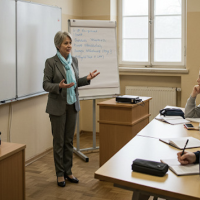
Dr. Şule Güçyeter is an Associate Professor in the Special Education Department, Gifted and Talented Division at the Usak University, in Türkiye. She received her Master’s and Ph.D. degree in special education (with an emphasis in gifted and talented education). Dr. Güçyeter is especially interested in conceptions of giftedness, identification of gifted and talented students, math talent, 2e, psychological characteristics of gifted students, and creative thinking. Beside her role as the field editor of Turkish Journal of Education, she is serving on the editorial/review board Gifted Education International. She has been a delegate of Türkiye in the Asia Pacific Federation on Giftedness since 2016.
The articles published in this journal are licensed under Creative Commons Attribution-NonCommercial 4.0 International License (CC BY-NC 4.0).