Pamukkale University Journal of Engineering Sciences (PAJES) aims to provide an environment where the academic and industrial community can present original theoretical and practical engineering studies.
Pamukkale University Journal of Engineering Sciences (PAJES) publishes original theoretical and applied research articles and review articles in the fields of Computer Engineering, Environmental Engineering, Electrical and Electronics Engineering, Industrial Engineering, Food Engineering, Civil Engineering, Geological Engineering, Chemical Engineering, Mechanical Engineering, and Textile Engineering.
• A research article is an original study, written in Turkish or English, that presents new findings.
• A review article is a study written in English that comprehensively and comparatively presents and interprets existing findings on a specific topic.
http://pajes.pau.edu.tr/eng/Default.asp?p=author_guideline
AUTHOR GUIDELINE
IMPORTANT NOTICE:
While uploading your manuscript to JournalAgent system, authors should provide the contact information of AT LEAST THREE potantial reviewers (from different institutions of the authors) at Reviewer Suggestion section given in Step 9. Please note that the Editor-in-Chief has the right of not sending the manuscript to the suggested reviewers.
The PAJES manuscript template can be downloaded at: http://pajes.pau.edu.tr/PAJES_Template_20160407_for_Authors.dotx
Abstract
This template contains the manuscript preparation guideline of Pamukkale University Journal of Engineering Sciences updated in December 2014. In this section a short abstract indicating the novelty and main findings of the work should be written. The text of abstract should be written fully justified, in italics and 8 pt. The abstract should include approximately 100-250 words and should not contain any non-common abbreviations and citations. The number of keywords should be between 3 and 6.
Introduction
Pamukkale University Journal of Engineering Sciences (PAJES) is a multidisciplinary journal that includes fundamental engineering areas. PAJES aims at disseminating recent advances in engineering and science to researchers, engineers and related readers. PAJES, in which both theoretical and experimental engineering studies take place, encourages the publication of the articles from challenging areas of engineering and concentrates on the publication of the interdisciplinary studies.
This template, which is prepared to help the authors, can be downloaded from the web site of the journal. The papers must be prepared in MS-Word® 2007 or its further releases.
Page Format
The preparation rules given below should be followed. It is recommended that you use this document as template in order to meet the specifications for the format of PAJES.
Page Layout
The size of the papers must be in A4 (210 x 297 mm). Margins must be 30 mm from top, 25 mm from bottom, 15 mm from left and 15 mm from right. Except for the title section of the paper, the page-width figures and tables, the main text must be in double columns 85 mm each. There must be a 10 mm space between the columns.
The main title of the paper should be written in both English and Turkish. The size of the title should be 14 pt and centered.
Only initial letters of the first names and whole of the surnames of the authors must be capital letters. There must be a 10 pt space after the full name of each author. Affiliations of the authors must be given in order of appearance and each individual affiliation must be given in a separate row together with the e-mails of the authors. If there are more than one author who have the same affiliation, their e-mail addresses should be given in order of their names. There must be an 8 pt space between the last e-mail address and the reception/acceptance date information of the paper.
Abbreviations should be spelled out in full at their first occurrence in the text.
Titles
All headings should be written in Cambria font. Level-1 headings must be bold, centered and 11 pt, and should begin with capital letters. Level-2, Level-3 and Level-4 headings must be in the same format as Level-1 headings but they should be 9 pt and justified to the left. No headings should be used further than level-4.
Fonts
Main text should be written in Cambria font and 9 pt, justified. In special cases, e.g. making an emphasis, italic or bold characters can also be used.
Equations
Each equation should be written in a separate row and be enumerated. Equations must be given in the 1x2 tables with hidden borders, where the width of the first cell is 90% and the width of the second cell is 10%. The equation in the first cell should be centered and the equation number in the second cell should be justified to the right. Left and right margins of the cells must be zero. All equations should be written in MS-Word® 2007 and further releases equation editor. Equations which cannot be fitted into a single row can be expressed in more than one row. When necessary, an equation can be given within the main text as long as it is shorter than a single row. Equation editor should be used also in the writing of the equations within the main text or the variables used in the equations. Numbers and their related units used in the text should be in the same line.
Figures
All figures should be centered in the column, but if a figure is large to the extent that it covers double column, then it should be centered according to the page. Figure captions must be below the figures as illustrated in Fig. 1.
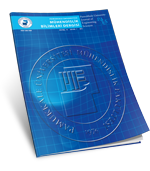
Figure 1. An example figure.
If a figure is wider than a single column, it may be given as to cover two columns and it should be placed at the top or bottom of the page. All original or modified figures taken from other sources must be cited.
Tables
An example table is given in Table 1. Depending on the purpose of use, other types of tables can also be used in the text. Caption of the table should be given above the table.
Table 1. An example table.
1st Column | 2nd Column |
A | X |
B | Y |
C | Z |
If a table is wider than a single column it should be placed at the top or bottom of the page. All citations to the tables, figures and equations in the text must be expressed as in the template. If more than one tables, figures or equations are cited, punctuations of “,” and “-” can be used.
Hyperlinks
Hyperlinks can be used in the paper. Hyperlinks can be utilized as the links (documents, audio, multi-media etc.) that provide more information about the related topic. Font type of a hyperlink must be same as that of the main text but it should be underlined.
Page Numbers
Page numbers should not be inserted into the paper. Headers and footers should not be used in the paper. Such arrangements are to made by PAJES staff.
Citations
Citations in the text should be given by numbers in square brackets. The list of references should be given at the end of the paper in order of their first appearance in the text. Use individual sets of square brackets for citation numbers that appear together. For instance, the expression [1],[2],[5] cites the references 1, 2 and 5; similarly, the expression [3]-[9] cites all the references from 3 to 9. In this context, the section of references should be arranged as given in Section 5. In Section 5, [1],[2] correspond to peer reviewed journal papers, [3],[4] books, [5] section in book, [6],[7] conference proceedings, [8],[9] theses/dissertations, [10],[11] reports, and [12] internet hyperlinks.
Conclusion
This template can be downloaded from the web site (http://pajes.pau.edu.tr) of Pamukkale University Journal of Engineering Sciences (PAJES). Publishing Coordinators of PAJES thank to all authors for preparing their papers in conformity with this template.
Acknowledgment
Editors and Publishing Coordinators of PAJES thank to all authors and reviewers for their contributions.
References
[1] Bennert T, Hanson D, Maher A. “Influence of Pavement Surface Type on Tire/Pavement Generated Noise”. Journal of Testing & Evaluation, 33(2), 94-100, 2005.
[2] Erdoğan M, Tekin R, Kaya M. “Mikrodalga Fırında Suni Yaşlandırılan 6013 Alüminyum Alaşımın Korozyon Davranışının İncelenmesi”. Pamukkale Üniversitesi Mühendislik Bilimleri Dergisi, 20(1), 25-30, 2014.
[3] Haupt RL, Haupt SE. Practical Genetic Algorithms. 2nd ed. New York, NY, USA, Wiley, 2004.
[4] Erkek C, Ağıralioğlu N. Su Kaynakları Mühendisliği. Altıncı baskı. İstanbul, Türkiye, Beta, 2010.
[5] Poore JH, Lin L, Eschbach R, Bauer T. Automated statistical testing for embedded systems. Editors: Zander J, Schieferdecker I, Mosterman PJ. Model-Based Testing for Embedded Systems, 111–146, Boca Raton, FL, USA, CRC Press, 2012.
[6] Li RTH, Chung SH. “Digital Boundary Controller for Single-Phase Grid-Connected CSI”. IEEE 2008 Power Electronics Specialists Conference, Rhodes, Greece, 15–19 June 2008.
[7] Yeğen B, Önöz B, Altıparmak B, Bilen O, Pala M. “Fırat, Yeşilırmak ve Kızılırmak Havzalarında Taşkınların Mevsimselliğinin Belirlenmesi”. Altıncı Ulusal Hidroloji Kongresi, Denizli, Türkiye, 22-24 Eylül 2010.
[8] Boynukalın Z. Emotion Analysis of Turkish Texts by Using Machine Learning Methods. MSc Thesis, Middle East Technical University, Ankara, Turkey, 2012.
[9] Ceylan H. Şehiriçi Ulaşım Ağlarının Armoni Araştırması Optimizasyon Tekniği ile Tasarımı. Doktora Tezi, Pamukkale Üniversitesi, Denizli, Türkiye, 2009.
[10] Diament P, Lupatkin WL. “V-line Surface-Wave Radiation and Scanning”. Department of Electrical Engineering, Columbia University, New York, USA, Scientific Report, 85, 1991.
[11] Devlet Planlama Teşkilatı. “Devlet Yardımlarını Değerlendirme Özel İhtisas Komisyonu Raporu”. Devlet Planlama Teşkilatı, Ankara, Türkiye, 2681, 2004.
[12] Türk Standartları Enstitüsü. “Standart Arama”. https://intweb.tse.org.tr/standard/standard/standardara.aspx (21.12.2014).
Appendix A
Appendices should be given by classifying them. If necessary, they may begin on a separate page.
Pamukkale University Journal of Engineering Sciences (PAJES) embraces the principle of developing and disseminating knowledge objectively and respectfully throughout its publication process. Therefore, it is crucial that all parties involved in the publication process (authors, readers/researchers, publishers, reviewers, and editors) adhere to ethical principles. Pamukkale University Journal of Engineering Sciences expects all parties to uphold the ethical responsibilities established by the Committee on Publication Ethics (COPE) policies.
Ethical Principles
Authors,
• Ensure that the article they submit to the journal is original.
• Do not submit their work under review to other journals.
• Publish the results of a study as a single article without compromising the integrity and quality of that research.
• Do not manipulate research data in any way or present fabricated or misleading information.
• Report any conflict of interest to the editorial office.
• Inform the editorial team for correction or retraction if they discover an error in the manuscript, regardless of the stage of the manuscript (under review, early printing, published).
• Submit the necessary documents and declarations in case there are situations requiring data usage permission, research permission, ethics committee approval, or participant approval within the article.
• Do not include individuals not involved in the study as authors in articles, and do not request the addition or removal of authors, or changes to the author order during the review and publication stages.
• Provide information and raw data to the editorial office when requested.
• Cite the sources accurately they use in the article and do so within the framework of ethical principles.
• Declare in the relevant section of the article whether ethics committee approval is required, as stated in the writing guide.
• Declare their contributions to the article in a descriptive manner, as specified in the writing guidelines, in the relevant section of the article.
Editors,
• Strive to improve the journal and ensure the high quality of published studies.
• Select referees to evaluate articles based on their expertise and ensuring the transparency of the process.
• Keep the identities of authors and reviewers confidential.
• Implement correction or retraction procedures for articles containing errors or ethical violations.
• Take necessary action to prevent conflicts of interest between reviewers and authors.
• Not allowing discourteous or unscientific peer reviews.
• Ensure that a fair process based on impartiality is implemented in article evaluation and that the process is completed on time.
• Ensure that human and animal rights are protected when articles involve human or animal experimentation. In such studies, they verify whether the ethics committee permits have been obtained and reject the article if the necessary permits are not documented.
• Direct the editorial board to ensure independent and impartial evaluation of articles.
• Consider the originality of articles in making publication decisions and ensuring their contribution to the relevant readership. They consider reader feedback and provide appropriate feedback.
• Consider originality, contribution to the relevant field, and the reliability and validity of the method. They prioritize clarity of expression and appropriateness to the journal's purpose and scope. They oversee compliance with publication policies and international standards.
• Protect the intellectual property rights of authors.
• Pre-evaluate articles within the scope of the journal unless there are significant problems.
• Provide information and guidance to reviewers as needed.
• Direct all editorial board members to ensure that processes continue in accordance with publication policies and directives, informs them about publication policy, and shares developments.
• Hold regular meetings with editorial board members regarding journal issues and operations.
• Does not tolerate misconduct or abuse of power. In such cases, they pursue the necessary prosecution.
Reviewers,
• Offer constructive comments based on courtesy and avoid derogatory comments when evaluating the manuscript.
• Conduct an objective evaluation, basing their evaluations on scientific criteria, independent of personal opinions, and should not stray beyond the scope of the study. Although blind review is used, they should not allow factors such as religion, language, race, political views, or commercial concerns to influence the evaluation.
• Complete the manuscript evaluation process based on the principles of impartiality and confidentiality.
• Inform the editorial office of any potential conflict of interest before the manuscript is reviewed.
• Destroy any documents related to the manuscript after reviewing the manuscript.
• Reject the review if the study falls outside their area of expertise.
• Respond to the review invitation, whether positively or negatively, and should complete the evaluation of the manuscript they have accepted in a timely manner.
Publication Ethics
• By submitting their articles to the Pamukkale University Journal of Engineering Sciences, authors declare that their work is original and authored by them; that it has not been previously published or submitted for review; that original ideas, data, findings, and materials obtained from other sources (including their own sources) are properly documented and cited; that their work does not violate the rights of others, including privacy rights and intellectual property rights; that the data provided is their own and accurate.
• Authors declare and undertake that the article submitted to the Pamukkale University Journal of Engineering Sciences for review has not been previously published, accepted for publication, or submitted to another journal for publication, either domestically and/or internationally, in Turkish or any other language.
• Authors acknowledge that partial or complete plagiarism without proper citation is unacceptable to the journal. Articles submitted to the journal are checked for originality using plagiarism prevention software. If unacceptable similarities to other published works are detected, the article will be returned to the authors immediately. Authors accept the return of their articles if they are found to have unacceptable similarities with other published works in their articles submitted to Pamukkale University Journal of Engineering Sciences for evaluation.
Publication Policy
Pamukkale University Journal of Engineering Sciences (PAJES) is committed to applying the highest standards of publication ethics and following the practice guide prepared by the Committee on International Publication Ethics (COPE). Accordingly, Pamukkale University Journal of Engineering Sciences:
• Adopts and implements the principle of double-blind review, where the identities of both author(s) and reviewers are kept confidential during the article evaluation process.
• Considers the "positive" opinions of at least two reviewers before accepting an article for publication. The final decision on the article is made by the editor, based on the reviewer reports and the opinion of the field editor.
• Commits to applying the highest standards of publication ethics and following the practice guide prepared by the Committee on International Publication Ethics (COPE). It reserves the right to remove articles that do not comply with publication ethics or that contain abusive practices at any time.
• Publishes original theoretical and practical research articles in the fields of Computer Engineering, Environmental Engineering, Electrical and Electronics Engineering, Industrial Engineering, Food Engineering, Civil Engineering, Geological Engineering, Chemical Engineering, Mechanical Engineering, and Textile Engineering in Turkish or English, while only publishing "review articles" in English.
• Publishes electronically in seven issues per year, in January-February, March-April, May-June, July-August, September-October, November, and December. Additionally, special issues are published in December.
• Conducts its article evaluation process through the Journalagent system since 2012; as of January 2026, it will conduct all processes related to the article processing through the Dergipark system.
• Reserves the right to publish accepted articles; the copyright of the articles belongs to the author(s).
• Declares that all legal and scientific responsibilities regarding the content of the published articles belong to the author(s). • It does not pay royalties for published articles.
• Allows users to read, download, copy, distribute, print, and use its published articles for any lawful purpose.
• Rejects any behavior that violates publication and research ethics and subjects all articles it reviews to plagiarism/similarity checks. Since January 2015, all submitted articles have been checked using IThenticate® plagiarism detection software. Based on the similarity report generated by the software, the editorial board decides whether the article will be peer-reviewed or rejected outright.
• Uses email address pajes@pau.edu.tr for questions, suggestions, and comments.
All articles that have been reviewed and accepted are published online without any article submission and / or evaluation fee.
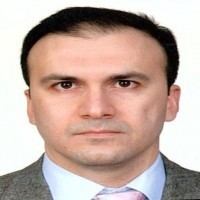
Dr. Öğr. Üyesi Mustafa TÜMBEK, Pamukkale Üniversitesi Mühendislik Fakültesi Elektrik-Elektronik Mühendisliği Bölümü’nde öğretim üyesi olarak görev yapmaktadır. Lisans eğitimini 2004-2009 yılları arasında Eskişehir Osmangazi Üniversitesi’nde Bilgisayar Mühendisliği ve Elektrik-Elektronik Mühendisliği alanlarında çift anadal programı ile tamamlamıştır. Ardından yüksek lisans ve doktora derecelerini 2010-2019 yılları arasında Pamukkale Üniversitesi Fen Bilimleri Enstitüsü Elektrik-Elektronik Mühendisliği Anabilim Dalı’nda almıştır. Doktora çalışmaları, elektrikli araçlarda enerji yönetimi ve elektrik makineleri tasarımı üzerine yoğunlaşmıştır.
Akademik kariyerine 2014 yılında Pamukkale Üniversitesi’nde araştırma görevlisi olarak başlayan TÜMBEK, 2020 yılından itibaren Dr. Öğretim Üyesi unvanıyla görevini sürdürmektedir. Araştırma alanları; elektrik makineleri ve sürücüleri, gömülü sistemler, enerji yönetim sistemleri, modelleme ve simülasyon, sayısal tasarım, güç elektroniği ve makine öğrenmesi konularını kapsamaktadır. Özellikle batarya-ultrakapasitör hibrit sistemleri, elektrikli araç motor tasarımı ve elektrikli araçlarda enerji optimizasyonu üzerine yaptığı çalışmalar, ulusal ve uluslararası düzeyde yayımlanmış makaleler ve bildiriler ile bilimsel literatüre katkı sağlamıştır. TÜMBEK, bu alanlarda yürüttüğü projelerle mühendislik uygulamalarında verimlilik ve sürdürülebilirlik odaklı çözümler geliştirmeyi hedeflemektedir.
Akademik görevleri kapsamında lisans ve lisansüstü düzeyde dersler vermekte, mühendislik öğrencilerinin pratik becerilerini geliştirmeye yönelik öğrenci projelerini yönlendirmekte ve endüstri ile iş birliği içinde araştırmalar yürütmektedir. Ayrıca, çeşitli bilimsel dergilerde hakemlik yapmakta ve konferanslarda bildiriler sunmaktadır. Ek olarak, PAJES dergisinde editör yardımcılığı görevini yürütmektedir.
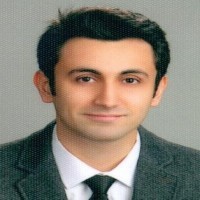
Okan Minnetoğlu 1987 yılında Denizli'de doğdu. 2009 yılında Pamukkale Üniversitesi (PAÜ) Mühendislik Fakültesi Makine Mühendisliği Bölümünü bitirdi.
2010 yılında PAÜ Makine Mühendisliğinde Yüksek Lisans sınavını kazandı. 2012 yılında Araştırma görevliliği sınavını kazanarak yüksek lisans yaptığı bölüme atandı.
2013 yılında "Engelli Bir Alan İçinde Hedefine Otomatik Olarak Ulaşabilen Bir Mobil Robotun Kabiliyetinin Araştırılması" tezi ile yüksek lisansını tamamladı.
Aynı yıl içinde PAÜ Makine Mühendisliğinde Makine Teorisi ve Dinamiği Anabilim dalında Doktorasına başladı.
2022 yılında "Diferansiyel Sürüş Sistemli Mobil Robotların Çok Sayıda Sabit ve Hareketli Engeller Arasındaki Hareket Planlaması ve Hiper Gereğinden Çok Serbestlik Dereceli Robotların Üç Boyutlu Dar Ortamlarda Keskin Manevra Kabiliyetinin Arttırılması" tezi ile doktora eğitimini tamamladı.
PAÜ Makine Mühendisliği Bölümü Makine Teorisi ve Dinamiği Anabilim Dalında halen araştırma görevlisi olarak çalışmaktadır