Web
The aim of Necmettin Erbakan University Journal of the Faculty of Political Sciences is to contribute to science by publishing high-quality publications of scientific significance. For this purpose, original research articles, reviews, case presentations, and letters to the editor in all areas related to basic or expanded clinical experience in the field of health sciences are published. Necmettin Erbakan University Journal of the Faculty of Political Sciences is an independent, double-blind peer-reviewed, open-access journal that aims to publish articles in all relevant scientific fields and is published online in June and December.
The journal focuses on original research in the field of Social and Political Sciences. Works must describe original data that have not been previously published or submitted elsewhere. The publication language of the journal is Turkish and English, and Turkish works must include an expanded abstract in English. Manuscripts considered appropriate for submission according to the submission rules and scope of the journal are sent to at least two expert reviewers for scientific evaluation. In the case of acceptance by one reviewer and rejection by another, a third reviewer is invited. The Editorial Board of Necmettin Erbakan University Jornal of the Faculty of Political Sciences, which discusses the appropriateness, then takes into account the comments of the reviewers for each submission. The final decision on publication/non-publication for all submitted articles rests with the Editor-in-Chief. The Editorial Board of Necmettin Erbakan University Journal of the Faculty of Political Sciences commits to complying with the criteria of the International Council of Medical Journal Editors (ICMJE), World Association of Medical Editors (WAME), and the Committee on Publication Ethics (COPE).
Subject Category: Social Sciences
Scientific Fields: Economics, Business Administration, Finance, Labor and Social Security Economics, Political Science, Public Administration, International Relations, Econometrics, Finance, Applied Sciences
Keywords: Social Sciences, Political Sciences, Economics, Business Administration, Finance, Labor and Social Security Economics, Political Science, Public Administration, International Relations, Econometrics, Finance, Applied Sciences
Publication Language
Full Text Publication Language:
• Primary Language: Turkish
• Secondary Language: English
Content Written in English and the Latin Alphabet:
• Article Title: Turkish & English
• Author Name: Turkish (via Latin Alphabet)
• Author Address: Turkish (via Latin Alphabet)
• Keywords: Turkish & English
• References: Turkish (via Latin Alphabet)
Full Text: Turkish (via Latin Alphabet)
Article Submissions
Submitted manuscripts must be appropriate to the purpose and scope of the journal. Original, unpublished manuscripts that are not in the evaluation process in another journal and whose content and submission have been approved by each author are accepted for evaluation.
Readership
The target readership is members of professions, specialists, researchers, specialty and doctoral students as well as students related to this field in all areas of health. It aims to contribute to the spread of continuous professional development and research culture.
Fee Policy
The publication of articles in the journal and the execution of article processes are not subject to any fee. No processing or submission fee is charged for articles submitted to the journal or accepted for publication. In addition, Necmettin Erbakan University Journal of the Faculty of Political Sciences does not accept sponsorship and advertisement in accordance with its publication policies. All expenses of the Journal of Necmettin Erbakan University Faculty of Political Sciences are covered by the Dean's Office of Necmettin Erbakan University Faculty of Political Sciences.
Copyright
The copyrights of the works published in Necmettin Erbakan University Journal of the Faculty of Political Sciences belong to their authors. Authors consent to the publication of their intellectual work by Necmettin Erbakan University Faculty of Political Science Journal under the Creative Commons Attribution-NonCommercial 4.0 International (CC BY-NC 4.0) license.
Originality of Articles
Necmettin Erbakan University Journal of the Faculty of Political Sciences does not accept works previously published elsewhere. There are a few exceptions to this situation. The Journal accepts the abstract of a published paper as long as the full text is not included in another work. Even if the thesis is published or cataloged as a whole on the web page of a university or institute, works derived from the thesis are accepted for publication by the Journal if they meet the publication requirements. In addition, foreign language articles that have been previously published in another work can be processed with the decision of the editor-in-chief if they have a positive scientific externality. This last article is not absolute.
Language: Turkish, English
The journal publishes in Turkish (as spoken in Turkey) and English.
Accepted Article Types: Research Article, Review Article, Book Review, Compilation, Technical Note, Thesis Summary, Conference Paper, Short Paper, Translation, Case Report, Interview, Systematic Reviews and Meta-Analysis, Short Report, Monograph, Clinical Research, Photo-Quiz, Letter to the Editor, Note, Meeting Summary, Legal Review, Decision Review, Correction, Editorial, Biography, Bibliography, News, Report, etc.
Authors are encouraged to include abstracts in both Turkish and English to facilitate the spread of their work. For Research and Review Articles written in Turkish, an extended English abstract must follow the references section after the regular summary.
Article Format: Word (doc/docx)
Citation Style: APA 7
Author Changes: Author changes are allowed only before the article is accepted for publication. Authors must review the author list and order carefully before submitting their articles and ensure that the final list of authors is provided during the initial submission.
After the article is uploaded to the system, it will be checked by the editorial board using a plagiarism detection software, and if the similarity rate is below 15% without references or below 30% with references, the peer review process will be initiated. The similarity rate for articles derived from theses must not exceed 30%. Otherwise, the article will be returned to the author.
Writing Rules:
1. The publication is in Turkish and English.
2. Studies must have these parts:
• The title, full names of the author(s) and their institutions, contact information, Turkish abstract, keywords, English abstract and English keywords.
• The main text of the article.
• References.
• Appendix, tables and figures.
3. For articles written in Turkish, a Turkish abstract of 150-250 words and at least 3 and no more than 5 keywords must be included at the beginning of the article. The Turkish title must be in 16-point bold font.
4. The English abstract should be between 150 and 250 words long, and should contain between three and five English keywords. An English title should also be provided.
5. An extended English abstract must also be added to Turkish-language studies. The extended abstract should be between 750 and 1500 words. The author is responsible for the English language check (proofreading) of the extended abstract. Articles with insufficient language in the abstract will not be published. This will be until language validity is ensured.
6. The abstract should include the purpose, scope, method and brief results of the article.
7. You should submit works to the journal in MS Word and in .doc or .docx format.
8. Articles should be between 3,000 and 10,000 words (excluding the extended abstract), while book reviews should be no less than 1,000 words. However, the editorial board will decide on the suitability of works exceeding 10,000 words.
9. It is essential that the first letter of each word in the main title are capitalized. Use Times New Roman, 16-point bold. Please review the Article Template for all details. You can find the article template on our journal's homepage at https://dergipark.org.tr/tr/pub/neusbf under the "Download Article Template" link.
10. Only use a maximum of two subheadings; make sure the second one is also italicised.
11. As shown in the article template, the author's name should be written in Times New Roman 12 point, bold, one line below the title. The author(s)' title, position, e-mail address, and ORCID number or link should be provided in a footnote. You should number footnotes for other explanations in the text and at the bottom of the page. The article template contains all these points.
12. Abstracts should be set in 10-point Times New Roman font and keywords in 9-point Times New Roman font.
13. Main texts should be in Times New Roman 11 point.
14. The line spacing should be 1.15 nk. There should be a 6 pt space above each paragraph.
15. The first line indentation should be 0.39 inches/0.99 cm.
16. Use double quotation marks (‘...’) for direct quotations.
17. Figures, images, graphs and tables should be numbered in 11-point font. According to APA7 rules, the names of tables, figures, images and graphics should be placed at the top. However, they can also be prepared in a smaller font size if necessary. For details on formatting, please refer to the Article Template.
18. It is essential that graphs can be viewed in Windows MS Word, and that they are numbered.
19. Photos must be in JPEG format, be of sufficient size and be placed in the relevant places in the text.
20. Harvard University has published guidelines for using quotations from the internet. You can find them here: http://www.library.dmu.ac.uk/Images/Selfstudy/Harvard.pdf
21. You must upload articles to the DergiPark website. http://dergipark.org.tr/neusbf.
22. A template for articles is available in the attachment to assist authors with technical issues such as page, font, line spacing, paragraphs, quotations and references. Texts that are not prepared in accordance with this template will be returned to the author without being included in the review process, and authors will be reminded that the text must be prepared in accordance with this template.
23. An extended abstract is not required for studies prepared in English, but it is mandatory for studies not prepared in English, and the format is clearly specified in the article template. The extended abstract must start on a new page after the references. The title should be 'EXTENDED ABSTRACT', written in 11-point bold Times New Roman. The text should include subheadings in Times New Roman 10-point bold font. The main text should be in 10-point Times New Roman font with 0 pt before and after spacing and single line spacing. The first line should be indented by 0.39 inches (0.99 cm).
Ethical Guidelines:
For studies involving human subjects or animals that require ethical committee approval, the approval should be mentioned, and the related documents must be uploaded.
Research involving informed consent must provide information about the signed consent form.
Source Citation Style:
Articles must adhere to the APA 7 Citation Style.
Final Checklist:
This checklist is intended to be useful during the final review of the article before it is uploaded to the journal system.
1. Author information: The following information must be provided for each author on the title page:
- Author's name and surname
- Author's affiliation and city
- ORCID number
- Email address
2. Required files:
• Full manuscript
• Similarity report (while the editor will obtain the similarity report for each submission, it is important for testing the integrity of the author-journal relationship)
• Copyright form
• Title page containing author information
• Necessary tables and figures (should be uploaded separately from the main text)
3. Ensure that the article has undergone both "spell check" and "grammar check."
4. All references cited in the text should be listed in the reference list, and vice versa.
Electronic Confirmation from the Author During Submission:
I am authorized to submit this work for consideration by your journal, and I have been authorized by the co-authors.
The manuscript is original, has not been officially published in another peer-reviewed journal, is not under consideration for publication elsewhere, and does not infringe on any existing copyright or third-party rights.
If the manuscript is accepted for editorial publication, I/we accept that it will be licensed under the Creative Commons Attribution-NonCommercial 4.0 International (CC BY-NC 4.0) license.
The copyright and intellectual property rights of the author(s) or, if applicable, the author's employer, are retained. The author(s) confirm that the publisher has no responsibility for any third-party claims or lawsuits resulting from copyright infringement, and all responsibility rests with the authors.
The author(s) affirm that the manuscript contains no criminal or unlawful content, and that no illegal material or methods were used in conducting the research.
IMPORTANT NOTE: For studies that have undergone minor or major revisions based on reviewer feedback, the editor requests two additional files along with the revised full manuscript:
1) Full text: the full text revised in accordance with the referee's suggestions, including author names and any other necessary information, must be uploaded to the system again. This text is considered ready for publication and the process will be carried out based on it.
2) A file of type 'Additional File' with the file name 'Colored Main Text'. This file will show the revisions made by the author(s) in accordance with the referee's comments, with the changes made by each referee shown in a different colour. This is essential for transparency in the review and revision process.
3) A Word file consisting of a table with two columns should be prepared with the file type 'Additional File' and the file name 'Note to the Editor'. The first column should list the requests and opinions of the same reviewers and the second column should list the corrections made in accordance with each reviewer's suggestions, item by item. This is essential for demonstrating the transparency of the review and revision process.
Authors' Responsibilities
Authorship and Contribution: Authorship should be limited to individuals who have made significant contributions to the conception, design, execution, or interpretation of the work. All individuals who have made significant contributions should be listed as co-authors. Those who made minimal contributions, such as language editing, should be acknowledged in the acknowledgment section. The corresponding author must ensure that all co-authors have seen and approved the final version of the manuscript and consented to its submission. Authors should carefully review the author list and order before submitting, providing the definitive list during the initial submission. The editor will consider adding, removing, or reordering authors only in exceptional cases after submission. All authors must agree to such changes.
Requests for Changes in the Author List: Changes to the author list (adding, removing, or reordering authors) can only be made before the article is accepted, and must be approved by the journal editor. In such cases, the editor will require a written confirmation from the corresponding author explaining the reason for the change and obtaining consent from all authors.
Writing the Article: Original research articles should be written with objectivity, presenting the topic in a clear and original manner, with sufficient detail and references to allow others to replicate the work. Fraudulent or knowingly false statements are considered unethical and unacceptable.
Originality: Authors must guarantee that the manuscript is original, has not been published elsewhere, and is not under review for publication in another journal. The journal will conduct similarity checks for each submission and will notify authors if discrepancies arise. Authors should not expect the editor to rely solely on the author's declaration.
Use of Original Sources and Citation: Authors should ensure that all original sources are properly cited and that no third-party content is used without permission.
Data Access and Retention: Authors may be required to provide research data supporting their article for editorial review and must comply with the journal’s open data requirements, making the data publicly available and retaining it for a reasonable period after publication. The journal encourages uploading research data to TUBITAK’s Aperta Portal.
Multiple and Concurrent Publication: Authors should not submit the same research to multiple journals simultaneously. Submitting a manuscript to more than one journal is considered unethical.
Ethics Approval for Studies Involving Surveys and Interviews: For research involving human participants, ethical approval is required and must be stated in the manuscript, including details such as the ethics committee name, date, and approval number.
Conflict of Interest: Any potential financial or non-financial conflict of interest that could influence the objectivity of the research or provide an unfair advantage must be disclosed, including sources of funding and sponsorships. If there are no conflicts of interest, this should also be stated.
Error Notification: If an author detects a significant error or inaccuracy in a published work, they must promptly notify the journal and cooperate to correct or retract the article if necessary.
Image Integrity: Authors should ensure that any images used do not have altered features that mislead the reader. The journal's policies on graphic content should be adhered to.
Publication Ethics Principles
Publication ethics can be defined as a self-regulation mechanism on behalf of authors, reviewers, and publishers, insisting on honesty to establish higher editorial processing standards. Ethical standards for publications exist to ensure high-quality scientific publications, public trust in scientific findings, and the credibility of individuals' ideas.
• Honest researchers do not engage in plagiarism.
• They do not incorrectly attribute sources.
• They do not hide objections they cannot refute.
• They do not distort opposing viewpoints.
• They do not destroy or conceal data.
Peer-reviewed studies are research that supports and implements the scientific method. In this regard, adherence to ethical principles by all parties involved in the publication process (authors, readers, researchers, publishers, reviewers, and editors) is of great importance. Necmettin Erbakan University Journal of the Faculty of Political Sciences adheres to national and international standards regarding research and publication ethics. It complies with the Press Law, the Law on Intellectual and Artistic Works, and the Higher Education Institutions Scientific Research and Publication Ethics Directive. Necmettin Erbakan UniversityJournal of the Faculty of Political Sciences has also adopted the International Ethical Publishing Principles published by the Committee on Publication Ethics (COPE), Directory of Open Access Journals (DOAJ), Open Access Scholarly Publishers Association (OASPA), and the World Association of Medical Editors (WAME). It also commits to the decisions of the Turkish Editors Workshop.
• Press Law (National Legislation)
• Law on Intellectual and Artistic Works (National Legislation)
• Higher Education Institutions Scientific Research and Publication Ethics Directive (National Legislation)
• Transparency and Best Practices in Academic Publishing (International Criteria)
• Turkish Editors Workshop Decisions (National Criteria)
Duplicate Publication
Duplicate publication is the publication of the same article or substantially similar articles in multiple journals. The editor will reject such articles without review. Subsequently, the editor may impose an embargo on the author attempting duplicate publication, publicly disclose this situation in the journal where the article was previously published (perhaps as a simultaneous announcement with the editor of the previous journal that published the article), or apply these measures together.
Simultaneous Submission to Multiple Journals
Authors cannot submit the same article to multiple journals simultaneously. The editor reserves the right to consult with the editor(s) of the other journal(s) if they learn about a possible simultaneous submission. Additionally, the editor may return the article without review, reject it without considering the reviews, or make this decision after discussing it with the relevant other editor(s) and may decide not to accept article submissions from the authors for a certain period. Moreover, they may also inform the authors' employers or implement all of these measures simultaneously.
Preventing Plagiarism
Presenting the ideas, methods, data, applications, writings, figures, or works of others as one's own, either partially or entirely, without giving proper scientific attribution in accordance with established rules is considered plagiarism. Journal of Necmettin Erbakan University Faculty of Political Sciences scans all submitted articles to prevent plagiarism. The presence of plagiarism in the submitted works is checked using Turnitin & iThenticate software, and a similarity rate of less than 15% without reference and/or less than 30% with references is expected. The primary measure of similarity rate is whether the author adheres to citation and referencing rules. Even if the similarity rate is below 1%, if proper citation and referencing are not done, plagiarism may still be considered. Therefore, authors should be familiar with citation and referencing rules and apply them carefully.
Fraud
Generating data not based on research, manipulating or altering a presented or published work to be based on fabricated data, reporting or publishing these, making it appear as though research that was never conducted has been completed, falsifying research records and obtained data, using methods, devices, and materials not used in the research, failing to consider data that is inconsistent with the research hypothesis, manipulating data and/or results to fit relevant theories or assumptions, and distorting or shaping research results to align with the interests of the supported individuals and organizations are all considered unethical behaviors. All articles that do not comply with accepted ethical standards are removed from publication. This includes articles that are found to contain possible irregularities and improprieties after publication.
Necmettin Erbakan University Journal of the Faculty of Political Sciences requires that all research involving personal or sensitive data or materials related to non-public individuals undergo official ethical review.
Handling Research Misconduct Allegations
Necmettin Erbakan University Journal of the Faculty of Political Sciences complies with COPE's Ethical Tool Set for Successful Editorial Boards. The journal's editors will take measures to prevent the publication of articles where plagiarism, citation manipulation, data manipulation, data fabrication, and other research misconduct have occurred. In no case will the editors of Journal of Necmettin Erbakan University Faculty of Political Sciences knowingly allow such misconduct to occur. If the journal's editors become aware of any allegations of research misconduct related to a published article, they will follow COPE's guidelines in addressing the allegations.
Ethical Violation Reports
Readers who notice a significant error or mistake in an article published in Necmettin Erbakan University Journal of the Faculty of Political Sciences or have any complaints about editorial content (plagiarism, duplicate publications, etc.) can report them by sending an email to neusbfj@gmail.com. We welcome such reports as they provide an opportunity for improvement, and we will respond promptly and constructively.
Correction, Retraction, Expression of Concern
Editors may consider publishing a correction if minor errors that do not affect the findings, interpretations, or conclusions are identified in a published article. When major errors or violations that render the findings and results invalid are found, editors should consider retracting the article. If there is a possibility of research or publication misconduct by the authors, and there is evidence that the findings are not reliable or that the authors' institutions have not investigated the matter, editors should consider an expression of concern. Guidelines from COPE and ICJME are taken into account regarding correction, retraction, or expression of concern.
Publication of Survey and Interview-Based Studies
Necmettin Erbakan University Journal of the Faculty of Political Sciences adopts the principles of "Behavioral Rules and Best Practices Guidelines for Journal Editors" and "Behavioral Rules for Journal Publishers" of the Committee on Publication Ethics (COPE) to establish ethical assurance in scientific periodical publishing. In this context, the following should be observed in the studies submitted to the journal:
For research in all fields requiring ethical board approval, it should have been obtained, this approval should be stated in the article and documented.
In research requiring ethical board approval, information regarding the approval (committee name, date, and number) should be provided in the methodology section, as well as confirmation in the first/last pages of the article for case reports, stating that informed voluntary consent was obtained.
Special Issue Publication Policy
Upon the request of the Publication Board, one special issue may be published in the journal each year. Articles submitted for inclusion in a special issue undergo initial editorial review. They are then reviewed for compliance with the journal's writing rules and subjected to similarity checks to prevent plagiarism. After these stages, they are subjected to a peer review process using a double-blind model, where both the author and the reviewers are anonymous.
Necmettin Erbakan University Journal of the Faculty of Political Sciences takes the editorial confidentiality obligation seriously, treating all submitted articles as confidential documents. This means that information about a manuscript will not be disclosed to anyone without the author's permission. During the manuscript review process, only the following individuals have access to the manuscript: Editors, Reviewers, and Members of the Editorial Board. The only circumstance under which details about a manuscript can be communicated to a third party without the author's permission is if the editor suspects a serious case of research misconduct.
Scientific Misconduct Allegations and Suspicions:
Scientific misconduct can be defined in various ways. While following the guidance provided by major publication ethics bodies, Journal of Necmettin Erbakan University Faculty of Political Sciences addresses these issues on a case-by-case basis. Editors are obliged to take action if they suspect scientific misconduct or if an allegation of misconduct is made. This duty applies to both published and unpublished manuscripts. Editors should not simply reject manuscripts that are subject to allegations of misconduct. They should investigate the allegations ethically. When necessary, editors should follow COPE (Committee on Publication Ethics) flowcharts. Editors should first request a response from the individuals under suspicion of misconduct. If they are not satisfied with the response, they should ask the relevant employer or institution to investigate. Editors should make every reasonable effort to ensure that an appropriate investigation of alleged misconduct is conducted; if not, they should persistently seek a resolution to the problem. This is a laborious but crucial task.
Necmettin Erbakan University Journal of the Faculty of Political Sciences adheres to COPE's Ethical Toolkit for Successful Journal Publishing. The Journal editors will take precautions to prevent the publication of articles where plagiarism, citation manipulation, data falsification, data fabrication, and other forms of research misconduct have occurred. In no case will the Necmettin Erbakan University Journal of the Faculty of Political Sciences or its editors knowingly permit such misconduct to take place. The editors of Necmettin Erbakan University Journal of the Faculty of Political Sciences are committed to following COPE guidelines if they become aware of any allegations of research misconduct regarding an article published in their journal.
Reviewers should report to the Editor any suspicions they have regarding research or publication misconduct. The Editor is responsible for taking the necessary actions in line with COPE recommendations.
The Journal of Necmettin Erbakan University Faculty of Political Sciences commits to applying COPE flowcharts when encountering allegations of misconduct in the following or similar areas:
• What to do if you suspect redundant (duplicate) publication
• What to do if you suspect plagiarism
• What to do if you suspect fabricated data
• What to do if you suspect fake authorship/institution
• What to do if you suspect a change in authorship is planned
• What to do if you suspect undeclared conflict of interest
• What to do if you suspect ghost/gift authorship
• What to do if you suspect ethical problems with a paper
• What to do if you suspect misconduct reported via email or other means
• What to do if you suspect ethical misconduct reported on social media
Complaints Procedure:
This procedure applies to complaints regarding content, procedures, or policies for which Necmettin Erbakan University Journal of the Faculty of Political Sciences or its editorial staff is responsible. Complaints can provide an opportunity and incentive for improvement, and we aim to respond quickly, courteously, and constructively.
Complaints should be related to content, procedures, or policies that are the responsibility of Necmettin Erbakan University Journal of the Faculty of Political Sciences or its editorial staff. Complaints should be sent by email to neusbfj@gmail.com and will be treated as confidential. The Editor will respond promptly to complaints. If the complainant is not satisfied with the initial response, the complainant may request that the complaint be escalated to a more senior member of the editorial team.
Where the complainant remains dissatisfied, complaints may be referred to the Senior Editor. A full response will be provided where possible within two weeks.
COPE publishes an application code for editors of scientific journals. This will facilitate the resolution of disputes between journals and publishers. However, it can only be approached after the Journal's own complaints procedure has been exhausted.
Appeals Process:
We welcome serious appeals regarding evaluations made by editors and reviewers. If you believe we have rejected your paper because we misunderstood the scientific content, please contact our editorial team via neusbfj@gmail.com. At this stage, please do not attempt to submit a revised version of your manuscript. If, after reading your appeal, we agree that your appeal is justified, we may invite you to submit a revised version of your manuscript for further review. In this way, your paper will be resubmitted to the external peer-review process. Please provide as much detail as possible in your appeal letter. Finally, please be aware that we can consider only one appeal for each paper; therefore, write the appeal letter carefully and with full details—you have one chance, so use it wisely. We do not generally engage in lengthy reconsiderations of rejected papers, as we have found that such discussions are often unsatisfactory for both authors and editors.
Conflicts of Interest:
A conflict of interest arises when a primary interest could be unduly influenced by a secondary interest (such as financial gain or personal rivalry). We believe that we need to know about authors' competing interests to be able to make the best decision about how to handle their paper. It is also important for readers to be aware of authors' competing interests, if any, when they read a paper.
A conflict of interest can take many forms, and examples include consultancies, employment, grants, and honoraria. All sources of financial support for the project should be disclosed, and the role of the sponsor(s) in the research should be briefly described. If there is no funding, this should be stated. Any potential conflicts of interest should be disclosed as early as possible.
Necmettin Erbakan University Journal of the Faculty of Political Sciences has a process for handling submissions from editors, employees, or board members. Such submissions will be subject to the same peer-review process. The editors, employees, and board members involved in the processing of these submissions are not involved in the decision-making process of their own work. These submissions undergo double-blind peer review.
The editor should not be involved in decisions about papers that they have written themselves. The submission should be assigned to another editor and undergo the full peer-review process. Editors must follow the ICMJE guidelines on conflicts of interest in editorial decision-making.
Research Ethics Principles
Necmettin Erbakan University Journal of the Faculty of Political Sciences upholds the highest standards of research ethics and embraces the international research ethics principles described below. Compliance with ethical rules in articles is the responsibility of the authors.
The design, review, and conduct of research should adhere to principles of integrity, quality, and transparency.
The research team and participants should be fully informed about the purpose of the research, methods used, potential uses of the research, the requirements of participation, and any associated risks.
The confidentiality of information provided by research participants and the privacy of respondents should be ensured. Research should be designed to safeguard the autonomy and dignity of research participants.
Research participants should volunteer to take part in the study and should not be under any form of coercion.
Measures should be taken to prevent harm to participants, and research should be planned to minimize any risks to participants.
Independence in research should be clearly and transparently articulated, and any conflicts of interest should be disclosed.
In experimental studies involving human subjects, written informed consent should be obtained from participants who decide to take part in the research. For children, wards, or those with certified mental illnesses, the approval of a legal guardian is required.
If the study is conducted in any institution or organization, approval must be obtained to conduct the study in that institution or organization.
For studies involving human subjects, the "method" section should indicate that informed consent was obtained from the participants, and ethical approval from the institution where the study was conducted should be noted.
Necmettin Erbakan University Journal of the Faculty of Political Sciences (JNEUSBF) does not charge any fees for the submission, evaluation and publication of the articles. Authors do not pay article processing fees for the studies they send to the journal. All expenses of the journal are covered by Necmettin Erbakan University Faculty of Political Sciences.
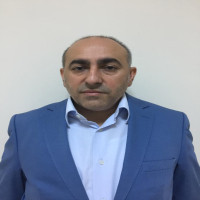
Prof. Dr. Murat ÇEMREK. Eğitim: ODTÜ Siyaset Bilimi ve Kamu Yönetimi Bölümü (1996, lisans), Bilkent Üniversitesi Siyaset Bilimi ve Kamu Yönetimi Bölümü (1997, yüksek lisans; 2003, doktora) ve Budapeşte Koleji: Yüksek İhtisas Enstitüsü (2004, doktora sonrası araştırma). İş Tecrübesi: Selçuk Üniversitesi Uluslararası İlişkiler Bölümü (2004-2014, Erasmus Koordinatörü-Öğretim Üyesi-Bölüm Başkan Yardımcısı- Bölüm Başkanı), Stratejik Düşünce Enstitüsü (2010-2012, Dış Politika Masası Koordinatör Yardımcısı), Uluslararası Ahmet Yesevi Türk-Kazak Üniversitesi Avrasya Araştırma Enstitüsü (2012-2014, Kurucu Müdür) ve Necmettin Erbakan Üniversitesi Siyaset Bilimi ve Uluslararası İlişkiler Bölümü (2014-halen, Öğretim Üyesi-Bölüm Başkanı). Araştırma İlgileri: Küreselleşme, Türk Dış Politikası ve Siyasi Tarih.
Prof. Dr. Murat ÇEMREK. Educational Background: METU Department of Political Science Public Administration (1996, BA), Bilkent University Department of Political Science Public Administration (1997, MA; 2003 PhD) and Collegium Budapest: Institute for Advanced Studies (2004, post-doc). Working Experience: Selçuk University Department of International Relations (2004-2014, Erasmus Coordinator-Instructor-Vice Chair-Chair), Institute of Strategic Thinking (2010-2012, Vice Coordinator for Foreign Policy Desk) International Ahmet Yesevi University Eurasian Research Institute (2012-2014, Founding Director) and Necmettin Erbakan University Department of Political Science and International Relations (2014-currently, University Erasmus+ Coordinator-Instructor-Chair). Research Interests: Globalization, Turkish Foreign Policy and Political History.
Prof. Dr. Önder Kutlu, Ankara’da doğdu (1967). Lisans öğrenimini Ankara Üniversitesi, SBF, Kamu Yönetimi Bölümünde (1990); Yüksek Lisans (1996) ve Doktora (2001) çalışmalarını, YÖK bursu ile University of Exeter – Department of Politics’te tamamladı. Exeter Üniversitesinde iki yıl öğretim üyeliği ve Devon County Council adına altı ay EAL öğretmenliği yaptı. Niğde (2002) ve Selçuk Üniversitelerinde (2002-2015) çalıştı. 2005 yılında Doçent, 2011 yılında Profesör oldu. Selçuk Üniversitesinde Bölüm başkanlığı, Rektör danışmanlığı ve Dış İlişkiler ve Erasmus Koordinatörlüğü gibi görevler yürüttü. Üniversitenin kurul ve komisyonlarında görevler aldı. 2015 yılından itibaren Necmettin Erbakan Üniversitesi, Siyasal Bilgiler Fakültesinde görev yapmaktadır. Burada Rektör Yardımcılığı ve Dekanlık (Hukuk ve SBF) yaptı. YÖK, ÜAK; TÜBA ve YÖKAK bünyesindeki kurul, komisyon ve çalışmalarda akademik ve idari görevler üstlenip, Bakanlık, yerel yönetimler (Büyükşehir, İlçe belediyeleri; İl Özel İdaresi) ve meslek kuruluşlarında (Sanayi ve Ziraat) danışmanlıklar ifa etti. Bologna Ulusal Takımı’nda (2008-2009) yer aldı. Türkiye Yükseköğretim Yeterlilikler Çerçevesi ve Temel Alan Yeterlilikleri Hazırlama Komisyonunda katkı sağladı (2008-2010). AB ve BM projeleri yanında ulusal destekli (Başbakanlık, Bakanlık, valilik, yerel yönetim, meslek kuruluşu, kalkınma ajansı, üniversite) pek çok projede yürütücü, koordinatör ve danışmanlık görevlerinde bulundu. Çalışma alanları kamu politikası, reform, politika transferi, yerel yönetimler, kurumsal kapasite ve sivil toplumdur. Sekiz adet kitabı bulunmaktadır. Evli ve dört çocuk babasıdır.
Journal of Necmettin Erbakan University Faculty of Political Sciences is licensed under a Creative Commons Attribution-NonCommercial 4.0 International License (CC BY NC).