Special Issue

Volume: 36 Issue: Kadın Araştırmaları , 1/26/26

Year: 2026

Research Article

Default avatar
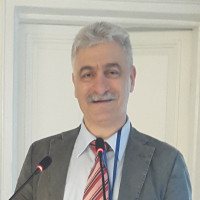
Prof. Dr. Ahmet AKSIN FIRAT ÜNİVERSİTESİ
History of Ottoman Socio-Economy, Ottoman Society, Late Modern Urban History, Late Modern Ottoman History
Old Anatolian History, History of Old Asia Minor, Classical Greek and Roman History

He earned a bachelor's degree in economics and a master's degree in economic theory from Istanbul University. The field of economic theory is the focus of study for both degrees. He completed his PhD program at Kyoto University's Department of Economics. His studies concentrate on the economies of East Asia, energy economics, financial economics, institutional economics, and input-output analysis. His primary research interests are in the institutional frameworks of global and financial economies. He was employed at a broad range of institutions, and his works were published in scholarly publications. At the present, he is working as an associate professor at the economics department of Firat University in Turkey. Moreover, he was a research fellow at the Faculty of Engineering in the Kyushu University.

Econometrics Theory, Institutional Economics Theory, Macroeconomic Theory, Mathematical Economics

AIMS

The Fırat University Journal of Social Sciences (p-ISSN 1300-9702, e-ISSN 2149-3243) is a peer-reviewed, open-access academic journal dedicated to advancing research and scholarly dialogue in the fields of humanities, social sciences, and economics. The journal aims to foster theoretical, empirical, and critical studies that contribute to a deeper understanding of cultural, historical, political, social, and economic phenomena.

The journal encourages submissions that are interdisciplinary in nature and engage with complex social realities from a human-centered perspective. It places special emphasis on research that explores the intersections of society, culture, and communication within local, national, and global contexts.

SCOPE

The Fırat University Journal of Social Sciences publishes original research articles, conceptual discussions, and critical reviews that reflect scholarly rigor and contribute to the advancement of knowledge in the following fields:
  • Humanities: Including philosophy, history, language and literature, art history, and cultural studies—particularly those offering critical or theoretical insights.
  • Social Sciences: Covering sociology, anthropology, political science, communication studies, and psychology, with a focus on identity, discourse, institutions, and processes of social transformation.
  • Economics: Welcoming contributions on economic theory, development economics, public policy, economic history, and the socio-economic dimensions of regional and global change, especially those grounded in broader social science contexts.

The journal supports interdisciplinary work that bridges traditional academic boundaries to address emerging and multifaceted social issues. Special consideration is given to studies that examine the dynamic relationships between society, culture, and communication across diverse settings.

All submitted manuscripts undergo a rigorous double-blind peer review process, ensuring impartiality, academic integrity, and adherence to international publication standards.

Submissions must demonstrate scholarly originality, methodological soundness, and alignment with the journal’s core focus on the humanities and social sciences.


Open Access Policy 
As an Open Access publication, Fırat University Journal of Social Sciences makes its published work immediately available to the public. The journal supports the advancement of research through its Open Access policy. All uses (such as online linking, copying, printing, duplication, and distribution) are permitted under the terms of the Creative Commons Attribution-NonCommercial 4.0 International License (CC BY-NC 4.0), unless otherwise specified. This license allows users to share and adapt the content for non-commercial purposes, as long as proper attribution is given. Commercial use of the material requires prior permission from the journal editor.

Evaluation Process
1. The journal employs a double-blind peer review system for the evaluation of all submitted articles. Under this system, reviewers do not have access to the identity of the authors, and authors remain unaware of the reviewers’ identities throughout the process.
2. Translation and publication evaluation studies submitted to the journal are also subjected to the same double-blind review process as original scholarly articles.
3. The Editorial Board initially screens submissions for format compliance and subject relevance. Suitable manuscripts are then forwarded to two independent reviewers who are experts in the relevant field. If both reviewers provide favorable evaluations, the manuscript is accepted for publication. In cases of one positive     and one negative review, the manuscript is sent to a third reviewer for final assessment.
4. Authors whose manuscripts require revisions must submit the revised version within 20 days of receiving reviewer feedback. Revised manuscripts may be re-evaluated by the original reviewers if necessary.
5. The final decision regarding the publication of all manuscripts is made by the Editorial Board, following approval from two field experts recommending that the manuscript is publishable. Authors are expected to address all reviewer and editorial comments. If the author disagrees with any feedback, they may submit a          separate justification document outlining their position.
6. Submitted manuscripts, whether accepted or rejected, will not be returned to the authors.
7. The views expressed in published articles are those of the authors and do not necessarily reflect the official views of the Fırat University Journal of Social Sciences.

Publication Frequency
Fırat University Journal of Social Sciences is published triannually, both in print and electronic formats, in the months of January, May, and September. Articles are accepted on a rolling basis and are not restricted to a specific issue. Authors may submit their scientific papers at any time throughout the year.

Submission/Article Processing Charges
Fırat University Journal of Social Sciences is an open access journal under the terms of the Creative Commons Attribution-NonCommercial 4.0 International License (CC BY-NC 4.0). The journal does not charge authors any fees for submission or publication, nor does it pay royalties to the author(s) for their articles.

Plagiarism Detection
Fırat University Journal of Social Sciences requires that all studies passing the Blind Review Process be subjected to plagiarism detection to uphold the integrity of the journal. In this regard, every submitted manuscript is checked using a plagiarism detection system approved by the Editorial Board.

Copyright Policy
The copyright of articles published in Fırat University Journal of Social Sciences remains with the author(s). However, by submitting a manuscript and upon its acceptance, the author(s) grant the journal the right to publish and distribute the work under the terms of the Creative Commons Attribution-NonCommercial 4.0 International License (CC BY-NC 4.0). Articles that have been previously published or are under consideration elsewhere will not be accepted.


WRITING RULES PDF

WRITING RULES Word

CLICK HERE TO DOWNLOAD THE SAMPLE ARTICLE TEMPLATE


Articles intended for publication in the Fırat University Journal of Social Sciences should primarily be original works that contribute to the field of social sciences and must possess the following qualities:
1. Titles in Turkish and foreign languages should be compatible with the scope of the article; they should reflect the subject of the article briefly, clearly, and adequately.
2. Summaries in Turkish and foreign languages should reflect the purpose, scope, and results of the writing and should be prepared in a way that can be published separately from other sections of the text.
3. The writing should adhere to grammatical rules in terms of language and expression, follow a clear and straightforward narrative style, avoid unnecessary information that goes beyond the purpose and scope, and comply with the rules of article writing.
4. In the preparation of the article, established scientific methods should be followed, and information such as the subject, purpose, scope, and rationale for the preparation of the study should be provided adequately and in a specific order. The figures, tables, photographs, and other documents used in the article should be prepared in accordance with scientific standards, selected in line with the purpose and scope of the writing, and unnecessary documents and sources that are not mentioned in the text should not be included.
5. The figures, tables, photos, and other documents used in the article must have a clear and sufficient explanation that is easy to understand.
6. The sources used in the text should be organized according to writing rules, and every document mentioned should be included in the references section; however, documents that are not referenced in the text should not be included in the references section.
7. The results should be consistent with the aims and scope of the research, presented in a concise and essential manner, and should not include data or findings that are not mentioned in the text.
8. For any research conducted using qualitative or quantitative approaches that involve data collection from participants through surveys, interviews, focus group studies, observations, experiments, or other interview techniques, an "Ethics Committee Approval Document" must be obtained.
9. All articles to be submitted to our journal must include a "Similarity Report" (Plagiarism Report).
10. The article file should be uploaded in two separate instances, one of which must include the authors' names within the work, while the other must not contain any author information. The file name should also include the title of the work, not just the author's name.

Example file name:

V1_untitled_article title

Article titled V1.


11. An author can only have one article published in any issue of our magazine, regardless of the order of authorship.
12. Considering the TR INDEX criteria (in your institution, the number of articles and the peer review ratio should be at most 1/3) and taking into account the journal density, an author will have only one publication in a year.

ETHICAL PRINCIPLES AND PUBLICATION POLICY

Publication Ethics
The publishing processes of Fırat University Journal of Social Sciences are designed to ensure the impartial and respectful development and dissemination of knowledge. These processes directly influence the quality of the work produced by authors and supported by their institutions. Peer-reviewed studies reflect and uphold the principles of the scientific method. It is essential that all stakeholders in the process—authors, readers, researchers, publishers, reviewers, and editors—adhere to ethical principles.

Fırat University Journal of Social Sciences expects all stakeholders to fulfill the following ethical responsibilities within the framework of publication ethics.

The ethical duties and responsibilities outlined below have been formulated in accordance with the guidelines and policies provided by the Committee on Publication Ethics (COPE) and are in line with open access principles.

Ethical Responsibilities of the Authors
The author(s) submitting to Fırat University Journal of Social Sciences are expected to adhere to the following ethical responsibilities:
1. Originality: The article(s) submitted must be original. If the author(s) reference or draw upon other studies, they must fully and accurately cite the sources they have used.
2. Authorship: Only individuals who have made significant intellectual contributions to the creation of the study should be listed as authors. Individuals who have not contributed intellectually should not be designated as authors.
3. Conflict of Interest: Any potential conflicts of interest related to the submitted studies must be disclosed, if applicable. This includes any financial, personal, or professional relationships that may influence the results or interpretation of the study.
4. Raw Data: The raw data associated with the article may be requested by the editorial board during the evaluation process. In such cases, the author(s) should be prepared to provide the requested data and information promptly.
5. Rights and Permissions: The author(s) must provide documentation showing that they have the rights to use any data, including necessary permissions for research or analysis, as well as consent from experimental subjects (if applicable).
6. Corrections and Retractions: If the author(s) notice any mistakes or errors in their published work, at any stage (e.g., early view or evaluation), they are obligated to inform the journal editor and cooperate with the editorial team in correcting or retracting the work.
7. Simultaneous Submissions: Articles submitted to the journal must not be under consideration for publication by any other journal simultaneously. Each submission should be made only after the completion of the previous submission process. A study that has already been published elsewhere cannot be submitted to     Fırat University Journal of Social Sciences.
8. Changes in Authorship: Once the evaluation process of a study has begun, no changes to the authorship (such as adding, removing, or altering the order of authors) can be proposed.

Ethical Duties and Responsibilities of the Editors
The editors of Fırat University Journal of Social Sciences have the following ethical duties and responsibilities, based on the COPE Code of Conduct and Best Practice Guidelines for Journal Editors and the COPE Best Practice Guidelines for Journal Editors, which are published by the Committee on Publication Ethics (COPE) as open access.

General Duties and Responsibilities
Editors are responsible for all publications in Fırat University Journal of Social Sciences. In line with this responsibility, editors have the following roles and obligations:
1. They strive to meet the information needs of both readers and authors.
2. They ensure the continuous development and improvement of the journal.
3. They oversee processes aimed at enhancing the quality of studies published in the journal.
4. They support and uphold freedom of thought and expression.
5. They ensure academic integrity in all aspects of the publication.
6. They carry out their duties without compromising intellectual property rights or ethical standards.
7. They maintain transparency and clarity in addressing issues that require corrections or further explanations.

Relationship with the Readers
Editors make decisions by considering the knowledge, skills, and experience expectations of all readers, researchers, and practitioners. They ensure that the published studies contribute to the readers, researchers, practitioners, and the scientific literature, and that the studies are original. Additionally, editors take into account feedback from readers, researchers, and practitioners, providing explanatory and informative responses.

Relationship with the Authors
The duties and responsibilities of editors toward authors are as follows:
1. Editors make decisions based on the importance, originality, validity, clarity of expression, and alignment with the journal's goals and objectives.
2. Editors forward works suitable for the journal's scope to the pre-evaluation stage, unless the work presents serious issues.
3. Editors do not disregard positive referee suggestions unless there are significant problems with the work.
4. New editors may not alter the decisions made by previous editors regarding a work, unless there is a serious issue.
5. Editors ensure transparency by publishing the "Blind Refereeing and Evaluation Process" and prevent any deviations from the established processes.
6. Editors provide clear, descriptive, and informative notifications and feedback to the authors.

Relationship with Referees
The duties and responsibilities of editors toward referees are as follows:
1. Editors select referees based on the subject matter of the study.
2. Editors provide the necessary information and guidelines to referees during the evaluation process.
3. They monitor for any conflicts of interest among editors, authors, and referees.
4. Editors maintain the confidentiality of referees' identities in accordance with the blind refereeing process.
5. Editors encourage referees to approach their evaluations with impartiality, scientific rigor, and objectivity.
6. Editors assess the performance of referees based on criteria such as timely feedback and quality of evaluation.
7. Editors establish practices and policies to enhance the performance of referees.
8. Editors take necessary actions to dynamically update and expand the pool of referees.
9. Editors prevent impolite or unscientific reviews.
10. Editors work to ensure that the referee pool is diverse and represents a wide range of expertise.

Relationship with the Editorial Board
Editors ensure that editorial board members follow the processes, publishing policies, and guidelines effectively. They keep the editorial board members informed about publishing policies and any related developments. Editors provide training for new editorial board members on publishing policies and supply them with the necessary information.
Additionally, editors:
1. Ensure that editorial board members evaluate works impartially and independently.
2. Select new editorial board members from among qualified faculty members who can contribute meaningfully.
3. Assign works relevant to the expertise of the editorial board members for evaluation.
4. Regularly engage and communicate with the editorial board.
5. Organize meetings with the editorial board at regular intervals to develop publishing policies and improve the journal.

Relationship with the Owner and Publisher of the Journal
The relationship between editors and the publisher is based on the principle of editorial independence. Editors make editorial decisions independently of the publisher, ensuring that the publication process adheres to the highest standards of academic integrity and impartiality. The publisher supports the editorial board’s decisions and ensures that resources and infrastructure necessary for the journal's operation are provided.

Editorial and Blind Review Processes
Editors adhere to the "Blind Review and Evaluation Process" outlined in the journal's publishing policies. In this context, editors ensure that each work undergoes a fair, impartial, and timely evaluation. The review process is designed to maintain the integrity and quality of the journal by providing objective assessments while upholding the standards of academic rigor.

Quality Assurance
Editors ensure that every article published in the journal adheres to the journal's publication policies and meets international academic standards. This includes maintaining rigorous editorial processes, ensuring the quality and integrity of the content, and providing a transparent, fair, and unbiased evaluation process for each submission.

Protection of Personal Data
Editors ensure the protection of personal data related to the subjects, images, and individuals mentioned in the evaluated studies. They safeguard the personal information of authors, referees, and readers in accordance with privacy laws and ethical standards. Confidentiality is maintained throughout the editorial and review processes to uphold the integrity and trust in the journal.

Ethics Committee, Human and Animal Rights
Editors ensure the protection of human and animal rights in all evaluated studies. In cases where studies involve human participants or animals, editors require that ethical approval from the relevant ethics committee be provided. If such approval is absent or the study lacks permission for experimental research, editors will reject the work to uphold ethical standards and ensure compliance with international research guidelines.

Prevention Against Possible Misuse and Misconduct
Editors take proactive measures to prevent potential abuse and misconduct in the publication process. They conduct thorough, objective investigations into any allegations of misconduct, ensuring that all complaints are addressed in accordance with ethical standards. Editors share their findings transparently and ensure that the evaluation process upholds the integrity of the journal.

Ensuring Academic Publication Integrity
Editors act promptly to correct any errors, inconsistencies, or misdirections in their work to maintain the integrity of academic publishing. They ensure that all published articles are accurate and consistent, addressing any identified issues swiftly and transparently to uphold the credibility of the journal.

Protection of Intellectual Property Rights
Editors are committed to protecting the intellectual property rights of all published articles. They defend the rights of both the journal and the authors in the event of potential violations. Furthermore, editors take the necessary steps to ensure that the content in all published articles does not infringe upon the intellectual property rights of other publications, ensuring respect for original works and compliance with copyright laws.

Constructiveness and Openness to Discussion
Editors:
1. Consider and address the constructive criticisms of the articles published in the journal, adopting a positive and open approach to such feedback.
2. Grant the author(s) the right to respond to critiques of their work, ensuring a fair and balanced dialogue.
3. Do not disregard studies with negative results, recognizing the value of all research contributions regardless of their outcomes.

Complaints
Editors respond to complaints from authors, referees, or readers in a thoughtful and detailed manner. They carefully examine each complaint and provide informative and clarifying feedback, ensuring that all concerns are addressed with transparency and respect for ethical standards.

Political and Business Concerns
The journal owner, publisher, and any other political or commercial interests do not influence the editors' independent decision-making process. Editors make decisions solely based on the academic merit and scientific rigor of the submitted work, ensuring that external factors do not compromise the integrity of the editorial process.

Conflicts of Interest
Editors ensure that the publication process is carried out independently and impartially, carefully considering any potential conflicts of interest between authors, referees, and other editors. They take necessary actions to prevent any bias and ensure that the editorial decisions are made based solely on the academic quality and merit of the work.

Ethical Responsibilities of Referees
The evaluation of all studies through the "Blind Review" process directly impacts the quality of the publication. This process ensures confidence in the objective and independent evaluation of the work. For Fırat University Journal of Social Sciences, the evaluation process follows the principle of double-blind review. Referees are not permitted to contact authors directly; all evaluations and comments must be submitted through the journal management system. In this process, referee comments on evaluation forms and full texts are forwarded to the author(s) through the editors. In this context, referees evaluating articles for Fırat University Journal of Social Sciences are expected to adhere to the following ethical responsibilities:
1. Referees agree to evaluate studies within their area of expertise only.
2. Referees make evaluations impartially and maintain confidentiality throughout the process.
3. If they believe there is a conflict of interest during the evaluation process, they must decline to evaluate the study and inform the journal editor.
4. In accordance with the confidentiality principle, referees are required to destroy the works they evaluate after the review process.
5. Referees only evaluate the final version of studies, once they have been officially published.
6. Evaluations should be made objectively, based solely on the content of the study.
7. Referees should not let factors such as nationality, gender, religion, political beliefs, or commercial interests influence their evaluations.
8. Referees provide feedback in a constructive and courteous manner, avoiding derogatory personal comments, hostility, slander, or insults.
9. Referees must complete their evaluations in a timely manner, adhering to the ethical guidelines outlined above.
10. If you encounter any unethical behavior or content in Fırat University Journal of Social Sciences beyond the above-mentioned ethical responsibilities, please report it via email to sbedergi@firat.edu.tr.

Privacy Statement
Fırat University Journal of Social Sciences is an "Open Access" journal that provides its published content directly to open access. The journal aims to contribute to the support and development of science through its "Open Access" policy. As per this policy, provided that the source is cited in accordance with recognized standards, all usage rights (such as online linking, copying, printing, reproduction in any physical medium, distribution, etc.) are granted, except for commercial use and content modification (unless otherwise stated in the specific content). These rights are granted under the Creative Commons Attribution-NonCommercial 4.0 International License (CC BY-NC). For any commercial use of the content, permission from the journal editor is required.

Journal of Social Sciences is an open access journal.

İMTİYAZ SAHİBİ: FIRAT ÜNİVERSİTESİ REKTÖRLÜĞÜ

Fahrettin Göktaş
Prof. Dr. Fahrettin GÖKTAŞ FIRAT ÜNİVERSİTESİ
Atomic and Molecular Physics, Nuclear Physics

BAŞ EDİTÖR

Default avatar
Prof. Dr. Ahmet AKSIN FIRAT ÜNİVERSİTESİ
History of Ottoman Socio-Economy, Ottoman Society, Late Modern Urban History, Late Modern Ottoman History

EDİTÖRLER

İstanbul Üniversitesi İktisat Teorisi Anabilim Dalında lisansüstü programında ilk defa düzenleme teorisinin teorik çerçevesi konusunda detaylı çalışma
gerçekleştirmiştir. Daha sonra bu çalışma ile dünyanın en ilk sıralarında gelen ve birçok Nobel ödülü kazanmış Kyoto Üniversitesi'nden 2013 yılında
doktorasını yapmak için kabul almıştır. Japonya tarafından eğitimi için burs sağlanmıştır. Doktora sürecinde 3 yıl boyunca Kyoto Üniversitesi'nde
araştırma görevlisi olarak çalışmıştır. Danışmanı Prof.Dr. Uni Hiroyuki'nin projesinde, önemli kurumsal iktisatçılardan birisi olan J.R.Commons'un şehir
kütüphanesinde bulunan daktilo yazmalarını görev üstlenerek bir araya getirmiştir. Bu süreç içerisinde hem kurumsal ekonomi hem de mühendislikte
çokça kullanılan girdi-çıktı analizleri konusunda uzmanlaşmıştır. 3 yıl sonunda doktorasını birincilikle bitirmiştir. Daha sonra Kyoto Üniversitesi'nde bir
süre öğretim görevlisi olarak bulunmuştur. Bu süreçte birçok prestijli dergiler için yayınlar hazırlamıştır.Yeni modellerin hem ampirik hem de girdi-çıktı
analizi kullanılarak tasarlanması için çalışmış ve yeni gelişmelere odaklanarak sorunlara matematiksel ve istatistiksel anlamlar bulmaya çalışmıştır.

Econometrics Theory, Institutional Economics Theory, Macroeconomic Theory, Mathematical Economics
Old Anatolian History, History of Old Asia Minor, Classical Greek and Roman History

YAYIN KURULU

Default avatar
Assoc. Prof. Dr. Bekhzod KUZİBOEV Urgench State University
Econometrics Theory, Panel Data Analysis, Time-Series Analysis, Environmental Economy, Energy Economy On Ships, Green Economy
Isik Akin
Dr. Isik AKİN Bath Spa University

Dr. Isik Akin, Finans alanında son derece deneyimli ve tutkulu bir öğretim görevlisi olup, Muhasebe Programı Lideri olarak görev yapmaktadır. Muhasebe ve finans disiplinlerinin geniş bir yelpazesinde uzmanlığa sahip olan Dr. Akin, lisans düzeyinde Finansal Muhasebe ve Yönetim Muhasebesi, lisansüstü düzeyde ise Finansal ve Yönetim Muhasebesi ile Kurumsal Finans Yönetimi modüllerinin liderliğini üstlenmektedir. Eğitim ve öğretime olan bağlılığı ve dinamik yaklaşımı, öğrencilerinin finans ve muhasebe prensiplerini derinlemesine anlamasına büyük katkı sağlamaktadır.

Dr. Akin'in profesyonel kariyeri, Finans alanındaki önemli araştırma katkılarıyla zenginleşmiştir. Şirket finansmanı, davranışsal finans ve finansal piyasalar gibi konularda birçok makale ve kitap yayını bulunan Dr. Akin, alanında bilgi birikimini sürekli olarak genişletmektedir. Araştırmaya olan bu bağlılık, akademik tartışmaları derinleştirmenin yanı sıra, eğitimini en güncel sektör içgörüleri ve trendleri ile uyumlu hale getirmektedir.

Akademinin ötesinde, Dr. Akin çeşitli idari ve liderlik rollerinde de önemli görevler üstlenmiştir. 2016-2017 yılları arasında Avrupa Birliği Proje Yöneticisi olarak görev yaparak organizasyon ve proje yönetimi becerilerini sergilemiştir. Aynı dönemde Sağlık Bilimleri Enstitüsü Başkan Yardımcılığı, Bologna Komitesi Başkanlığı ve Çin İşbirliği Yöneticiliği görevlerini de yürütmüştür. Bu görevler, onun farklı sorumluluklar altında sergilediği çok yönlülüğü ve yetkinliğini yansıtmaktadır.

Dr. Akin’in öğretim kariyeri, Worcester Üniversitesi ve Londra Sanat Üniversitesi de dahil olmak üzere çeşitli kurumları kapsamaktadır. Bu kurumlarda lisans ve lisansüstü öğrencilere Ekonomi ve Finans modülleri öğretmiştir. Matematik, İstatistik, Uluslararası Finans, Uluslararası Bankacılık ve Finans, Kurumsal Finans, Nicel Araştırma Yöntemleri, Ekonomi ve Küreselleşme ve Sigortacılık gibi konulardan oluşan geniş bir eğitim portföyüne sahiptir. Bu geniş deneyim, teorik bilgiyi pratik uygulamalarla bağdaştırmasına olanak tanımış ve öğrencilerini finans dünyasının karmaşıklıklarına hazırlamıştır.

Dr. Akin’in akademik mükemmeliyete olan bağlılığı, uluslararası iş birliğini teşvik etmek ve eğitim girişimlerini geliştirmek adına dış finansman sağlama yeteneği ile de desteklenmektedir. 2021–2022 yıllarında Connect4Innovation: İngiltere-Türkiye Yükseköğretim Kurumları Ortaklık Fonu projesi için hibe sağlamayı başaran Dr. Akin, eğitim alanında uluslararası iş birliğini teşvik etme konusundaki kararlılığını bir kez daha ortaya koymuştur.

Akademik Nitelikler:

Muhasebe ve Finans Doktorası, Bath Spa Üniversitesi
Ekonomi ve Finans Doktorası, İstanbul Gelişim Üniversitesi
Finans Yüksek Lisansı, University of the West of England, Bristol
Matematik Lisans Derecesi, Trakya Üniversitesi
Profesyonel Nitelikler:

Yükseköğretim Akademisi Üyeliği (FHEA)
Tam Üyelik, Vergi Teknisyenleri Derneği (MATT)
Chartered Institute for Securities & Investment (CISI) Üyeliği


Dr. Akin’in hem eğitimci hem de araştırmacı olarak çok yönlü uzmanlığı, akademide önemli bir etki yaratmaya devam etmektedir. Öğrencilerini başarılı kariyerlere hazırlarken Finans alanına da değerli bilgiler kazandırmaktadır.

Banking and Insurance, Finance and Investment, Behavioural Finance, Financial Forecast and Modelling, Financial Markets and Institutions, Financial Risk Management, Financial Accounting
Default avatar
Assoc. Prof. Dr. Ryo IZAWA Tokyo Metropolitan University

Tokyo Metropolitan University

History of Asian Economy, Economic History, Business Systems in Context (Other)

Institutional Economics

Institutional Economics Theory
Default avatar
Prof. Dr. Kürşat ÇELİK FIRAT ÜNİVERSİTESİ
History of Ottoman Economy
Default avatar
Assoc. Prof. Dr. Ali Yavuz POLAT Gulf University for Science&Technology

Gulf University for Science&Technology

Behavioural Economy, Financial Economy
İskender Oymak
Prof. Dr. İskender OYMAK Fırat Üniversitesi

1964 Malatya'da doğdum. İlk, Orta ve Lise tahsilimi Malatya'da, Üniversiteyi Kayseri Erciyes Üniversitesi İlahiyat Fak. 1985 yılında tamamladım. MEB de öğretmen olarak çalıştım. 1994 yılında Felsefe ve Din bilimlerinde (Dinler Tarihi) Yüksek Lisansımı, 1997 yılında Doktoramı tamamladım. 2004 yılında doçent, 2010 yılında da Dinler tarihi alanında Profesör olarak atandım.

Christian Studies, Comparative Religious Studies

Kyushu University

Supervised Learning, Sustainable Development
Law and Legal Studies, Family Law, Competition Law, Tort Law, Contract Law, European Union Law, Comparative Law

With a passion for excellence and a collaborative mindset, Meryem brings a wealth of experience, expertise and a global perspective to research, teaching and learning in the fields of business management, entrepreneurship, marketing, creative enterprise, managing people and international higher education.

Holding a PhD in Business Management with a focus on Consumer Behaviour, Meryem is an accomplished Senior Lecturer in Business and Management.

Meryem has over 10 years’ experience in Higher Education teaching and leadership globally. Her current responsibilities are module leadership, research supervision and curriculum development.

She is leading postgraduate and undergraduate modules, mentoring students, and fostering impactful research collaborations between higher education and industry.

Beyond the classroom, Meryem actively engages in community outreach projects, collaborating with various stakeholders to drive positive change.

Meryem's entrepreneurial spirit and project management expertise shine through her roles as a community engagement specialist and project coordinator, where she led interdisciplinary projects with tangible societal impact.

With international engagement in transnational education, particularly in Sri Lanka, Meryem possesses valuable insights into diverse educational contexts and global partnerships.

International Corporation, Management Psychology, Marketing, Consumer Behaviour, Entrepreneurial Marketing, Strategy, Management and Organisational Behaviour, Entrepreneurship, Organisational Behaviour
Kılıç Orhan
Prof. Dr. Kılıç ORHAN FIRAT ÜNİVERSİTESİ İNSAN VE TOPLUM BİLİMLERİ FAKÜLTESİ TARİH BÖLÜMÜ
Urban History, Ottoman Field Service, Early Modern Ottoman History, Ottoman history, Natural Hazards
Default avatar
Prof. Dr. Nezir KÖSE BEYKENT ÜNİVERSİTESİ
Econometrics, Econometric and Statistical Methods, Panel Data Analysis
Mehmet Ali Özdemir
Prof. Dr. Mehmet Ali ÖZDEMİR AFYON KOCATEPE ÜNİVERSİTESİ

Karaismailler Köyü İlkokulu’ndan 1975, Denizli Cumhuriyet Lisesi’nden 1981’de mezun oldum. 1985 yılında, Ankara Üniversitesi/Dil Ve Tarih Coğrafya Fakültesi/Coğrafya Bölümü/Fiziki Coğrafya ve Jeoloji lisans programından mezun oldum. Yüksek Lisansı Fırat Üniversitesi/Sosyal Bilimler Enstitüsü/Fiziki Coğrafya bilim alanında “Kovancılar Ovası ve yakın çevresinin genel ve uygulamalı jeomorfolojisi (1990)” konusunda yaptım. Doktora eğitimimi Fırat Üniversitesi/Sosyal Bilimler Enstitüsü/Fiziki Coğrafya bilim alanında “Örmeli (Şiro) Çayı havzasının genel ve uygulamalı jeomorfolojisi (1994)” konusunda tamamladım. Fırat Üniversitesi’nde 1987-1994 yılları arasında araştırma görevlisi, 1995-2000 yardımcı doçent, 2000-2002’de doçent, Afyon Kocatepe Üniversitesi’nde 2002-2006 doçent, 2006’dan itibaren profesör olarak çalışıyorum. Fiziki coğrafya, özellikle jeomorfoloji, tektonik, klimatoloji, arazi kullanımı ve jeomiras konularında çalışıyorum.

Climate Change Impacts and Adaptation (Other), Türkiye Physical Geography, Geomorphology and Earth Surface Processes, Soil Geography, Physical Geography
Ali Akın Akyol
Prof. Dr. Ali Akın AKYOL ANKARA HACI BAYRAM VELİ ÜNİVERSİTESİ

Lisans (Kimya, 1997), yüksek lisans (Arkeometri, 2000 - 2000 - Phosphorous Analysis of Neolithic Çatalhöyük Sediments) ve doktora (Arkeometri, 2009 - Material Characterization of Ancient Mural Paintings and Related Base Materials: A Case Study of Roman Zeugma Archaeological Area) eğitimini ODTÜ’de tamamlamıştır. Ankara Üniversitesi (2000-2013), Gazi Üniversitesi (2013-2018) ve 2018 yılından itibaren de Ankara Hacı Bayram Veli Üniversitesi'nde öğretim üyesi olarak hizmet vermekte, Tarihi Malzeme Araştırma ve Koruma Laboratuvarı (MAKLAB) çalışmalarını yürütmektedir.
Akademik çalışmaları arkeolojik malzeme (kil/toprak, taş/kayaç, seramik, harç/sıva/duvar resmi, cam ve pigment/boya) analizleri ve karakterizasyonu üzerinedir. 1995 yılından itibaren ulusal (31 kazı ve 5 yüzey araştırması) ve uluslararası (Afganistan, Arnavutluk, Cezayir, Kazakistan, Makedonya, Mısır, Pakistan, Romanya, Sırbistan, Suriye ve Türkmenistan) restorasyon ve konservasyon projelerinde araştırmacı/arkeometrist ya da proje ekip üyesi olarak görev almıştır. 1200’ün üzerinde ulusal/uluslararası tarihi anıt ve alanlara ait Rölöve Restitüsyon ve Restorasyon Projesi’nde malzeme analizi çalışmalarında bulunmuştur. Ayrıca “müze eğitimi” alanında da uzmanlaşmış, çeşitli müze ve kurum/kuruluşlarla projeler yürütmüştür.
Avrupa Yer Bilimleri Birliği (EGU, 2011-2012), Uluslararası Mozaik Konservasyonu Komitesi (ICCM), Uluslararası Müzeler Konseyi (ICOM, 2012-), Çağdaş Drama Derneği (ÇDD, 1999-), Müzeciler Derneği (2007-), Sanat Eğitimcileri Derneği (SEDER, 2011-), Türkiye Kimya Derneği (2014-), Ankara Üniversitesi Yer Bilimleri Uygulama ve Araştırma Merkezi (YEBİM, 2009-) üyesidir.
2010 yılında Türk Mimarlar Odası XII. Ulusal Mimarlık Ödülleri Seçici Kurul Özel Ödülü (Hasankeyf Zeynel Bey Türbesi Restorasyonu), 2012 yılında Avrupa Birliği Europa Nostra Yılın Kültür Mirası Koruma Ödülü'ne (Milet İlyas Bey Külliyesi Restorasyonu – KABA Mimarlık Ltd. Şti.), 2021 yılında da AR-MIPIM (Le marché international des professionnels de l’immobilier) Future Projects Awards 2021 Ödülü’ne (Mersin Eski İngiliz Yağ Fabrikası Koruma Projesi - Onur Yüncü Mimarlık Ltd. Şti. & ANB Mimarlık Ltd. Şti. ve Stüdyo Nüve Ltd. Şti.) proje grubu üyeleriyle beraber layık görülmüştür.

Museum Education, Architectural Science and Technology, Archaeological Science, Ceramics in Archeology, Cultural Heritage and Conservation, Conservation of Historical Materials
Default avatar
Assoc. Prof. Dr. Vera COSTANTİNİ Ca' Foscari University of Venice
Late Modern Ottoman History
Default avatar
Assoc. Prof. Dr. Barış ÇAĞIRKAN IZMIR DEMOCRACY UNIVERSITY
New Media, Migration Sociology, Sociology (Other)
Default avatar
Prof. Dr. Alpaslan CEYLAN KIRGIZİSTAN-TÜRKİYE MANAS ÜNİVERSİTESİ
Old Anatolian History

DANIŞMA KURULU

Default avatar
Prof. Dr. Enver ÇAKAR FIRAT ÜNİVERSİTESİ
History of Ottoman Economy, History of Ottoman Minorities, Urbanization History
Default avatar
Prof. Dr. Abdulhalim AYDİN FIRAT ÜNİVERSİTESİ
French Language, Literature and Culture, Comparative and Transnational Literature, Romantic Literature
Ahmet Yatkin
Prof. Dr. Ahmet YATKİN İNÖNÜ ÜNİVERSİTESİ
Public Administration
Human Resources Management, Organisational Behaviour, Strategy
Default avatar
Prof. Dr. Süleyman ÇALDAK İNÖNÜ ÜNİVERSİTESİ
Old Turkic Language (Orhon, Uyghur, Karahan)
Ahmet Buran
Prof. Dr. Ahmet BURAN FIRAT UNIVERSITY, FACULTY OF HUMANITIES AND SOCIAL SCIENCES, DEPARTMENT OF TURKISH LANGUAGE AND LITERATURE, TURKISH LANGUAGE AND LITERATURE PR.
South-West (Oghuz) Turkic Dialects and Literatures, South-East (Latest Uyghur/Uzbek) Turkic Dialects and Literatures, North-West (Kipczak) Turkic Dialects and Literatures, North-East (Altai, Khakas, Tuva, Sakha/Yakut) Turkic Dialects and Literatures, Dialectology, Modern Turkic Languages and Literatures (Other), Language Studies, Linguistics
Hacı Musa Taşdelen
Prof. Dr. Hacı Musa TAŞDELEN SAKARYA ÜNİVERSİTESİ
Sociology of Religion, Migration Sociology

YABANCI DİL EDİTÖRÜ

Naciye Sağlam
Asst. Prof. Dr. Naciye SAĞLAM FIRAT ÜNİVERSİTESİ

Curriculum Vitae
Naciye Saglam, Ph.D.
Address: Firat Universitesi İnsani ve Sosyal Bilimler Fak. Mutercim Tercumanlık Bolumu zemin kat no 25,
23 Elazig, Turkey
Current Address: 1506/10 Manning Street, South Brisbane, Queensland/Australia, 4101.
Email address: naciyetasdelen@gmail.com /ntasdelen@firat.edu.tr / s.naciye@uq.edu.au
Phone number: (+90) 5068328690 / +61 451326254
Date of birth: 31/05/1986
Nationality: Turkish
ACADEMIC APPOINTMENTS
School of Communication, University of Queensland 2023 - 2024
Visiting Academic
Department Translation and Interpreting Studies/ Firat University
Department Head 2020 -
Department Translation and Interpreting Studies/Firat University
Asst. Prof. 2020-
Department of Comparative Literature/ University of Iowa
Visiting Researcher 2013-2013
The Department English Language and Literature/Firat University 2012- 2020
Research Assistant
EDUCATION
Ph.D., Yildiz Technical University/ Turkey
Programme: Intercultural and Interlingual Translation Studies
Thesis: Bourdieu sosyolojisi ile Henry Miller çevirilerini anla(mlandır)mak: Müstehcenlik, kısıtlar,
eyleyiciler (The Positioning of Henry Miller Translations in Turkish Literature: An Evaluation with Bourdieu's
Sociology)
Supervisor: Prof. Dr. Emine Bogenç Demirel
Master’s Degree, Hacettepe University/ Turkey
Programme: Translation and Interpreting Studies
Thesis: A hermeneutic Approach to the English translation of Bilge Karasu’s Göçmüş Kediler Bahçesi and
Uzun Sürmüş Bir Günün Akşamı
Supervisor: Prof. Dr. Asalet Erten
Bachelor’s Degree, Karadeniz Technical University/Turkey
Programme: English Language and Literature
PUBLICATIONS
Books
Saglam, N. (2025, in press). Adapting the Novel for the Stage: Translation in Intermedial Circulation.
Palgrave Studies in Adaptation in Theatre and Performance. Palgrave Macmillan, Springer Nature.
Saglam, N. (2020). Henry Miller Çevirilerinin Türk Yazın Alanında Konumlanışı: Bourdieu Sosyolojisi ile Bir
Okuma Denemesi (The Positioning of Henry Miller Translations in Turkish Literature: An Evaluation with
Bourdieu's Sociology). Cinius Yayınevi. İstanbul
Saglam, N. (2019). Bilge Karasu in Translation: Tracing the Steps of a Translator in the Hermeneutic Cycle.
Cinius Yayınevi. İstanbul.
Translations
Irigaray, L. (2021). Doğmak Yeni İnsanın Başlangıcı (To Be Born Genesis of a New Human Being). Trans.
Naciye Saglam. Fol Kitap, ISBN:9786257307567
Irigaray, L. 2022. Ateşi Paylaşmak Duyusallığın Diyalektiği (Sharing the Fire Outline of a Dialectics of
Sensitivity). Trans. Naciye Saglam Fol Yayınevi, Ed. Ebubekir Demir. ISBN: 786257307932
Articles and Chapters
Saglam, N. (2024-forthcoming). Navigating Intermedial Adaptation through Translation: Dear Shameless
Death Dirmit. In Seda Oz, Taner Can, Palgrave Studies in Adaptation and Visual Culture. Palgrave, Springer
Nature.
Saglam, N. (2023). From a Nineteenth Century Classic into a Modern Graphic Novel: Batman Noël as A
Multi-level Translation Practice. IinTRAlinea Special Issue: Reimagining Comics - The Translation and
Localization of Visual Narratives.
Saglam, N. (2022). From Page to Stage, Linguistic to Multimodal: Stage Adaptations from Literary Texts.
Çeviribilim ve Uygulamaları Dergisi/Journal of Translation Studies 33: 119-134
Saglam, N. (2022). Mine Söğüt’ün Beş Sevim Apartmanı Romanının Tiyatro Uyarlamalarına Çeviribilim
Perspektifinden Bakış (A Translation Studies Perspective to the Stage Adaptations of the Novel Beş Sevim
Apartmanı by Mine Söğüt). Journal of Theatre Criticism and Dramaturgy. 35: 197-223
Saglam, N. (2022). Representation and circulation of One Flew over the Cuckoo’s Nest in Turkish through
paratexts. RumeliDE Journal of Language and Literature Studies, 31: 348-360.
2
Saglam, N. (2019). Struggle for Legitimacy, Forms of Labeling: A Case Study from the Turkish Literary Field.
In Translation in and for Society: Sociological and Cultural Approaches in Translation Eds.Beatriz Martínez
Ojeda María Luisa Rodríguez Muñoz, UCO Press Editorial Universidad de Cordoba, 273 -289. ISBN:978-84-
9927-492-8
Erten, A.& Saglam, N. (2019). Translation of Bilge Karasu's Göçmüş Kediler Bahçesi in the Light of
Hermeneutic Motion.
Saglam, N. & Demirel, E. (2018). Henry Miller’ın Tropic of Capricorn Yapıtının Türkçe Çevirileri Üzerinden
Müstehcenlik Tartışması (Obscenity Discussion Through the Turkish Translations of Tropic of Capricorn By
Henry Miller). JIA International Journal of Interdisciplinary and Intercultural Art. 3, (6). 145-158.
Saglam, N. (2017). Yoga Journal ve Yoga Journal Türkiye Dergileri Üzerine Çeviri Sosyolojisi Odaklı Bir
Değerlendirme (A Translation Sociology Focused Evaluation on Yoga Journal And Yoga Journal Türkiye).
International Journal of Social Science. 55:155-170.
Saglam, N. (2017). Çeviri Göstergebilimi Yöntemiyle Buket Uzuner'in İstanbullular Romanı Çevirileri (A
Study on Translations of the Novel Buket Uzuner with Translation Semiotic Approach. Journal of Turkish
Research Institute. 60: 283-294.
Select Conference Papers
Saglam, N. (2023). From Shadow to Spotlight: Transformative Power of Adaptations. Theatre and Drama
Network Adaptation, Appropriation, Translation Conference. Virtual, 8-10 December 2023.
Saglam, N. (2022). Stage Adaptations as a form of Intersemiotic Translation. Bolu Abant Izzet Baysal
University International Congress On Academic Studies In Translation And Interpreting Studies. Bolu,
Turkey.
Saglam, N. (2021). Batman Noel as an adaptation of A Christmas Carol and its Turkish Translation. 15th
ESSE Conference Lyon/France.
Saglam, N. (2022). Invited Speaker. Yazın Alanında Dolaşımın İzini Sürmek: Henry Miller Örneği (Tracing
the Circulation in Literary Field. Henry Miller Case Study. Ege University Circulation Conference./İzmir,
Turkey.
Saglam, N. (2015). Milestones n Translation Studies. Some Holmes and Popovic in All of Us? International
Conference/ Nitra/ Slovakia.
Languages
English (C2), German (B1).
3
TEACHING
2021-2022 IDE 409 Contemporary English Poetry
2021-2022 IDE 203 Translation Studies
2021-2022 IDE 105 Academic Thinking and Writing
2021-2022 IDE 303 Literary Translation
2021-2022 IDE 1006 Studying Skills and Research Techniques
2021-2022 IDE 304 Literary Translation
2021-2022 IDE 2004 Translation Studies
2021-2022 IDE 410 Contemporary English Poetry II
2020-2021 IDE 204 Translation Studies
2020-2021 IDE 409 Contemporary English Poetry I
2020-2021 IDE 410 Contemporary English Poetry II
2020-2021 IDE 304 Literary Translation
2020-2021 IDE 1006 Studying Skills and Research Techniques
2020-2021 IDE 303 Literary Translation
2020-2021 IDE 1005 Academic Thinking and Writing
2020-2021 IDE 203 Translation Studies
2019-2020 IDE 409 Contemporary English Poetry
2019-2020 IDE 105 Academic Thinking and Writing
2019-2020 IDE 303 Literary Translation
2019-2020 IDE 203 Translation Studies
OTHER ACADEMIC EXPERIENCES
2023- Erasmus Staff Teaching Mobility. University of Beira Interior/ Portugal.
2022. Erasmus Staff Teaching Mobility. University of Evora/Portugal
2017- Erasmus Traineeship. Berlin Yunus Emre Institute /Germany
2016. Erasmus Staff Training Mobility. University of Amsterdam/Holland
2013- Visitor Researcher/ University of Iowa/United States of America
4

Translation and Interpretation Studies, English As A Second Language, Translation Studies, Linguistic Contrastif, European Language, Literature and Culture, British and Irish Language, Literature and Culture, Comparative and Transnational Literature, Media Industry Studies, Transmedia, Communication and Media Studies (Other), Literature Sociology, Visual Effects, Performance Art, Performing Arts (Other)

MİZANPAJ EDİTÖRÜ

Default avatar
Hilal TOKUŞ FIRAT ÜNİVERSİTESİ
Public Administration