Research Article
Aim & Scope
Published by the Graduate School of Çankırı Karatekin University, the Journal of the Institute of Social Sciences (JISS) is a peer-reviewed, open-access electronic journal that aims to publish, disseminate, and promote original scientific research, review articles, critiques, evaluations, and book reviews in the fields of social and human sciences.
The primary objective of the journal is to encourage interaction and integration among various disciplines of the social sciences, to support interdisciplinary perspectives, and to contribute to the accumulation of knowledge in the field. Through its open-access policy, JISS seeks to provide researchers and readers with free and unlimited access to scientific studies.
JISS covers studies conducted in the fundamental and subfields of the social sciences, including but not limited to Literature, History, Geography, Education, Sociology, Philosophy, Economics, Business Administration, Political Science, Communication, Theology, and Information and Records Management. The journal publishes both conceptual and field-based original research articles in these areas.
JISS accepts:
- Qualitative, quantitative, and mixed-method studies,
- Review and evaluation papers,
- Book reviews,
- Opinion and commentary articles.
The journal publishes articles written in Turkish and English. All submissions are evaluated through a double-blind peer-review process involving at least two independent referees. https://dergipark.org.tr/tr/download/journal-file/35630
Author Guidelines
ÇANKIRI KARATEKİN UNIVERSITY INSTITUTE OF SOCIAL SCIENCES JOURNAL (ÇAKÜ JISS JOURNAL)
WRITING RULES / AUTHOR GUIDELINES
BASIC RULES AND PRINCIPLES
* ÇAKÜ JISS Journal is published twice a year, in April and November.
* Academic research articles, review articles, and book reviews prepared in the fields of Literature, History, Geography, Education, Information and Records Management, Sociology, Philosophy, Economics, Business Administration, Political Science, Communication, Theology and other social sciences may be submitted to ÇAKÜ JISS Journal, provided that they are presented to the reader within a scientific framework.
* Before submitting their work to the journal, authors must obtain an ORCID number from [https://orcid.org/register](https://orcid.org/register).
* Articles written in Turkish and English are published in the journal. However, where deemed necessary and appropriate, studies written in German, French or another widely used language may also be published upon the decision of the editorial board.
* The main text of the manuscripts (excluding the references) should not be fewer than 4,000 words and should not exceed 15,000 words.
* APA 7 (American Psychological Association, 7th edition) adaptation must be used for in-text citations, referencing, and preparation of the reference list. For more detailed information on the use of APA 7, please click here.
* All submissions must be checked for similarity by the authors using the iThenticate software, and the similarity report must be uploaded to the journal system together with the manuscript. Authors must strictly avoid plagiarism, including self-plagiarism. Manuscripts with a similarity report result exceeding 18% (excluding the references section) will not be considered for evaluation. Authors are also obliged to update the similarity report after making revisions requested by the reviewers.
* Manuscripts must be prepared in accordance with the Writing Rules specified below. Manuscripts that do not comply with the writing rules and section-structuring principles will not be considered for evaluation.
* Evaluation Process: Manuscripts that pass the initial technical check by the editors are sent to at least two reviewers for content and format evaluation. However, based on an assessment made by the journal editors and editorial board in line with the journal’s aim, scope, and writing rules, a manuscript may be rejected without being sent to reviewers or at any stage of the process. The identities of the reviewers are not disclosed to the authors, and the identity of the author(s) is not disclosed to the reviewers. Reviewer reports are kept confidential. Manuscripts that do not receive positive reports are not published and are not returned to the author; no administrative or legal responsibility is accepted in this regard. Manuscripts for which revision (minor or major) is requested are sent back to the author(s) for the necessary changes. It is the responsibility of the author(s) to submit the revised version to the journal within the specified period. The author(s) retain copyright of the articles published in the Journal of the Institute of Social Sciences of Çankırı Karatekin University. By publishing in the journal, the author(s) grant the journal the non-exclusive right of first publication and the right to reproduce, distribute, make the articles available online, and archive them. The scientific, ethical, and legal responsibility for the articles belongs solely to the author(s). All content published in the journal is licensed under the Creative Commons Attribution 4.0 International License (CC BY 4.0).
GENERAL WRITING RULES
For ÇAKÜ JISS Journal submissions, the following files must be uploaded to the system. Submissions or file uploads made by e-mail or other communication channels are not considered valid.
1. Cover Page File (click here) – Word format
2. Full Text for Double-Blind Review– Word format (click here for the full-text template)
3. Ethics Committee Approval File – PDF format
4. Plagiarism (Similarity) Report – PDF format
5. Copyright Agreement File (click here) – PDF format
6. Author Contribution Statement Form indicating each author’s contribution rate to the article, for manuscripts with more than one author – Word/PDF format (click here)
(Documents submitted in formats other than those requested will be considered incomplete.)
Cover Page File
Since double-blind peer review is applied, no information about the author(s) should appear in the submitted manuscript. In this context, information about the author(s) must be provided in a separate file titled “Cover Page”. The cover page file must be prepared in Word format.
Manuscripts to be submitted to ÇAKÜ JISS Journal must be prepared in accordance with the full-text template.
Full Text File
Format and Page Layout
The texts in the submitted manuscripts must be prepared in accordance with the following specifications:
* The main body of the manuscript (excluding the Turkish “Öz” and English “Abstract”) must be written in Times New Roman, 11-point, single line spacing on A4 size paper.
* Paragraph/line spacing must be: Before: 0 pt, After: 0 pt
* Page margins must be set to “Narrow”: Top 1.27 cm, Bottom 1.27 cm, Left 1.27 cm, Right 1.27 cm.
* The main text must be justified, with Body Text at the main outline level, and indentation set as: Left: 0 cm, Right: 0 cm, Special: First line, By: 1 cm.
Texts should, in general, be concise to the extent permitted by the page layout in the journal template and by the subject and research method.
Main headings (Introduction, Conceptual Framework/Literature, Method, Methodology, Findings, Conclusion and Recommendations, Discussion, References) should be written in bold, left aligned (no indentation), 12-point, with only the first letter of each word capitalized.
Sub-headings should be 1 cm indented from the left and written in 11-point bold, with only the first letter of each word capitalized. Main headings and sub-headings should not be numbered. An example layout is as follows:
* Introduction
* Literature Review
* Research Methodology
* Sample Selection and Data Collection
* Variables
* Method
* Findings and Discussion
* Conclusion
* References
To ensure an impartial evaluation, authors should refrain from revealing their identity directly or indirectly in the text or in any experimental instruments submitted as part of the application.
Page numbering should not be added, and manuscripts should be prepared within the framework of the ÇAKÜ JISS Journal template. (Page numbers will be added during the typesetting stage by the journal editorial office.)
Abstract (Öz)
The submitted manuscript must include a Turkish abstract, under the heading “Öz”, and an English abstract, under the heading “Abstract”, each with a word limit of 350 words, excluding the Turkish/English titles and keywords. (“Öz” should be used instead of “Özet”.)
In the abstracts, the following headings must appear separately (see the articles in the latest issue of the journal for examples):
* Amaç (Aim)
* Yöntem (Method)
* Bulgular (Results)
* Sonuç (Conclusion)
* Özgünlük (Originality)
On the first page of the article, the Turkish title, English title, Öz, and Anahtar Kelimeler (Keywords) must appear; on the next page, the English Abstract and Key Words must be provided.
Keywords:
Keywords must be written in Times New Roman, 10-point, justified, and italic. Each article must include at least 3 and at most 5 keywords. The keywords should be separated from each other with commas (,). Except for the first keyword (whose first letter should be capitalized) and proper nouns, all other keywords should be written in lowercase. A period must be placed at the end.
Abstract:
The English version of the Turkish abstract given above must be provided with the following structure:
* Aim:
* Method:
* Results:
* Conclusion:
* Originality:
* Key Words:
Tables and Figures
It is important that all tables and figures are explained within the text. Tables and visual materials must begin with the label “Table”, “Figure” or “Visual” and be numbered consecutively. For tables with many rows and columns, light grey shading may be used to facilitate readability. Data within the created tables must be entered in 10-point font size; if the table exceeds a full page, 9-point font may be used. Direct presentation of SPSS output should be avoided. Tables, figures, and visuals that exceed one page should be provided as appendices after the references. Visual materials intended to appear in the article must be suitable for printing techniques. Photographs must be in “jpeg”, “tiff” or “png” format with a minimum resolution of 500 dpi.
Example of Table Title:
*Table 1: Title of the Table* (10-point, plain, 1 cm indented, above the table)
Note: For important notes regarding tables and figures, a heading “Note” should be placed on the line immediately below the illustration, indented 1 cm from the left, followed by a colon “:”. The explanation should follow on the same line. This section must be written in 9-point font. If there is a source, it should be indicated here. Table titles must be placed above the table.
The paragraph following tables should start 1 cm from the left margin and the text should continue in standard article format.
Captions for figures and images must be in 10-point font and placed directly under the figure.
*Figure 1. Title of the Figure* (10-point, plain, 1 cm indented, beneath the figure)
Note: For important notes regarding tables and figures, a heading “Note” should be placed on the line immediately below the illustration, without indentation and in italics, followed by a colon “:”. The explanation should follow. This section must be written in 9-point font. If there is a source, it should be indicated here.
Conclusion (12-point, Bold)
Each article must include a conclusion section. This section should state whether the study has achieved its aim. Names such as “Conclusion and Recommendations” may also be used for this section. The findings of the study should not be presented again in this section. Furthermore, in terms of originality, it is recommended that quotations and citations are not used in this section.
References (12-point, Bold)
Çankırı Karatekin University Journal of Social Sciences Institute uses the APA 7 referencing style. Sample reference entries according to APA 7 are provided at the end of the text. All sources cited within the text, including footnotes, must be listed in the references. Likewise, every source listed in the references must be cited in the text.
After the Conclusion section, one line space must be left before starting the References. This section must be written in 11-point font. References must be arranged in alphabetical order from A to Z. Bullets must not be used in the reference list, and a period must be avoided at the very end of URLs. DOI numbers should be included where available. A maximum of 20 authors can be listed for multi-authored works. A hanging indent of 1 cm must be used in the reference list. Spacing should be: Before: 0 pt, After: 0 pt, with single line spacing. Sample reference entries are provided below (for more detailed examples, see the articles published in the latest issue).
Journal Articles
Printed journal article: single author
In-text citation: (Börü, 2019, p. 173) – Page number must be indicated in in-text citations.
Reference list entry:
Börü, L. (2019). Adi konkordatoda alacaklıların alacaklarını bildirmesi. *İnönü Üniversitesi Hukuk Fakültesi Dergisi*, 10(1), 173–183. doi: 10.21492/inuhfd.560908
Printed journal article: two authors
In-text citation: (Pekcanıtez & Erdönmez, 2018, pp. 172–174)
Reference list entry:
Pekcanıtez, H., & Erdönmez, G. (2018). 7101 Sayılı Kanunla yürürlüğe giren konkordato hükümlerinin değerlendirilmesi. *Bankacılar Dergisi*, 4(2), 172–174. Retrieved from [https://www.tbb.org.tr/tr/bankacilik/](https://www.tbb.org.tr/tr/bankacilik/) arastirma-ve-yayinlar /bankacilar-dergisi/43?year=2021 (for journal articles without DOI numbers)
Printed journal article: multiple authors
In-text citation: first citation: (Hekler, Lambert, Leventhal, Levethal, & Contrada, 2008, p. 392);
subsequent citation: (Hekler et al., 2008, p. 393)
Reference list entry:
Hekler, E. B., Lambert, J., Leventhal, E., Levethal, H., & Contrada, R. J. (2008). Commonsense illness beliefs, adherence behaviors and hypertension control among African Americans. *Journal of Behavioral Medicine*, 31, 391–400. Retrieved from [https://www.springer.com/journal/10865](https://www.springer.com/journal/10865)
Books
In-text citation: (Jackson, 2019, p. 172)
Reference list entries:
Jackson, L. M. (2019). *The psychology of prejudice: From attitudes to social action* (2nd ed.). American Psychological Association. [https://doi.org/10.1037/0000168-000](https://doi.org/10.1037/0000168-000)
Sapolsky, R. M. (2017). *Behave: The biology of humans at our best and worst*. Penguin Books.
Conference Papers
Conference papers published in journals
In-text citation: (Duckworth et al., 2019)
Reference list entry:
Duckworth, A. L., Quirk, A., Gallop, R., Hoyle, R. H., Kelly, D. R., & Matthews, M. D. (2019). Cognitive and noncognitive predictors of success. *Proceedings of the National Academy of Sciences, USA*, 116(47), 23499–23504. [https://doi.org/10.1073/pnas.1910510116](https://doi.org/10.1073/pnas.1910510116)
Conference papers published as books
In-text citation: (Kushilevitz & Malkin, 2016)
Reference list entry:
Kushilevitz, E., & Malkin, T. (Eds.). (2016). *Lecture notes in computer science: Vol. 9562. Theory of cryptography*. Springer. [https://doi.org/10.1007/978-3-662-49096-9](https://doi.org/10.1007/978-3-662-49096-9)
Conference papers published as book chapters
In-text citation: (Bedenel et al., 2019)
Reference list entry:
Bedenel, A. L., Jourdan, L., & Biernacki, C. (2019). Probability estimation by an adapted genetic algorithm in web insurance. In R. Battiti, M. Brunato, I. Kotsireas, & P. Pardalos (Eds.), *Lecture notes in computer science: Vol. 11353. Learning and intelligent optimization* (pp. 225–240). Springer. [https://doi.org/10.1007/978-3-030-05348-2_21](https://doi.org/10.1007/978-3-030-05348-2_21)
Theses
Çelik, F. (2019). *Taşımalı eğitim veren ilkokullarda ve ortaokullarda risk ve risk yönetimi*. Unpublished Master’s Thesis. Van Yüzüncü Yıl University, Van.
Çelik, F. (2019). *Taşımalı eğitim veren ilkokullarda ve ortaokullarda risk ve risk yönetimi*. Unpublished Doctoral Dissertation. Van Yüzüncü Yıl University, Van.
For Articles to be Submitted to the Journal
1. For any research conducted using qualitative or quantitative approaches that require collecting data from participants through questionnaires, interviews, focus group studies, observation, experiments, and interview techniques, Ethics Committee Approval is required.
2. For research in which humans and animals (including materials/data) are used for experimental or other scientific purposes, Ethics Committee Approval is required.
3. If the study involves the use of human or animal subjects, it must be declared that the study was conducted in accordance with international declarations, guidelines, etc. In this context:
* For studies conducted on humans, the Declaration of Helsinki must be followed.
* For studies on animals, the Universal Declaration of Animal Rights, European Union Directives and Regulations, and the Animal Protection Law must be complied with.
4. In accordance with the Law No. 6698 on the Protection of Personal Data, Ethics Committee Approval is required for retrospective studies.
5. For studies that donot require Ethics Committee Approval, a “Declaration that Ethics Committee Approval Is Not Required” must be prepared, signed, and uploaded to the system as a PDF using the form of Çankırı Karatekin University Journal of Social Sciences Institute.
6. For manuscripts with more than one author, a form indicating each author’s contribution rate to the article must be prepared, signed, and uploaded to the system in PDF format.
Ethics Committee Approval File
As of the beginning of 2020, ULAKBİM has decided that for research conducted in all fields of science, including social sciences, and for clinical and experimental studies on humans and animals that require ethics committee approval, separate ethics committee approvals must be obtained; this approval must be stated in the article and documented. In accordance with this decision, authors who submit manuscripts to ÇAKÜ JISS Journal for evaluation must upload to the system their ethics committee approval documents, including the approval number, obtained from the relevant authorities concerning their data collection tools and methods.
For studies that include data collected before 2020 but are submitted to the system in 2020 or later, retrospective ethics committee approval cannot be obtained; therefore, the data collection period must be stated in the body of the manuscript.
Plagiarism (Similarity) Report File
ÇAKÜ JISS Journal has a "Zero Tolerance” policy against plagiarism. For this reason, plagiarism detection is carried out in two stages for manuscripts submitted to the journal. First, manuscripts submitted to the journal must be checked with the plagiarism-prevention tool iThenticate, and the resulting report must be uploaded to the system. In the second stage, once a manuscript is accepted, plagiarism checking may be performed by the reviewers. At this stage, manuscripts with high plagiarism/similarity rates will not be accepted for publication. (Manuscripts with a similarity rate exceeding 18% will not be considered for evaluation.)
Copyright Agreement
During submission, the “Copyright Agreement Form” must be signed (wet signature), scanned, and uploaded as a separate file. Please click here for the Copyright Agreement Form.
Ethical Principles and Publication Policy
Price Policy
No fee is charged for article submission, article processing and publication. Internet access to full texts in Turkish and English is free of charge.
Indexes
Citation Indexes


Journal Boards
Editör


Sayı Editörü
Editör Yardımcısı

Yayın Kurulu
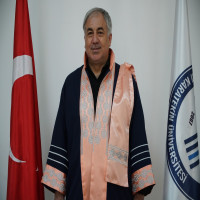
Prof. Dr. Ertan Beşe
1985 yılında girdiği İstanbul Üniversitesi Siyasal Bilgiler Fakültesi ‘Kamu Yönetimi’ Bölümü’nden, 1989 yılında mezun oldu. 18 Ocak 1991’de Polis Akademisi’nde ‘Araştırma Görevlisi’ olarak göreve başladı. University of Wales, Aberystwyth Hukuk Fakültesi’nde “General Aspects of Contemporary Political Terrorism and State Responses” adlı tezini, 1994 yılı başında tamamlayarak, ‘Kamu Hukuku’ alanında LL-M (Hukuk Mastırı) derecesi aldı.
İstanbul Üniversitesi Sosyal Bilimler Enstitüsü ‘Avrupa Topluluğu’ Anabilim Dalı’nda yürütmekte olduğu ‘Doktora’ çalışmalarını, Temmuz 2001’de “Avrupa Birliği Açısından Terörle Mücadele ve İnsan Hakları” başlıklı doktora teziyle tamamladı.
27 Mayıs 2002 tarihinde Polis Akademisi Güvenlik Bilimleri Fakültesi kadrosunda ‘Kriminoloji’ alanında Yrd. Doçent olarak atandı.
Mart 2005’de Orta Doğu Teknik Üniversitesi Sosyal Bilimler Enstitüsü Sosyoloji Bölümü’nde ‘Sociological Analysis of Organized Criminality in Turkey’ başlıklı teziyle ‘ikinci doktora’ derecesini aldı. 09.10.2006 tarihinde ‘Sosyoloji’ dalında ‘DOÇENT’ oldu.
11 Şubat 2012 tarihinde PROFESÖR olan Ertan BEŞE; 1996 yılından itibaren Polis Akademisi Güvenlik Bilimleri Fakültesi’nde lisans düzeyinde ‘Kriminoloji’, ‘Terörizm’, ‘Organize Suçlar’, ‘Sosyoloji’; Güvenlik Bilimleri Enstitüsü’nde Yüksek Lisans düzeyinde ‘Siyasal Şiddet ve Terörizm’, ‘Uluslararası Hukuk ve Terörizm’ ve Suç Sosyolojisi ve doktora düzeyinde de ‘Etnisite, Ulus-Devlet ve Terörizm’ ve ‘Uluslararası Politika ve Terörizm’ dersleri verdi.
Ayrıca İstanbul Aydın Üniversitesi Sosyal Bilimler Enstitüsü Siyaset Bilimi ve Uluslararası İlişkiler Ana Bilim Dalı Uluslararası İlişkiler ve Terörizm Araştırmaları Programı’nda Yüksek Lisans Düzeyinde ‘Siyasal Şiddet ve Terörizm’, ‘Türk İstihbarat Tarihi ve Karşılaştırmalı İstihbarat Örgütleri’ ve ‘Uluslararası İlişkilerde Güvenlik Yaklaşımları’ dersleri verdi.
Prof. Dr. Ertan BEŞE, Temmuz 2010 tarihinden Temmuz 2012 tarihine kadar Kamu Düzeni ve Güvenliği Müsteşarlığı’nda AR-GE Daire Başkanı olarak görev yapmıştır. 2012 -2013 yıllarında Polis Akademisi Güvenlik Bilimleri Enstitüsü Müdürü olarak görev yapan Ertan BEŞE; 2013 - 2014 yıllarında Polis Akademisi Güvenlik Bilimleri Fakültesi Dekanlığı yapmıştır. Fırat Üniversitesi İktisadi ve İdari Bilimler Fakültesi, Siyaset Bilimi ve Kamu Yönetimi Bölümü’nde de bir dönem öğretim üyeliği yapan Prof. Dr. Ertan BEŞE; 2016 - 2019 yılları arasında İstanbul Üniversitesi Siyasal Bilgiler Fakültesi, Siyaset Bilimi ve Kamu Yönetimi Bölümü’nde öğretim üyeliği görevinde bulunmuştur.
Ayrıca, Stratejik Düşünce Enstitüsü (SDE)’nün ‘Güvenlik ve Terörizm’ masasının kurucusu olup, bu kurumda 2009 - 2013 yılları arasında da Masa Başkanı ve Uzman olarak çalışmıştır.
Halihazırda Çankırı Karatekin Üniversitesi İktisadi ve İdari Bilimler Fakültesi Siyaset Bilimi ve Kamu Yönetimi Bölüm Başkanıdır.
Ertan BEŞE’nin akademik ilgi alanları; özellikle, ‘Siyasal Şiddet ve Terörizm’, Stratejik İstihbarat, Güvenlik Stratejileri, İstihbarat, Toplumsal Hareketler, Suç Sosyolojisi, ‘Organize Suçlar’ ve ‘Kriminoloji’dir. Bu alanlarda yayınlanmış kitap, makale, bildiri ve araştırma yazıları bulunmaktadır.




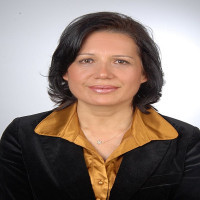

Danışma Kurulu



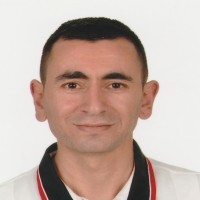
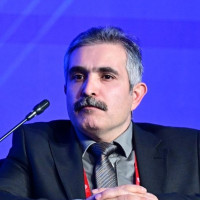
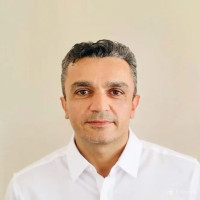
Mürsel Bayram received his bachelor’s, master’s and doctoral degrees from Selçuk University, Ahi Evran University and Kırıkkale University respectively. He is currently the Head of the Department of African Studies at the Institute for Area Studies, Social Sciences University of Ankara. He is the author of Une histoire diplomatique des États ouest-africains and Çin-Afrika İş Birliği (China-Africa Cooperation). Bayram is also the editor of the books titled Mağrib Diplomasisi (Maghreb Diplomacy) Afrika Yıllığı 2021 (Africa Yearbook 2021), Afrika Yıllığı 2022 (Africa Yearbook 2022), Afrika’da Politika ve Uluslararası İlişkiler (African Politics and International Relations) and Doğu Afrika’da Siyaset ve Diplomasi (Politics and Diplomacy in East Africa).
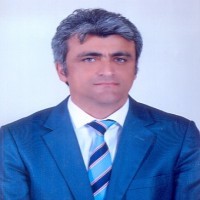



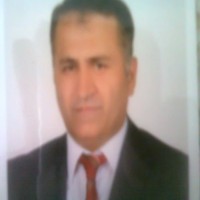
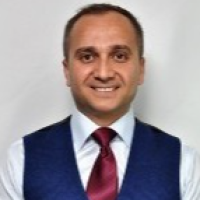
Doç. Dr. İSMAİL EFE
1972 yılında Sinop Durağan’da doğan yazar, ilk ve orta
öğrenimini burada tamamladı. 1998–99 Eğitim öğretim yılında
Kırıkkale Üniversitesi Fen Edebiyat Fakültesi Tarih Bölümü’nden
mezun oldu. 1999-2007 yılları arasında Kırıkkale Üniversitesi
Fen Edebiyat Fakültesi Tarih Bölümü Türkiye Cumhuriyeti
Tarihi Ana Bilim Dalı’nda Araştırma Görevlisi olarak çalıştı.
2008 yılında Kırıkkale Üniversitesi Atatürk İlkeleri ve İnkılap
Tarihi Bölümü’nde Öğretim Görevlisi olarak çalışmaya başladı ve
halen bu görevine devam etmektedir. 2004 yılında Kırıkkale
Üniversitesi Sosyal Bilimler Enstitüsü’nde Yüksek Lisansını
tamamladı. 2015 yılında Erciyes Üniversitesi Sosyal Bilimler
Enstitüsü Türkiye Cumhuriyeti Tarihi Ana Bilim Dalı’nda
doktora eğitimini tamamlayarak Dr. Unvanını aldı. 2020 yılında
Atatürk İlkeleri ve Cumhuriyet Tarihi alanında Doçent unvanı
alan yazarın, 2018 yılında yayınlanmış olan “Sinop Tarihi”
konulu kitabı, çeşitli dergilerde yayınlanan makaleleri, kitap
bölümleri ve çok sayıda sempozyum ve kongrede sunduğu
tebliğleri, yürütücü ve araştırmacı olarak yer aldığı projeleri
bulunmaktadır.
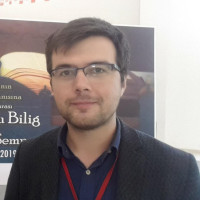
1990 yılında İzmir'de doğdu. İlk ve orta öğretimi burada gördü. Lisans eğitimini Boğaziçi Üniversitesi Tarih Bölümünü yüksek onur derecesiyle tamamladı. 2013 yılı Aralık ayında ÖYP programı kapsamında Kırıkkale Üniversitesi'nde araştırma görevlisi olarak çalışmaya başladı. 2014-2016 yılları arasında Kırıkkale Üniversitesi Sosyal Bilimler Enstitüsü Tarih Anabilimdalı'nda Yüksek Lisansını yaptı. Aynı yıl Kırıkkale Üniversitesi Sosyal Bilimler Enstitüsü Tarih Anabilimdalı'nda doktoraya başladı ve 2022 yılında bu eğitimini tamamlayarak doktor unvanını aldı. 2023 yılında Kırıkkale Üniversitesi Tarih Bölümünde Dr. öğretim üyesi olarak atandı ve halen bu görevde çalışmaktadır. C1 seviyesinde İngilizce ve B1 seviyesinde Fransızca bilmektedir. Evli ve bir çocuk babasıdır.


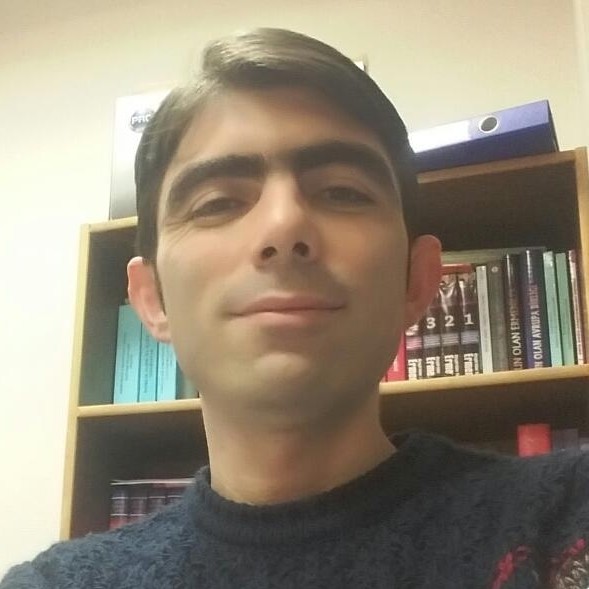
İlkokulu, orta ve lise tahsilini Kayseri’de tamamladı. Yüksek tahsilini Kayseri-Erciyes Üniversitesi’nde tamamlayarak 1980 tarihinde mezun oldu. İlk öğretmenliğe 1983 tarihinde Kars ili Selim Lisesi’nde stajyer olarak başladı. 1986 tarihinde Kayseri’nin Tomarza İlçesi'nde, 1988 tarihinde ise yine Kayseri'nin Hacılar ilçesinde öğretmenliğe devam etti. 1989 tarihinde Erciyes Üniversitesi Sosyal Bilimler Enstitüsü’nde yüksek lisansa başladı. Yüksek lisansı “İslâm Savaş Esasları ve Bunun Birleşmiş Milletler Esaslarına Yansıması”çalışması ile tamamladı. 1992 tarihinde Erciyes Üniversitesi Sosyal Bilimler Enstitüsü’nde doktora programına başladı. 1996 tarihinde doktorasını "1876-1918 Yılları arası Ortadoğu ve Halep" isimli tezi ile tamamladı. Doktoradan bir müddet sonra Gazi Üniversitesi Kırşehir Eğitim Fakültesi Tarih Eğitimi Anabilim Dalı’nda Yardımcı Doçent olarak göreve başladı. 2007 Öğretim yılına kadar görevini Eğitim Fakültesi Sosyal Bilgiler Öğretmenliği Anabilim Dalı’nda sürdürdü. 2007-2008 öğretim yılından itibaren kadrosu Eğitim Fakültesi’nde kalmak şartı ile Ahi Evran Üniversitesi Fen Edebiyat Fakültesi Tarih Bölümü’nde göreve başladı. 23 Ekim 2019 tarihinde doçentliği alınca Fen Edebiyat Fakültesi Tarih Bölümü’ne kadrolu olarak ataması yapıldı ve hâlen Tarih Bölümü Yakın Çağ Ana Bilim Dalı’nda görevini sürdürmektedir.
Türkçe,İngilizce,Azerbaycan Türkçesi
Dil Editörleri
Sekreterya
Mizanpaj Editörü
