Research Article
Issue Reviewers

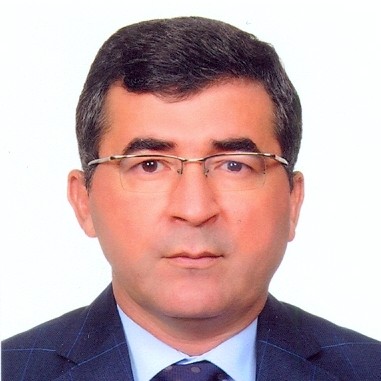

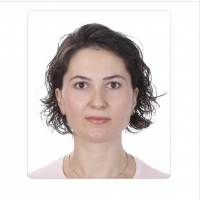
Arzuhan Burcu GÜLTEKİN was graduated from İstanbul Technical University, Faculty of Architecture, Department of Architecture in 1997. She received her M.S. degree from İstanbul Technical University, Graduate School of Science, Engineering and Technology, Construction Sciences Graduate Program in 2001. Thereafter, she received her Ph.D. degree from Gazi University, Institute of Natural and Applied Sciences, Architecture Program in 2006. She worked as a research assistant in Gebze High Technology Institute, Faculty of Architecture, Department of Architecture between 1998 and 2001, and in Gazi University, Technical Education Faculty, Construction Education Department between 2001 and 2007. She worked as an assistant professor in the same department between 2007 and 2015, and as an associate professor in Ankara University, Faculty of Applied Sciences, Department of Real Estate Development and Management between 2015-2019. She carries out her duty in Gazi University, Faculty of Technology, Department of Civil engineering as an associate professor.
Her professional fields are sustainable buildings, smart buildings, sustainable building materials, energy/water/material conservation in buildings, green building certification systems, building performance simulations, and life cycle assessment of buildings.
She has 19 international scientific papers, 67 international congress papers, 23 national scientific papers, 19 international book chapters, 2 books, chairmanship in 12 international and national events (workshops, seminars, conferences, symposia), 6 national and international research projects, numerous expert positions, scientific journal refereeing, master/doctorate/seminar jury memberships and editorial duties.
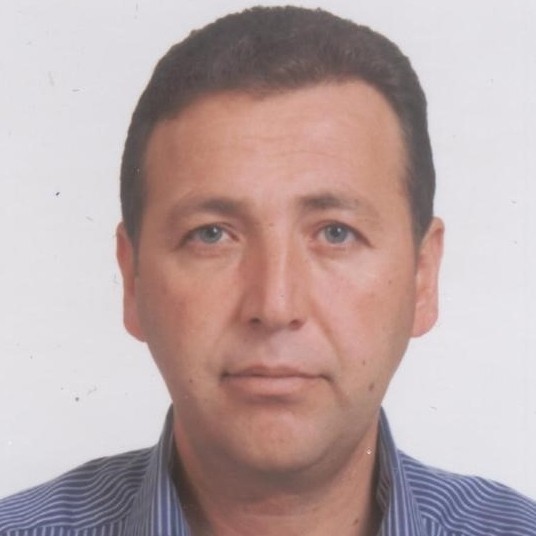

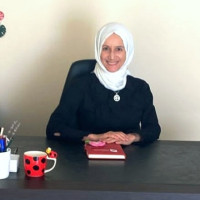
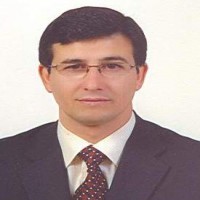
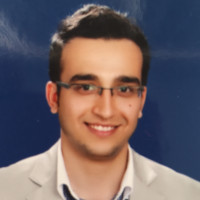
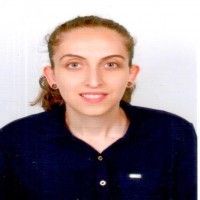
Farabi Temel received his Ph.D. degree in Chemical Engineering from the Graduate School of Natural Sciences, Selcuk University, in 2018. Now he works as an Assoc. Prof. Dr. in the Department of Chemical Engineering, Konya Technical University. His current interests are the synthesis of calixarenes, supramolecular chemistry, gas and biologic sensors, QCM sensors, and adsorption applications.
English, Spanish, German, Italian, Russian
İstatistik





 Web
Web
Dr. Süleyman Aykut Korkmaz is a faculty member at Dokuz Eylül University, specializing in sustainable maritime propulsion systems and decarbonization of maritime transportation. He also serves as a Postdoctoral Research Fellow at the University of Southampton's Maritime Engineering Group. His research focuses on the integration of hydrogen fuel cells and Li-ion batteries, hybrid propulsion systems, waste heat recovery, and the optimization of integrated energy systems. With numerous peer-reviewed publications, Dr. Korkmaz actively contributes as an editorial board member and reviewer for prominent journals. His work aims to advance innovative solutions for zero-emission maritime technologies.
Aim & Scope
Necmettin Erbakan University Journal of Science and Engineering (NEU-FMBD) is an interdisciplinary and open-access journal covering all subjects of basic sciences and engineering. The Journal of Science and Engineering aims to convey the latest scientific/technical developments in basic and engineering sciences to the relevant scientists and readers.
Necmettin Erbakan University Journal of Science and Engineering (NEU-FMBD) applies double blind refereeing system.
Submitted manuscripts must be in English or Turkish and authors must strictly adhere to publication ethics. There is no publication fee in the journal.
Necmettin Erbakan University Journal of Science and Engineering covers both experimental and theoretical studies of basic sciences and engineering and includes original, qualitative, quantitative and mixed-method publications. Studies that do not comply with this scope are not included in the evaluation process.
Author Guidelines
The author guidelines that prepared in journal article format: Please click
Important Notice: Articles must be in A4 page layout. Manuscripts should be written as plain text in a single column. The margins should be arranged as 2.5 cm while the page layout is being made. The font should be "Times New Roman" and the texts should be arranged in a justified format using 11 font sizes, single line spacing. The article template can be used by downloading from the website of our journal and making corrections on it. You must add 1 cm of paragraph indent.
Types of Publications
Necmettin Erbakan University Journal of Science and Engineering is a peer-reviewed and scientific journal and accepts articles in the fields of science and engineering, whose qualifications are explained below, in Turkish or English.
Research Article: These are the articles that reflect original research with its findings and results. The study must necessarily contribute to science.
Review Article: These are the articles that examine a sufficient number of scientific articles, summarize the subject at the level of today's knowledge and technology, evaluate and interpret the findings by comparing them.
Correspondence Address: Necmettin Erbakan University Journal of Science and Engineering, Institute of Science and Technology, Meram KONYA
Tel: 0 332 3212017- 3243182
E-mail: neufmbd@erbakan.edu.tr
Copyright Transfer Form: Authors must submit the Copyright Transfer Form (available on the journal's WEB site) in PDF format with the publication when submitting their articles for publication. The transfer of copyright of the articles is done by filling out and signing the form on the journal's website. Submissions from authors who do not submit the signed Copyright Transfer Form will not be evaluated.
The author(s) accept that the submitted work complies with PUBLICATION ETHICS and accepts ethical responsibility for the article. Submitted scientific articles should take into account the recommendations of the ICMJE (International Committee of Medical Journal Editors) and the International Standards for Editors and Authors of COPE (Committee on Publication Ethics).Each author is equally responsible for the article content. The articles sent for publication are first passed through the iThenticate® (Professional Plagiarism Prevention) software and then sent to the referees. The articles are checked with the iThenticate® program, if plagiarism or self-plagiarism is detected, the article will not be evaluated. The similarity must not be more than 15%, excluding references and including quotations.
Review process: The author(s) must provide the names and e-mail addresses of at least three reviewers. In addition, the author(s) should notify the names of the referees that they do not want to review their articles. Each article is sent to at least two revieweres related to its subject for review. The editorial board of the journal can send the articles to any reviewer.
Cover Letter
A cover letter must be included with each manuscript submission.
Manuscript Preparation
All manuscripts must contain the required sections: Author Information, Abstract, Keywords, Introduction, Materials & Methods, Results, Discussio and nConclusions, Figures and Tables with Captions, Funding Information, Conflict of Interest and other Ethics Statements.
Chemical designations, abbreviations and acronyms (acronyms) must be given in brackets when they are used for the first time in the article. Known processes/reactions are to be named and provided with a corresponding reference to the literature.
SI Units (International System of Units) should be used. Imperial, US customary and other units should be converted to SI units whenever possible.
Each symbol and variable in the text is in italics; units, mathematical formulas and abbreviations normally; matrices and vectors should be written in bold. The variables in the diagram axes and table captions are to be specified as variable, eg as time t (s), potential E (mV), current density i (mA/cm2).
A detailed mathematical discussion should be given in the appendices. Equations and formulas should be written in an equation editor whenever possible. Equations are to be numbered consecutively in Arabic numerals in brackets on the right side of the page. It should be divded into terms in accordance with the notation of long equations.
Symbols
All symbols used in the text are given under this heading. Sub-titles such as “Greek Letters”, “Sub Index” can be used when necessary.
REFERENCES
All sources cited should be included in this section. In the bibliography, the citations are listed in the order of the numbers in the text. Citations should be given in accordance with the journal format. Make sure that every reference mentioned in the text is also in the bibliography (and vice versa). Unpublished results and personal contacts are not recommended in the bibliography, but can be cited in the text. [1], [3], [5] etc. in brackets in the text. should be numbered and placed at the end of the text in the order in which they are given in the paper. If the author's name is to be mentioned, it should be referenced immediately after the author's name (Gemi et al. [5]), without the author's name, at the end of the sentence (... ..... preserved [4], [6]).
Example:
[1] A. Aslan, E. Salur, A. Güneş, Ö.S. Şahin, H.B. Karadağ, A. Akdemir, Production and mechanical characterization of prismatic shape machine element by recycling of bronze and cast-iron chips, Journal of the Faculty of Engineering and Architecture of Gazi University. 33 (2018), 1013–1027. doi:10.17341/gazimmfd.416402
Book
Example:
[2] U.P. Breuer, Commercial Aircraft Composite Technology, Springer International Publishing, Cham, 2016. doi:10.1007/978-3-319-31918-6
Chapter in edited book:
Example:
[3] M. Kaplan, M. Uyaner, Y. Ozgurluk, K.M. Doleker, A.C. Karaoglanli, Evaluation of Hot Corrosion Behavior of APS and HVOF Sprayed Thermal Barrier Coatings (TBCs) Exposed to Molten Na2SO4+ V2O5 Salt at 1000 °C, içinde: Öchsner A., Altenbach H. (Ed.), Advanced Structured Materials, Springer, 2019: ss. 441–459. doi:10.1007/978-3-319-79005-3_28
Thesis:
Example:
[4] Ş. Yazman, Karbon Nanotüp ve Seramik Nanopartikül Takviyeli Hibrit Nanokompozit Yapıştırıcıların Mekanik Özelliklerinin Araştırılması, Doktora Tezi, Necmettin Erbakan Üniversitesi Fen Bilimleri Enstitüsü, Makine Mühendisliği Anabilim Dalı, Konya, 2018.
Conference:
Example:
[5] S. Yazman, A. Akdemir, M. Uyaner, B. Bakircioglu, The Effect of Build Up Edge Formation on the Machining Characteristics in Austempered Ferritic Ductile Iron, içinde: Volume 2B: Advanced Manufacturing, The American Society of Mechanical Engineers, San Diego, California, USA, 2013: s. V02BT02A052. doi:10.1115/IMECE2013-63764
Internet:
Example:
[6] S. Ridout, HOWTO: edit citation styles for use in Mendeley, (2011). https://blog.mendeley.com/2011/05/03/howto-edit-citation-styles-for-use-in-mendeley/ (erişim 29 Aralık 2018).
Reference management software
It is recommended that authors use one of the bibliography editing software such as Mendeley, Zotero, Papers, Docear4Word, Paperpile while editing their sources. You can obtain the style file prepared in CSL (Citation Style Language) language, which can be used for our journal in these software, from the following address:
http://www.zotero.org/styles/necmettin-erbakan-universitesi-fen-ve-muhendislik-bilimleri-dergisi
.
Ethical Principles and Publication Policy
PRINCIPLES OF PUBLICATION ETHICS OF OUR JOURNAL
The author(s) accept that the submitted manuscript complies with PUBLICATION ETHICS and accepts ethical responsibility for the article. In the submitted scientific articles, the recommendations of the ICMJE (International Committee of Medical Journal Editors) and the "International Standards for Editors and Authors" of COPE (Committee on Publication Ethics) should be taken into account.
Each author is equally responsible for the article content.
Ethical Responsibilities of Authors
· Authors prepare and submit their works as original.
· Authors ensure that the citations they make in the articles they submit are correct and complete.
· Authors are required to state and explain situations that may have a conflict of interest in the articles they submit.
Editor, referee and section editor can request raw data of the article from the author. Therefore, the author should be able to present the raw data of the submitted article.
· In studies that require an ethical report, the author must send the Ethics report together with the submission.
Authors are obliged to inform the journal for correction or retraction of the article in case of errors or inaccuracies in any of the pre-control, evaluation, editing and publication stages.
Authors cannot follow the process for the same article in two journals at the same time. When the process is completed in one journal and his article is rejected, he can send his article to the other journal. An article published in another journal cannot be sent to our journal.
If there is a need for processes such as adding an author, changing the order of authors, removing an author to an article whose evaluation process has begun in our journal, it can apply to the journal with the approval of all authors. The editorial board of the journal examines the application and notifies the responsible author of the decision.
Editors' Ethical Responsibilities
The editor and section editors must have the ethical duties and responsibilities specified in the "Code of Conduct and Best Practice Guidelines for Journal Editors" and "Cope Best Practice Guidelines for Journal Editors" published by the Committee on Publication Ethics (COPE) on our Dergipark page. These duties and responsibilities are summarized below.
· Editors are responsible for taking into account the feedback from readers and researchers about published studies and taking necessary actions and responses.
· Editors make their decision about the article based on the original value of the article, the aims of the journal and ethical rules.
· Editors should evaluate articles with high novelty and originality, and articles prepared by considering the journal's purposes and ethical rules.
· The editors should take into account the positive comments of the referees unless there is a justification.
· Editors are required to respond to requests and comments from authors with feedback.
· Editors and referees to be appointed should be selected in accordance with the subject of the article.
· Editors should take care that there is no conflict of interest or conflict of interest between the referee(s) and the author(s).
· Editors are responsible for guiding the referees in the article evaluation process and providing the information they request.
· Editors are obliged to hide the identity information of the author and referee by applying the blind refereeing process.
· Editors should take the necessary warnings and precautions for the referees to evaluate the article in a timely, impartial and scientific manner.
· Editors should consider the opinions and suggestions of the advisory board about the articles.
· Editors' decisions about the article should be independent of the journal owner and publisher.
· Editors are responsible for observing the journal publication principles, journal aims and international standards in the articles to be published in the journal.
· Editors are responsible for not transferring their personal information to third parties without the consent of the article authors.
· Editors are responsible for protecting human and animal rights in case the content of the article includes studies on humans and animals. It is responsible for rejecting the article if ethics committee approval is not sent for studies that require an ethics committee report.
· Editors are responsible for protecting the intellectual property rights of all articles submitted and published to the journal.
· Editors are responsible for clearly responding to complaints from referees, authors and readers.
· Editors are responsible for taking precautions against conflicts of interest that may arise between authors, referees and third parties in order to complete the impartial and independent evaluation processes of the articles.
Ethical Responsibilities of Referees
The referees are responsible for not evaluating the article if there is a conflict of interest.
The referees are responsible for evaluating the article by paying attention to the principles of confidentiality and impartiality.
The referees cannot use the work sent to them for any purpose until the evaluation process is completed and it is published.
The referees are responsible for not allowing the gender, nationality, religious beliefs and political views of the authors to affect the evaluation process.
Reviewers should use courteous and constructive language when evaluating the article.
The referees are responsible for evaluating the article on time and by paying attention to the ethical rules.
Plagiarism Policy
Necmettin Erbakan University Journal of Science and Engineering Sciences has started to check the manuscripts sent for publication as of 01.01.2020 through plagiarism software (Turnitin, iThenticate, etc.). The author should also send the document showing the similarity rate with the study. Studies with a similarity rate of more than 15% (excluding references) are not evaluated and returned to their authors. If a work published in the journal is found to be plagiarism, the Editorial Board reserves the right to take various actions, including retracting the article, reporting the issue to the department head, dean, and/or relevant institutions in the institution where the author works.
Price Policy
There is no publication fee in the journal, which gladly accepts articles from domestic and international authors.