Volume: 20 Issue: 2 , 12/27/25

Year: 2025

Research Article

Research Article

2. Osmanlı Döneminde Muş (İdarî ve Sosyal Yapı)
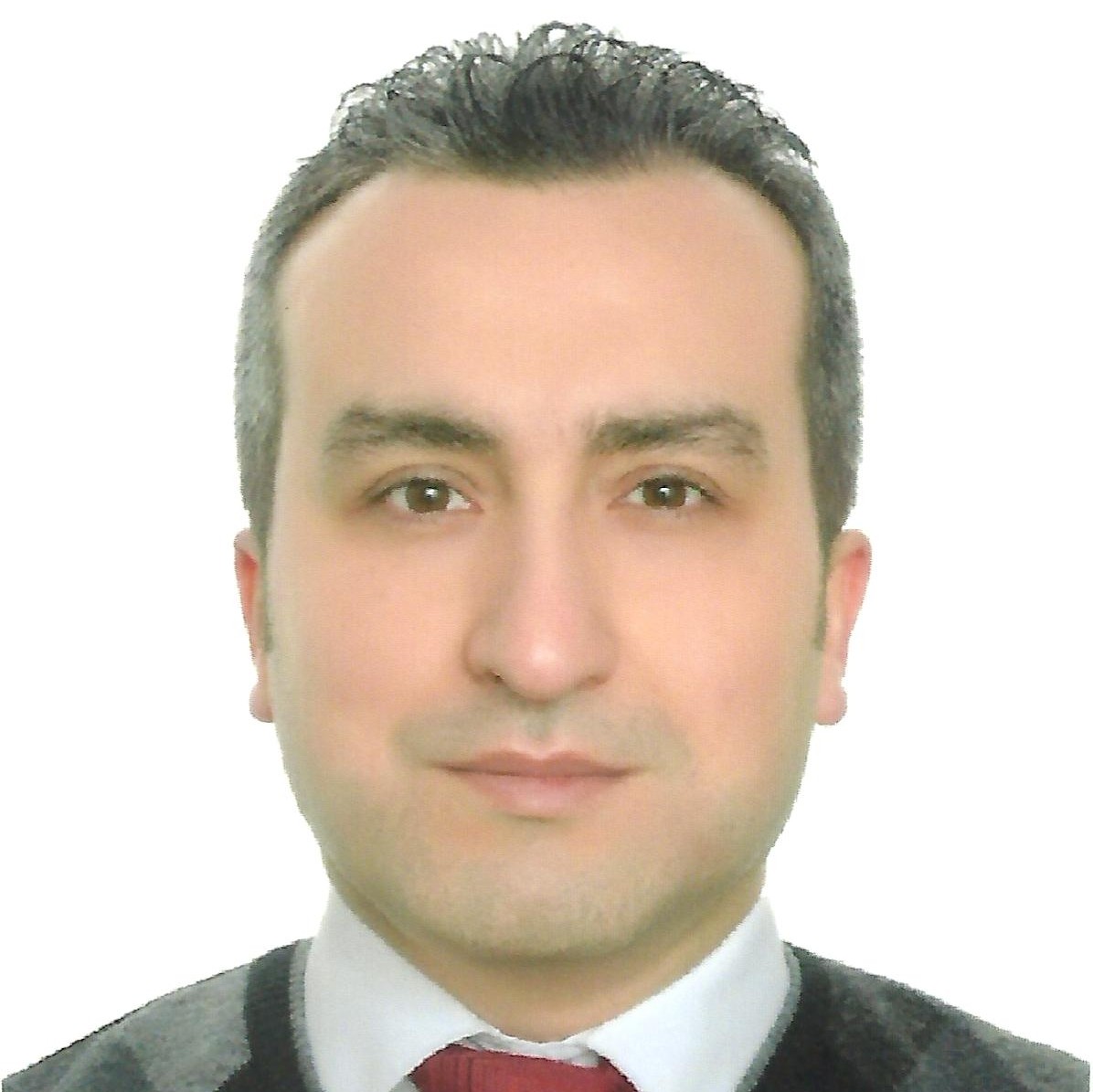
Fatih Yeter
Assoc. Prof. Dr. Fatih YETER TOKAT GAZİOSMANPAŞA ÜNİVERSİTESİ, TURHAL UYGULAMALI BİLİMLER FAKÜLTESİ Web

.

Inflation, Monetary Policy, Monetary-Banking, International Finance
Default avatar
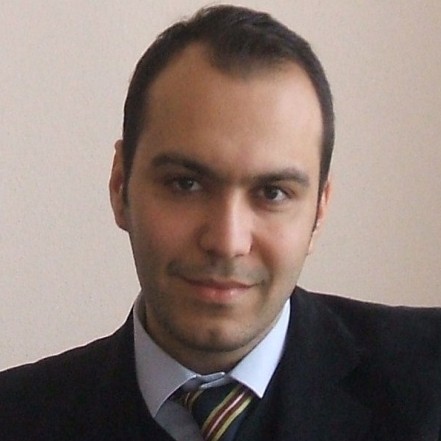
Assoc. Prof. Dr. Nalan KANGAL TOKAT GAZİOSMANPAŞA ÜNİVERSİTESİ
Institutional Economics Theory, Macroeconomics, Development Economics - Macro, Monetary Policy, Environmental Economy
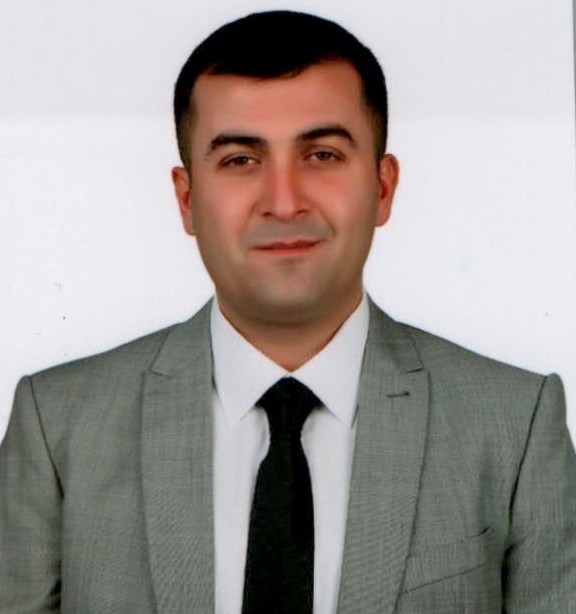
Murat Aksu
Asst. Prof. Dr. Murat AKSU TOKAT GAZİOSMANPAŞA ÜNİVERSİTESİ Web
Insurance Marketing, E-Trade, Marketing, Digital Marketing

The aim of JSSR, which is published by Tokat Gaziosmanpasa University, Institute of Graduate Studies, is to be a qualified social sciences journal which meticulously reviews qualified and original studies in accordance with scientific norms and science ethics.

The journal accepts original and scientific studies prepared in the field of social sciences, including Archaeology, History, Geography, Turkish Language and Literature, Western Languages and Literatures, Theology, Business Administration, Economics, Finance, Public Administration, Political Science, International Relations, Labor Economics, Social Policies, Art History, and other social science disciplines related to these fields.

General Information on Author Guidelines
In article submissions, it is mandatory to use the official Word template file provided by the journal.
Authors should not create a new and blank Word document to prepare their manuscripts from scratch.
Instead, the manuscript must be completed directly within the provided template.

All writing and formatting rules (font type, paragraph structure, heading format, page layout, reference style, etc.) are predefined and exemplified within the template file.
Therefore, detailed author guidelines are not separately provided on this page.

Authors are expected to prepare their manuscripts by preserving the structural integrity of the template and working exclusively within this file.

🔗 You can access the template file here:
👉 Social Sciences Research Journal Template File

Points to Consider When Submitting a Manuscript
To ensure that the manuscript complies with the journal’s writing guidelines, please observe the following points:

The manuscript must be prepared directly on the template file. A new document should not be created.

The quick styles in the template (title, abstract, main text, references, etc.) must be used exactly as provided. Manual formatting should not be applied.

Font type, font size, and line spacing settings must not be altered.

The reference list must comply with the APA citation style as formatted in the template.

Common Issues in Files Not Prepared Using the Template:
✔️ Disruptions in heading structure
✔️ Use of different font types
✔️ Inconsistencies in references and in-text citation style
✔️ Page layout distortions
✔️ These issues are considered grounds for editorial rejection.

Headings and New Subsections
Authors may add new headings and subheadings where necessary, provided they are relevant to the manuscript content.
However, all headings must be formatted using the predefined heading styles in the template.
Free formatting or manually applied styles may lead to technical incompatibilities.

Implementation Suggestion
📌 Download the template file and save it on your computer using the “Save As” option.
📌 Then, complete your manuscript within that file.
📌 This ensures full compliance with the formatting rules and facilitates a systematic evaluation process.

Journal Publishing Policy


a) The Journal of Social Sciences Research is published on the ULAKBIM Journal platform with the status of "Refereed Journal". The journal is published twice (June and December) per year in electronic form.
b) The journal publishes original Turkish and English studies in pre-mentioned disciplines of social sciences.
c) Manuscripts sent to the journal are directed to the relevant field editor after the editor and assistant editor review. And upon the approval of the field editor, the manuscript will go through a double-blind peer-review process.
d) No fee is charged for the articles, book reviews, etc. published in the Journal of Social Sciences Research and also the journal does not pay any fees to authors.
e) Research should be prepared in accordance with ethical rules and citations in the manuscript should be indicated. The upper limit of acceptable similarity rate is %20 as of the June 2021 issue.
f) The arguments expressed in the published manuscripts do not represent the views of the journal, and it is the responsibility of the author(s).
Copyright
a) Authors are obliged to fill and send a "Copyright Agreement Form" for the manuscripts sent to the journal.


Publication Ethics

The publication process of the Journal of Social Sciences Research is based on the unbiased production, improvement, and sharing of information by using scientific methods.
The publication ethics and open access policy of the Journal of Social Sciences Research require that all stakeholders of the publication process comply with the ethical principles in line with the guidelines and policies (For example, "Publication Ethics Committee (COPE) Code of Conduct and Best Practice Guidelines for Journal Editors;" Code of Conduct and Best Practice Guidelines for Journal Editors "and" COPE Best Practice Guidelines for Journal Editors") published by the Publication Ethics Committee (Committee on Publication Ethics, COPE) on open access.
If such situations as manipulating and distorting the data used in the articles and using make-up data are detected, this situation will be officially reported to the institutions of the author(s) and the manuscript will be rejected.
The journal has the right to request the output files of the analysis results from the authors according to the feedback given by the editors and / or referees.
Publisher's Ethical Responsibilities
The Journal of Social Sciences Research is in the public interest and non-profit. The editorial board of the journal consists of a chief editor, an assistant editor, and field editors. A new member is appointed to replace the leaving member. According to the subject of the manuscript, when necessary, the editor may send manuscripts to faculty members who are not members of the editorial board and who have at least a PhD degree to be reviewed as field editors.


The Responsibilities of the Journal Editorial Board
The editorial board is responsible for every manuscript submitted to the journal, and the editorial board is aware of this responsibility.
The editorial board strives to continuously improve the journal and increase its publication quality.
The editorial board ensures that such journal policies as publication, blind review, review process, and ethical principles are determined and implemented.
The editorial board is responsible for taking measures regarding intellectual property rights, unscientific-unethical behaviors, plagiarism during the publishing process of manuscripts and journals.
The editorial board carries out the responsibility of appointing an expert referee for the manuscripts sent to the journal.


Ethical Responsibilities of Editorial Board
While deciding on the publication of manuscripts, editors consider that the manuscripts are original and contribute to the scientific literature.
When editors give decisions about the manuscripts, they take into account the original value of the manuscripts, their contribution to the field, the validity and reliability of the research method, the clarity of the language, and the purpose and scope of the journal
Editors implement the policies of blind review and review process, which are among the publishing policies of the journal, keep the identity information of the referees confidential, and ensure that each manuscript is reviewed objectively and in time.
Editors send the manuscripts by taking into account the field of expertise of the editors and referees, and they support the impartial and independent review.
Editors pay attention to unbiased review of the manuscript. Editors strive to ensure the diversity of the referee committee and the constant change of the committee.
Editors ensure the protection of personal data in reviewed manuscripts. Editors pay attention to the protection of human rights in the manuscripts and care about documenting the explicit consent of the participants of the manuscripts. They reject the manuscripts when the authors do not have the approval of the ethics committee related with the participants of the manuscripts.
Editors take precautions against misconduct. When there are complaints about misconduct, they make an objective investigation and shares the findings on the complaints.
Editors take into account the consistent criticism of the manuscripts published in the journal, and give the right to reply to the author(s) for the criticism.
Editors examine the complaints submitted to the journal and make the necessary explanations.


Ethical Responsibilities of Referees
In the process of reviewing the manuscripts, the two-way blind refereeing principle is applied. Referees cannot communicate directly with the authors. The manuscript review forms, and the notes specified on the manuscript and requests for correction are conveyed to the author(s) by the editors through the journal management system. Referees who will review the manuscripts submitted to the Journal of Social Sciences Research Journal should bear the following ethical responsibilities:
Referees should only accept manuscripts related to their field of expertise.
Referees should notice neutrality and confidentiality of review process.
In case of a conflict of interest, referees should refuse to review the manuscripts and inform the editors.
Referees should review the manuscripts in a constructive language in accordance with academic ethic principles and avoid personal comments containing insults and hostility.
The referees should review the manuscripts, which they have accepted, within the time limit.
The referees should give detailed reasons for acceptance or refusal.


Ethical Responsibilities of Authors
Author(s) should not send the manuscript that they have published elsewhere or sent to be published elsewhere.
The manuscript sent by the author(s) should be distinctive.
Author(s) should refer (cite) to the sources of the manuscript in line with ethical principles.
The names of people who do not contribute to the manuscript should not be mentioned as authors. It should not be suggested to change the order of the authors and to remove or add authors for the manuscript submitted for publication,
If information or data about the manuscript is requested from the author(s) during the review process, author(s) should provide the expected information to the editors.
The author(s) should provide the approval of the ethics committee for the research that requires quantitative or qualitative data collection methods such as experiments, questionnaires, scales, interviews, observations, and focus group studies. The document indicating the ethics committee decision should be uploaded to the system with the application of the manuscript.


Notification of the Editor for the Unethical Cases
In case of encountering an unethical case regarding editors, referees and authors or the manuscript in an early view or in review process that does not comply with ethical principles, it should be reported to sbad@gop.edu.tr e-mail address.
Obtaining Legal / Private Ethical Committee Approval
The articles related to the Principles of Ethics in the previous years in the EXPLANATION and DISCLOSURE Criteria for the TR Index Principles of Ethics were detailed with explanations in 2020 and the issue of “including information about permission in the manuscript” was added to the criteria by assuming permission was obtained for studies requiring ethics committee approval in the field of research.
The researches that require ethical committee approval are as follows, and the forementioned permission must be obtained for the publication of such studies;
1) All kinds of research conducted with qualitative or quantitative approaches that require data collection from participants using questionnaire, interview, focus group study, observation, experiment, and interview techniques
2) Use of humans and animals (including material / data) for experimental or other scientific purposes,
3) Clinical researches on humans,
4) Research on animals,
5) Retrospective studies in accordance with the law on the protection of personal data 

There is no article processing fee in our journal.

Baş Editör

Fatih Yeter
Assoc. Prof. Dr. Fatih YETER TOKAT GAZİOSMANPAŞA ÜNİVERSİTESİ, TURHAL UYGULAMALI BİLİMLER FAKÜLTESİ

.

Inflation, Monetary Policy, Monetary-Banking, International Finance

Editörler

Default avatar
Assoc. Prof. Dr. Nalan KANGAL TOKAT GAZİOSMANPAŞA ÜNİVERSİTESİ
Institutional Economics Theory, Macroeconomics, Development Economics - Macro, Monetary Policy, Environmental Economy
Murat Aksu
Asst. Prof. Dr. Murat AKSU TOKAT GAZİOSMANPAŞA ÜNİVERSİTESİ
Insurance Marketing, E-Trade, Marketing, Digital Marketing

Alan Editörleri

Default avatar
Asst. Prof. Dr. Mustafa Ozan ŞAHİN TOKAT GAZİOSMANPAŞA ÜNİVERSİTESİ
Turkish Foreign Policy
Hakan Kendir
Assoc. Prof. Dr. Hakan KENDİR TOKAT GAZİOSMANPAŞA ÜNİVERSİTESİ
Hospitality Management, Tourism, Sustainable Tourism, Tourism Management, Gastronomy Tourism
Bahadır Sazak Doğan
Asst. Prof. Dr. Bahadır Sazak DOĞAN TOKAT GAZİOSMANPAŞA ÜNİVERSİTESİ

Lisans: Gazi Üniversitesi / İİBF / Maliye / 2009

YL: University of Kent / Business School / 2011

DR: Hacettepe Üniversitesi / İİBF / Maliye / 2019

Taxation Law, Theory of Treasury
Emin Arslan
Assoc. Prof. Dr. Emin ARSLAN TOKAT GAZIOSMANPASA UNIVERSITY
Hospitality Management, Sustainable Tourism, Tourism Management, Food Culture, Gastronomy Tourism
Fatih Erarslan
Asst. Prof. Dr. Fatih ERARSLAN TOKAT GAZİOSMANPAŞA ÜNİVERSİTESİ

1985 yılında Tokat’ da dünyaya gelen Fatih ERARSLAN, ilk ve orta öğrenimini bu şehirde tamamladı. 2006 yılında Jandarma Astsubay Meslek Yüksekokulundan mezun oldu. 2006- 2017 yılları arasında Jandarma Genel Komutanlığı emrinde Astsubay rütbesi ile görev yaptı. 2011- 2013 yılları arasında Adıyaman Üniversitesi Sosyal Bilimler Enstitüsü, Kamu Yönetimi Bilim Dalında Tezsiz Yüksek Lisans eğitimini tamamladı. 2017 Şubat ayı itibari ile görevinden istifa ederek Tokat Gaziosmanpaşa Üniversitesinde Öğretim Görevlisi olarak göreve başladı. 2018 yılında Tokat Gaziosmanpaşa Üniversitesi Sosyal Bilimler Enstitüsü, Kamu Yönetimi Bilim Dalında Yüksek Lisans eğitimine başladı. 2019 yılında Doç. Dr. Ahmet GÜVEN danışmanlığında hazırladığı “Askeri kolluktan sivil kolluğa uzanan süreçte Jandarma Genel Komutanlığının yönetimsel değişimi” başlıklı tezi ile Yüksek Lisans eğitimini tamamladı. 2019 yılında İnönü Üniversitesi Sosyal Bilimler Enstitüsü, Siyaset ve Sosyal Bilimler Bilim Dalında doktora eğitimine başladı. 2024 yılında Doç. Dr. Ender AKYOL danışmanlığında hazırladığı “Z Kuşağının Siyasal Katılım Tercihleri Üzerine Bir Araştırma” adlı teziyle mezun olarak Dr. ünvanını aldı. 2025 yılında Tokat Gaziosmanpaşa Üniversitesinde Dr. Öğr. Üyesi olarak atandı. Akademik ilgi alanları arasında Türk siyasal hayatı, güvenlik politikaları, terörizm, seçmen davranışı ve darbe/ demokratikleşme süreçleri yer alan Dr. Fatih Erarslan, bu alanlarda ulusal ve uluslararası yayınlar yapmıştır. Ayrıca lisans ve lisansüstü düzeyde dersler vermekte ve çeşitli idari görevlerde bulunmaktadır.

Police and Internal Security Studies, Political Science, Turkish Political Life, Turkish Foreign Policy, Political Psychology
Mücahit Kelek
Asst. Prof. Dr. Mücahit KELEK TOKAT GAZİOSMANPAŞA ÜNİVERSİTESİ
Medical and Health Law, Administrative Law
Canan Hanoğlu
Asst. Prof. Dr. Canan HANOĞLU TOKAT GAZİOSMANPAŞA ÜNİVERSİTESİ, FEN-EDEBİYAT FAKÜLTESİ, SANAT TARİHİ BÖLÜMÜ
Islamic Arts, Cultural and Natural Heritage, Architectural, Turkish Islamic Arts (Other)
Default avatar
Assoc. Prof. Dr. Yavuz ACUNGİL GAZİOSMANPAŞA ÜNİVERSİTESİ
Environmental Management (Other), Environment Policy, Public Administration, Urbanization Policies, Urban Policy, Urban Sociology and Community Studies
Murat Serdar
Assoc. Prof. Dr. Murat SERDAR TOKAT GAZİOSMANPAŞA ÜNİVERSİTESİ

İngilizce, Latince

Medieval History, Medieval European History, History of Seljuk, History of Muslim Turkish Countries and Societies
Default avatar
Assoc. Prof. Dr. Şevki BABACAN TOKAT GAZİOSMANPAŞA ÜNİVERSİTESİ, FEN-EDEBİYAT FAKÜLTESİ
Geography Education, Human Geography (Other)
Default avatar
Asst. Prof. Dr. Murat YILDIRIM TOKAT GAZİOSMANPAŞA ÜNİVERSİTESİ
Statistical Analysis, Quantitative Decision Methods , Applied Statistics
Çetin Bektaş
Prof. Dr. Çetin BEKTAŞ TOKAT GAZİOSMANPAŞA ÜNİVERSİTESİ
Human Resources Management, Industrial Organisation
Yalçın Kulaç
Asst. Prof. Dr. Yalçın KULAÇ TOKAT GAZİOSMANPAŞA ÜNİVERSİTESİ
Turkish Language and Literature
Elif Boyraz
Assoc. Prof. Dr. Elif BOYRAZ TOKAT GAZİOSMANPAŞA ÜNİVERSİTESİ

Doç. Dr. Elif Boyraz 1982 Tokat doğumludur. İlk ve orta öğrenimini Tokat'ta tamamlamıştır. 2003 yılında Gazi Üniversitesi İktisadi ve İdari Bilimler Fakültesi İşletme Bölümünden mezun olmuştur. 2006 yılında Gazi Üniversitesi Sosyal Bilimler Enstitüsü İşletme Anabilim Dalı Üretim Yönetimi ve Pazarlama Yüksek Lisans Programından mezun olarak pazarlama alanında bilim uzmanı ünvanını almıştır. 2012 yılında Erciyes Üniversitesi Sosyal Bilimler Enstitüsü İşletme Anabilim Dalında "Stratejik Siyaset Pazarlaması ve Siyaset Pazarının Bölümlendirilmesi Üzerine Bir Araştırma" başlıklı tezi ile doktor ünvanını almıştır. 2004 yılında Tokat Gaziosmanpaşa Üniversitesi İktisadi ve İdari Bilimler Fakültesi İşletme Bölümü Üretim Yönetimi ve Pazarlama Anabilim Dalında araştırma görevlisi olarak çalışmaya başlamıştır. 2020 yılında Pazarlama alanında Doçent ünvanını almıştır. Halen Tokat Gaziosmanpaşa Üniversitesi İİBF İşletme Bölümünde öğretim üyesi olarak görev yapan Elif Boyraz evli ve iki çocuk annesidir.

Marketing, Marketing Communications, Advertisement, Consumer Behaviour
Default avatar
Asst. Prof. Dr. Murat TEKİN TOKAT GAZİOSMANPAŞA ÜNİVERSİTESİ
Archaeology, Greek and Roman Period Archeology, Classical Greek and Roman History
Türker Şimşek
Prof. Dr. Türker ŞİMŞEK Tokat Gaziosmanpaşa Üniversitesi
Tokat Gaziosmanpaşa Üniversitesi, İktisadi ve İdari Bilimler Fakültesi, İktisat Bölümü
Panel Data Analysis, Applied Macroeconometrics, Political Economy Theory, Macroeconomic Theory, Growth, Development Economics - Macro, Cyclical Fluctuations, Policy of Treasury, Monetary Policy, Law and Economy, Political Economy, Applied Economics (Other)
Default avatar
Prof. Dr. Mihriban COŞKUN ARSLAN TOKAT GAZİOSMANPAŞA ÜNİVERSİTESİ
Financial Accounting, Sustainability Accounting and Reporting, Management Accounting, Cost Accounting
Default avatar
Prof. Dr. İlhan EROĞLU Tokat Gaziosmanpaşa Üniversitesi
Macroeconomic Theory, Monetary Policy, Monetary-Banking, Macroeconomics (Other)
Default avatar
Prof. Dr. Ahmet İNANIR TOKAT GAZİOSMANPAŞA ÜNİVERSİTESİ, İSLAMİ İLİMLER FAKÜLTESİ, İSLAMİ İLİMLER PR.
Islamic Law

Mizanpaj Editörü

Oğuzhan Sönmez
Asst. Prof. Dr. Oğuzhan SÖNMEZ TOKAT GAZİOSMANPAŞA ÜNİVERSİTESİ
Deep Learning, Big Data, Artificial Intelligence, Computer Software, Time-Series Analysis

Yabancı Dil Editörü

Emine Demir
Res. Assist. Emine DEMİR TOKAT GAZİOSMANPAŞA ÜNİVERSİTESİ
English As A Second Language
Mustafa Sırakaya
Res. Assist. Mustafa SIRAKAYA TOKAT GAZİOSMANPAŞA ÜNİVERSİTESİ
English As A Second Language, Other Fields of Education (Other)