Volume: 8 Issue: 2 , 12/26/25

Year: 2025

Research Article

Research Article

4. Karmatîlerin Irak’taki Faaliyetleri ve Etkileri

Research Article

17. Katalan Atlası’nın Yazıları

Review

Book Review

Murat Serdar
Assoc. Prof. Dr. Murat SERDAR TOKAT GAZİOSMANPAŞA ÜNİVERSİTESİ Web

English, Latin

Medieval History, Medieval European History, History of Seljuk, History of Muslim Turkish Countries and Societies
Kübra Gün
Dr. Kübra GÜN gazi osmanpaşa üniversitesi
Medieval History, History of Muslim Turkish Countries and Societies
Handan Gürbüz Yeni
Dr. Handan GÜRBÜZ YENİ It is not affiliated with an institution
Modern Turkish Literature in Turkiye Field
Murat Hanar
Dr. Murat HANAR Tokat Gaziosmanpaşa Üniversitesi Web
Doctor
Language Studies, Linguistics, Medieval History, Medieval European History, Medieval Cities, Roman History, History of Seljuk

Completed his undergraduate education at Pamukkale University, spending one year of this study at the University of Southern Denmark. Started his master's degree at Istanbul University, but transferred to Aksaray University when he began working there as a faculty member, and completed his degree there. Obtained his Ph.D. from Ankara University, Institute of Social Sciences, Department of Medieval History. Currently works in the History Department of the Faculty of Arts and Sciences at Aksaray University.

Turkish Savannah Culture, Turkish Society and Community, History of The Byzantine, Political and Civilization History of Islam, Medieval European History, Medieval Cities, Medieval History (Other)
Pınar Savaş
Doctoral Pınar SAVAŞ MUĞLA SITKI KOÇMAN ÜNİVERSİTESİ
Medieval European History
Özlem Genç
Prof. Dr. Özlem GENÇ Ondokuz Mayıs Üniversitesi Web
Medieval European History
İlkgül Kaya
Assoc. Prof. Dr. İlkgül KAYA BOZOK ÜNİVERSİTESİ, FEN-EDEBİYAT FAKÜLTESİ

Lisans: Hacettepe Üniversitesi Fen Edebiyat Fakültesi Sanat Tarihi (1999-2003)

Yüksek Lisans: Hacettepe Üniversitesi Sosyal Bilimler Enstitüsü Sanat Tarihi ABD (2004-2007)

Doktora: Ankara Üniversitesi Sosyal Bilimler Enstitüsü Sanat Tarihi ABD (2011-2017)

Unvan-Kurum: Doç. Dr., Bozok Üniversitesi Fen-Edebiyat Fakültesi Sanat Tarihi Bölümü, Bizans Sanatı Anabilim Dalı Başkanı

History of Architecture, Medieval Age Archeology
Umut Barutlu
Instructor Umut BARUTLU BEYKENT ÜNİVERSİTESİ, YABANCI DİLLER YÜKSEKOKULU
World Languages, Literature and Culture, British and Irish Language, Literature and Culture, Medieval European History
Birkan Akgül
Post Graduate Birkan AKGÜL 19 Mayıs Üniversitesi
Medieval Philosophy, Medieval European History, European Political History
Müjdat Namdar
Doctoral Müjdat NAMDAR MUGLA SITKI KOCMAN UNIVERSITY, INSTITUTE OF SOCIAL SCIENCES
Medieval History, History of The Byzantine, History of Seljuk
Default avatar
Doctoral Sefa AKYAZICI ONDOKUZ MAYIS ÜNİVERSİTESİ
Medieval European History, Medieval Cities
Deniz Ece Kahveci
Post Graduate Deniz Ece KAHVECİ MUĞLA SITKI KOÇMAN ÜNİVERSİTESİ
Archaeology, Ancient History
Turgut Akyüz
Assoc. Prof. Dr. Turgut AKYÜZ GÜMÜŞHANE ÜNİVERSİTESİ İLAHİYAT FAKÜLTESİ Web

1981 yılında Giresun’da dünyaya geldi. 2005 yılında Marmara Üniversitesi İlahiyat Fakültesi’nden mezun oldu. 2011 yılında “Ebûbekir Zekeriyâ Râzî’nin Metafiziği” adlı teziyle Marmara Üniversitesi Sosyal Bilimler Enstitüsü Felsefe ve Din Bilimleri Anabilim Dalı İslam Felsefesi Bilim Dalı’nda yüksek lisansını; 2017 yılında ise aynı Enstitünün Felsefe ve Din Bilimleri Anabilim Dalı’nda “Fahreddîn er-Râzî’nin el-Mantıku’l-Kebîr’inin Tahkik ve İncelemesi” adlı tezle Mantık alanında doktora eğitimini tamamlamıştır. 2004 yılından itibaren çeşitli kamu kuruluşlarında çalıştıktan sonra 2011 yılında Erzincan Üniversitesi İlahiyat Fakültesi Mantık Anabilim Dalı’na Araştırma görevlisi olarak atanmış olup 2018'de Dr. Öğretim Üyesi, 2022 yılında da Doçent olarak atanmıştır. Halen Gümüşhane Üniversitesi İlahiyat Fakültesi Mantık Anabilim Dalında Doçent olarak görev yapmaktadır. Çalışma alanları; mantık, metafizik ve metodoloji ayrıca felsefi meseleler üzerine popüler yayınları vardır.

Gazete yazıları, Tv programları, şiirleri ve youtube yayınları bulunmaktadır.

Evli ve dört çocuk babasıdır.


Philosophy of Logic, Logic, History of Logic
Yaren Pekağaç
Post Graduate Yaren PEKAĞAÇ ONDOKUZ MAYIS ÜNİVERSİTESİ, LİSANSÜSTÜ EĞİTİM ENSTİTÜSÜ, TARİH (YL) (TEZLİ)
Medieval European History
Default avatar
Doctoral Duygu AKKUŞ It is not affiliated with an institution
History of The Byzantine
Sare Bodur
Professional Sare BODUR It is not affiliated with an institution
Old Fabric Patterns, Medieval European History, Medieval History (Other), Gender History
Default avatar
Doctoral Ece UYSAL Muğla Sıtkı Koçman University
Medieval History

The aim of the Ortacag Arastimalari Dergisi is to be among the priority journals that are published in regular intervals and preferred in the field of Medieval History, in accordance with scientific norms and scientific ethics, by rigorously evaluating qualified and original studies in the field of Medieval History.


"One of the aims of this journal is to share scientifically the information (Archaeology, Art History, History,etc.) produced especially in Türkiye in the field of the Middle Ages."


-Our journal covers all events that shape history by affecting the Eastern World and the Western World politically, socially, economically and culturally within a long period of time such as the Middle Ages.

-The Journal of Medieval Studies aims to contribute to the publication of academic studies that can reveal the political, social, economic and cultural development in the Eastern and Western world in the Middle Ages, which is a very important transition period of history.

-Within this framework, the journal can adopt the publication of some issues as publication topics.

-Articles published in this framework are based entirely on scientific research.

-There are at least one resource analysis in each issue, book promotions and translations (with the approval of the authors).

-The journal carries an electronic feature and every copy is made accessible to the internet.

-The journal, which does not have an organic connection with any institution and organization, publishes articles of all researchers interested in the history of the Middle Ages, with the scientific and legal responsibility of the opinions in the published studies.

Subject Category


Social Science
  • LC Category: Social Sciences (General)
  • LC Category: Philosophy. Psychology. Religion
  • Cultural Studies (Medieval Culture)
  • Archeology, Regional Studies, Cultural Studies, Other Subjects of Social Sciences
Art & Humanities
  • History (Medieval History)
  • Literature (Medieval Literature)
  • Philosophy (Medieval Philosophy)
  • Art (Medieval Art)
  • Logic (Medieval Logic Studies and Reflections)
  • Archeology (Roman-Byzantine and Medieval Archeology)
  • Religion (Research on Medieval Islamic History and Related Sciences)
  • Library of Congress/LCC Subject Category: History and European History, Associated Sciences (General)

Keywords

  • Medieval
  • Religion
  • Philosophy
  • History
  • Sociology-Psychology
  • Literature
  • History of art
  • Archaeology
  • Medieval History (Other)
  • Islamic History and Civilization
  • Turkish Islamic Intellectual History
  • History of Turkish Islamic States
  • Seljuk History
  • Late Roman History
  • Medieval Cities
  • Medieval Folk Culture
  • Medieval European History
  • Medieval Asian History
  • Byzantine History
  • Central Asian History
  • Turkish Steppe Culture
  • Pre-Islamic Turkish History
  • Medieval Archeology
  • Islamic Geography Archeology
  • Seljuk Archeology
  • Greek and Roman Archeology
  • Medieval Philosophy
  • Turkish Islamic Thought
  • Islamic Philosophy
  • Logic
  • Society and Culture
  • Christian Studies
  • Judaism Studies
  • Medieval Eastern and Western Literature

Submission Dates

Issue of June: January 01 - March 01 | Issue of December: July 01 -September 01

Writing Manuscript

Authors of original research should address the topic in an original way and an objective discussion. A paper should contain sufficient detail and references to permit others to replicate the work. Fraudulent or knowingly inaccurate statements constitute unethical behavior and are unacceptable. Short and long summaries and articles in English must be written in either United Kingdom English or United States (USA) English. 

OAD ARTICLE TEMPLATE I OAD AUTHOR FORM I COPYRIGHT AGREEMENT

Originality
The author must provide assurance that the article is original, has not been previously published elsewhere, and is not under consideration for publication elsewhere, in another language.


Originality of Sources
Authors should ensure that they are writing a completely original paper and that if they have used the work or words of others, it is appropriately cited. Privately obtained information, such as in conversations, correspondence, or discussions with third parties, should not be used without the express and written permission of the source.


Data Access and Retention
Authors may be asked to provide the research data supporting their paper for editorial review and/or to comply with the open data requirements of the journal. Authors should be prepared to provide public access to such data, if practicable, and should be prepared to retain such data for a reasonable number of years after publication. The Ortacag arastirmalari Dergisi recommends uploading research data to TUBITAK's Aperta Portal.


Multiple and Concurrent Publication
An author should not publish an article containing the same research in more than one journal. Submitting the same article to more than one journal at the same time is unethical behavior. An author should not submit a previously published article for consideration in another journal, except in the form of an abstract.


Publication of research that involve human subjects (i.e., surveys and interviews)
For research conducted in all branches of science that requires ethics committee approval (ethics committee approval should be obtained, this approval should be stated and documented in the article. In research that requires ethics committee permission, information about the permission (name of the committee, date, and number) is in the method section, and also on one of the first/last pages of the article; In case of reports, information about signing the informed consent/consent form should be included in the article.


Competing Interests
Conflict of Interest is any financial or other interest that may conflict with one's work, significantly impair objectivity, or provide an unfair advantage to any person or organization. All authors must disclose in their writing any financial and personal relationships with individuals or organizations that may be seen to improperly influence their work. All financial support resources and the role of sponsors in the study should be explained during the conduct of the research and the preparation of the article. If there is no source of funding, this should also be stated. Examples of potential conflicts of interest that need to be disclosed include consultations, hiring, and grants. Potential conflicts of interest should be disclosed at the earliest possible stage.


Notification of Errors
When an author notices a material error or inaccuracy in his published work, he should notify the journal immediately. It is also the author's obligation to cooperate in retracting or correcting the article if deemed necessary by the editor. If the editor or publisher learns from a third party that a published work contains errors, it is the author's obligation to cooperate with the editor, including notifying the editor.


Image Integrity
It is not acceptable to enhance, obscure, move, remove, or introduce a specific feature within an image. Authors must abide by the policy for graphic images enforced by the journal.


Manuscript Preparation
  1. Language: Turkish or English
  2. The language of the journal is Turkey Turkish and English.
  3. Types of Article: Research Article – Book Review
  4. The Journal publishes Research Papers and Book Reviews. Research articles should be between 3000-10000 words. However, we advise the authors to make the work as concise as possible for dissemination.
  5. Article Format: MS Word Template
  6. Image Format: JPEG: minimum of 300 dpi
  7. Bibliography Style: CHIGACO Citation Style
  8. Authors are required to carefully review the list and order of authors before submitting their manuscript and to provide the definitive list of authors at the time of original submission


Citation Style
The Ortacag arastirmalari Dergisi requires writers to use the CHIGACO Citation Style. In the field of science, CHIGACO footnote or in-text system, whichever is widely used, can be preferred. CHIGACO Citation Style (PDF) 


Submission checklist
It is hoped that this list will be useful during the final checking of an article prior to sending it to the journal's Editor for review.
  • Author information added.
  • E-mail address
  • Full mailing address
  • Phone number
  • All necessary files have been uploaded
  • Article text
  • Copyright Agreement
  • The manuscript has been "spellchecked" and "grammar-checked"
  • All references mentioned in the Reference list are cited in the text, and vice versa.


Submit Manuscript
The account of the corresponding author of the manuscript should be used in the applications. All correspondence regarding the application is forwarded to the responsible author via e-mail sent through the journal system. When uploading the file of the main text of the article, make sure that this file does not contain any elements that decipher the identity of the author, due to the double-blind peer review process.

Submission URL:  https://dergipark.org.tr/tr/journal/2725/submission/step/manuscript/new

Files You Need To Download Separately: Manuscript Full Text | Copyright Form  | Author Form 


Keeping track of your submission
You can keep track of your manuscript throughout the process by going to your author area in Journal System. Here it will list for you manuscripts you have submitted under "Submitted manuscripts". If your manuscript is sent for external peer review, you will find reviewers' comments in the decision letter. Please click on "Manuscripts with decision" and click on "View decision letter."


Ethical Principles and Publication Policy

The journal adheres to national and international standards in research and publication ethics. It complies with the Press Law (a), the Law on Intellectual and Artistic Works (b), and the Regulation on Scientific Research and Publication Ethics in Higher Education Institutions (c). It has also committed to upholding the highest standards of publication ethics and pays regard to Principles of Transparency and Best Practice in Scholarly Publishing (d) published by the Committee on Publication Ethics (COPE), the Directory of Open Access Journals (DOAJ), the Open Access Scholarly Publishers Association (OASPA), and the World Association of Medical Editors (WAME).

The press law has been published on the Official Gazette in Turkey on 26 June 2004. The purpose of the press law is to arrange freedom of the press and the implementation of this freedom.
The Law on Intellectual and Artistic Works has been published in the Official Gazette in Turkey on 13 December 1951.
The Regulation on Scientific Research and Publication Ethics in Higher Education Institutions has been gone into effect with General Assembly Resolution numbered 2016.23.497,
Principles of Transparency and Best Practice in Scholarly Publishing,

Publication of research that involve human subjects (i.e., surveys and interviews)
Ortacag Arastirmalari Dergisi adopts the "Code of Conduct and Best Practice Guidelines for Journal Editors" and "Code of Conduct for Journal Publishers" of the Publication Ethics Committee (COPE) in order to create ethical assurance in scientific periodicals. In this context, the following points should be followed in the manuscripts submitted to the journal:

1) For research conducted in all branches of science that requires ethics committee approval (ethics committee approval should be obtained, this approval should be stated and documented in the article.
2) In research that requires ethics committee permission, information about the permission (name of the committee, date, and number) is in the method section, and also on one of the first/last pages of the article; In case of reports, information about signing the informed consent/consent form should be included in the article.
Editorial oversight and processing concerning special issues
A special issue can be published in the journal once a year upon the request of the Editorial Board. Manuscripts sent for inclusion in a special issue are first subjected to editorial review. Then it is examined in terms of compliance with the writing rules of the journal and similarity is scanned to prevent plagiarism. After these stages, it is taken into the peer review process in which the double-blind model is used.

Correction, Retraction, Expression of Concern

Editor should consider publishing correction if minor errors that do not effect the results, interpretations and conclusions of the published paper are detected. Editor should consider retraction if major errors and/or misconduction that invalidate results and conclusions are detected. Editor should consider issuing an expression of concern if there is evidence of research or publication misconduct by the authors; there is evidence that the findings are not reliable and institutions of the authors do not investigate the case or the possible investigation seems to be unfair or nonconclusive. The guidelines of COPE and ICJME are taken into consideration regarding correction, retractions or expression of concern.

Plagiarism Action Plan and Journal Precautions

The journal respects intellectual property and aims to protect and promote the original work of its authors. Articles containing plagiarism are against the standards of quality, research, and innovation. Therefore, all authors who submit articles to the journal are expected to comply with ethical standards and avoid plagiarism in any form. If an author is suspected of plagiarism in a submitted or published article, the journal's Ethics Editor reviews the work first. This work is then reviewed by the Editorial Board. The Journal then contacts the author(s) to submit their comments within two weeks. If the journal does not receive any response from the author within the specified time, it requests the investigation of the claim by contacting the university to which the author is affiliated. The journal will take the following serious precautions against published articles that are found to contain plagiarism.
1. The journal will immediately contact the university to which the author(s) are affiliated, in order to take final action against the related author.
2. The journal will remove the PDF copy of the published article from its website and disable all links to the full-text article. The phrase Plagiarized Article will be added to the title of the published article.
3. The journal will disable the author's account and reject all future submissions by the author for a period of 3 years.

This journal checks for plagiarism
Submitted manuscripts that pass preliminary control are scanned for plagiarism using Intihal.Net software. If plagiarism/self-plagiarism will be found authors will be informed. Editors may resubmit the manuscript for similarity check at any peer-review or production stage if required. High similarity scores may lead to rejection of a manuscript before and even after acceptance. The percentage of similarity score taken from each article, the overall similarity score is generally expected to be less than 15%.
Plagiarism Policy
All articles are checked by means of a program in order to confirm they are not published before and avoid plagiarism.

Plagiarism Policy

All articles are checked by means of a program in order to confirm they are not published before and avoid plagiarism.

Publication Ethics

Publication Ethics can be defined as a self-regulatory mechanism that insists on integrity on behalf of authors, reviewers, and publishers to establish higher standards of editorial processing. Ethical standards for publication exist to ensure high-quality scientific publications, public trust in scientific findings, and respect for people's opinions.

Peer-reviewed studies are studies that support and actualize the scientific method. At this point, all parties involved in the publication process (authors, readers and researchers, publisher, referees, and editors) must comply with ethical principles. This journal checks for plagiarism in the works submitted for review. The Ortacag Arastirmalari Dergisi adheres to national and international research and publication ethics standards. It complies with the Press Law, the Law on Intellectual and Artistic Works, and the Directive on Scientific Research and Publication Ethics of Higher Education Institutions. It has also adopted the International Ethical Publishing Principles published by the Committee on Publication Ethics (COPE), Directory of Open Access Journals (DOAJ), Open Access Scholarly Publishers Association (OASPA), and World Association of Medical Editors (WAME)

a) Press Law (National Legislation)

b)Law on Intellectual and Artistic Works (National Legislation)

c)Higher Education Institutions Scientific Research and Publication Ethics Directive (National Legislation)

d) Transparency and Best Practice in Academic Publishing

Duplicate Publication
Duplicate publication is the publication of the same article or substantially similar articles in more than one journal. The editor returns the article unreviewed. After that, the editor may consider no articles by any of the authors for a period of time and may announce publicly in the journal (perhaps as a simultaneous announcement with the editor of the journal that published the earlier article) that the authors have submitted a previously published article, or may do any combination of these actions, at the editor’s discretion.

Resubmission of an Article by the Same Author within One Year

The Journal of Medieval Studies accepts only one publication by an author within a year, whether it is accepted or the article has not passed the internal evaluation and referee process. In order to submit a publication to the Journal of Medieval Studies, at least three (3) issues of the journal must have been published after the submission date. Articles submitted without paying attention to this issue may be rejected directly by the editor without being evaluated.

Simultaneous submission of manuscripts
Authors may not send the same manuscript to more that one journal at the same time. If the editor learns of possible simultaneous submission, the editor reserves the right to consult with the other editor(s) who have received the article. Further, the editor may return the article without review, or may reject it without regard to the reviews, or make this decision in discussion with the other editor(s) involved, and may decide to consider no articles from the author from the authors for a period of time, and may also write to the authors' employers, or may do any combination of these actions, at the editor’s discretion.

Publication Check for Plagiarism
In an instructional setting, plagiarism occurs when a writer deliberately uses someone else’s language, ideas, or other original (not common knowledge) material without acknowledging its source.

The Ortacag Arastirmalari Dergisi routinely screens article submissions for Plagiarism. The studies submitted for review are checked for plagiarism using the Intihal.Net software. The similarity rate is expected to be less than 15%. The main measure of similarity is that the author complies with the citation and citation rules. Even though the similarity rate is 1%, if the citation and citation are not duly made, plagiarism may still be in question. In this respect, citation and citation rules should be known and carefully applied by the author: https://dergipark.org.tr/tr/pub/oad/writing-rules 

All submitted manuscripts to the journal are scanned for similarity via Intihal.Net to prevent plagiarism. Plagiarism, duplication, false authorship/denied authorship, research/data fabrication, article slicing, slicing, copyright infringement, and concealment of conflict of interest are considered unethical behaviors. All articles that do not comply with accepted ethical standards are removed from the publication. This includes articles with possible irregularities and inconsistencies detected after publication.

Data fabrication and falsification
Data fabrication means the researcher did not actually do the study but made up data. Data falsification means the researcher did the experiment but then changed some of the data. Both of these practices make people distrust scientists. If the public is mistrustful of science, then it will be less willing to provide funding support.

Human participants
The Ortacag Arastirmalari Dergisi requires that all research involving personal or sensitive data or material relating to human participants that is not legally available to the public is subject to formal ethical review.

Addressing Allegations of Research Misconduct
The Journal of Medieval Studies adheres to COPE's Ethical Toolkit for a Successful Editorial. The Journal of Medieval Studies editors will take measures to prevent the publication of manuscripts in which plagiarism, citation manipulation, data falsification, data fabrication, and other research misconduct have occurred. Under no circumstances will the Journal of Medieval Studies or its editors knowingly allow such misconduct to occur. If they become aware of any allegations of research misconduct related to an article published in the Journal of Medieval Studies, they will follow COPE's Guidelines regarding allegations.

Complaints
Should you encounter any unethical act or content in the journal apart from the ethical responsibilities listed above, please notify the journal by e-mail at ortacagarastirmalaridergisi@gmail.com

Research Ethics
The Ortacag Arastirmalari Dergisi adheres to the highest standards in research ethics and follows the principles of international research ethics as defined below. The authors are responsible for the compliance of the manuscripts with the ethical rules.
  • Principles of integrity, quality, and transparency should be sustained in designing the research, reviewing the design, and conducting the research.
  • The research team and participants should be fully informed about the aim, methods, possible uses and requirements of the research, and risks of participation in research.
  • The confidentiality of the information provided by the research participants and the confidentiality of the respondents should be ensured. The research should be designed to protect the autonomy and dignity of the participants.
  • Research participants should participate in the research voluntarily, not under any coercion.
  • Any possible harm to participants must be avoided. The research should be planned in such a way that the participants are not at risk.
  • The independence of research must be clear; any conflict of interest or must be disclosed.
  • In experimental studies with human subjects, written informed consent of the participants who decide to participate in the research must be obtained. In the case of children and those under wardship or with confirmed insanity, the legal custodian’s assent must be obtained.
  • If the study is to be carried out in any institution or organization, approval must be obtained from this institution or organization.
  • In studies with a human subject, it must be noted in the method’s section of the manuscript that the informed consent of the participants and ethics committee approval from the institution where the study has been conducted have been obtained.

Open Access Policy

This journal provides immediate open access to its content on the principle that making research freely available to the public supports a greater global exchange of knowledge. The OrtacagArastirmalari Dergisi is licensed under a Creative Commons Attribution-NonCommercial (CC BY-NC).
Creative Commons Attribution-NonCommercial (CC BY-NC). For non-commercial purposes, lets others distribute and copy the article, and to include it in a collective work (such as an anthology), as long as they credit the author(s) and provided they do not alter or modify the article.

Archiving

Each issue is forwarded to libraries and international indexing institutions within one month after its publication.

Processing Charges
The Ortacag Arastirmalari Dergisi does not charge any article submission, processing charges, and printing charges from the authors.
The publication process at the Ortacag Arastirmalari Dergisi is the basis of the improvement and dissemination of information objectively and respectfully. Therefore, the procedures in this process improve the quality of the studies. Peer-reviewed studies are the ones that support and materialize the scientific method. At this point, it is of utmost importance that all parties included in the publication process (authors, readers, researchers, publisher, reviewers, and editors) comply with the standards of ethical considerations.
The Ortacag Arastirmalari Dergisi expects all parties to hold the following ethical responsibilities. List of references, financial support; No plagiarism, no fraudulent data; forbidden to publish same research in more than one journal.

Authors obliged to participate in the peer-review process; All authors have significantly contributed to the research; Statement that all data in article are real and authentic; All authors are obliged to provide retractions or corrections of mistakes. Judgments should be objective; Reviewers should have no conflict of interest with respect to the research, the authors and/or the research funders; Reviewers should point out relevant published work which is not yet cited; Reviewed articles should be treated confidentially. Editors have complete responsibility and authority to reject/accept an article; Editors should have no conflict of interest with respect to articles they reject/accept; Only accept a paper when reasonably certain; When errors are found, promote publication of correction or retraction; Preserve anonymity of reviewers. No plagiarism, no fraudulent data. Monitoring/safeguarding publishing ethics by editorial board; Guidelines for retracting articles; Maintain the integrity of the academic record; Preclude business needs from compromising intellectual and ethical standards; Always be willing to publish corrections, clarifications, retractions, and apologies when needed.

The following ethical duties and responsibilities are written in the light of the guide and policies made by the Committee on Publication Ethics (COPE).
1. Publication and authorship:
2. Author’s responsibilities:
3. Peer review/responsibility for the reviewers:
4. Editorial responsibilities:
5. Publishing ethics issues Duties of the Publisher the Ortaçag Arastirmalari Dergisi is committed to ensuring that commercial revenue has no impact or influence on editorial decisions. In addition, the Ortacag Arastirmalari Dergisi will assist in communications with other journals and/or publishers where this is useful to editors. Finally, we are working closely with other publishers and industry associations to set standards for best practices on ethical matters, errors, and retractions–and are prepared to provide specialized legal review and counsel if necessary.

Plagiarism Detection
Manuscripts submitted for publication in the Ortacag Arastirmalari Dergisi are forwarded to two internal referees. If the internal reviewers are positive, the manuscript is sent to the author for the first revision. After the revision, the manuscript is sent to two independent external referees with a PhD thesis, book, or article. The referee process is confidential within the framework of double-blind refereeing. In addition, it is confirmed through Intihal.Net, which is used to detect plagiarism, that the articles have not been published before and do not contain plagiarism. In addition, all articles are checked by Intihal.Net in order to confirm they are not published before and avoid plagiarism. The peer-review process is at the heart of the success of scientific publishing. As part of our commitment to the protection and enhancement of the peer review process, The Ortacag Arastirmalari Dergisi has an obligation to assist the scientific community in all aspects of publishing ethics, especially in cases of (suspected) duplicate submission or plagiarism. When a reader discovers a significant error or inaccuracy in a paper published in The Ortacag Arastirmalari Dergisi have any other complaint about editorial content (plagiarism, duplicate papers, etc.), he/she should make a complaint by e-mail to ortacagarastirmalaridergisi@gmail.com We welcome complaints as they provide an opportunity for improvement, and we aim to respond quickly and constructively. Publishing Ethics Resource Kit for editors Committee on Publication Ethics (COPE) What to do if you suspect peer review manipulation How to recognise potential authorship problems Suspected fabricated data in a submitted manuscript

How to spot authorship problems Suspected ghost, guest or gift authorship Suspected plagiarism in a submitted manuscript

The review process for papers
Double-blind peer review Preliminary Examination and Plagiarism Screening:

The study is reviewed by the editor for compliance with the journal publication principles, academic writing rules, and the Chigaco 17 Citation Style and it is scanned about plagiarism by using the TURNITIN program. Placenta similarity rate to be less than %15 condition required. This review is completed in a maximum of 15 days.

Section Editor Review:
The study which was carried out Preliminary Examination and Plagiarism Screening is examined by the related section editor in terms of problematic and academic language style. This review is completed in a maximum of 15 days.

Referee Process (Academic Evaluation):
After being reviewed by the field editor, the manuscript is submitted to two internal reviewers with a PhD thesis, book, or article. If the internal reviewers are positive, the manuscript is sent to the author for the first revision. After revision, the manuscript is sent to two independent external reviewers with a PhD thesis, book, or article. The review process is confidential within the framework of double-masked reviewing. The referee is requested to either state their opinion and opinion on the manuscript or justify it with an explanation of at least 150 words on the online referee form. The author is given the right to object and defend their views if they disagree with the referee's opinions. The field editor ensures mutual communication between the author and the referee while maintaining confidentiality. If at least two external referee reports are positive, the manuscript is submitted to the Editorial Board with a proposal for publication. The article is published after the final decision of the Editorial Board. Translated articles are sent to language and related field experts to evaluate conformity with the original and appropriate use of field concepts and vocabulary. Translations in which the experts express a negative opinion are not published. The publication of book and symposium reviews and doctoral thesis abstracts is decided upon the evaluation of the relevant field editors. Revision Phase: If the referees request revisions in the text they have reviewed, the appropriate reports are sent to the author, and the manuscript is sent to the author.

Correction Phase:
In the case of referees requesting proofreading in the text that they are examining, relevant reports are sent to the author and they are asked to correct them. The correction is requested to be completed within 10 days. The author presents his corrections by specifying a red color to the section editor.

Section Editor Control:
The field editor checks whether the author makes the corrections requested in the text. The inspection process is completed within a maximum of 5 days.

Referee Control:
The referee who requests correction checks whether the author has made any corrections requested from him in the text. The inspection process is completed within a maximum of 7 days.

Turkish Language Control:

The works which are passed through the referees are examined by Language Editor and if necessary the author is asked for correction. The inspection process is completed within a maximum of 15 days.

English Language Control:

The works which are passed through the Turkish Language Control are examined by English Language Editor and if necessary the author is asked for correction. The inspection process is completed within a maximum of 15 days.

Editorial Board Review:
The works which are passed through technical, academic, and linguistic examination, final broadcast status is decided with review of Editorial Board. In case of objection from the members, the Board shall decide by majority vote.

Typesetting and Layout:
The works which decided to be published by the Editorial Board, are made ready for publication by making the typesetting and layout of the works.

Data Transmission to National and International Indexes:
The printed copies of the published issue shall be submitted to local and external reference libraries within 60 days at the latest; article metadata is transmitted to related Indexes within 15 days.
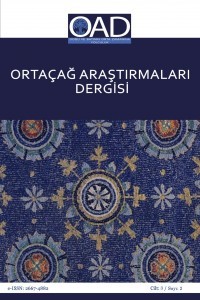

There are NO PUBLICATION FEES (article processing charges or APCs) to publish with this journal.
Ortacag Arastirmalari Dergisi is an open-access, peer-reviewed scientific e-journal that publishes research articles that will contribute to the field of Medieval History twice a year, in June and December. All charges of the Ortacag Arastirmalari Dergisi are covered by Dergipark. The publication of articles and the execution of article processes in the journal are free of charge. No processing fee or submission fee is charged under any other names (editorial processing charges, language editing fees, colour charges, submission fees, page charges, membership fees, print subscription costs, or other supplementary charges). As part of its publication policies, Ortacag Arastirmalari Dergisi does not accept sponsorship or advertisements.

SAHİBİ

Murat Serdar
Assoc. Prof. Dr. Murat SERDAR TOKAT GAZİOSMANPAŞA ÜNİVERSİTESİ

İngilizce, Latince

Medieval European History

EDİTÖRLER

Murat Keçiş
Prof. Dr. Murat KEÇİŞ MUĞLA SITKI KOÇMAN ÜNİVERSİTESİ
History of The Byzantine
Murat Serdar
Assoc. Prof. Dr. Murat SERDAR TOKAT GAZİOSMANPAŞA ÜNİVERSİTESİ

İngilizce, Latince

Medieval European History

ALAN EDİTÖRLERİ

Default avatar
Assoc. Prof. Dr. Murat ÖZTÜRK İstanbul Üniversitesi

1978 İstanbul doğumlu. 1996-2000 yılları arasında İstanbul Üniversitesi Edebiyat Fakültesi Tarih Bölümü’nde Lisans öğrenimini tamamladı. 2002 senesinde İstanbul Üniversitesi Edebiyat Fakültesi Tarih Bölümü Ortaçağ Tarihi Anabilim Dalı’na Araştırma Görevlisi olarak atandı. 2004 yılında İstanbul Üniversitesi Sosyal Bilimler Enstitüsü’nde Yüksek Lisans programından mezun oldu. 2012 senesinde Doktor, 2020’de Doçent unvanlarını aldı. Hâlen aynı anabilim dalında görevine devam etmekte olup İslâm denizciliği ve Türk-İslâm devletleriyle ilgili Lisans, Yüksek Lisans ve Doktora dersleri vermekte, bu konulardaki ilmî çalışmalarına devam etmektedir. İngilizce, Arapça ve Farsça biliyor.

History of Muslim Turkish Countries and Societies
Suna Çağaptay
Assoc. Prof. Dr. Suna ÇAĞAPTAY MUĞLA SITKI KOÇMAN ÜNİVERSİTESİ
History of Architecture, Habitat Archeology
Fatma İnce Sancaklı
Assoc. Prof. Dr. Fatma İNCE SANCAKLI İNÖNÜ ÜNİVERSİTESİ
History of Seljuk
History of Architecture
History of The Byzantine
Default avatar
Prof. Dr. Arda ARIKAN Akdeniz Üniversitesi

Graduating from Hacettepe University’s Faculty of Letters, Department of American Culture and Literature in 1996, Prof. Dr. Arda Arikan completed his Ph.D. at Penn State University’s Science, Technology, and Society program in 2002 with his dissertation on the professional development of foreign language instructors from a Postmodern narrative study perspective. He is currently employed at Akdeniz University’s Faculty of Letters, Department of English Language and Literature. He continues his studies as a generalist by reading and writing on education, literature, and culture. 

British and Irish Language, Literature and Culture
Default avatar
Prof. Dr. Osman GÜMÜŞÇÜ ÇANKIRI KARATEKİN ÜNİVERSİTESİ

1970 yılında Sungurlu'da doğdu.

Ankara Üniversitesi, DTCF Coğrafya bölümünden 1991 yılında mezun oldu.

Yüksek Lisansı 1994 yılında ve doktorayı 1997 yılında tamamladı.

Historical Geography
İlker Yiğit
Assoc. Prof. Dr. İlker YİĞİT Marmara Üniversitesi İnsan ve Toplum Bilimleri Fakültesi Coğrafya Bölümü
Historical Geography
Default avatar
Assoc. Prof. Dr. Fatih DURGUN İstanbul Medeniyet Üniversitesi
Medieval European History
Altay Tayfun Özcan
Prof. Dr. Altay Tayfun ÖZCAN DUMLUPINAR ÜNİVERSİTESİ

Çalışmalarımda İngilizce, Latince ve Rusça kullanmaktayım

History of Central Asia
Turgut Akyüz
Assoc. Prof. Dr. Turgut AKYÜZ GÜMÜŞHANE ÜNİVERSİTESİ İLAHİYAT FAKÜLTESİ

1981 yılında Giresun’da dünyaya geldi. 2005 yılında Marmara Üniversitesi İlahiyat Fakültesi’nden mezun oldu. 2011 yılında “Ebûbekir Zekeriyâ Râzî’nin Metafiziği” adlı teziyle Marmara Üniversitesi Sosyal Bilimler Enstitüsü Felsefe ve Din Bilimleri Anabilim Dalı İslam Felsefesi Bilim Dalı’nda yüksek lisansını; 2017 yılında ise aynı Enstitünün Felsefe ve Din Bilimleri Anabilim Dalı’nda “Fahreddîn er-Râzî’nin el-Mantıku’l-Kebîr’inin Tahkik ve İncelemesi” adlı tezle Mantık alanında doktora eğitimini tamamlamıştır. 2004 yılından itibaren çeşitli kamu kuruluşlarında çalıştıktan sonra 2011 yılında Erzincan Üniversitesi İlahiyat Fakültesi Mantık Anabilim Dalı’na Araştırma görevlisi olarak atanmış olup 2018'de Dr. Öğretim Üyesi, 2022 yılında da Doçent olarak atanmıştır. Halen Gümüşhane Üniversitesi İlahiyat Fakültesi Mantık Anabilim Dalında Doçent olarak görev yapmaktadır. Çalışma alanları; mantık, metafizik ve metodoloji ayrıca felsefi meseleler üzerine popüler yayınları vardır.

Gazete yazıları, Tv programları, şiirleri ve youtube yayınları bulunmaktadır.

Evli ve dört çocuk babasıdır.


Mycology, Logic
Uğur Ada
Asst. Prof. Dr. Uğur ADA GAZİOSMANPAŞA ÜNİVERSİTESİ EĞİTİM FAKÜLTESİ YABANCI DİLLER EĞİTİMİ BÖLÜMÜ İNGİLİZ DİLİ EĞİTİMİ ANA BİLİM DALI
British and Irish Language, Literature and Culture
İlkgül Kaya
Assoc. Prof. Dr. İlkgül KAYA BOZOK ÜNİVERSİTESİ, FEN-EDEBİYAT FAKÜLTESİ

Lisans: Hacettepe Üniversitesi Fen Edebiyat Fakültesi Sanat Tarihi (1999-2003)

Yüksek Lisans: Hacettepe Üniversitesi Sosyal Bilimler Enstitüsü Sanat Tarihi ABD (2004-2007)

Doktora: Ankara Üniversitesi Sosyal Bilimler Enstitüsü Sanat Tarihi ABD (2011-2017)

Unvan-Kurum: Doç. Dr., Bozok Üniversitesi Fen-Edebiyat Fakültesi Sanat Tarihi Bölümü, Bizans Sanatı Anabilim Dalı Başkanı

Creative Arts and Writing
Özlem Genç
Assoc. Prof. Dr. Özlem GENÇ Ondokuz Mayıs Üniversitesi
Medieval European History

Yabancı Dil Editörü

Default avatar
Prof. Dr. Arda ARIKAN Akdeniz Üniversitesi

Graduating from Hacettepe University’s Faculty of Letters, Department of American Culture and Literature in 1996, Prof. Dr. Arda Arikan completed his Ph.D. at Penn State University’s Science, Technology, and Society program in 2002 with his dissertation on the professional development of foreign language instructors from a Postmodern narrative study perspective. He is currently employed at Akdeniz University’s Faculty of Letters, Department of English Language and Literature. He continues his studies as a generalist by reading and writing on education, literature, and culture. 

British and Irish Language, Literature and Culture
Uğur Ada
Asst. Prof. Dr. Uğur ADA GAZİOSMANPAŞA ÜNİVERSİTESİ EĞİTİM FAKÜLTESİ YABANCI DİLLER EĞİTİMİ BÖLÜMÜ İNGİLİZ DİLİ EĞİTİMİ ANA BİLİM DALI
British and Irish Language, Literature and Culture
Murat Hanar
Doctoral Murat HANAR Tokat Gaziosmanpaşa Üniversitesi
Doktor
Translation Studies
Pınar Savaş
Doctoral Pınar SAVAŞ MUĞLA SITKI KOÇMAN ÜNİVERSİTESİ
British and Irish Language, Literature and Culture

YAYIN KURULU

Default avatar
Prof. Dr. Cengiz TOMAR MARMARA ÜNİVERSİTESİ
Political and Civilization History of Islam
Default avatar
Prof. Dr. Aydın USTA MİMAR SİNAN GÜZEL SANATLAR ÜNİVERSİTESİ
History of Muslim Turkish Countries and Societies
Pelin Seval Esen
Asst. Prof. Dr. Pelin Seval ESEN Gaziosmanpaşa Üniversitesi

Lisans, Yüksek Lisans eğitimini Fars Dili ve Edebiyatı alanında tamamlamış olup 2017 yılında aynı alanda Dr. ünvanını almıştır. Halen Tokat Gaziosmanpaşa Üniversitesi Yabancı Diller Yüksekokulunda Dr. Öğr. Üyesi olarak görev yapmaktadır.

Persian Language, Literature and Culture
Default avatar
Prof. Dr. Casim AVCI MARMARA ÜNİVERSİTESİ, İLAHİYAT FAKÜLTESİ
History of Islam
Default avatar
Prof. Dr. Ebru ALTAN İstanbul Üniveristesi
History of The Byzantine
Kazım Paydaş
Prof. Dr. Kazım PAYDAŞ Harran Üniversitesi
Medieval Asian History
Default avatar
Prof. Dr. Mustafa ALİCAN MALATYA TURGUT ÖZAL ÜNİVERSİTESİ

Trabzon'da doğdu. Ege Üniversitesi'nde Tarih okudu. 2013'te Yrd. Doç. Dr., 2016'da Doç. Dr., 2021'de Prof. Dr. oldu. Muş Alparslan Üniversitesi rektörlüğünü yürütüyor.

History of Seljuk
Default avatar
Prof. Dr. Hammet ARSLAN Muğla Sıtkı Koçman Üniversitesi
History of Religion
Default avatar
Prof. Dr. Tarık Tolga GÜMÜŞ Mersin Üniversitesi Tarih Bölümü

ODTU felsefe bölümünden Lisans derecesiyle mezun olduktan sonra Bilkent Üniversitesi tarih bölümünde yüksek lisans ve doktora yaptım. halen Mersin Üniversitesinde Profesör olarak çalışıyorum

Medieval European History
History of The Byzantine

İngilizce, Arapça, Farsça

History of Muslim Turkish Countries and Societies

DİL EDİTÖRLERİ

Medieval History
Müjdat Namdar
Post Graduate Müjdat NAMDAR MUGLA SITKI KOCMAN UNIVERSITY, INSTITUTE OF SOCIAL SCIENCES
Medieval History
Yaren Pekağaç
Post Graduate Yaren PEKAĞAÇ ONDOKUZ MAYIS ÜNİVERSİTESİ, LİSANSÜSTÜ EĞİTİM ENSTİTÜSÜ, TARİH (YL) (TEZLİ)
Medieval History
Default avatar
Post Graduate Sefa AKYAZICI ONDOKUZ MAYIS ÜNİVERSİTESİ
Medieval History
Birkan Akgül
Post Graduate Birkan AKGÜL 19 Mayıs Üniversitesi
Medieval History
Umut Barutlu
Doctoral Umut BARUTLU BEYKENT ÜNİVERSİTESİ, YABANCI DİLLER YÜKSEKOKULU
Medieval History
Default avatar
Doctoral Ece UYSAL Muğla Sıtkı Koçman University
Medieval History
Deniz Ece Kahveci
Post Graduate Deniz Ece KAHVECİ MUĞLA SITKI KOÇMAN ÜNİVERSİTESİ
Medieval History

Etik Editörü

Default avatar
Prof. Dr. Alpaslan DEMİR TOKAT GAZİOSMANPAŞA ÜNİVERSİTESİ, FEN-EDEBİYAT FAKÜLTESİ, TARİH BÖLÜMÜ, TARİH PR.
Migration, Early Modern Ottoman History, Early Modern Renewal History, Early Modern History (Other), Urbanization History, Ottoman history

İstatistik Editörü

Default avatar
Assoc. Prof. Demet BİNBAŞIOĞLU TOKAT GAZİOSMANPAŞA ÜNİVERSİTESİ
Topology

Yazı İşleri Müdürü

Murat Hanar
Dr. Murat HANAR Tokat Gaziosmanpaşa Üniversitesi
Doktor
Language Studies, Linguistics, Medieval History, Medieval European History, Medieval Cities, Roman History, History of Seljuk
Deniz Ece Kahveci
Post Graduate Deniz Ece KAHVECİ MUĞLA SITKI KOÇMAN ÜNİVERSİTESİ
Hellenistic Period Archeology
Müjdat Namdar
Post Graduate Müjdat NAMDAR MUGLA SITKI KOCMAN UNIVERSITY, INSTITUTE OF SOCIAL SCIENCES
Medieval History

DERGİ SAHİBİ

Murat Serdar
Assoc. Prof. Dr. Murat SERDAR TOKAT GAZİOSMANPAŞA ÜNİVERSİTESİ

İngilizce, Latince

Medieval History, Medieval European History, History of Seljuk, History of Muslim Turkish Countries and Societies

EDİTÖRLER

Murat Serdar
Assoc. Prof. Dr. Murat SERDAR TOKAT GAZİOSMANPAŞA ÜNİVERSİTESİ

İngilizce, Latince

Medieval History, Medieval European History, History of Seljuk, History of Muslim Turkish Countries and Societies
Murat Keçiş
Prof. Dr. Murat KEÇİŞ MUĞLA SITKI KOÇMAN ÜNİVERSİTESİ
Medieval History, History of The Byzantine, Medieval European History, History of Seljuk

YAYIN KURULU

Kazım Paydaş
Prof. Dr. Kazım PAYDAŞ Harran Üniversitesi
General Turkish History, History of Central Asia, Turkish Cultural History, Medieval History
Default avatar
Prof. Dr. Uli SCHAMİLOGLU Nazarbayev Üniversitesi

Uli Schamiloglu is Professor and chair in the Department of Kazakh Language and Turkic Studies at Nazarbayev University in Astana, Kazakhstan. He is also director of the Ph.D. in Eurasian Studies program at Nazarbayev University. He received his B.A. in Middle East Languages and Cultures from Columbia College in 1979 (with a concentration in Turkish Studies) and his Ph.D. in Middle Eastern and Central Asian History from Columbia University in 1986. He also studied in the Department of Altaistics at Szeged University in Hungary in Fall 1982. He has taught previously at Indiana University-Bloomington (1983-1989) and at the University of Wisconsin-Madison (1989-2017), where he is now professor emeritus.

His main research interests include the Turkic languages and cultures of the Middle East and Central Eurasia, the socio-economic history of the Middle East and Central Eurasia in the medieval period (especially the Golden Horde), the history of Turko-Islamic civilization, and modern intellectual movements among the Muslim Turkic peoples of the Ottoman and Russian Empires. Since the late 1980s he has also been interested in the role of the bubonic plague in the history of medieval Central Eurasia, especially the impact of plague on the history of populations, written monuments, literary languages, religiosity, and other spheres. This has led to a growing interest in the “Science of the History of Man”. In this regard, he has worked with colleagues to establish the Nazarbayev University aDNA Lab.

Turkish Language and Literature (Other), General Turkish History (Other)
Murat Keçiş
Prof. Dr. Murat KEÇİŞ MUĞLA SITKI KOÇMAN ÜNİVERSİTESİ
Medieval History, History of The Byzantine, Medieval European History, History of Seljuk
Default avatar
Prof. Dr. Zsombor RAJKAI Ritsumeikan University
Sociology
Default avatar
Prof. Dr. Tarık Tolga GÜMÜŞ Mersin Üniversitesi Tarih Bölümü

ODTU felsefe bölümünden Lisans derecesiyle mezun olduktan sonra Bilkent Üniversitesi tarih bölümünde yüksek lisans ve doktora yaptım. halen Mersin Üniversitesinde Profesör olarak çalışıyorum

Medieval Folk Culture
Default avatar
Prof. Dr. Ebru ALTAN İstanbul Üniveristesi
History of The Byzantine, Medieval European History, History of Seljuk
Murat Serdar
Assoc. Prof. Dr. Murat SERDAR TOKAT GAZİOSMANPAŞA ÜNİVERSİTESİ

İngilizce, Latince

Medieval History, Medieval European History, History of Seljuk, History of Muslim Turkish Countries and Societies
Default avatar
Assoc. Prof. Dr. Yaroslav PYLYPCHUK V. Sykhomlynskyi State Scientific and Pedagogical library
Medieval Asian History

İngilizce, Arapça, Farsça

Political and Civilization History of Islam, History of Muslim Turkish Countries and Societies
Default avatar
Prof. Dr. Maria Alice TAVARES New University of Lisbon
Medieval European History, Medieval Cities, Medieval History (Other), Environmental History, Gender History, Early Modern European History, History of Law and Justice
History of The Byzantine, Political and Civilization History of Islam, Ottoman Society
Default avatar
Prof. Aydın USTA MİMAR SİNAN GÜZEL SANATLAR ÜNİVERSİTESİ
History of The Byzantine

ALAN EDİTÖRLERİ

Suna Çağaptay
Assoc. Prof. Dr. Suna ÇAĞAPTAY MUĞLA SITKI KOÇMAN ÜNİVERSİTESİ
Virtual and Mixed Reality, Urban History, Architectural History, Theory and Criticism, History of Architecture, Aesthetics in Architecture, Byzantine Art, Architectural, Medieval Age Archeology, Urbanization History
Altay Tayfun Özcan
Prof. Dr. Altay Tayfun ÖZCAN DUMLUPINAR ÜNİVERSİTESİ

Çalışmalarımda İngilizce, Latince ve Rusça kullanmaktayım

General Turkish History, Medieval History
Default avatar
Prof. Dr. Osman GÜMÜŞÇÜ ÇANKIRI KARATEKİN ÜNİVERSİTESİ

1970 yılında Sungurlu'da doğdu.

Ankara Üniversitesi, DTCF Coğrafya bölümünden 1991 yılında mezun oldu.

Yüksek Lisansı 1994 yılında ve doktorayı 1997 yılında tamamladı.


Historical Geography
Melek Gedik
Asst. Prof. Dr. Melek GEDİK VAN YÜZÜNCÜ YIL ÜNİVERSİTESİ
Language Studies, Persian Language, Literature and Culture
History of Architecture, Art History, Turkish Islamic Arts
Fatma İnce Sancaklı
Assoc. Prof. Dr. Fatma İNCE SANCAKLI İNÖNÜ ÜNİVERSİTESİ
History of The Byzantine, History of Seljuk
Turgut Akyüz
Assoc. Prof. Dr. Turgut AKYÜZ GÜMÜŞHANE ÜNİVERSİTESİ İLAHİYAT FAKÜLTESİ

1981 yılında Giresun’da dünyaya geldi. 2005 yılında Marmara Üniversitesi İlahiyat Fakültesi’nden mezun oldu. 2011 yılında “Ebûbekir Zekeriyâ Râzî’nin Metafiziği” adlı teziyle Marmara Üniversitesi Sosyal Bilimler Enstitüsü Felsefe ve Din Bilimleri Anabilim Dalı İslam Felsefesi Bilim Dalı’nda yüksek lisansını; 2017 yılında ise aynı Enstitünün Felsefe ve Din Bilimleri Anabilim Dalı’nda “Fahreddîn er-Râzî’nin el-Mantıku’l-Kebîr’inin Tahkik ve İncelemesi” adlı tezle Mantık alanında doktora eğitimini tamamlamıştır. 2004 yılından itibaren çeşitli kamu kuruluşlarında çalıştıktan sonra 2011 yılında Erzincan Üniversitesi İlahiyat Fakültesi Mantık Anabilim Dalı’na Araştırma görevlisi olarak atanmış olup 2018'de Dr. Öğretim Üyesi, 2022 yılında da Doçent olarak atanmıştır. Halen Gümüşhane Üniversitesi İlahiyat Fakültesi Mantık Anabilim Dalında Doçent olarak görev yapmaktadır. Çalışma alanları; mantık, metafizik ve metodoloji ayrıca felsefi meseleler üzerine popüler yayınları vardır.

Gazete yazıları, Tv programları, şiirleri ve youtube yayınları bulunmaktadır.

Evli ve dört çocuk babasıdır.


Philosophy of Logic, Logic, History of Logic
Özlem Genç
Prof. Dr. Özlem GENÇ Ondokuz Mayıs Üniversitesi
Medieval European History
İlkgül Kaya
Assoc. Prof. Dr. İlkgül KAYA BOZOK ÜNİVERSİTESİ, FEN-EDEBİYAT FAKÜLTESİ

Lisans: Hacettepe Üniversitesi Fen Edebiyat Fakültesi Sanat Tarihi (1999-2003)

Yüksek Lisans: Hacettepe Üniversitesi Sosyal Bilimler Enstitüsü Sanat Tarihi ABD (2004-2007)

Doktora: Ankara Üniversitesi Sosyal Bilimler Enstitüsü Sanat Tarihi ABD (2011-2017)

Unvan-Kurum: Doç. Dr., Bozok Üniversitesi Fen-Edebiyat Fakültesi Sanat Tarihi Bölümü, Bizans Sanatı Anabilim Dalı Başkanı

History of Architecture, Medieval Age Archeology
Muhammet Okudan
Assoc. Prof. Dr. Muhammet OKUDAN TOKAT GAZİOSMANPAŞA ÜNİVERSİTESİ, İLAHİYAT FAKÜLTESİ, İSLAM TARİHİ VE SANATLARI BÖLÜMÜ, SİYER-İ NEBİ VE İSLAM TARİHİ ANABİLİM DALI
20.12.1977 yılında Samsun’da doğdu. 1994 yılında Samsun İmam Hatip lisesinden, 2001 yılında Ondokuzmayıs Üniversitesi İlahiyat Fakültesinden mezun oldu. 2005 yılında “2032/218 Numaralı Trabzon Şer’iyye Sicilinin Transkripsiyon ve Değerlendirilmesi” adlı teziyle yüksek lisans, 2013 yılında “Vakfiyelere Göre Osmanlı Döneminde Samsun’da Vakıflar” teziyle doktora programını bitirdi. Ocak 2014 yılında Gaziosmanpaşa Üniversitesi İlahiyat Fakültesi, İslam Tarihi ve Sanatları Anabilim Dalına yardımcı doçent olarak atandı. Halen aynı üniversitede görevine devam etmektedir.
Political and Civilization History of Islam, History of Islam, Religion, Society and Culture Studies

Lisans, Yüksek Lisans eğitimini Fars Dili ve Edebiyatı alanında tamamlamış olup 2017 yılında aynı alanda Dr. ünvanını almıştır. Halen Tokat Gaziosmanpaşa Üniversitesi Yabancı Diller Yüksekokulunda Dr. Öğr. Üyesi olarak görev yapmaktadır.

Language Studies, Translation Studies, World Languages, Literature and Culture, Persian Language, Literature and Culture, Contemporary History of Iran
İlker Yiğit
Assoc. Prof. Dr. İlker YİĞİT Marmara Üniversitesi İnsan ve Toplum Bilimleri Fakültesi Coğrafya Bölümü
Human Geography, Population Geography, Historical Geography, Habitation Geography
Default avatar
Prof. Dr. Fatih DURGUN İstanbul Medeniyet Üniversitesi
Medieval European History
Default avatar
Asst. Prof. Dr. Özden MERCAN HACETTEPE ÜNİVERSİTESİ
Medieval European History, Early Modern Mediterranean History, Early Modern European History
Mehmet Abi
Dr. Instructor Mehmet ABİ MUGLA SITKI KOCMAN UNIVERSITY
English As A Second Language, Applied Linguistics and Educational Linguistics, Other Fields of Education (Other)
Default avatar
Asst. Prof. Dr. Ayça ELALMIŞ TOKAT GAZİOSMANPAŞA ÜNİVERSİTESİ, FEN-EDEBİYAT FAKÜLTESİ

Lisans eğitimini Ankara Üniversitesi, Mühendislik Fakültesi, Jeofizik Mühendisliği (1994-2000), yüksek lisans eğitimini Ankara Üniversitesi, Sosyal Bilimler Enstitüsü, Protohistorya ve Önasya Arkeolojisi Anabilim Dalında (2007) ve doktorasını Ege Üniversitesi, Sosyal Bilimsel Enstitüsü, Bizans Sanatı Anabilim Dalında  yapmıştır (2016). Gaziosmanpaşa Üniversitesi Fen-Edebiyat Fakültesi Sanat Tarihi Bölümü, Batı Sanatı ve Çağdaş Sanat Anabilim Dalında Dr. Öğretim Üyesi  olarak görev yapmaktadır. 

Medieval Age Archeology
Nihat Fırat
Asst. Prof. Dr. Nihat FIRAT ERZİNCAN BİNALİ YILDIRIM ÜNİVERSİTESİ

Dr. Öğretim Üyesi Nihat FIRAT
Marmara Üniversitesi İlahiyat Fakültesinden mezun oldu. 2017’de Erzincan Üniversitesi’nde yüksek lisansını (Erzincan C 55 Nolu Şer'iyye Sicili ve Hukuki Değerlendirmesi (1916-1919)), 2022’de de Atatürk Üniversitesi’nde doktorasını (Abdülbâsıt el-Malatî ve Tarihçiliği) tamamladı.  2023 yılında Erzincan Binali Yıldırım Üniversitesi İlahiyat Fakültesi’ne Doktor Öğretim Üyesi olarak atanan Nihat FIRAT’ın yayımlanmış makale, kitap bölümleri ve tebliğleri bulunmaktadır.

History of Islam

2008 yılında Ankara Üniversitesi Dil ve Tarih-Coğrafya Fakültesi Antropoloji Bölümü'nden mezun olan Dr. Öğr. Üyesi Sibel Önal, 2017 yılında Ankara Üniversitesi Sosyal Bilimler Enstitüsü Fizik Antropoloji programında doktorasını tamamladı. 2014 yılından beri mezun olduğu bölümde çalışmaktadır. Ergonomi, kent ergonomisi, beden algısı ve ekoloji üzerine dersler vererek çalışmalarını sürdürmektedir. 

Anthropometry, Ecological Anthropology, Ergonomi, Physics Anthropology

1978 İstanbul doğumlu. 1996-2000 yılları arasında İstanbul Üniversitesi Edebiyat Fakültesi Tarih Bölümü’nde Lisans öğrenimini tamamladı. 2002 senesinde İstanbul Üniversitesi Edebiyat Fakültesi Tarih Bölümü Ortaçağ Tarihi Anabilim Dalı’na Araştırma Görevlisi olarak atandı. 2004 yılında İstanbul Üniversitesi Sosyal Bilimler Enstitüsü’nde Yüksek Lisans programından mezun oldu. 2012 senesinde Doktor, 2020’de Doçent unvanlarını aldı. Hâlen aynı anabilim dalında görevine devam etmekte olup İslâm denizciliği ve Türk-İslâm devletleriyle ilgili Lisans, Yüksek Lisans ve Doktora dersleri vermekte, bu konulardaki ilmî çalışmalarına devam etmektedir. İngilizce, Arapça ve Farsça biliyor.

Medieval Age Archeology, Medieval History
Pınar Kaya Tan
Assoc. Prof. Dr. Pınar KAYA TAN KIRKLARELİ ÜNİVERSİTESİ, FEN-EDEBİYAT FAKÜLTESİ, TARİH BÖLÜMÜ

Selçuklu Tarihi, Ortaçağ Türk ve Müslüman Devletleri, Bâtınîlik, İran Tarihi, Ortaçağ tarih yazıcılığı çalışma alanlarıdır.

History of Seljuk

Orta Çağ Tarihi Müslüman Türk Devletleri ve Toplumları Tarihi,  Tohâristan, Gazneliler 

Medieval History, History of Muslim Turkish Countries and Societies

DANIŞMA KURULU

Abdullah Kaya
Prof. Dr. Abdullah KAYA SİVAS CUMHURİYET

KONYA SELÇUK ÜNİVERSİTESİ

LİSANS

YL

DR TAHSİLİ


History of Seljuk
Default avatar
Prof. Dr. Mustafa UYAR ANKARA ÜNİVERSİTESİ
Political and Civilization History of Islam, History of Seljuk, History of Muslim Turkish Countries and Societies
History of Architecture, Urban Archeology, General Turkish History, Political and Civilization History of Islam, Turkish and Islamic Intellectual History, Urbanization History, Islamic Intellectual History
Default avatar
Prof. Dr. Cihan PİYADEOĞLU İSTANBUL MEDENİYET ÜNİVERSİTESİ
History of Seljuk
Default avatar
Prof. Dr. Cengiz TOMAR MARMARA ÜNİVERSİTESİ
Middle East Studies, Political and Civilization History of Islam, History of Muslim Turkish Countries and Societies
Default avatar
Prof. Dr. İlyas GÖKHAN Ankara Hacı Bayram Veli Üniversitesi Edebiyat Fakültesi Tarih Bölümü

Ankara Üniversitesi DTCF Mezunu. Halen Ankara Hacı Bayram Veli Üniversitesinde çalışıyor.

Political and Civilization History of Islam, History of Muslim Turkish Countries and Societies
Default avatar
Prof. Dr. Mehmet HACIGÖKMEN SELÇUK ÜNİVERSİTESİ
Theory of History
Default avatar
Prof. Dr. Adnan ÇEVİK Muğla Sıtkı Koçman Üniversitesi
Political and Civilization History of Islam, History of Seljuk, History of Muslim Turkish Countries and Societies

İNGİLİZCE DİL EDİTÖRLERİ

Pınar Savaş
Doctoral Pınar SAVAŞ MUĞLA SITKI KOÇMAN ÜNİVERSİTESİ
Medieval European History
Murat Hanar
Dr. Murat HANAR Tokat Gaziosmanpaşa Üniversitesi
Doktor
Language Studies, Linguistics, Medieval History, Medieval European History, Medieval Cities, Roman History, History of Seljuk
Default avatar
Prof. Dr. Arda ARIKAN Akdeniz Üniversitesi

Graduating from Hacettepe University’s Faculty of Letters, Department of American Culture and Literature in 1996, Prof. Dr. Arda Arikan completed his Ph.D. at Penn State University’s Science, Technology, and Society program in 2002 with his dissertation on the professional development of foreign language instructors from a Postmodern narrative study perspective. He is currently employed at Akdeniz University’s Faculty of Letters, Department of English Language and Literature. He continues his studies as a generalist by reading and writing on education, literature, and culture. 

North American Language, Literature and Culture

Lisans eğitimini Pamukkale Üniversitesi'nde tamamladı; bu eğitimin bir yılını Güney Danimarka Üniversitesi'nde geçirdi. İstanbul Üniversitesi'nde başladığı yüksek lisans eğitimine, öğretim elemanı olarak göreve başladığı Aksaray Üniversitesi'ne geçiş yaparak devam etti ve burada tamamladı. Doktora derecesini ise Ankara Üniversitesi Sosyal Bilimler Enstitüsü Ortaçağ Tarihi Anabilim Dalı'ndan aldı. Halen Aksaray Üniversitesi Fen Edebiyat Fakültesi Tarih Bölümü'nde görev yapmaktadır. Uzmanlık alanı Orta Çağ Tarihi olup, özellikle İskandinavya, Doğu Avrupa ve Kafkasya bölgelerine odaklanmaktadır.

Turkish Savannah Culture, Turkish Society and Community, History of The Byzantine, Political and Civilization History of Islam, Medieval European History, Medieval Cities, Medieval History (Other)

YAZIM VE DİL EDİTÖRLERİ

History of The Byzantine
Deniz Ece Kahveci
Post Graduate Deniz Ece KAHVECİ MUĞLA SITKI KOÇMAN ÜNİVERSİTESİ
Archaeology, Ancient History
Yaren Pekağaç
Post Graduate Yaren PEKAĞAÇ ONDOKUZ MAYIS ÜNİVERSİTESİ, LİSANSÜSTÜ EĞİTİM ENSTİTÜSÜ, TARİH (YL) (TEZLİ)
Medieval European History
Old Fabric Patterns, Medieval European History, Medieval History (Other), Gender History
Default avatar
Doctoral Sefa AKYAZICI ONDOKUZ MAYIS ÜNİVERSİTESİ
Medieval European History, Medieval Cities
Umut Barutlu
Instructor Umut BARUTLU BEYKENT ÜNİVERSİTESİ, YABANCI DİLLER YÜKSEKOKULU
World Languages, Literature and Culture, British and Irish Language, Literature and Culture, Medieval European History
Birkan Akgül
Post Graduate Birkan AKGÜL 19 Mayıs Üniversitesi
Medieval Philosophy, Medieval European History, European Political History
Müjdat Namdar
Doctoral Müjdat NAMDAR MUGLA SITKI KOCMAN UNIVERSITY, INSTITUTE OF SOCIAL SCIENCES
Medieval History, History of The Byzantine, History of Seljuk

ETİK EDİTÖRÜ

Default avatar
Prof. Dr. Alpaslan DEMİR TOKAT GAZİOSMANPAŞA ÜNİVERSİTESİ, FEN-EDEBİYAT FAKÜLTESİ, TARİH BÖLÜMÜ, TARİH PR.
Migration, Early Modern Ottoman History, Early Modern Renewal History, Early Modern History (Other), Urbanization History, Ottoman history

İSTATİSTİK EDİTÖRÜ

Default avatar
Assoc. Prof. Demet BİNBAŞIOĞLU TOKAT GAZİOSMANPAŞA ÜNİVERSİTESİ
Science and Mathematics Education (Other), Mathematical Sciences, Statistics (Other)

EDİTÖR YARDIMCILARI

Pınar Savaş
Doctoral Pınar SAVAŞ MUĞLA SITKI KOÇMAN ÜNİVERSİTESİ
Medieval European History
Murat Hanar
Dr. Murat HANAR Tokat Gaziosmanpaşa Üniversitesi
Doktor
Language Studies, Linguistics, Medieval History, Medieval European History, Medieval Cities, Roman History, History of Seljuk
Kübra Gün
Dr. Kübra GÜN gazi osmanpaşa üniversitesi
Medieval History, History of Muslim Turkish Countries and Societies

SOSYAL MEDYA SORUMLUSU

Deniz Ece Kahveci
Post Graduate Deniz Ece KAHVECİ MUĞLA SITKI KOÇMAN ÜNİVERSİTESİ
Archaeology, Ancient History
Müjdat Namdar
Doctoral Müjdat NAMDAR MUGLA SITKI KOCMAN UNIVERSITY, INSTITUTE OF SOCIAL SCIENCES
Medieval History, History of The Byzantine, History of Seljuk

TÜRKÇE DİL EDİTÖRÜ

Modern Turkish Literature in Turkiye Field

16263  open-access-logo.png   COPE.jpg  32977


Articles published in Ortaçağ Araştırmaları Dergisi are licensed under a Creative Commons Attribution-NonCommercial 4.0 International License (CC BY-NC 4.0). Ortaçağ Araştırmaları Dergisi provides immediate open-access to its content, reflecting its conviction in advancing global knowledge exchange. The opinions presented in the articles are the sole responsibility of their respective authors and do not present the view or opinions of Ortaçağ Araştırmaları Dergisi. Terms of Use & Privacy Policy