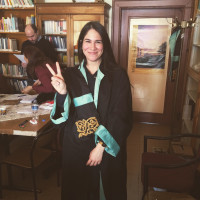
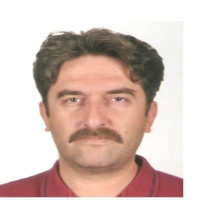
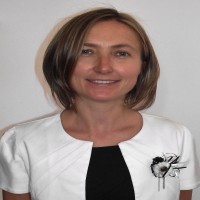
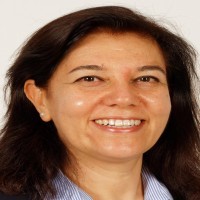
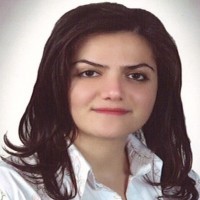
Alev SINAR UĞURLU 1967 tarihinde İstanbul’da doğdu. Beşiktaş Atatürk Lisesi'ni bitirdikten sonra 1988 yılında Marmara Üniversitesi Fen Edebiyat Fakültesi Türk Dili ve Edebiyatı Bölümünden mezun oldu. 1990 yılında Marmara Üniversitesi Sosyal Bilimler Enstitüsü Yeni Türk Edebiyatı Ana Bilim Dalında "İlkokul Okuma Kitapları (1921-1933)" adlı teziyle yüksek lisansını, 1995 yılında Marmara Üniversitesi Türkiyat Araştırmaları Enstitüsü Yeni Türk Edebiyatı Ana Bilim Dalında "Türk Hikâye ve Romanında Çocuk (1872-1950)" adlı teziyle doktorasını tamamladı.
1989-1996 tarihleri arasında Marmara Üniversitesi Atatürk Eğitim Fakültesi Sınıf Öğretmenliği ve Okul Öncesi Eğitimi Öğretmenliği Bölümleri'nde öğretim görevlisi olarak çalıştı. Eylül 1996’da Uludağ Üniversitesi Fen Edebiyat Fakültesi Türk Dili ve Edebiyatı Bölümüne yardımcı doçent olarak atandı. 17 Haziran 2002 tarihinde Türk Edebiyatı Bilim Dalında doçent, 29 Ocak 2009 tarihinde de Yeni Türk Edebiyatı Anabilim Dalında profesör unvanını kazandı.
Hikâye ve Romanımızda Çocuk, Türk Roman ve Hikâyesinde II. Dünya Savaşı, Aka Gündüz’ün Romanlarında Kadın, Çocuk Edebiyatı, Fevzi Lütfi Karaosmanoğlu Bir Muallifin Edebi ve Sosyal Yazıları, adlı kitapları başta olmak üzere çok sayıda makaleleri, bildirileri ve kitap içinde bölüm yazarlığı vardır.
Türk Ocakları Derneği Bursa Şubesi yönetim kurulu üyesi de olan Alev SINAR UĞURLU halen Bursa Uludağ Üniversitesi Fen Edebiyat Fakültesi Türk Dili ve Edebiyatı Bölümü öğretim üyesi ve Yeni Türk Edebiyatı Anabilim Dalı başkanıdır.
2003 yılında Ege Üniversitesi Edebiyat Fakültesi Türk Dili ve Edebiyatı Bölümü’nden mezun olmuştur. Aynı üniversitede başladığı yüksek lisans öğrenimini 2005 yılında “Temel Göstergebilim Kavramları Üzerine Bir İnceleme” başlıklı teziyle tamamlamıştır. 2008 yılında “Çağdaş Batı Eğitiminde Nesir Analizi Yöntemleri” adlı teziyle Yeni Türk Edebiyatı alanında doktora derecesi, 2016 yılında ise yine aynı alanda Doçent ünvanı almıştır. Halen Ege Üniversitesi Eğitim Fakültesi Türkçe ve Sosyal Bilimler Eğitimi Bölümü Türkçe Eğitimi Anabilim Dalı’nda öğretim üyesi olarak görevini sürdürmektedir. 2012 yılında Manfred Jahn’ın Anlatıbilim: Anlatı Teorisi El Kitabı (Dergâh Yayınları) başlıklı çalışmasını, 2014 yılında Ondřej Sládek’in Prag Ekolü’nün Yapısalcı Poetikası ve Geçirdiği Dönüşüm (Dergâh Yayınları) adlı kitabını ve 2018 yılında Rita Felski’nin Eleştirinin Sınırları (Dergâh Yayınları) başlıklı kitabını Türkçeye tercüme etmiştir. 2014 yılında Anlatıbilime Giriş (Dergâh Yayınları) başlıklı telif kitabı ve Ahmet Mithat Efendi’den yaptığı Beşir Fuat (Dergâh Yayınları) adlı metin neşri yayınlanmıştır. 2022 yılında Çözülemeyen Bulmaca: Anlatıcı Üzerine Tartışmalar (Dergâh Yayınları) başlıklı kitabı yayınlanmıştır.
2025 taririhinde Sinop Üniversitesi İlahiyat Fakültesi Temelİslam Bilimleri Arap Dili Anabilim Dalında Doçent oldu.
My name is Emek Usenmez. I was born in 1981 in Aksaray, Turkey. Aksaray is one of the small cities of central Anatolia. My father is a truck driver and my mother is a housewife. I have seven siblings. My mother is a local carpet weaver.
As the middle member of a family of 7 children, you can easily imagine that I grew up in difficult conditions. I completed my primary, secondary and high school education in Aksaray.
I completed my undergraduate education at Konya Selcuk University, Department of Turkish Language and Literature in 2004. I graduated from Konya Selcuk University with the top of the department and an honorary degree. In 2004, I started working as a research assistant at Kütahya Dumlupinar University. I graduated from Kütahya Dumlupinar University, in master’s degree, Department of Turkish Language and Literature in 2006. In 2006, I was appointed to Istanbul University to study for a PhD. In 2010, I successfully qualified for my PhD degree at Istanbul University Institute of Social Sciences, Department of Turkish Language. I have been currently working as an associate professor (teaching fellow) at the University of Istanbul Rectorate’s Language Institute.
I made field-related investigations and researches in Kyrgyzstan in 2007 and in Turkmenistan between 2010-2011. I had become interested in Central Asian studies. For this purpose, I was invited to Uzbekistan in 2008. In 2008, 2009 and 2011, I conducted studies and researches as a visiting lecturer at the Uzbekistan Academy of Sciences, Ali Sher Navai Institute of Language and Literature, Department of Uzbek Language and Literature. During this period, I worked on Chagatai manuscripts in the library of manuscripts under the Ebu Reyhan Biruni Institute of Oriental Studies of Uzbekistan Academy of Sciences.
2013 Eskişehir Turkic World Capital of Culture While I was the Turkic World consultant, I realized projects with countries such as Tatarstan, Crimea, Mongolia, Uzbekistan, Kyrgyzstan and Turkmenistan. In this context, I published the first color facsimiles of Kutadgu Bilig copies. I prepared 3 volumes of Terjuman newspaper published by Gaspirali İsmail Bey in Bakhchesaray in Crimea, as transliteration and facsimile. In 2014, I prepared the catalogue of Turkic manuscripts of the Turkmenistan Academy of Sciences for publication. Our work on Iran within the scope of the Khorasan-Iran Turkish place names project has been continuing since 2014. In 2014, I worked on Turkic manuscripts in the British Library in England.
I worked as a visiting professor at Harvard University in 2015-2016 and at the University of Cambridge in 2017-2018. As part of IRCICA Library Farabi OCR (Ottoman Turkish machine text reading), I continue to be a consultant in the machine learning project of Ottoman texts in cooperation with ITU and Boğaziçi Universities.
Within the scope of the translation of the First Quran in Turkish, the United States, University of Michigan Department of Near Eastern Studies (Dr. Gottfried Hagen), Germany Freie Universität Berlin Institut für Turkologie (Prof. Dr. Claus Schönig), Russia Petersburg Saint-Petersburg State I received an official invitation letter from the University Department of Turkic Philology of Oriental Faculty (Prof. Dr. Viktor Grigorievich Guzev) and Hungary Budapest Loránd Eötvös University, Institute of Oriental Studies, Department of Turkology (Prof. Dr. Géza Dávid).
I have more been interesting The Middle Turkic (Karakhanid and Kharezm), Chagatai Turkic, The Old Anatolian Turkish (as part of Western-Oghuz Turkic), Ottoman Turkish and contemporary Turkish dialects such as Uzbek-Turkmen-Crimean Tatar and in teaching Turkish as a foreign language for foreigners. In addition to these I am curious about Turkish manuscripts and cataloguing especially Ottoman and Chagatai manuscripts all around the World.
I am currently working on the comparison of the Turkish words in the first Quranic translations in Turkish with Arabic and Persian. I have just published a commentary on the Yaqub al-Cxarhiy commentary written in Chagatay, in the 15th century in Mavaraunnahr.
Fatma Kalpaklı did her PhD in British Cultural Studies programme at Hacettepe University in Turkey and her postdoctorate research in the department of Comparative Human Development at the University of Chicago in USA. Currently, she works at Selcuk University. Her main interests are postcolonial novel, gender studies, cultural psychology, cultural clashes and conflict-solving. Her book entitled British Novelists and Indian Nationalism was published by Academica Press in 2010 in USA. Later, her second book entitled Amitav Ghosh ile Elif Şafak’ın Romanlarında Öteki/leştirme/ Us and Them Attitude in the Works of Amitav Ghosh and Elif Şafak was published in 2016 by Çizgi Publishing House in Turkey. She also translated C.L.R. James’ book, The Life of Captain Cipriani into Turkish and it was published by Zoomkitap in 2016 as Kaptan Cipriani’nin Hayatı.
Assoc. Prof. Gül Kurtuluş
Independent Scholar
kurtulus@bilkent.edu.tr
Education
1997-1992: PhD in English Language and Literature, Bilkent University, Ankara,
Turkey
Dissertation Title: The Carnivalesque in Ben Jonson’s Three City
Comedies: Volpone, The Alchemist and Bartholomew Fair.
Primary Area: English Renaissance Literature
Specialization: Sixteenth Century English Drama
1992-1990: MA in English Language and Literature, Bilkent University, Turkey
Dissertation Title: A Kaleidoscope of Harold Pinter’s Plays.
1985-1990: BA in English Language and Literature, Hacettepe University, Ankara,
Turkey
First Monograph published by Peter Lang in January 2020
Stereoscopic London: Plays of Oscar Wilde, Bernard Shaw and Arthur Wing Pinero in the 1890s
Second Monograph published by Peter Lang in October 2022
Convention and Contravention in Ben Jonson's Three Comedies: Volpone, The Alchemist, Bartholomew Fair
Third Monograph published by Routledge in June 2024
Shakespeare's Unmuted Women
Publications
“Aphra Behn’s Sisters: The (Re)Appearance of Women Playwrights in Contemporary Drama,” Chapter Thirty-five. IDEA: Studies in English, ed. by Evrim Doğan Adanur, UK: Cambridge Scholars Publishing, 2011, 389-408.
“Letters to Queen Elizabeth: Anglo-Turkish Relations in Sultan Murad III’s Reign,” Studies in English: Proceedings from the 6th International IDEA Conference, Istanbul: Kultur University, 2012, 215-228.
“Autobiographical Truth Reflecting the Social Truth of Male and Female Subjectivity in Charles Dickens’s No Thoroughfare,” Hacettepe University, Journal of Faculty of Letters, Volume 30 / Number 2, 2013, 107-118.
“Changes in Social and Political Climate in 1620s: From Tudor Supremacy to the Jacobean Polity in Women Beware Women,” BAKEA: History in Western Literature, ed. by Zekiye Antakyalıoğlu, Turkey: Gaziantep University, 2014, 257-270.
“Patriotism, Morality, and the Spirit of Macbeth’s Ambition in Dunsinane,” International Journal of Scottish Theatre and Screen Volume 7 / Number 2, 2014, 57-85. https://ijosts.ubiquitypress.com/30/volume/7/issue/2/
“Brian Friel’s Ireland: A Translated Realm in Translations,” LITTERA Edebiyat Yazıları Journal for the Study Research of World Literatures Volume 35, July, 2015, 81-92.
“Ecology, Love and Relationships in Sir Philip Sidney’s Astrophil and Stella,” Journal of Literature and Art Studies Volume 5, Number 9, September 2015, 692-705. DOI:10.17265/2159-5836/2015.09.002
“Acting does not Always Come off on Stage: Is Henry V a Patriotic Hero or a War Criminal?” B/Orders Unbound: Transgressing the Limit in Arts and Humanities, Proceedings of the 4th International Conference on Language, Literature and Culture, eds. Şule Okuroğlu Özün, Mustafa Kırca, Süleyman Demirel University Basımevi, Isparta,Turkey, 2016, 79-91. ISBN: 978-9944-452-90-8.
“Multidimensional and Ambidextrous Shakespeare” (Review Essay on Shakespeare), Sixteenth Century Journal: The Journal of Early Modern Studies, XLVIII/1 (2017), 131-136.
“Updating Shakespeare: Reflections on the Possibilities of Reading and Teaching Shakespeare Today” Sixteenth Century Journal: The Journal of Early Modern Studies, L/1 (2019), 307-313.
“A Divine Cause for Abandoning Reason in Shakespeare’s King Lear” Gaziantep University Journal of Social Sciences, 18 (Special Issue), 150-158.
DOI: 10.21547/jss.595324
“Can You See Shakespeare Now?” Sixteenth Century Journal: The Journal of Early Modern Studies (2020) https://www.escj.org/blog/can-you-see-shakespeare-now.html
Book Reviews
“The Passion Story: From Visual Representation to Social Drama,” ed. by Marcia Kupfer, Sixteenth Century Journal: The Journal of Early Modern Studies, XLI/1 (2010), 281-282.
“Fictions of Embassy: Literature and Diplomacy in Early Modern Europe,” by Timothy Hampton, Sixteenth Century Journal: The Journal of Early Modern Studies, XLII/1 (2011), 192-194.
“Leila’s Kiss: Imagining Gender, Sex, and Marriage in Italian Renaissance Comedy,” by Laura Gianetti, Sixteenth Century Journal: The Journal of Early Modern Studies, XLII/4 (2011), 1165-1166.
“Rabelais’s Radical Farce: Late Medieval Comic Theatre and Its Function in Rabelais,” by E. Bruce Hayes, Sixteenth Century Journal: The Journal of Early Modern Studies, XLIII/2 (2012), 484-485.
“Shakespeare and Biography,” by David Bevington, Sixteenth Century Journal: The Journal of Early Modern Studies, XLIII/3 (2012), 862-864.
“Women Beware Women: A Critical Guide,” ed. by Andrew Hiscock, Sixteenth Century Journal, The Journal of Early Modern Studies, XLIII/4 (2012), 1184-1186.
“Shakespeare and the Law,” ed. by Bradin Cormack, Martha C. Nussbaum, and Richard Strier, Sixteenth Century Journal, The Journal of Early Modern Studies, XLV/1 (2014), 261-262.
“Region, Religion and English Renaissance Literature,” ed. by David Coleman, Sixteenth Century Journal, The Journal of Early Modern Studies, XLV/2 (2014), 549-551.
“A Monarchy of Letters: Royal Correspondence and English Diplomacy in the Reign of Elizabeth I,” by Rayne Allinson, Sixteenth Century Journal, The Journal of Early Modern Studies, XLVI/1 (2015), 234-235.
“Faith in Shakespeare,” by Richard C. McCoy, Sixteenth Century Journal, The Journal of Early Modern Studies, XLVI/4 (2015), 1149-1151.
“Literature and the Idea of Luxury in Early Modern England,” by Alison V. Scott, Sixteenth Century Journal, The Journal of Early Modern Studies, XLVII/1 (2016), 137-138.
“Untold Futures: Time and Literary Culture in Renaissance England,” by J.K. Barret, Sixteenth Century Journal, The Journal of Early Modern Studies, XLVIII/3 (2017), 775-777.
“Shakespeare’s Sonnets Re-visited,” by Jane Fairhead, Sixteenth Century Journal, The Journal of Early Modern Studies, L/3 (2019), 932-934.
“Shakespeare and the Soliloquy in Early Modern English Drama,” ed. by A.D. Cousins and Daniel Derrin, Sixteenth Century Journal, The Journal of Early Modern Studies (submitted, under revision)
“Elizabethan Narrative Poems: The State of Play,” ed. by Lynn Enterline, Sixteenth Century Journal, The Journal of Early Modern Studies (submitted, under revision)
“How and Why We Teach Shakespeare: College Teachers and Directors Share How They Explore the Playwright’s Works with Their Students,” ed. by Sidney Homan, Sixteenth Century Journal, The Journal of Early Modern Studies (submitted, under revision)
Academic Presentations
“Modernist (Un)Certainty in Pinter’s The Birthday Party: Threat of Violence and Its Impact,” 12th International Cultural Studies Symposium: Redefining Modernism and Postmodernism organized by Ege University (CSS), 2009, İzmir, Turkey.
“A New Approach to Sir Philip Sidney’s Astrophil and Stella: Imagery, Symbols and Themes in Accordance with Ecology, Love and Relationships,” The Future of
Ecocriticism: New Horizions jointly organized by Hacettepe University and Ankara University, 2009, Antalya, Turkey.
“Aphra Behn’s Sisters: (Re)Appearance of Women Playwrights in Contemporary Drama,” Fifth International IDEA Conference, organized by Atılım University, 2010, Ankara, Turkey.
“Letters to Queen Elizabeth: Anglo-Turkish Relations in Sultan Murad III’s Reign,” Sixth International IDEA Conference, organized by Istanbul Kültür University, 2011, İstanbul, Turkey.
“Variables in Currriculum Development of English Literature Departments at Turkish Private Universities: A Case Study,” Fourth World Conference on the Educational Sciences, WCES 2012, Barcelona, Spain.
“The Concept of Body, Sociopathy and the Presentation of a Topsy-Turvy World in Ben Jonson’s Plays,” ESSE IDEA 2012, organized by Boğaziçi University, Istanbul, Turkey.
“Reading Leslie Marmon Silko’s ‘Storyteller:’ Fusion of Globalism, Regionalism and Ecocriticism,” From Cover to Cover: Reading Readers, 50th Anniversary Conference
of the Department of American Culture and Literature, organized by Hacettepe University, 2012, Ankara, Turkey.
“Autobiographical Truth Reflecting the Social Truth of Male and Female Subjectivity in No Thoroughfare,” Charles Dickens: Births, Marriages and Deaths, a conference organized jointly by Bilkent University, English Language and Literature Department and Aristotle University of Thessaloniki, Greece on the bicentanery of Charles Dickens’s Birthday, 2012, Thessaloniki, Greece.
“Political and Ethical Concerns in David Greig’s Dunsinane and John McGrath’s The Cheviot, The Stag and The Black Black Oil,” Seventh International IDEA Conference, organized by Pamukkale University, 2013, Denizli, Turkey.
“Changes in Social and Political Climate in 1620s: From Tudor Supremacy to the Jacobean Polity in Women Beware Women,” International BAKEA Western Cultures and Literatures Studies, organized by Gaziantep University, 2013, Gaziantep, Turkey.
“The Making of Anglo-Ottoman Diplomacy through Correspondence,” Talk organized by Hacettepe University, Centre For British Literary and Cultural Studies, Mehmet Akif Ersoy Hall, March 2013, Beytepe, Ankara.
“Adroit Negotiators: Letter Writing in the Sixteenth Century Diplomacy,” Annual Sixteenth Century Society Conference, SCSC 2013, San Juan, Puerto Rico.
“Rhetoric of the Unspeakable in Shakespeare’s Macbeth and David Greig’s Dunsinane,” 8th International IDEA Studies in English Conference, organized by Muğla Sıtkı Koçman University, 2014, Muğla, Turkey.
“Patriotism, Morality and the Spirit of Macbeth’s Ambition in Dunsinane,” 12th International Conference of the European Society for the Study of English (ESSE), P.J. Šafárik University in Košice, Slovakia 29 August 2014 – 2 September 2014.
“Lust, Ambition, and the Commodification of Women in Thomas Middleton’s Women Beware Women,” Sixteenth Century Society and Conference, New Orleans, Louisiana, USA, 16-19 October 2014.
“Carnival, Libertinism, Sexuality, and the Representation of the Restored King in Aphra Behn’s The Rover,” 9th International IDEA Studies in English Conference, organized by İnönü University, Malatya, Turkey, 15-17 April 2015.
“Acting does not Always Come off on Stage: Is Henry V a Patriotic Hero or a War Criminal?” 4th International Conference on Language, Literature, and Culture - B/Orders Unbound: Transgressing the Limit in Arts and Humanities, organized by Isparta Süleyman Demirel University, Isparta, Turkey, 7-8 May 2015.
“Humor and Refinement: Redemptive Role of Theatre in Timberlake Wertenbaker’s Our Country’s Good.” Fifth International BAKEA Western Cultures and Literatures Studies 2015, organized by Pamukkale University, Denizli, 5-7 October 2015.
“Resolving to Provide Oneself to Madness in Ben Jonson’s City-Comedies: The Alchemist and Bartholomew Fair,” Sixteenth Century Society and Conference, Vancouver, Canada, 22-25 October 2015.
“Women and Diplomacy: The Official Correspondence of Safiye Sultan and Queen Elizabeth,” The Renaissance Society of America, Boston, USA, 31 March-2 April 2016.
“T.S. Eliot’s Spiritual Journey in Designing The Cocktail Party as a Drama of Conversion,” 10th International IDEA Studies in English Conference, organized by Boğaziçi University, Istanbul, Turkey, 14-16 April 2016.
“Transnational Perspectives, Multiculturalism and Environmental Concerns in Louise Erdrich’s ‘Fleur’,” Third International English Studies Conference on Multiculturalism, Heritage, and English Studies, organized by Karabük University, Safranbolu, Turkey, 5-6 May 2016.
“Politics and Poetics of a Labor Party Leader in David Hare’s The Absence of War,”
The 11th International IDEA Conference, organized by Çankaya University, Ankara, Turkey, 12-14 April 2017.
“Underwater World in Othello,” 12th International IDEA Conference, organized by Akdeniz University, Antalya, Turkey, 18-20 April 2018.
“A Divine Cause for Abandoning Reason in Shakespeare’s King Lear,” 13th International IDEA Conference, organized by Gaziantep University, Gaziantep, Turkey, 24-26 April 2019.
“Exposing the Socio-Political Biases in Shakespeare's Antony and Cleopatra,” International Conference on Culture, Society and Literature: Migration and Changing Identities, organized by Atılım University, Ankara, Turkey, 7-8 November 2019.
Book Chapter in Progress:
I’m working on an article about Caryl Churchill’s Cloud Nine to be published as a book chapter in Contemporary Theatre and Post-Theories. The chapter’s title is
“History, Memory, and Theatricality in Caryl Churchill’s Cloud Nine.” The book is going to be published in 2021.
Professional Experience
Academic and Administrative Positions
2019 - present: Lecturer
1991 - 2019: Bilkent University, English Language and Literature Department, Instructor
2016 - present: Bilkent University, Faculty of Humanities and Letters, Advisor of the Disabled Students
2013 - 2020: Bilkent University, English Language and Literature Department, ELIT 290 Summer Training Coordinator
2012 - 2013: Bilkent University, English Language and Literature Department, Acting Chair
2008 - 2015: Bilkent University, English Language and Literature Department, Assistant Chair
2007 - 2014: Bilkent University, English Language and Literature Department, Erasmus Coordinator
Courses Taught
ELIT 422 Female Voices: Modern British Women Playwrights of the Twentieth Century
ELIT 427 Plays and Conventions of the Theatre of the Absurd
ELIT 437 Plays and Playwrights of the English Renaissance Excluding Shakespeare
ELIT 453 Trends in British Drama since 1960s
ELIT 443 British Drama
ELIT 442 British Drama II (from 1950s to present)
ELIT 441 British Drama I (from the Restoration to 1950s)
ELIT 388 Plays and London since 1850
ELIT 359 Shakespeare
ELIT 356 Seventeenth and Eighteenth Century Literature
ELIT 355 Renaissance Literature
ELIT 352 Shakespeare II (tragedies, histories, roman plays)
ELIT 351 Shakespeare I (comedies, romances, problem plays)
ELIT 281 The Short Story
ELIT 270 Poetry
ELIT 246 Drama and Performance
ELIT 242 Introduction to Drama
ELIT 164 Concepts in Literary Studies
ELIT 152 Research and Writing Techniques
ELIT 139 Appreciation of Literature
ELIT 130 Selections from English Literature
ELIT 112 Translation II (Turkish-English)
ELIT 109 Translation I (English-Turkish)
Professional Memberships
RSA – Renaissance Society of America
SCS – Sixteenth Century Society
BSA – British Shakespeare Association
IDEA – English Language and Literature Research Association of Turkey
ASAT – American Studies Association of Turkey
Referees
Prof. Ian Brown, Emeritus Drama Professor, Kingston University, London
and Honorary Senior Research Fellow, University of Glasgow
Email: ijmbrown@hotmail.com
Prof. Margaret Sands, Adjunct Professor, Bilkent University, Educational Sciences
Email: msands@bilkent.edu.tr
Prof. Gary Gibbs, Roanoke College, History Department
Email: gibbs@roanoke.edu
Prof. Dr. Burçin Erol, Chair, Hacettepe University, English Language and Literature Department
Email: burc@hacettepe.edu.tr
Prof. Dr. Deniz Bozer, Hacettepe University, English Language and Literature Department
Email: dbozer@hacettepe.edu.tr
Web
Lisans: Karadeniz Teknik Üniversitesi, Giresun Fen Edebiyat Fakültesi, Türk Dili ve Edebiyatı Bölümü (2006)
Yüksek Lisans: Mimar Sinan Güzel Sanatlar Üniversitesi, Sosyal Bilimler Enstitüsü, Türk Dili ve Edebiyatı Ana Bilim Dalı, Eski Türk Edebiyatı Bilim Dalı (2010)
Doktora: Karadeniz Teknik Üniversitesi, Sosyal Bilimler Enstitüsü, Türk Dili ve Edebiyatı Ana Bilim Dalı (2016)
Kerim Can YAZGÜNOĞLU, PhD, is Associate Professor of English literature at Niğde Ömer Halisdemir University, specializing in contemporary British novel, climate change fiction, ecocriticism, posthumanism, green cultural studies, and gender studies. He obtained his PhD in English Literature from Hacettepe University, Ankara, Turkey in 2018. A former TÜBİTAK Visiting Fellow at The University of British Columbia, he has written on such topics as ecogender, the posthuman body, nonhuman animals, climate change, postnatural environments, ecofeminism, postecology, and ecoaesthetics in contemporary fiction. Recently, he has contributed to the edited volumes Turkish Ecocriticism: From Neolithic to Contemporary Timescapes (Lexington Books, 2020), Posthuman Pathogenesis: Contagion in Literature, Arts, and Media (Routledge, 2022), The Routledge Handbook of Ecofeminism and Literature (Routledge, 2023), and Post Green: Literature, Culture, and the Environment (Lexington Books, 2024). Yazgünoğlu has also published his Turkish monograph, İklimkurgu: İklim Değişikliği, Antroposen’in Poetikası ve Ekoeleştirel İzler ([Climate Fiction: Climate Change, the Poetics of the Anthropocene, and Ecocritical Traces], Çizgi Kitabevi, 2022).
Prof. Dr. Murat ÖZCAN
Gazi Üniversitesi, Gazi Eğitim Fakültesi, Arap Dili Eğitimi Anabilim Dalı
Oğuz KISA, Afyon Kocatepe Üniversitesi, Fen-Edebiyat Fakültesi, Çağdaş Türk Lehçeleri ve Edebiyatları Bölümü'nden 2013 yılında mezun oldu. Yüksek lisansını Prof. Dr. Nurettin Demir danışmanlığında, 2018 yılında Hacettepe Üniversitesi, Sosyal Bilimler Enstitüsü, Çağdaş Türk Lehçeleri ve Edebiyatları Anabilim Dalı'nda "Güneybatı Anadolu Ağızlarında Şimdiki Zaman Ekleri" başlıklı teziyle tamamladı. 2023 yılında Ege Üniversitesi, Türk Dünyası Araştırmaları Enstitüsü, Türk Dili ve Lehçeleri programında "Güncel Türkçe Sözlük’te Sözlüksel Boşluk (Türkmen Türkçesi Temelinde)" isimli doktora tezini Prof. Dr. Zeki Kaymaz danışmanlığında hazırlayarak doktorasını tamamladı. 2017 yılından bu yana Afyon Kocatepe Üniversitesi, Fen-Edebiyat Fakültesi, Çağdaş Türk Lehçeleri ve Edebiyatları Bölümü'nde görev yapmaktadır.
Prof. Dr. Selahattin Yıldız 1962, Kırklareli doğumlu. 1985 yılında Anadolu Üniversitesi Sinema-TV Bölümü’nü tez filmi olarak çektiği “Lületaşı” belgeseli ile tamamladı. 1985-1987 arasında çeşitli video filmlerde teknik yönetmenlik, kurguculuk ve yardımcı yönetmenlik yaptı. 1986 yılında Araştırma Görevlisi olarak girdiği Marmara Üniversitesi Güzel Sanatlar Fakültesi Sinema TV Bölümü’nde 1997 yılında Doçent, 2003 yılında Profesör oldu. 1998-2005 yılları arasında Bölüm Başkanlığı yapan Yıldız, 2010 yılında Dekan Yardımcısı olarak görevde bulundu. 2012-2013 yılları arasında Maltepe Üniversitesi İletişim Fakültesi Dekanı olarak görev yapan Yıldız, 2013 yılından bu yana Maltepe Üniversitesi Güzel Sanatlar Fakültesi Dekanı olarak görev yapmaktadır. Hakemli ve hakemsiz çeşitli sinema dergilerinde yayınlanmış 47 makalesi bulunan Yıldız’ın sinema dili üzerine yazılmış “Sinematografik Anlatım” ve “Kurgunun Dili” adlı iki kitabı vardır.
Serkan Ertin received his DPhil degree in English Literature from Middle East Technical
University, Ankara, in 2012 with a dissertation entitled “Perpetuation of the Gay Male
Stereotype: A Study on Camping & Closeting the Gay Male Subculture in Hollinghurst’s
Fiction” and currently teaches both graduate and undergraduate courses in the English
Language and Literature program in Western Languges and Literatures Department at Kocaeli
University, Turkey. His research interests lie in a wide range of topics, yet his pricipal
research field is gender studies, identities and sexualities. His publicatons include several
articles and book chapters on psychology and drama, gender, marginalised sexualities,
heteronormativity, and queer theory.
Born in Tokat/Reşadiye, the academic completed his undergraduate education at Gazi University Faculty of Vocational and Continuing Education between 1993 and 1997, her master's degree at Gazi University Institute of Educational Sciences between 1999 and 2002, and her doctoral degree between 2002 and 2009. Between 1998 and 2015, she worked as a teacher and administrator in institutions affiliated with the Ministry of National Education. In 2016, she was appointed as an Associate Professor in the Department of Fashion Design at the Faculty of Fine Arts, Uşak University. She began serving as the department chair in the same year and continued until the end of 2019. She served as the assistant dean of the Faculty of Fine Arts between 2020 and 2022. Since 2022, Şengül EROL has been working as a faculty member at the Faculty of Fine Arts with the title of associate professor. She participates in various international and national mixed exhibitions and symposiums with her academic and artistic works.
International Journal of Language, Literature and Culture Researches (UDEKAD-e-ISSN 2667-4262) publishes in these fields: general linguistics, including all languages, literatures, cultures of that language; the socio-cultural structure of societies in general; such as sociology-language, literature and culture; philosophy-language, literature and culture; history-language, literature and culture. It is an international peer-reviewed journal published in order to handle original articles, articles translations, book reviews and critiques of a wide range of topics. Our journal is published four times a year in March, June, September and December. If necessary, the special number (s) are also published.
UDEKAD includes original or compilation articles in Turkish, English and Russian languages. The journal publishes scientific translations and promotions of books as well as articles.
The scientific and legal responsibility of the articles published in UDEKAD belong to the authors.
UDEKAD is an academic, international and double blinded peer-reviewed journal publishes four times a year including Spring (March), Summer (June), Autumn (September) and Winter (December).
Unlike other social science journals, the scope of the International Journal of Language, Literature and Culture Researches (UDEKAD), is different from other social sciences journals; it also has a strong relationship with other fields of social sciences such as History, Geography, Anthropology, Law, Sociology, Philosophy, etc.In these areas, research articles, reviews, article translations, book promotion and criticism; language, literature or cultural context.
Articles submitted in accordance with UDEKAD publication rules should be submitted with iThenticate program before the publication. Similarity rate should not exceed 20%.
You can browse our Author Guide for the principles and rules of our journal.
International Journal of Language, Literature and Cultural Research (UDEKAD) adheres to national and international standards in research and publication ethics. It complies with the Press Law, the Law on Intellectual and Artistic Works, and the Regulation on Scientific Research and Publication Ethics in Higher Education Institutions. It has also committed to upholding the highest standards of publication ethics and pays regard to Principles of Transparency and Best Practice in Scholarly Publishing published by the Committee on Publication Ethics (COPE), the Directory of Open Access Journals (DOAJ), the Open Access Scholarly Publishers Association (OASPA), and the World Association of Medical Editors (WAME).
International Journal of Language, Literature and Cultural Research (UDEKAD) is the journal of all languages, literatures, and cultures belonging to that language, including general linguistics; also the socio-cultural structure of societies in general; sociology-language, literature, culture relationship; relationship between philosophy and language, literature and culture; It is an international peer-reviewed journal published with the aim of dealing with a wide range of original articles, article translations, book promotions and criticisms, such as the relationship between history and language, literature and culture, with a scientific approach. In this direction, UDEKAD aims to bring research to an international level and to bring new perspectives and approaches to research.
The publication processes implemented at UDEKAD form the basis for the development and distribution of information in an impartial and respectful manner. The processes implemented in this direction directly reflect on the quality of the work of the authors and the institutions that support the authors. Peer-reviewed studies are studies that embody and support the scientific method. UDEKAD has a strict publishing approach against plagiarism and predatory journal publishing. Therefore, authors who want to submit their works to the journal must have a quality that will contribute to academic fields, be original and research-based, comply with the publication rules, and have the Ithenticate similarity report comply with the criteria of our journal (not to exceed 20% similarity rate), and the work must not have been published or sent for publication elsewhere. At the same time, authors are expected to pay attention to the level of contribution of the authors to the research in studies with more than one author, to declare that they have read and accept the publishing and writing principles of the journal, and to take into account the Scientific Research and Publication Ethics Directive specified by the Council of Higher Education. As of the date of announcement (16.03.2024), our journal will not include studies produced from symposium and congress proceedings and studies produced from master's theses.
On the other hand, UDEKAD attaches importance to the fact that referees, who are one of the most important stakeholders of the academic publication process, act with the awareness that they are the most fundamental determinants of the academic quality of the studies during the evaluation phase of the studies to be published and act in accordance with their responsibility to increase academic quality. For this purpose, UDEKAD ensures that the studies to be evaluated are forwarded to referees suitable for their fields of expertise and academic experience; It gives priority to referees to pay attention only to the accuracy of the content of the articles and their compliance with academic criteria, their reports to be objective and measured, and their evaluations to be completed within the given time.
The editor, assistant editors and other responsible persons of the journal are asked to accept and pre-evaluate studies that will contribute to the fields addressed by the journal in order to ensure that the academic publication process is carried out in a healthy manner; They are expected to reject works that do not meet the specified criteria. In addition, it is the primary responsibility of those involved in the journal to maintain mutual confidentiality between researchers and referees, to make efforts to prevent possible plagiarism in studies, and to prioritize academic and ethical principles in all processes of the journal.
The International Journal of Language, Literature and Culture Researches (UDEKAD) does not receive any help or support from any institution or organization. Our journal; uses paid services for digital publishing, graphic design and promotion to international indexes. For this reason, as of January 2022, UDEKAD AKADEMİ Publishing requests a fee (75 USD) from the authors during the evaluation of their articles. The fee is requested regardless of the acceptance or rejection of the article. The fees paid by the authors whose applications are rejected by the referees will not be refunded.
Evaluation and Referee Fee Policy of the International Journal of Language, Literature and Culture Researches (UDEKAD):
After the article is sent to the journal, the application files and plagiarism report of the relevant article are examined by the journal editor and the Editorial Board, and its suitability for evaluation in the journal is checked. Manuscripts that do not pass this process are returned to the author with their justifications. After the evaluation, the authors of the studies deemed suitable for the publication principles of our journal are informed about the process. The authors, who are informed about the process, are requested to deposit the process operating fee to the account of UDEKAD ACADEMY Publishing. The evaluation process of the articles for which the required fee is not paid is not started and the article is returned. After the article owners' feedback on the subject, the study is taken into pre-evaluation. At this stage, the manuscript is evaluated formally by the editorial unit; Corrections are requested for the articles that do not comply with the publishing principles and spelling rules. The referee evaluation process is started for the works that are transferred to the editor after the correction requests are fulfilled. Manuscripts that are deemed appropriate to be sent to the referee are first sent to two referees by applying the double-blind refereeing policy. If one of the referee's reports is positive and the other negative, the opinion of the third referee is requested. The refere fee is evaluated as follows: Each referee is paid 10 USD, including VAT. Referee fee does not mean that the article will be published, but that it will be reviewed by experts in the field. Even if the referee rejects the article after making an objective evaluation, the referee fee is paid.
Considering the layout expenses at the publishing stage for the articles deemed suitable for publication by the referee reports and the decision of the editorial board, and the expenses incurred together with the service received for the promotion of the article to the indexes and indexes after publication, it is seen that our journal does not seek profit.
Our journal does not, under any circumstances, request or accept money from authors with a commitment to publish.
The address "udekadjournal@gmail.com" is used for sending receipts or fee information. (Evaluation of book review articles will be done free of charge)
* It is important for our referees to enter their fields of expertise in detail in terms of assigning referees in the process.
* The articles sent to our journal can only be withdrawn by giving reasons during the preliminary evaluation process. It is not possible to withdraw the articles that have started the evaluation process. Thank you for your understanding and we wish you good work.