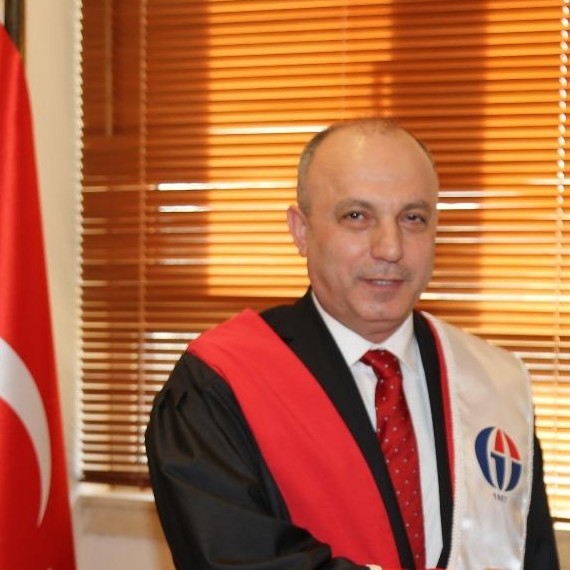
The Pamukkale University Journal of Business Research (PIAR) aims to publish academic research at national and international levels and contribute to the advancement of science. PIAR is an open-access journal that provides researchers and readers with easy and unrestricted access. Published biannually, the journal aspires to offer review and research articles in its field for the benefit of the scientific community.
The Pamukkale University Journal of Business Research (PIAR) is an international peer-reviewed journal. PIAR aims to contribute to the development of organizations in various fields, including businesses, government institutions, and non-profit organizations. The journal encompasses theoretical and applied topics, as well as interdisciplinary studies that contribute to such activities. It publishes articles in fields such as business administration, economics, public administration, management information systems, labor economics, public finance, management, finance, marketing, tourism management, and healthcare management.
AUTHOR GUIDELINES
General Rules
1. Manuscripts written in Turkish and English are published in Pamukkale University Journal of Business Research (PIAR) submitted should include both Turkish "Abstract" and English "Abstract".
2. Writer(s) accept(s) that the manuscript is original, and it has not been sent to another journal to be published and it has not published before.
3. The studies that are requested to be evaluated in the journal should be uploaded via Dergipark (https://dergipark.org.tr/tr/pub/piar) in accordance with the conditions stated in the journal writing rules. It is necessary to select the Submit Article button and follow the necessary steps and upload the article and other necessary information and documents to the system.
4. The name-surname, institution, e-mail and ORCID information of the author or authors should be included in all files uploaded to the system. This information about the author or authors is deleted by the journal editor during the evaluation process within the framework of blind review principles.
5. If the article is derived from any thesis or other scientific study, it should be shown in a footnote to the title of the article on the first page of the article.
6. Manuscripts should be submitted as Microsoft Word file (minimum version is Microsoft Office Word 2010)
7. Authors should analyze their manuscripts with similarity programs such as iThenticate or Turnitin and upload the analysis report to the system. Plagiarism rate is expected to be less than 20%.
8. If there are legal reasons that prevent the sharing of data sets, analysis outputs and data used in the analysis in the articles, the documents showing this must be uploaded to the system. The authors agree in advance that the datasets or analysis outputs they upload can be audited.
9. Manuscripts should be maximum 25 (twenty-five) pages including everything.
10. Page layout, A4 size; It should be: Top: 3 cm, Bottom: 3 cm, Left: 2.5 cm, Right: 2.5 cm, Header: 1.25 cm, Footer: 1.25 cm.
11. Palatino Linotype (Times New Roman font, if not installed) font should be used in manuscripts.
12. Copyright Form must be signed by the corresponding author and uploaded to the system.
13. The Editorial Board is entitled to request correction on any form of condition not covered by this directive.
Main Text Writing Rules
1. The first page of the article should be prepared in the following rules in order:
• Title: Its size should be 12 pt, bold, centered, before 12 pt, after 6 pt, the first letter of the words should be capital and maximum of twelve (12) words (APA style).
• Authors’ names: Its size should be 11 pt, centered, 0 pt before and 6 pt after, and title should not be used. The last name must be in capital letters, followed by institution information, e-mail addresses and ORCID numbers. Multiple authors should not be written side by side on the same line.
• Abstract (in Turkish): The text should contain no text carriage indent (size 9 pt, 0 pt before and after, italic, justified, single line spacing), the subject of the study, its purpose, methodology, and notable findings and should contain a minimum of 100 and a maximum of 180 words.
• Key words: Size (9 font, bold, before and after 6 pt spacing) should be written next to the title at least 3 and at most 5.
• Title in English: Its size should be 12 points, bold, centered, only the first letter of the first word should be capital, 0 pt before, 6 pt after.
• Abstract: It should be the same content as the Turkish abstract text without any carriage indent (size 9 pt, 0 pt before and after, italic, justified, single line spacing).
JEL Codes: Size (9 point, bold, italic, before and after 6 pt interval) It is obligatory to give JEL codes in studies related to operation and economy. https://www.aeaweb.org/econlit/jelCodes.php
• If the submitted article is written in English, the order is: Article Name (English) -Author Information- Abstract- Keywords-JEL Codes- Article Name (Turkish) - Abstract (Turkish) - Keywords (Turkish) - JEL Codes.
2. The main text should be 11 pt starting from the INTRODUCTION section including all titles and a single line spacing should be used.
3. The titles in the article should be numbered. All of the main titles must be in capital letters, 11 points, bold, left aligned, before and after 6 pt. In the subtitles, the first letter of each word must be uppercase and the others must be lowercase.
Example:
1. INTRODUCTION
2. ORGANIZATIONAL SUPPORT
2.1. The Features of Organizational Support
4. Paragraphs must be 11 pt, justified, 0 and 6 pt before and without line indent.
5. Each of the tables, figures and graphics to be included in the text should be titled so as not to overflow the page margins (if the page margins are smaller than the tables, figures and graphic, the page should be centered) and by giving a heading (numerical) title number.
6. The font size of the text in the table, graphic and figure cannot be less than 9 points and larger than 11 points.
7. Table headings should be at the top of the table and start in line with the table. Table titles should be created as "Table 1. Title appropriate to the content of the table".
Example
Table 1. . Organizational support dimensions and factor loadings
| Organizational Support | 1-Caring | 2-Institutional Tolerance |
| 1. The organization I work for cares about my well-being. | ,83 | ,87 |
| 2. The organization I work for definitely takes my goals and values into consideration. | ,90 | ,84 |
Reference: Serinkan, 2021: 15
8. Figure and graphic titles should be at the bottom. The references of the tables, figures and graphics to be included in the text should be placed under the tables, figures and graphics in accordance with the in-text reference rules. Source: DPT, 1988: 125
9. Decimal fractions should be separated by commas in the article, the equations used should be numbered and these numbers should be at the far right of the page in parentheses. Equation Editor of MS Word should be used in mathematical expressions and should not be pasted as a picture.
10. Spelling rules should be observed in the text. Turkish Language Association spelling rules apply. For example, since the Turkish Language Association accepts the word “Internet” as a private name, this word should be used in Turkish writings in accordance with the specific name language rules.
11. If there is no author and institution name in internet references, these references should be listed on the basis of access dates, under the heading “Internet References”, after the references list.
Citation and Footnote Writing Rules
APA 7th Style is preferred for citation and reference in our journal. (https://apastyle.apa.org)
1. In the Pamukkale University Journal of Business Research (PIAR), only the in-text citation system should be used, and the reference system with author surname, date and page numbers should be preferred in citations (Ex: Clegg, 1997: 53).
2. In the references to sources with more than two authors, the surname of the first author and "et al." must be used (Ex: Morgan et al., 1994: 75).
3. If more than one source is used in the same parenthesis, the sources must be separated with a semicolon (;) sign (For example: Hassard and Parker, 1994: 125; Boje, 1996: 146).
4. In the quotations given from the work published by an author in the same year, the quotations should be separated into a and b. (Ex: Kazgan, 2016a: 125; Kazgan, 2016b: 256).
5. If the article mentions an entire study, the page number may not be included in the citation.
6. Explanations about some issues to be explained in the text can be specified as footnote at the bottom of the page. Footnotes should be numerically justified, single line spacing and 9 points.
REFERENCES WRITING RULES
1. Reference Palatino Linotype, 11 font size, single line spacing should be used and justified.
2. Footnote or endnote should not be preferred in References.
Article examples:
Author Surname, Initials of the Author's name. (Year). Article name, The Name of the Journal, Volume(Number), Pages.
Single author article in foreign language (other than Turkish):
Ahmed, W. A. (2016). The dynamic linkages among sector ındices: The case of the egyptian stock market, International Journal of Economics and Finance, 8(4), 23-38.
Article with two authors written in a foreign language: Authors should be separated by "&"
Blesa, A., & Ripollés, M. (2008). The influence of marketing capabilities on economic ınternational performance. International Marketing Review, 25(6), 651-673.
Articles with more than two authors written in a foreign language: Previous authors with commas; the last author should be separated by "&"
Peterson, S. J., Luthans, F., Avolio, B. J., Walumbwa, F. O., & Zhang, Z. (2011). Psychological capital and employee performance: A latent growth modeling approach. Personnel Psychology, 64, 427-450
Single author article in Turkish:
Mücevher, M. H. (2021). Yönetimde ahlâk ve maneviyata yönelik bir öneri. Pamukkale Üniversitesi İşletme Araştırmaları Dergisi, 8(1) , 82-100.
Articles written in Turkish with two authors: Must be separated with "ve"
Işık İnan, Ö. ve Serinkan, C. (2020). Liderlik yaklaşımları ve spor yönetiminde liderlik. Pamukkale Üniversitesi İşletme Araştırmaları Dergisi, 7(2), 308-332.
Articles with more than two authors written in Turkish: Previous authors with commas; the last author should be separated by "ve".
Akkuş, D. B. , Najımudınova, S. ve Gül, H. (2021). Psikolojik sermayenin örgütsel bağlılık üzerindeki etkisinde iş-yaşam dengesinin aracılık rolü: Bir araştırma. Pamukkale Üniversitesi İşletme Araştırmaları Dergisi, 8(1), 27-46.
Book examples:
Author Surname, Initials of the Author's name. (Year). Title of the book. Publisher.
The separation of author names is the same as in the article display.
English book with a single author
Yukl, G. (2013). Leadership in organizations (8th ed.). Pearson Education.
English book with two authors
Griffin R. W., & Pustay M. W. (1996). International business: A managerial perspective. Addison-Wisley Publishing Company.
English book with more than two authors
Wilson, B. A., Alderman, N., Burgess, P. W., Emslie, H. C., & Evans, J. J. (1996). The behavioural assessment of the dysexecutive syndrome. Thames Valley Test Company.
English book chapter with more than two authors
Aron, L., Botella, M., & Lubart, T. (2019). Culinary arts: Talent and their development. In R. F. Subotnik, P. Olszewski-Kubilius, & F. C. Worrell (Eds.), The psychology of high performance: Developing human potential into domain-specific talent (pp. 345–359). American Psychological Association. https://doi.org/10.1037/0000120-016
Turkish book with a single author
Şencan, H. (2005). Sosyal ve davranışsal ölçümlerde güvenirlik ve geçerlilik. Seçkin Yayıncılık.
Turkish book with two authors
Ülgen, H. ve Mirze S. K. (2004). İşletmelerde stratejik yönetim. Literatür yayınları.
Turkish book chapter with more than two authors
Marangoz, M., Kara, E., Yılmaz, H. ve Demirağ F. (2022). Sanayinin dönüşümü ve evreleri. Marangoz M. ve Özkoç H., (Ed.), Endüstri 4.0 ve işletme yönetimi (ss. 1-28). Beta Basım Yayın ve Dağıtım.
Dissertations and Thesis:
Author's surname, initials of the author's name. (Year). Thesis title [Master's thesis / Doctoral thesis]. Name of the University / Institution.
Tülü, M. (2019). Örgütsel politika algısı, iş yaşamında yalnızlık ve örgütsel yabancılaşma ilişkisine yönelik bir araştırma [Yayımlanmamış yüksek lisans tezi]. Pamukkale Üniversitesi.
Harris, L. (2014). Instructional leadership perceptions and practices of elementary school leaders [Unpublished doctoral dissertation]. University of Virginia.
Symposium - Conference Proceeding References:
Author's Surname, Initials of the Author's name. (Year, Month Day). Name of the paper [Conference Presentation]. Symposium/Conference Name, City, Country.
Evans, A. C., Jr., Garbarino, J., Bocanegra, E., Kinscherff, R. T., & Márquez-Greene, N. (2019, August 8–11). Gun violence: An event on the power of community [Conference presentation]. APA 2019 Convention, Chicago, IL, United States.
Serinkan, C., ve Boz N. (2019, 17-20 Ekim). Pamukkale üniversitesindeki akademik personelin örgütsel muhalefet algılarının belirlenmesine yönelik bir araştırma [Kongre Sunumu]. IV. Uluslararası Girişimcilik, İstihdam ve Kariyer Kongresi, Bodrum, Türkiye.
Conference paper published in the journal
Author's Surname, Initials of the Author's name. (Year). Name of the paper. Symposium/Conference Name, Country, Volume(Issue), Page Range. DOI
Duckworth, A. L., Quirk, A., Gallop, R., Hoyle, R. H., Kelly, D. R., & Matthews, M. D. (2019). Cognitive and noncognitive predictors of success. Proceedings of the National Academy of Sciences, USA, 116(47), 23499–23504. https://doi.org/10.1073/pnas.1910510116
Aksel, İ., Serinkan, C., Kızıloğlu M., & Aksoy, B. (2013). Assessment of teachers’ perceptions of organizational citizenship behaviors and psychological empowerment: An empirical analysis in Turkey. Procedia-Social and Behavioral Sciences (89), 69–73. https://doi.org/10.1016/j.sbspro.2012.06.600
Internet examples
Author's Surname, Initials of the Author's name. (Year, Month Day). Title. Institution Name. URL
Toner, K. (2020, September 24). When Covid-19 hit, he turned his newspaper route into a lifeline for senior citizens. CNN. https://www.cnn.com/2020/06/04/us/coronavirus-newspaper-deliveryman-groceries-senior-citizens-cnnheroes-trnd/index.html
Kaya, İ. (2017). Content Marketing/İçerik Pazarlama. Pazarlama Bi’tanedir. http://pazarlamabitanedir.blogspot.com/2017 (Erişim Tarihi: 02.06.2022).
Web page of an organization
Name of the institution. (Year). Title. URL
Kamuyu Aydınlatma Platformu. (2022). BIST Şirketler. https://www.kap.org.tr/tr/bist-sirketler (Erişim Tarihi: 01.12.2023).
National Institute of Mental Health. (2018, July). Anxiety disorders. U.S. Department of Health and Human Services, National Institutes of Health. https://www.nimh.nih.gov/health/topics/anxiety-disorders/index.shtml
Web page without publication date (n.d.: no date) (t.y.: tarih yok)
U.S. Census Bureau. (n.d.). U.S. and World population clock. U.S. Department of Commerce. Retrieved January 9, 2020. https://www.census.gov/popclock/
TÜİK, Türkiye İstatistik Kurumu. (t.y.). Sanayi üretim endeksi (Ekim 2023). https://data.tuik.gov.tr/Bulten/Index?p=Sanayi-Uretim-Endeksi-Ekim-2023-49707 (Erişim Tarihi: 11.12.2023)
For more information and the citation/reference format you are looking for in APA 7 style, you can get help from the links below.
https://apastyle.apa.org/style-grammar-guidelines/references/examples
ETHICAL PRINCIPLES AND PUBLICATION POLICY
Ethical Principles
Articles submitted for publication in the journal should be prepared in accordance with the rules of research and publication ethics. Pamukkale University Journal of Business Research follows the principles, standards and recommendations of the publication ethics determined by the COPE (Committee on Publication Ethics).
All rights of the articles uploaded to Pamukkale University Journal of Business Research have been transferred to the journal by the authors. A signature and confirmation information-document is not requested from the author for this process. Scientific, content, language, legal and ethical responsibilities of the articles published in the journal belong to the author / authors.
In the articles evaluated within the journal, the responsible (corresponding) author of the relevant study is addressed. The journal does not have to provide information to other people except for the corresponding author.
In the context of publication ethics, all the shareholders are expected to bear the following ethical responsibilities in brief and all the ethical incidences are going to be evaluated in compliance with COPE rules.
Editors' Duties and Ethical Responsibilities
Publication and Liability Decision: The chief and field editors of Pamukkale University Journal of Business Research are responsible for deciding which of the articles submitted for publication is in line with the aim and publication policies of the journal and should be published. Editors are also responsible for deciding which of the articles submitted to the journal has policies regarding copyright infringement and plagiarism. The editor is responsible for the content and publication quality of the journal and has the right to negotiate with the reviewers while making the publication decision in this context. The editor provides a fair and equitable peer review and review process. The editor of Pamukkale University Journal of Business Research strives to respond to the needs of readers and writers.
Objectivity: Articles submitted to Pamukkale University Journal of Business Research are always evaluated in accordance with open, transparent, scientific, and objective criteria without any prejudice. The articles are evaluated only within the framework of intellectual and scientific values, without considering the race, colour, gender, religious belief, ethnic origin, nationality, and political view of the authors.
Privacy: Editor-in-chief, assistant editor, field editors and the editorial board do not disclose any information on submitted manuscripts to anyone other than the authors, reviewers, and publisher of the article. Any information about an article sent to the journal is not shared by the editor with anyone other than the editorial board, reviewers, and the owner of the journal.
Plagiarism Check: Editors check that the copyright form is signed by the authors while submitting the article to the journal's system. In addition, they are responsible for checking that the plagiarism report of the article has been uploaded. In the absence of these forms, they ask the authors to complete these documents. The editor can also scan for plagiarism. Articles with a plagiarism rate higher than 20% can be returned to the authors.
Other ethical principles that the editors are committed to abide by are:
• Editors are obliged to carefully examine the complaints from the authors, reviewers or readers and respond in an enlightening and explanatory manner.
• The owner of the journal, publisher and no other political or commercial factors affect the editors' independent decision making.
• Editors can return articles that they believe will not be published.
• Appropriate language that is not offensive or condescending is used when reporting the reasons for rejection (not being related to the journal's aims and scope, unsuitable writing-content-editing, having obvious errors, etc.).
• The editor is responsible for protecting the research data and the author's information. Privacy regarding the submitted articles is taken care of. Privacy principles are maintained after rejection or publication.
• The evaluation process is not delayed by negligence or wilfully. It is unethical to block the article or delay its publication.
• It is considered whether the study is carried out in accordance with ethical rules.
• Reviewers who may have a conflict of interest regarding the subject of the article are not invited to make an evaluation. The reviewers are chosen impartially.
• If the editor has her/his own work, she/he leaves the evaluation to the assistant editor or field editors.
• Article information cannot be used in the studies of the editor or any of her/his acquaintances.
• Scientific requirements are considered in the determination of the reviewers and expert reviewers related to the subject of the article are selected.
• The opinions and suggestions of the reviewers are reported to the author by the editor without specifying the name.
• Wrong information is not given to the authors at any stage of the evaluation process.
• No changes are made on the reviewer reports, no untrue reports are prepared.
• The editor or field editors do not use the study in their own research before publication and they do not allow others to use it.
• Individuals and institutions giving financial support to the journal are clearly stated.
• The article rejected by at least two reviewers is returned, nothing is kept except a copy of the correspondence. Reviewer reports are kept for at least 5 years.
• The article, which has received an acceptance report by at least two reviewers, is notified to the author by the editor and it is requested to make the final checks of the study and to give the final form to the article.
• The editor corrects the errors and all kinds of unethical studies in the journal through publication.
Reviewers’ Ethical Responsibilities
Accelerating the Process: A reviewer who does not find the assigned study related to his/her field of expertise, feels inadequate to evaluate the article, or is unable to submit a reviewer report on time, should inform the editor of this situation and withdraw from the review task. Reviewers must accept or reject the review invitation sent to them within five days. When they accept the evaluation, they should report the article within 15 days. When they ask to make corrections to the article, they should indicate in the report whether they can review it again.
Privacy: The texts reviewed by the reviewers should be considered as confidential documents, they should not be shown to anyone other than those authorized by the editor and field editors, and there should be no discussion about the articles. Privileged information and ideas obtained during the review process must be kept confidential and not used for personal interest.
Impartiality: Reviewer criticism should be made objectively, fairly and in accordance with scientific ethics. No personal criticism should be directed against the author. Reviewers should evaluate articles regardless of the authors' nationality, race, gender, or political ideology. Reviewers should also ensure a fair blind peer review process for the review of manuscripts submitted to the journal. Reviewers should express their opinions with arguments that clearly support them.
Plagiarism: The reviewers should examine the plagiarism status of the article they are evaluating. They can return the article with a plagiarism rate of more than 20%. Reviewers should bring to the attention of the editor any substantial similarity or overlap between the article they are evaluating and another previously published study.
Citation and References: The reviewers should check whether the citation and reference form in the study they are examining is made according to the citation and reference systems requested by the journal.
Reviewer Evaluation Process:
• The reviewers should evaluate the article in time, not delay it.
• The reviewer should work meticulously and complete the reports on time. If the reviewer cannot evaluate the manuscript sent to him on his/her own terms, he/she should not accept the invitation. If he/she accepted, he/she should withdraw from the process without delay.
• Reviewers must accept or reject the reviewer invitation sent to them within 5 days.
• When reviewers accept the article for evaluation, they must complete their evaluation within 15 days.
• Reviewers should check the title, abstract, Gel Codes, key concepts of the study. Likewise, they should carefully consider the English parts of them.
• They should control the theoretical and practical parts of the study according to scientific and ethical principles.
• When reporting the article and requesting correction, they should indicate if it is a minor or major revision. They should state in the report whether they wish to re-evaluate the article.
• Even if the reviewers give an “acceptance” decision when they evaluate the article, they should write down the text parts in the evaluation report and the reasons for acceptance in detail.
Editorial Support: Reviewers should assist editors in decision making and should also assist authors in improving manuscripts. While evaluating the article, they should write their opinions, contributions, and criticisms in detail in the blank text fields specified in the review form.
Other ethical principles that reviewers must comply with:
• The scientist who undertakes the review process is obliged to make a “fair” criticism.
• He/she should evaluate the manuscript without prejudice (free from influences such as race, religion, nationality, gender, opinion, and institutional/personal affinity), impartially and independently.
• In cases where they cannot or do not want to evaluate the study due to reasons such as incompatibility of field of expertise, lack of information about the article, personal or professional affinity, conflict of interest and time constraints; should return the manuscript to the editor or field editor as soon as possible.
• The reviewer must comply with privacy statement and not share article information.
• He/she should not exchange information about the article with people/authors other than the editor who sent the manuscript or the field editor.
• He/she should not send an article whose opinion is requested to another reviewer without consulting the editor and getting approval.
• The reviewer is obliged to ensure that the data related to the study is protected and stored in accordance with the privacy rule.
• The reviewer should consider whether the study is carried out in accordance with ethical rules.
• If there is another article that is very similar and overlapping with the evaluated article, the editor should be informed of the situation.
• The reviewer should prevent the publication of inconsistent and unethical articles.
• A cartel cannot be formed in reviewing, the reviewer cannot denigrate the studies that do not refer to him or request references to him.
• The deficiencies of the study should be stated in a “guiding” style.
• They should express their opinions, evaluations, and suggestions about the study in a clear and understandable way and should support them with literature data when necessary.
• They should not use the study in their own research before the article is published and should not allow others to use it.
• If the article is the subject of the reviewer's research and the authors and the reviewer are in a competition on that subject, the article should be returned, and the information should not be used.
• The reviewer should be sensitive in cases where the article he/she is reviewing is close to the subject he/she is working on or a study that has been published, and this may create a conflict of interest. If such a situation arises, he/she should promptly return the manuscript without review and notify the editor of possible conflict or bias.
• The reviewer should not accept the review of articles written by people with whom he/she has a personal or professional relationship and whom he/she advises, on the grounds that it may affect the objectivity of the review process.
• The reviewer should see the manuscript sent to him/her for evaluation as a private document.
• The reviewer should express and support his/her criticism in a way that the editor and the author can understand.
• The reviewer should be careful about the wrong citations that the authors may make.
• The reviewer should not use the article under review without the permission of the author. If the reviewer realizes that his/her evaluation is useless, he/she should not continue to review it.
• Reviewers should pay attention to the expressions used in order not to discourage researchers at the beginning of their academic career and not to undermine their confidence.
• The evaluation report should be read one last time by the reviewer and turned into an easy-to-understand text that includes suggestions for eliminating the deficiencies, supported by the necessary resources for criticism.
Authors’ Responsibilities
Reporting Standards: Every manuscript submitted to Pamukkale University Journal of Business Research must be original. Authors must undertake that the text is original and unpublished in any journal. The data used in the study should be presented meticulously in the text. Articles should contain sufficient detail and source information. Fraudulent and deliberate false statements are unacceptable as they may lead to unethical situations. In addition, authors must strictly abide by the writing rules of the journal. Authors should make the changes requested by the reviewers, field editor and editor-in-chief in a timely and meticulously manner. All kinds of information, documents and changes related to the article requested from the authors by the journal editorial should be made within 15 days at the latest and sent through the system and the editor should be informed. It should be known that the authors will be deemed to have withdrawn the article if these requests are not fulfilled within the time limit.
Data Access and Data Retention: Authors may be asked to provide relevant raw data that may be needed during the evaluation phase in connection with their studies. Therefore, authors should be prepared to provide access to this data and retain it for a reasonable period of time following publication of their work.
Originality and Plagiarism: Authors should write completely original texts and, if they use other's articles and/or words, they should cite accordingly. By submitting an article to Pamukkale University Journal of Business Research, the authors guarantee that their articles are original and comply with ethical standards, that the references used are fully cited, and that they are not similar to other articles in print/published or in the publication phase. In this context, the authors should pass a plagiarism detection software (ihenticate, turnitin, etc.) and upload a document stating that they have a maximum of 20% similarity on the website of Pamukkale University Journal of Business Research. In addition, the Copyright Form in the journal's system must be signed by the corresponding author and uploaded to the journal's system.
Slicing and Multisite Publication: Authors should generally not publish text describing the same research in more than one article. Especially in research articles, slicing should not be done as much as possible. Authors should not submit the same manuscript to more than one journal. This is considered as an unethical behaviour. When authors convert their extended and revised papers uploaded to the journal into an article, they should declare this situation as a footnote on the first page of the article.
Declaration of Sources: The declaration of sources taken from the other studies should always be made appropriately. Authors must cite previous publications that have influenced the merits of the study they are reporting.
Authorship in the Study: Authorship must be an adjective limited to persons who have made a meaningful contribution to the concept, design, implementation, or interpretation of the reported study. All significant contributors should be listed following the first author. If there are people involved in various aspects of the research project, they should be declared or listed as "contributors". The editor and the field editors contact with the corresponding author. The corresponding author gives the necessary information to the other authors.
Fundamental Errors in Published Studies: If an author notices a material inaccuracy or defect in his/her published paper, he or she should immediately notify the journal editor and cooperate with the editor to correct the existing inaccuracy or defect. Since Pamukkale University Journal of Business Research is published through the DergiPark system, such change requests must be made within 5 days at the latest from the date of publication of the last issue of the journal. Authors have an obligation to work with the editor to ensure that errors are corrected. Responsibility for errors and inaccuracies in published articles that are not specified on time belong to their authors.
STATEMENT OF CONFLICT OF INTEREST
For Authors
According to the general publication principles of Pamukkale University Journal of Business Research, only people who contribute to the relevant study are considered as authors. The authors are responsible for reporting all personal and financial relationships that may be related to their studies. Financial relationships such as employment, consulting, shareholder, compensation, expert testimony payment are highly identifiable conflicts of interest and are highly likely to undermine the journal's reputation. To clarify the conflict-of-interest issue, the authors are obliged to declare openly whether there is any conflict of interest with a document prepared as a letter to the editor with their submitted articles. Authors should not submit their articles with a conflict of interest to the journal. Editors have the authority not to publish or return such manuscripts.
For Reviewers
The reviewers should not evaluate the articles if there are conflicts of interest that may arise due to competition, cooperation or any other kind of relationship or connection between the authors and themselves. There should be no conflict of interest between reviewers and authors, funders, editors, etc.
For Editors
The editor in chief and field editors of Pamukkale University Journal of Business Research do not allow any unpublished material, information and data in the texts submitted by the authors to be used by anyone without the clear and written permission of the authors. In co-authored studies, there should be no conflict of interest between the authors. Authors should not submit their studies with a conflict of interest to the journal. The editor may not publish articles with conflicts of interest. The editor only contacts with the corresponding author in all processes of the article.
Our journal is in the open access system and no application or publication fee is requested from the authors.
Tolgahan Aydıner lisans derecesini (2011) ODTÜ Siyaset Bilimi ve Kamu Yönetimi Bölümü’nden aldı. “Yerel Siyasetin Yeniden Ölçeklenmesi: Denizli Örneği” başlıklı teziyle Pamukkale Üniversitesi Siyaset Bilimi ve Kamu Yönetimi Bölümü Anabilim Dalı Doktora Programından (2019) mezun oldu. Kentsel siyaset, yerel yönetimler, iş dünyası-yerel siyaset/yönetim ilişkileri, yerel katılımcılık, yerel yönetim reformları başlıca çalışma ve ilgi alanlarındandır. Yazar, Pamukkale Üniversitesi Siyaset Bilimi ve Kamu Yönetimi Bölümü’nde öğretim üyesidir.
Tolgahan Aydıner received his undergraduate degree (2011) from the department of Political Science and Public Administration at METU. He got his PhD degree from Political Science and Public Administration Doctorate Program at Pamukkale University (2019) with his thesis titled “Rescaling of Local Politics: The Case of Denizli”. Urban politics, local governments, business-local politics/government relations, local participation and local government reforms are his main study and interest areas. The author is currently a faculty member at Pamukkale University in the department of Political Science and Public Administration.
I'm an academic researcher in the Faculty of Economics and Administrative Sciences at Pamukkale University. I completed my MSc. in Marketing at Gazi University and PhD. in Business Administration at Pamukkale University. My research aims at understanding consumer behaviors and I'm interested in digital marketing, video games, and virtual environment studies. I currently focus on video game industry and Metaverse platforms.
Dr. Gallina was promoted to Professor in 2007. Among his academic achievements are a Doctorate from the University of Guelph, and a Master of Laws (with Distinction) from the University of Leicester. Prior to coming to Bishop’s he had a 15-year career with the Ontario Ministry of Labour implementing the Paul Weiler reforms to occupational health and to workers’ compensation. He has published widely, and has been a consultant in all areas of employment relations. His consultancy includes work for the Government of Canada and the European Union.
1990’da Konya Selçuklu Lisesi’ni bitirerek Hacettepe Üniversitesi Sağlık İdaresi Yüksekokulu’na girdi. 1994’te buradan mezun oldu. Aynı yıl yine Hacettepe Üniversitesi Sağlık Kurumları Yönetimi Anabilim Dalında yüksek lisansa başladı. 1997’de “Zaman Yönetimi ve Hastane Üst Düzey Yöneticileri Üzerinde Bir Uygulama” adlı teziyle yüksek lisansını tamamladı. Temmuz 1998- ve Kasım 1999 tarihleri arasında Genelkurmay Başkanlığı Sağlık Dairesi Personel ve Eğitim Şubesi’nde sağlık yönetimi subayı olarak askerlik görevini tamamladı. Aralık 1999’da Fırat Üniversitesi Sağlık Hizmetleri Meslek Yüksekokulu’nda öğretim görevlisi olarak göreve başladı. 2000 yılı Bahar döneminde Hacettepe Üniversitesi Sağlık Bilimleri Enstitüsü Sağlık Kurumları Yönetimi Anabilim Dalında doktora eğitimine başladı. 2003 Aralık ayında “Toplumsal Kültürün Hastanelerin Kurum Kültürüne Etkisi: Fırat Tıp Merkezi Örneği” adlı teziyle bilim doktoru unvanını aldı. 2009 yılında ise Yönetim ve Organizasyon doçenti oldu. 2014 yılında profesörlüğe atandı.
1999-2009 yılları arasında Fırat Üniversitesi Sağlık Hizmetleri Meslek Yüksekokulu’nda öğretim görevlisi ve öğretim üyesi çalıştı, Yüksekokul Müdür Yardımcılığı ve Tıbbi Dokümantasyon ve Sekreterlik Program Başkanlığı görevlerini yürüttü. Yine 2015 Mayıs – 2020 Aralık tarihleri arasında Süleyman Demirel Üniversitesi İletişim Fakültesi Dekanlığı görevini yürüttü. 2009 yılından bu yana Süleyman Demirel Üniversitesi İktisadi ve İdari Bilimler Fakültesi Sağlık Yönetimi’nde öğretim üyesi olarak çalışmakta ve bölüm başkanlığı görevini yürütmektedir. 2014-2015 yılları arasında Türkiye Odalar ve Borsalar Birliği Isparta İli akademik danışmanlığını yürütmüş ve halen Sağlık İdarecileri Derneği, Avrupa Birliği Sağlık Araştırmaları Merkezi (ABSAM), Uluslararası Stratejik Sağlık Araştırmaları Merkezi (USSAM) üyesidir. Aynı zamanda 2017’den bu yana Türkiye Sağlık Politikaları Enstitüsü Bilim Kurulu üyesidir.
Son zamanlarda nitel araştırma yöntemleri, eleştirel yönetim, sağlık sosyolojisi ve akademik organizasyonların yapısı ve işleyişi konuları üzerinde çalışmaktadır.
Azamat Maksüdünov (Ph.D.) is an educator with over a decade of experience in the field of business academia. He is a Fulbright Visiting Scholar at Florida Atlantic University for the academic year 2023-2024. Currently, he is a full-time associate professor at Kyrgyz - Turkish Manas University, Department of Management, Faculty of Economics and Management. Dr. Maksüdünov has authored or co-authored 44 articles, 40 conference papers, 10 book chapters, and 4 books. He received the Best Paper Award at the 26th World Business Congress organized by the International Management Development Association (IMDA) in May 2016, as well as a Certificate of Honor from the Ministry of Education and Science of Kyrgyzstan in December 2021.
Semi retired professsor of Research and Post Graduate supervision
Dr. Veronika Linhartová earned her Ph.D. in Economics in 2014, specializing in unethical behavior, particularly corruption. Her research explores the causes and consequences of corruption, with a strong emphasis on its economic impact, including the role of macroeconomic performance. Dr. Linhartová has published several books, book chapters, and numerous scientific papers. She has also participated in various national and international conferences, where she has presented her research and engaged in discussions with leading global experts.
Currently, Dr. Linhartová serves as the Head of the Department of Economics, Economy, and Public Administration at AMBIS University in Prague, Czech Republic, and as the program director for the international Business Economy and Management program. She has extensive teaching experience at both public and private universities, at the undergraduate and graduate levels, in both Czech and English. Her passion for intercultural communication and travel has also led her to lecture at universities in Lithuania, Cyprus, Greece, and Turkey, enriching her global perspective.
Pazarlama bilgi sistemleri alanlarında uzmanlaşan Prof.Dr. Selçuk Burak Haşıloğlu, 1993’ten bu yana akademik çalışmalar yürütmektedir. Matematik alanında lisans, işletme ve bilgisayar mühendisliği alanlarında ise 2 yüksek lisans derecelerine sahiptir. Doktorasını, 2006 yılında, Gazi Üniversitesi Genel İşletme anabilim dalında tamamladı. Haşıloğlu’nun yüksek lisans ve doktora tezleri e-ticaret ve pazarlama bilgi sistemleri konuları üzerine olup; ülke çapında alanındaki ilklerdendir. 2009 yılında İngiltere Reading Üniversitesi Henley Business School Informatics Research Center’da bir yıl boyunca yürütmüş olduğu post doktora çalışmasını tamamladı. Bu dönem içerisinde T.C. Başbakanlık Dış Ticaret Müsteşarlığı tarafından Bilim Ödülü’ne layık görüldü. Bugüne kadar 6 adet burs/ödül aldı.Dijital pazarlama, işletmecilik ve pazarlama bilgi sistemi konularında 10’un üzerinde kitapta yazarlık yaptı. 100’ün üzerinde bilimsel çalışma gerçekleştirdi. 3 TÜBİTAK, 2 bakanlık projeleri yürütücülüğü olmak üzere 20’den fazla projede aktif rol oynadı. Doçentliğini 2011 yılında pazarlama bilim dalında aldı, 2017 yılında profesör oldu. Çalışma alanları özellikle; pazarlama araştırması, pazarlama analitiği, veri bilimi ve madenciliği, karar analizi, karar bilimleri ve dijital pazarlama üzerinedir.Pazarlama ve Pazarlama Araştırmaları Derneği, Satranç Kulüpleri Federasyonu başkanlıklarını yürüttü ve çok sayıda sosyal sorumluluk projelerinde görev aldı. 1995 yılından bugüne görev yaptığı Pamukkale Üniversitesinde genel sekreterlik (vekil) görevi yanında, fakülte yönetim ve fakülte kurulu üyelikleri, teknokent yönetim kurulu üyeliği, bölüm başkanlıkları, BAP vb. üniversite komisyon üyelikleri gibi idari görevler yürüttü. Blockchain-oyun dünyası matematiksel ekonomisi ve dinamikleri, büyük veri analizi ve analitiği, pazarlama araştırması, iş istihbaratı (iş zekası) ve bilişim sistemleri yönetimi alanlarında özel sektörde danışmanlıklar yürüten Haşıloğlu, halen kurucusu olduğu Pamukkale Üniversitesi Yönetim Bilişim Sistemleri Bölümü’nde görev yapmaktadır
Monika Moraliyska is an Associate Professor in the Department of International Economic Relations and Business at the University of National and World Economy in Sofia, Bulgaria. Currently she is Deputy Head of the Department. She conducts research in international economics, international trade, world economy, European economy and integration, and European institutions. She has published widely in the fields of European integration and international trade and regional economic integration in southeast Europe. She is also deeply interested in social policy and, in recent years, has explored comprehensively the social dimension of the European Union. She obtained her Ph.D. in European Economic Integration in 2011 from the University of National and World Economy.
Latest contributions
Robot carrying glass ball showing CO2 emissions
VoxEU Column
Fostering a sustainable digital transformation
Ana L. Abeliansky David Bloom Filippo Bontadini Emanuel Gasteiger Pedro Mazeda Gil Michael Kuhn Monika Moraliyska Catarina Peralta Klaus Prettner
13 Jun 2023  Climate Change  Labour Markets  Productivity and Innovation
Themes & Current Issues
Business Cycles
Central Banking
Climate Change
Competition Policy
COVID-19
Development & Growth
Economic history
Energy
EU Economic Architecture
Exchange Rates
Finance and Fintech
Financial Markets
Financial Regulation and Banking
Health Economics
Inflation
International Finance
International trade
Labour Markets
Migration
Monetary Policy
Political Economy
Poverty and Income Inequality
Productivity and Innovation
Taxation
Ukraine Initiative
Women in Economics
Sign up to our newsletter
Your email address
follow us
Copyright 2025 CEPR /designbysoapbox.com
Contact Us
Cookies
Privacy Policy
RSS Feeds
We use cookies on this site to enhance your user expe
Naim Kapucu is Pegasus Professor of public administration and policy and former director of the School of Public Administration at the University of Central Florida (UCF). He is elected fellow of National Academy of Public Administration. His research interests include emergency and crisis management, decision-making in complex environments, network governance, leadership, and social inquiry and public policy. Dr. Kapucu received Fulbright Distinguished Chair Award in Democratic Resilience jointly hosted by Flinders University and Carnegie Mellon University Australia. He currently serves as associate dean for research and innovation at the College of Community Innovation and Education at UCF.
Dr. Jha an author, poet, teacher, and a critic with an inclination towards societal development is a Professor and the Principal, Smt. B. C. J. College of Education. With ten doctoral scholars, being awarded the doctorate degree, the guide and mentor to Ph.D. aspirants, has presented several papers at national and international seminars and has a list of publications including books, articles and research papers with national and international publishers of repute. Having multi-language understanding ability, interest in teacher training, psychology, research methodology, creativity and human values, he accredits himself to prepare, design and introduce several new subjects in the curriculum of several reputed universities and institutes of national repute. He has written about more than 200 poetries in English and Hindi. Associated with institutes of national repute, he has organised seminars and workshops and delivered talks and lectures at various seminars, workshops etc.
Professor Dr. Masood-Ul-Hassan, formerly the Chairman of the Department of Commerce at Bahauddin Zakariya University Multan and the former Training Head at State Life Insurance Corporation of Pakistan Multan Zone, has been recognized as the top scientist in Business & Management at BZU according to the AD Scientific Index-2024. Dr. Hassan is Chief Editor of International Journal of Research & Social Sciences (IJRSS) Additionally, Dr. Hassan has been honored with three best research paper awards - one from the Higher Education Commission (HEC) of Pakistan in 2013/14 and two from the Small and Medium Enterprises Development Authority (SMEDA) during the first SME-2016 National and second SME-2017 International conferences.
With extensive national and international experience spanning over 28 years, Dr. Hassan has held roles as a Trainer, Teacher, and Researcher at various institutions including Bahauddin Zakariya University Multan, Istanbul University Turkey, Mohammad Ali Jinnah University Islamabad, State Life Insurance Corporation of Pakistan, and Bahrain Training Institute in the Kingdom of Bahrain.
Recently, he completed a Post-Doctoral fellowship focusing on Women Entrepreneurship Education under the fully funded Punjab Higher Education Commission program. Dr. Hassan holds a basic Turkish language certificate and defended his Ph.D. thesis in Turkish Language, earning his Ph.D. in Business Management & Organization from Istanbul University, Turkey. Prior to his Ph.D., he obtained degrees in B.Com, M.B.A. in Finance, L.L.B., and Cost & Management Accountants (CMA.) from institutions in Pakistan, as well as Associate Chartered Institute (ACII), Fellow Life Office Management (FLMI), and Associate Customer Service (ACS) degrees from the UK & USA. respectively. Dr. Hassan is a Fellow Member of the Institute of Cost & Management Accountants of Pakistan (FCMAP), an Associate Member of the Chartered Insurance Institute UK (ACII), and a Fellow Member of the Life Office Management Association (Life Insurance) USA (FLMI). He is also an Associate of Customer Service at the Life Office Management Association (Life Insurance) USA (ACS).
With a substantial publication record of over 100 research papers, including a book chapter in international refereed journals and conferences, Dr. Hassan's research encompasses a wide array of contemporary business management topics such as knowledge management, strategic human resource development, corporate governance, interpersonal trust, team learning, service quality, TQM, self-service technology (SST) service quality, social commerce, internet banking, open innovation, eco-innovation, business innovation, knowledge sharing, emotional intelligence, women entrepreneurial education, CPEC, and sustainable development. Since 2016, Professor Dr. Hassan has been actively involved as a keynote speaker and session chair at various conferences organized by institutions such as the International Islamic University-Islamabad, Islamia University-Bahawalpur, Bahauddin Zakariya University-Multan, Institute of Cost & Management Accountants of Pakistan, COMSATS Institute of Information Technology Vehari, and Air University, Multan Campus.
Şaban Nazlıoğlu lisans, yüksek lisans ve doktora eğitimini Erciyes Üniversitesi’nde tamamlamıştır. Makro İktisat alanlarında çalışan Nazlıoğlu akademik görevine Pamukkale Üniversitesi’nde devam etmektedir
PIAR is licensed under a Creative Commons Attribution 4.0 International License.