Volume: 9 Issue: 1 , 2/27/26

Year: 2026

Research Article

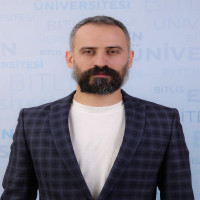
Taki Can Metin
Assoc. Prof. Dr. Taki Can METİN KIRKLARELI UNIVERSITY, FACULTY OF TOURISM, DEPARTMENT OF RECREATION MANAGEMENT Web
     Taki Can Metin is a researcher whose work focuses on tourism, leisure, and recreation studies, with an emphasis on spatial analysis and planning approaches. His academic research concentrates on the planning of tourism and recreation areas, the spatial distribution of leisure practices, and their relationship with regional planning processes.
      His publications make extensive use of GIS-supported analyses, spatial data, and systematic literature reviews. Metin conducts research on the accessibility and use patterns of recreation areas, as well as the effects of planning decisions on leisure behaviors. In this context, he focuses on developing sustainable spatial approaches in tourism and recreation planning.
      His academic output provides an integrative framework linking tourism planning, recreation studies, leisure research, and spatial analysis. His studies particularly address planning scales, spatial decision-making processes, and the analysis of recreational use patterns.
      In addition to his research activities, he has undertaken editorial roles in academic journals and is actively involved in the technical management of scholarly publishing processes. Metin’s work is grounded in an interdisciplinary and analytically consistent research perspective.
Recreation, Leisure and Tourism Geography, Sports and Recreation, Recreation Management, Sustainable Tourism, Tourism Planning, Environmental Management in Tourism

Gökhan Kenar is an Assistant Professor in the Department of Tourism Management at Alanya University. He is an academic whose research focuses on tourism management, organizational behavior, and human resource management. His academic work concentrates on examining employee behaviors, leadership approaches, and the effects of human resource practices on individual and organizational outcomes within the tourism and hospitality sector.

Human Resources Management, Organisational Behaviour, Hospitality Management
Ertan Düzgüneş
Prof. Dr. Ertan DÜZGÜNEŞ KARADENİZ TEKNİK ÜNİVERSİTESİ

Born in Ankara in 1982, DÜZGÜNEŞ completed his primary and secondary education in Trabzon. In 2001, he commenced his undergraduate studies in the Department of Landscape Architecture at the Faculty of Forestry, Karadeniz Technical University (KTU), and graduated in 2005 with the title of Landscape Architect. In the same year, he began his master’s degree at the Institute of Natural Sciences, Department of Landscape Architecture at KTU, where he focused his academic research particularly on protected area management and the relationship between tourism and recreation.
In 2007, DÜZGÜNEŞ was appointed as a Research Assistant in the Department of Landscape Architecture at the Faculty of Forestry, KTU. In the same year, within the scope of the ERASMUS Programme, he conducted scientific studies for six months at the University of Natural Resources and Life Sciences (BOKU) in Vienna, Austria. During this period, he carried out fieldwork and literature-based research on topics such as conflict management strategies in protected areas and the negative impacts of tourism on highland (plateau) areas, developing an internationally comparative perspective.
DÜZGÜNEŞ pursued his doctoral studies, which he began in 2009, at the Institute of Natural Sciences, Department of Landscape Architecture at KTU. Throughout his doctoral education, he further deepened his academic expertise in protected area planning, national park management, visitor management strategies, ecotourism, and participatory planning approaches. He was awarded the title of Assistant Professor in 2016 and Associate Professor in 2018, continuing his academic advancement.
Since 2024, DÜZGÜNEŞ has been serving as a Professor in the Department of Landscape Architecture at the Faculty of Forestry, Karadeniz Technical University. His research interests include nature conservation policies, protected area planning, sustainable visitor management in national parks, rural tourism, recreation and tourism planning, conflict management strategies, smart cities, participatory approaches in planning processes, and climate change. He actively conducts studies at both national and international levels and serves as a principal investigator and researcher in numerous national and international research projects.

Ecology, Sustainability and Energy, Landscape Planning, Landscape Design, Green Structures and Environments
Savaş Evren
Assoc. Prof. Dr. Savaş EVREN GUMUSHANE UNIVERSITY, FACULTY OF TOURISM
Recreation, Leisure and Tourism Geography, Tourism Marketing, Food Culture
Sercan Öncen
Assoc. Prof. Dr. Sercan ÖNCEN TEKİRDAĞ NAMIK KEMAL ÜNİVERSİTESİ Web

Doç. Dr. Sercan Öncen is a assistant professor at the Department of Coaching Education, Faculty of Sports Sciences, Namık Kemal University, Tekirdağ. I completed my undergraduate and graduate education in the fields of sports sciences and exercise physiology; I gained expertise in physical fitness, performance evaluation, and applied physiology during my academic career.

My scientific studies focus on exercise models for athletes and public health. I have authored book chapters and scientific publications on topics such as the physiological responses of the musculoskeletal system and exercise performance in environmental conditions.

My academic work, based on exercise physiology, covers multidisciplinary areas such as athlete health, physical fitness assessment systems, physical activity behaviors during the pandemic, functional movement analysis, and the use of wearable technologies in sports. His nationally and internationally published studies aim to provide sustainable contributions to both education and health policies by combining applied research with field data.

Translated with DeepL.com (free version)

Sports Science and Exercise, Sports Training, Exercise Physiology, Physical Activity and Health, Physical Fitness
Müge Akyıldız Munusturlar
Prof. Dr. Müge AKYILDIZ MUNUSTURLAR Eskişehir Teknik Üniversitesi

Dr. Müge Akyıldız Munusturlar completed her undergraduate studies in the Department of Recreation at Anadolu University, and her master’s and doctoral degrees in the Department of Sports Management and Recreation at the same institution. She subsequently completed her postdoctoral studies as a TÜBİTAK scholar at California State University, Chico (USA), where she continued her research on leisure and recreation.
She is currently a faculty member in the Department of Recreation at Eskişehir Technical University. Her research interests include leisure activity tendencies, therapeutic recreation, and serious leisure. She has conducted and published numerous national and international scientific studies in these fields.

Recreation Sociology, Sports and Recreation
Emrullah Tören
Assoc. Prof. Dr. Emrullah TÖREN KIRGIZİSTAN-TÜRKİYE MANAS ÜNİVERSİTESİ

Tören, 2000 yılında Şahinbey Anadolu Otelcilik ve Turizm Meslek Lisesi ile giriş yaptığı turizm alanına; teorik, yurt içi ve yurt dışı pratik tecrübelerinin yanı sıra, yüksek lisans ve doktora çalışmalarını tamamladıktan sonra, öğretim üyesi olarak katkı sağlamaya çalışmaktadır. Çalışma konuları arasında, "Diaspora Turizmi", "Uluslararası Göçler", "Kültür Turizmi", "Kültürel Miras Yönetimi" ve "Seyahat Motivasyonları" bulunmaktadır. 

Recreation, Leisure and Tourism Geography
Talha Aksoy
Asst. Prof. Dr. Talha AKSOY KIRKLARELİ ÜNİVERSİTESİ

Dr. Talha Aksoy is an Assistant Professor specializing in landscape architecture, remote sensing, and geographic information systems (GIS). He received his Bachelor’s degree in Landscape Architecture from Ankara University and completed his Master’s and PhD degrees in Remote Sensing and GIS at Anadolu University and Eskişehir Technical University, respectively.

His doctoral research focused on analyzing the impacts of wind turbines on vegetation and soil cover using remote sensing and geomatics technologies. His academic interests include landscape planning and design, ecological and environmental analysis, GIS-based spatial decision support systems, remote sensing, photogrammetry, virtual and augmented reality applications, and tourism and recreation planning.

Dr. Aksoy has published extensively in national and international journals, including Q1 and Q2 SCI/SSCI-indexed journals, and has contributed chapters to academic books. He has presented numerous papers at international conferences and received the PhD Thesis Award from Eskişehir Technical University for his doctoral research.

He is currently working as an Assistant Professor in the Department of Landscape Architecture, Faculty of Architecture, Kırklareli University, where he teaches undergraduate and graduate courses on GIS, ecological approaches, landscape design, photogrammetry, and advanced spatial analysis.

Landscape Architecture, Computer Technology in Landscape Architecture , Geographic Information Systems, Remote Sensing
Default avatar
Assoc. Prof. Dr. Arif YÜCE Eskisehir Technical University
Sports Science and Exercise, Sports Activity Management, Sports and Recreation
Volkan Aydoğdu
Assoc. Prof. Volkan AYDOĞDU BİTLİS EREN ÜNİVERSİTESİ Web
Sports Science and Exercise, Sport and Leisure Management
Özlem Erdoğan
Asst. Prof. Dr. Özlem ERDOĞAN KIRKLARELİ ÜNİVERSİTESİ, MİMARLIK FAKÜLTESİ
Ecology, Sustainability and Energy, Landscape Architecture, Plant Material and Growing, Landscape Planning
M. Bihter Bingül Bulut
Assoc. Prof. Dr. M. Bihter BİNGÜL BULUT KIRIKKALE UNIVERSITY, FACULTY OF FINE ARTS, DEPARTMENT OF LANDSCAPE ARCHITECTURE, DEPARTMENT OF LANDSCAPE PLANNING
Dr. Meryem Bihter Bingül Bulut is an Assistant Professor in the Department of Landscape Architecture at Kırıkkale University (KKU). She received her B.A. in Landscape Architecture at the Ankara University and M.L.A. in Landscape Architecture at the University of Colorado, Denver, and her Ph.D. in Human Dimensions of Natural Resources at Colorado State University. Her research focus on the human dimensions (social science) of natural resources as applied to landscape planning, and recreation and tourism settings. Specifically, she focuses on social science concepts such as norms, encounters, crowding, satisfaction, attitudes. She also has worked in survey research methodologies and statistical analysis.
Landscape Architecture, Landscape Planning, Landscape Design, Landscape Architecture (Other)
Pınar Özge Parlak
Res. Assist. Pınar Özge PARLAK KARADENİZ TEKNİK ÜNİVERSİTESİ, ORMAN FAKÜLTESİ Web
Computer Technology in Landscape Architecture , Landscape Planning, Landscape Design
Hasan Tahsin Kokonalıoğlu
Res. Assist. Hasan Tahsin KOKONALIOĞLU KIRKLARELİ ÜNİVERSİTESİ, TURİZM FAKÜLTESİ, TURİZM İŞLETMECİLİĞİ BÖLÜMÜ

Ege Üniversitesi Konaklama işletmeciliği lisans mezuniyeti sonrasında öğretim hayatına İstanbul Üniversitesi Turizm İşletmeciliği yüksek lisansı ve doktorası ile devam etmektedir. Kırklareli Üniversitesi Turizm İşletmeciliği bölümünde araştırma görevlisi olarak meslek hayatına devam etmektedir.

Recreation, Leisure and Tourism Geography, Tourism, Sustainable Tourism, Tourist Behaviour and Visitor Experience
Default avatar
Res. Assist. Muhammed Buğra YİLMAZ KIRKLARELİ ÜNİVERSİTESİ
Gastronomy Tourism, Food Marketing, Gastronomy (Other)
Seyhan Seyhan
Res. Assist. Dr. Seyhan SEYHAN KARADENİZ TEKNİK ÜNİVERSİTESİ, ORMAN FAKÜLTESİ, PEYZAJ MİMARLIĞI BÖLÜMÜ
Landscape Planning, Landscape Techniques, Landscape Architecture (Other)
Cultural Heritage Tourism, Visitor and Audience Studies
Tuba Gizem Aydoğan
Res. Assist. Tuba Gizem AYDOĞAN KIRIKKALE ÜNİVERSİTESİ, GÜZEL SANATLAR FAKÜLTESİ, PEYZAJ MİMARLIĞI BÖLÜMÜ, PEYZAJ MİMARLIĞI PR.

She graduated from Bilkent University, Department of Urban Design and Landscape Architecture in 2016. In 2020, she completed her master's degree at Ankara University, Department of Landscape Architecture with her thesis titled "Evaluation of Child-Friendly City Approach" and is continuing her doctoral studies at the same university. She works on the planning and design of livable cities for children. Since 2018, she has been working as a Research Assistant at Kırıkkale University, Department of Landscape Architecture. She has been working in various roles such as secretary, layout editor, and proofreader in the journals "Turkish Journal of Landscape Studies (PEYAD)", "GSI Journals Serie A: Advancements in Tourism Recreation and Sports Sciences" and "Journal of Architectural Sciences and Applications" within DergiPark.

Built Environment and Design, Urban Design, Landscape Design, Landscape Architecture (Other)

The primary aim of GSI Journals Serie A: Advancements in Tourism Recreation and Sports Sciences (ATRSS) is to provide a high-quality, continuous academic platform for scholars, researchers, and practitioners to disseminate their original work. The journal publishes original articles, including theoretical and empirical research papers, review reports, and case studies. It serves researchers, educators, practitioners, and policy-makers in tourism, recreation, and sports sciences worldwide.

ATRSS focuses on publishing both qualitative and quantitative research that critically examines the creation and consumption of leisure. The journal welcomes submissions covering a wide range of topics within sports, travel and tourism, hospitality, media (including digital media), events, heritage, and the arts.

Furthermore, ATRSS encourages contributions that foster interdisciplinary knowledge integration in tourism and recreation by incorporating perspectives from fields such as hospitality, recreation, events, and sports. The journal particularly values studies addressing contemporary societal issues from a holistic viewpoint. Depending on the research focus, articles may be situated within a single academic discipline or adopt an integrative approach across disciplines such as the social sciences, natural sciences, and environmental studies.


ATRSS is a peer-reviewed, academic, international electronic journal, and its publication languages are English and Turkish.

Submission regarding the following items will be rejected without review:

1. Studies that solely use data from social media, applications (e.g., Booking, TripAdvisor), or Google (user reviews).
2. Review articles or studies that only include systematic literature analyses (those that do not offer a new contribution to the topic), or studies containing bibliometric analyses.
3. Landscape architecture, gastronomy and sports studies that do not establish a clear connection with leisure or recreation and focus on technical and highly specific topics within their own fields.

The journal accepts submissions on the following topics:

Tourism Planning and Policies: Tourism destination management, sustainable tourism strategies, rural and urban tourism planning, tourism policy development, stakeholder participation in tourism planning.

Recreation Planning and Management: Planning of indoor and outdoor recreational spaces, social impacts of recreational activities, nature-based recreation, community-based recreation programs, accessibility and participation in recreation planning.

Geographic Information Systems (GIS), Tourism, and Recreation: Spatial analyses in tourism, GIS applications in destination management, mapping and analysis of tourist spaces, suitability studies for outdoor recreation activities, use of geographic data in tourism and recreation planning.

Landscape and Recreation Relationship: Urban landscape planning, recreational use of natural landscapes, ecological landscape design, cultural landscapes in tourism, green infrastructure in recreation planning.

Sports and Recreation: Sports tourism, outdoor sports events, sports management, sports facility planning, health and well-being through sports.

Nature-Based Tourism: Ecotourism, sustainable nature tourism practices, extreme sports and nature-based activities, adventure tourism planning and management, risk management in nature-based tourism.

Cultural and Heritage Tourism: Evaluation of cultural heritage sites in terms of tourism and recreation, sustainable management of tangible and intangible heritage, development of cultural tourism, heritage interpretation and community participation.

Tourism Technologies: Smart tourism applications, use of big data and artificial intelligence in tourism, digital transformation in tourism and recreation, virtual reality in tourism, blockchain technology in tourism management.

Environmental Sustainability, Tourism, and Outdoor Recreation: Environmental impacts of tourism activities, sustainable tourism planning, nature conservation policies, natural resource management, carrying capacity studies, environmental impact assessments.

Leisure Behavior: Leisure activities, individual and societal leisure preferences, psychological and sociological dimensions of leisure use, leisure and quality of life, trends in leisure behavior.

Game and Dance: The role of game and dance activities in the context of recreation and tourism, dance and games as cultural heritage, contributions of game and dance to individual and social development, traditional games in tourism, animation.

Tourist Motivation and Behavior: Factors influencing travel decisions, motivation theories, tourist typologies, analysis of tourism experiences and tourist behaviors, decision-making processes in tourism.

Tourism and Leisure Education: Research in higher education in the fields of accommodation, leisure, sports, tourism, and events, studies aimed at encouraging, developing, and disseminating best practices and innovations, curriculum development, experiential learning, and professional training in tourism and leisure fields.

Outdoor Recreation and Park Management: Planning and management of outdoor recreation areas, park design and maintenance, visitor management in parks, sustainable park management, public-private partnerships in park management.


The writing rules have been rearranged by announcing on 30.12.2025 to be valid as of the 9th volume (2026 issues) of our journal.
 

Dear author(s),

You must include the title page, manuscript, copyright agreement and Ethics Committee document (if required) files in the first submission. The originality of the submissions is checked with plagiarism detection software. Our policy for similarity levels is the similarity with each source should not exceed 1% and total similarity should not exceed 20%. For avoiding desk rejection, authors might consider checking the similarity level before submission.

Title Page Template:

Since blind refereeing will be applied in the article evaluation process, the article name, author's name, surname, institution, contact and author's CV information should be included on this page. While submitting the manuscript, this page should be uploaded to the system as a separate file with the name of "Author Information". Fill in the requested information according to the template below without changing the format properties. The title page content MUST be filled and loaded according to the template.

Click for Title Page template.

Manuscript Template:

Please click on the article template link for all formats, sections, table and figure representations and citation (APA6) formats related to the manuscript. Manuscript MUST be submitted without changing the format properties of the article template. The titles given in the template are for example. The titles may differ depending on the type of your article.

📝 Click for Manuscript Template

Information on Using the Article Template

This Word template has been designed to fully comply with the GSI Journals Serie A: Advancements in Tourism Recreation and Sports Sciences author guidelines. It includes predefined styles and macros that automatically format all parts of the manuscript, including titles, abstracts, in-text citations, tables, figures, and references. Authors are only required to:


Replace the sample text with their own content
Use the predefined heading styles when adding new sections
Insert tables and figures by following the provided examples

The template automatically preserves font type, font size, line spacing, paragraph indentation, and heading numbering. Therefore, no additional formatting is required.

Important note: The template structure should not be modified, and styles or macros should not be deleted. Manuscripts prepared using this template are considered fully compliant with the journal’s formatting requirements, which helps accelerate the review and publication process.

Publication License Statement:
All authors are required to submit a signed Publication License Agreement upon manuscript submission. Under this agreement, authors retain the copyright of their work and grant GSI Journals Serie A: Advancements in Tourism Recreation and Sports Sciences a non-exclusive, perpetual right to publish, distribute, archive, and make the manuscript publicly available. All published articles are licensed under the Creative Commons Attribution–NonCommercial 4.0 International License (CC BY-NC 4.0). Manuscripts submitted without a completed license agreement will not be considered for review.

Click for Copyright Form


 Artificial Intelligence Usage Declaration Statement:
In accordance with the Artificial Intelligence Usage Policy defined within the Ethical Principles and Publication Policy of the journal, authors are required to declare whether artificial intelligence–assisted tools were used during any stage of the manuscript preparation process. Accordingly, all authors must complete and upload the “Artificial Intelligence Usage Declaration” form to the system at the time of manuscript submission. The declaration should clearly and transparently specify the stages at which artificial intelligence was used (e.g., language editing, data analysis, image generation) and the purpose of such use.
Manuscripts submitted without an Artificial Intelligence Usage Declaration will not be considered for evaluation.

Click for the Artificial Intelligence Usage Declaration Form.

Author Response Form:
For manuscripts that require revision during the peer review or editorial evaluation process, authors are required to submit their responses to reviewer and/or editor comments using the Author Response Form.
The Author Response Form is designed to clearly, systematically, and transparently present: all comments and revision requests provided by reviewers and editors, the corresponding changes made in the manuscript or justified explanations where changes were not made, the exact location of each change within the manuscript (page, section, line, etc.).
For manuscripts undergoing revision, submission of a fully and clearly completed Author Response Form together with the revised manuscript is mandatory. The Author Response Form must be updated and resubmitted at each round of peer review to reflect all comments and revisions relevant to that specific review round.
Revisions submitted without an Author Response Form, with an incomplete form, or without updating the form for the relevant review round will not be considered for further evaluation.

👉 Author Response Form (For Reviewer and Editor Revisions)

 Writting Rules (You can easily access from the article template)

Paragraph and page structure: Single spacing (0 pt before, 6pt after) should be used for all parts of manuscript except tables, figures and appendices. The page structure should be determined according to the bottom, top, right and left margins 1.5 cm, A4 paper size.

Title: The title of the manuscript should be written with the first letter of the words in capital letters, Palatino Linotype, 12 pt, bold letters.

Abstract: It should be between 150-180 words. Font: Palatino Linotype, 10 pt, italicized.

Keywords: It should be between 3-5 words.

Main Text: It should not exceed the limit of 10000 words (including references, abstract, extended summary, and appendices sections). Font: Palatino Linotype, 11 pt. Font for headings and subheadings: Palatino Linotype 11 pt, bold, justified. Hierarchical numbering should be done for sub-headings. One line space should be left before the main headings.

Tables and Figures: Paragraph structure should be set with single line spacing, but with 0 pt spacing before and after. Font: Palatino Linotype, 9 pt, left aligned. In addition, the text wrapping feature in figures and tables should be turned off. For table and figure titles (Palatino Linotype, 11 pt) and their representations, see the examples in the article template.

Appendices: Each appendix should be given on separate pages, after the references.

Manuscript should not make direct references to the author or co-authors that would reveal the identity of the author. Information about authors should be indicated on the title page for blind review purposes only.
 

RECOMMENDATIONS AND EXAMPLE REFERENCES FOR PROPOSED ARTICLE
 Manuscripts can be designed according to the following sections. These sections are advisory in nature. Different designs can be made according to the method and originality of the proposed article.

Abstract: In this section, the main purpose, important results and method of the research should be stated. It is essential that the abstract is conceptualized in a way that gives the reader a clear idea of the topic and main points of the article. 


 Introduction part of the study should provide a general overview of the importance of the topic that is going to be covered in the manuscript. Readers should have an insight into the topic and reasons for conducting the current study. After introducing the topic, the research aim should be clearly stated. At the end of the introduction part, the presentation of the paper structure should be provided with a short description of what is going to be addressed in each part of the manuscript. Authors are advised to avoid reviewing the literature and detail description of the methodology in this part of the paper.

Literature review: At this part of the manuscript, previous similar studies conducted in the related field should be reviewed. Authors should in briefly elaborate on topic and concepts, theoretical models and framework as well as methodology being used, with the appropriate overview of the results obtained from these studies. It is important to clearly point out to the gap in the literature and contribution that the current study will have on the overall body of knowledge. Based on what is presented in the current part of the manuscript, related hypothesis or research questions should be derived and presented.

Methodology part should be reserved for description of research design and method used to answer to study’s research questions. It is expected that the appropriate literature for using the related method is presented. In addition, it is essential to pay attention to the issues such as explaining the characteristics of settings in which the study is conducted, sampling techniques as well as data collection method. The information on how were the questionnaires or interview questions derived should be provided in detail. In addition, the research analysis used in the current study, as well as the reasons for using this particular analysis should be presented. Descriptions mentioned in this part can be avoided in the case of an opinion piece.

Findings: After the description of the methodology, results derived from the conducted data analysis should be presented at this part. What type of analysis was used as well as statistical tests, reliability and validity tests, should be properly explained at this part of the study. After that presentation of the results should come. Findings and hypotheses evaluations should be presented according to the research approach and analysis, with the appropriate elaboration on the same. Tables, graphics, and figures should be presented at this part as well. Authors should make sure not to overuse the tables, but to combine several statistical data into one table where possible.

Discussions and/or Conclusion: In this part, a brief overview of the results obtained in the study is presented. This part should start with a short turn on the research problem and how the findings of the current study address this problem. At the end of the conclusion part, theoretical and practical implications for future research and practitioners in the field should be provided.

Acknowledgement and Info: (If produced from the thesis) This article, …. University, Graduate Institutite of …., Undergraduate thesis completed at …… Department.

The article complies with national and international research and publication ethics. Ethics Committee approval was not required for the study. / In the article, the Ethics Committee approval required for the data collection phase is arranged with the University/ Institution and date/number. (It should be explained in the methodology)

References: The spelling rules specified in the Publication Manual of American Psychological Association (APA) (6th edition) published by the American Psychological Association should be applied both in the text and in the bibliography.

Reference Formatting and Verification 
Authors are required to prepare all references in submitted manuscripts in accordance with APA 6th edition standards. To ensure accuracy and accessibility, references must be verified before the typesetting stage.
Our journal recommends using https://referanscheck.com/ for this purpose. Responsible authors should quickly check their references on this platform and make necessary corrections. Authors must register using a free edu-affiliated email address. This process ensures that:
Any deficiencies or errors in the references are identified and corrected before typesetting.
The publication process proceeds faster and more smoothly.
References are accurate at the typesetting stage, minimizing the need for further corrections.
After typesetting is completed, during the final review by the editor, corrections must be updated in the Dergipark interface for the manuscript title, abstract, keywords (both in Turkish and English), and any changes made in the references.

Explanation (Regarding DOI Requirement)
According to the new policy, it is mandatory to provide references with a DOI (Digital Object Identifier) in manuscripts. The DOI is a permanent identifier of academic publications and enhances citation accuracy. Therefore, DOI information must be indicated both in in-text citations and in the Reference List. If the article cited in the references does not have a DOI, the URL (access link) of the source must be provided.
In-text citation style:
Different citation formats are used as follows: single author (Adams, 1965), two authors (Chalip & Costa, 2012), three authors (Sevinç, Başaran & Clark, 2017), more than three authors (Chalip et al., 2012). For web references, instead of providing the URL, if the website belongs to an institution, the institution’s name should be used; if it does not belong to an institution, the website name should be given without “www” or domain extensions such as “com, net, org,” along with the year of access.
Examples: for www.kultur.gov.tr/
.. use (Ministry of Culture and Tourism, 2022); for www.hayalgucumerkezi.com
use (Hayalgucumerkezi, 2022).
An alphabetically ordered reference list must be provided at the end of the manuscript.
Sample Reference Formats
Journal Article Reference (with DOI):
Djurasevic, S., Adzic, S., & Stranjančević, A. (2019). Tourism Development Montenegro – Crucial Challenge Within The Structural Changes In Economy. GSI Journals Serie A: Advancements in Tourism Recreation and Sports Sciences, 2(1), 1–17. https://doi.org/10.5281/zenodo.3360303

Citation to a Journal Article (If there is no DOI)
Öztürk, A. (2020). Çalışan motivasyonu ve iş tatmini ilişkisi: İstanbul örneği. İşletme ve Yönetim Dergisi, 12(2), 45–60. Retrieved January 12, 2026, from https://example.com/makale.pdf

Book Reference (standard format if no DOI is available):
Probst, G. J. B., & Büchel, B. S. T. (1997). Organizational Learning: The Competitive Advantage of The Future. London: Prentice Hall.
Book Chapter Reference (standard format if no DOI is available):
O’Neil, J. M., & Egan, J. (1992). Men’s and women’s gender role journeys: A metaphor for healing, transition, and transformation. In B. R. Wainrib (Ed.), Gender issues across the life cycle (pp. 107–123). New York, NY: Springer.
Internet Sources (access information instead of DOI):
GSI Journals Serie A: Advancements in Tourism Recreation and Sports Sciences. (2021). Ethical principles and publication policy. Retrieved January 12, 2026, from https://dergipark.org.tr/tr/pub/atrss/policy

Milli Parklar 6. Bölge Müdürlüğü. (2019). Başpınar Tabiat Parkı Gelişme Planı. Retrieved January 12, 2026, from http://burdur.ormansu.gov.tr/6bolge/AnaSayfa/tabiatparklari/baspinartabiatparki.aspx?sflang=tr

WE RECCOMEND TO USE ZOTERO OR ENDNOTE:

Zotero is an open source and free bibliography management software used as a browser plug-in to collect and manage research and citation resources. It ensures that the citations in the bibliography and in the text are regularly arranged according to the appropriate citation style and mistakes are prevented. For this reason, one of the most common problems in article writing is eliminated.

We recommend using Zotero or Endnote style bibliography or citation editing plugins in the manuscript sent to our journal.

How to use Zotero, click HERE

Copyright: Author(s) should confirm the Copyright Contract and send it back to the editorial office. If their article is accepted for publication at ATRSS, this process should be completed before its publication. By the contract, authors confirm that articles submitted to the journal have not been published before in their current or substantially similar form. All published articles are copyrighted by publisher (GSI Journals Serie A: Advancements in Tourism Recreation and Sports Sciences)


All parties involved in the publishing process (Editors, Reviewers, Authors and Publishers) are expected to agree on the following ethical principles. Articles submitted first are checked for plagiarism with the Turnitin program. Articles with more than 20% similarity are rejected.
All submissions must be original, unpublished (including as full text in conference proceedings), and not under the review of any other publication synchronously. Authors must ensure that submitted work is original. They must certify that the manuscript has not previously been published elsewhere or is not currently being considered for publication elsewhere, in any language. Applicable copyright laws and conventions must be followed. Copyright material (e.g. tables, figures or extensive quotations) must be reproduced only with appropriate permission and acknowledgement. Any work or words of other authors, contributors, or sources must be appropriately credited and referenced.

Each manuscript is reviewed by one of the editors and at least two referees under double-blind peer review process. Plagiarism, duplication, fraud authorship/denied authorship, research/data fabrication, salami slicing/salami publication, breaching of copyrights, prevailing conflict of interest are unnethical behaviors.

All manuscripts not in accordance with the accepted ethical standards will be removed from the publication. This also contains any possible malpractice discovered after the publication. In accordance with the code of conduct we will report any cases of suspected plagiarism or duplicate publishing.

GSI Journals Serie A: Advancements in Tourism Recreation and Sports Sciences adopts the ethical standards set by (The Committee on Publication Ethics - COPE). Publication and scientific ethics are based on the ethical standards of COPE (https://publicationethics.org/).

Research Ethics
The journal adheres to the highest standards in research ethics and follows the principles of international research ethics as defined below. The authors are responsible for the compliance of the manuscripts with the ethical rules.

- Principles of integrity, quality and transparency should be sustained in designing the research, reviewing the design and conducting the research.
- The research team and participants should be fully informed about the aim, methods, possible uses and requirements of the research and risks of participation in research.
- The confidentiality of the information provided by the research participants and the confidentiality of the respondents should be ensured. The research should be designed to protect the autonomy and dignity of the participants.
- Research participants should participate in the research voluntarily, not under any coercion.
- Any possible harm to participants must be avoided. The research should be planned in such a way that the participants are not at risk.
- The independence of research must be clear; and any conflict of interest or must be disclosed.
- In experimental studies with human subjects, written informed consent of the participants who decide to participate in the research must be obtained. In the case of children and those under wardship or with confirmed insanity, legal custodian’s assent must be obtained.
- If the study is to be carried out in any institution or organization, approval must be obtained from this institution or organization.
- In studies with human subject, it must be noted in the method’s section of the manuscript that the informed consent of the participants and ethics committee approval from the institution where the study has been conducted have been obtained.

Data Sharing and Reproducibility Policy
The journal promotes transparency, reproducibility, and responsible data sharing in academic research. For the purposes of editorial evaluation, post-publication verification, and the reproducibility of research findings, authors may be requested to provide raw data, detailed methodological information, or supplementary materials during the review process or after publication. Authors are encouraged to make their research data openly available whenever possible and may be asked to include a Data Availability Statement indicating whether the data are publicly accessible, available upon reasonable request, or subject to ethical, legal, or confidentiality restrictions. In cases where data sharing is limited, authors must clearly and explicitly state the conditions under which the data can be accessed. Data fabrication, data falsification, or selective reporting of data are strictly prohibited and are regarded as serious breaches of publication ethics.

Author's Responsibilities
It is authors’ responsibility to ensure that the article is in accordance with scientific and ethical standards and rules. And authors must ensure that submitted work is original. They must certify that the manuscript has not previously been published elsewhere or is not currently being considered for publication elsewhere, in any language. Applicable copyright laws and conventions must be followed. Copyright material (e.g. tables, figures or extensive quotations) must be reproduced only with appropriate permission and acknowledgement. Any work or words of other authors, contributors, or sources must be appropriately credited and referenced.

All the authors of a submitted manuscript must have direct scientific and academic contribution to the manuscript. The author(s) of the original research articles is defined as a person who is significantly involved in “conceptualization and design of the study”, “collecting the data”, “analyzing the data”, “writing the manuscript”, “reviewing the manuscript with a critical perspective” and “planning/conducting the study of the manuscript and/or revising it”. Fund raising, data collection or supervision of the research group are not sufficient roles to be accepted as an author. The author(s) must meet all these criteria described above. The order of names in the author list of an article must be a co-decision and it must be indicated in the Copyright Agreement Form. The individuals who do not meet the authorship criteria but contributed to the study must take place in the acknowledgement section. Individuals providing technical support, assisting writing, providing a general support, providing material or financial support are examples to be indicated in acknowledgement section.

All authors must disclose all issues concerning financial relationship, conflict of interest, and competing interest that may potentially influence the results of the research or scientific judgment.

When an author discovers a significant error or inaccuracy in his/her own published paper, it is the author’s obligation to promptly cooperate with the Editor to provide retractions or corrections of mistakes.

Editorial Independence and Impartiality
Although the Publisher and the Editor-in-Chief of the journal are the same individual, the editorial processes are conducted within a clearly defined framework designed to ensure independence, impartiality, and the avoidance of conflicts of interest. The primary responsibility of the Editor-in-Chief is to conduct the initial editorial screening of submitted manuscripts, assess their compliance with the journal’s scope and publication policies, and either assign suitable manuscripts to the relevant Section Editors or apply a reasoned editorial desk rejection where appropriate (for example, when a manuscript is clearly out of scope, fails to meet basic methodological or ethical standards, or contravenes the journal’s publication policies).

The Editor-in-Chief does not routinely participate in reviewer selection, peer review management, or the formulation of scientific evaluation decisions. In cases where personal, institutional, or academic conflicts of interest may arise, the Editor-in-Chief is fully excluded from the editorial process of the relevant manuscript. Intervention by the Editor-in-Chief is limited to exceptional circumstances—such as serious discrepancies between reviewer eports, substantiated allegations of ethical misconduct, formal appeals, or procedural disputes—and is conducted in accordance with the principles of the Committee on Publication Ethics (COPE). This governance structure is intended to ensure that editorial decisions are made transparently, independently, and free from individual influence.

Responsibilities of Section Editors and Reviewers
Section Editors are responsible for managing the scientific evaluation of manuscripts assigned to them. Their duties include selecting independent and qualified reviewers, overseeing the double-blind peer review process, evaluating reviewer reports, and formulating editorial recommendations based on those reports. Section Editors must ensure that the review process is conducted fairly, confidentially, and without bias.

To prevent conflicts of interest and to uphold ethical standards, the journal’s policy prohibits the assignment of reviewers who are employed by the same institution as any of the manuscript’s authors. Section Editors must exercise due diligence to avoid such assignments when selecting reviewers. Reviewers are required to declare any actual or potential conflicts of interest (including institutional, financial, personal, or professional relationships) prior to accepting a review invitation. If a reviewer realizes after accepting that a relevant conflict exists or if the editorial office becomes aware of an undisclosed conflict (for example, a reviewer is from the same department or institution as an author), the reviewer must recuse themself, inform the editorial office immediately, and any submitted review will be excluded from the decision process; an alternative independent reviewer will be appointed.

Reviewers must conduct their assessments objectively and confidentially, reporting any suspected ethical issues (e.g., plagiarism, data fabrication, duplicate publication) to the editorial office. Reviewers who are not sufficiently qualified to review a manuscript or who cannot meet the requested timeframe should decline the invitation promptly.

Complaints and Appeals Policy
The journal operates a transparent, fair, and systematic mechanism for handling complaints and appeals related to editorial decisions, peer review processes, and publication ethics. Authors may submit reasoned and evidence-based appeals against editorial or reviewer decisions within a reasonable period following notification of the decision by contacting the Editorial Office via the journal’s official communication channels. Appeals are initially reviewed by the Editor-in-Chief and, where deemed necessary, the opinion of an independent member of the Editorial Board who was not involved in the original decision may be sought. Complaints concerning editorial practices, the integrity of the peer review process, or alleged ethical violations are evaluated in accordance with the principles and guidelines of the Committee on Publication Ethics (COPE). All complaints and appeals are handled with due regard to confidentiality, objectivity, impartiality, and the avoidance of conflicts of interest.

Manuscript Evaluation Process
A manuscript sent by researchers is examined by the journal secretary within 7 days from the date of submission to see if the manuscript, title page, copyright agreement, and service fee receipt are sent correctly and completely. If these requested files are sent properly and completely, the manuscript; in the second stage, it is evaluated whether it complies with the journal's writing rules (article template). If the manuscript does not comply with the writing rules, it is returned to the author. If the manuscript complies with the writing rules, it is evaluated whether it has been sent according to the template. If the manuscript is not adapted and sent according to the template, it is not taken into the evaluation process. During this process, it is expected that the researcher will upload the manuscript to the system in accordance with the conditions set by the journal. If the manuscript is prepared and sent in accordance with the template, in the last stage, the manuscript is examined in terms of the journal's publication principles, writing rules, abstract, abstract, extended abstract, bibliography display, etc. If there is a problem related to these details in the manuscript, the author is asked to complete these issues and send the manuscript back completely within the given time. Finally, the similarity report of the manuscript is taken by the secretary and uploaded. Manuscripts are forwarded to the editor for pre-control and then to be passed to the evaluation stage.

Manuscripts that pass all these stages are subjected to pre-controls by the editor and assistant editors within 7 days (the editor or assistant editors can reject in line with the journal's publication policies) and are sent to the field editor for the evaluation stage according to the subject of the manuscript. The field editors direct the author to make some corrections in the manuscript within 7 days for the purpose of inspecting its scientific adequacy or deem the manuscript sufficient for the referee evaluation process and send it to two suitable referees for their evaluations. The referees' evaluation periods are 15 days after the referee accepts the evaluation request. If a referee does not complete the referee duty within this period, an additional 7 days may be given to the relevant referee to complete the evaluation. If the referee does not fulfill his duty within this period, a new referee is appointed in his place. If reports from at least two referees are positive, the manuscript is taken to the publication stage. During this period, it may be necessary for the manuscript to be re-evaluated by the referees more than once. This process continues until the minor/major corrections given by the referees are marked as accepted by the referees. If one of the referee reports is positive and the other is negative, the field editor and editor decide whether to continue the publication process. In cases where the referee reports are insufficient and far from satisfying, the final decision regarding the manuscript is given by the field editor. A manuscript that has gone through all these stages is directed to the publication editor to be published in the nearest issue or taken into early view after all these inspections. If the manuscript is in Turkish, the publication editor undertakes the responsibility of checking the extended English summary and the English summary. Among the duties of the publication editor are also to control the number of keywords and the number of words in both Turkish and English summaries. After all these checks, the manuscript is directed to be published in the relevant issue or taken into early view for the final adjustments by the layout editor determined by the publication editor. The layout editor completes his duty by arranging the manuscript in terms of the journal's writing rules and styles and making the necessary corrections and arrangements with the responsible author if necessary. Once all the arrangements are completed, the editor obtains the DOI number of the manuscript and directs it to be published in the relevant issue or taken into early view. The author has the right to withdraw his article at any time and in all evaluation processes until the publication date of the relevant issue of the journal. However, this situation must be reported to the journal.

Post-Publication Discussion and Scholarly Dialogue
The journal supports post-publication academic discussion and constructive scholarly dialogue. Readers may submit comments, critiques, or communications regarding published articles by contacting the editorial office. Substantive issues raised after publication may result in editorial responses, corrections, expressions of concern, or retractions, as appropriate, in line with COPE procedures. The journal reserves the right to moderate post-publication discussions to ensure academic relevance, professionalism, and ethical standards.

Warning Regarding Interference with the Evaluation Process and Claims of Nepotism!
All processes (pre-flight, editorial evaluation, peer review, and publication decision) for manuscripts submitted to our journal are conducted in accordance with completely objective, scientific, and ethical principles. Transparency and impartiality are fundamental at every stage of this process.

In this context:
Any request to interfere with the process through personal or institutional acquaintance with journal editors, editorial board members, or referees, whether explicitly or implicitly, will be considered a serious ethical violation.
Requests to expedite the evaluation process for the purpose of preparing a manuscript for associate professorship applications or similar academic processes, along with any attempts to intervene before the deadline, will result in the manuscript being returned to the author immediately, regardless of its status.
Authors, intermediaries, or institutions that claim or imply nepotism will be reported to the relevant authorities, including the Interuniversity Board (ÜAK), along with the reasons for such requests.
All evaluation processes within the journal operate within specified timeframes. Attempting to interfere with the process outside these timeframes, such as by asking leading questions such as "When will the results be finalized?" or "Will it be finished?" before the peer-review process is completed, is considered unethical behavior.
Journal statistics are general information reflecting average timeframes. Misunderstanding the relevant data or attributing it to personal evaluation processes will be considered a form of interference with this process.
We respectfully inform the public that such interventions and unethical requests will absolutely not be tolerated.

Advertising Policy
This journal does not accept advertisements, sponsored content, or commercial promotions. Editorial decisions are not influenced by advertising, financial considerations, or external commercial interests.

Direct Marketing Policy
Any direct marketing or manuscript solicitation activities conducted on behalf of the journal are carried out in an ethical, transparent, and targeted manner. Invitations to submit manuscripts are sent selectively to researchers whose academic expertise aligns with the scope of the journal and are based on publicly available academic information. The journal does not engage in unsolicited mass emailing, spam practices, or misleading promotional communications. All direct communications accurately represent the journal’s aims, scope, indexing status, and editorial processes.

Archiving and Digital Preservation Policy
GSI Journals Serie A: Advancements in Tourism Recreation and Sports Sciences is hosted on the DergiPark journal management platform operated by TÜBİTAK ULAKBİM. In accordance with DergiPark’s national digital archiving policy and the principles of TR DİZİN, all published content is permanently preserved within the ULAKBİM infrastructure. In the event that the journal ceases publication, the full archive of published articles will remain accessible through the DergiPark platform as part of the national scholarly record.

Reference Accuracy and Verification Policy
To uphold academic integrity and ethical publishing, our journal requires that all authors guarantee the accuracy and accessibility of their references. Accordingly:
All authors are responsible for listing all sources in their manuscripts in APA 6th edition format.
References will be verified for accuracy and accessibility using https://referanscheck.com/  . Responsible authors must register on the platform with a free edu-affiliated email address to check their references and correct any deficiencies. This procedure is mandatory to prevent errors prior to typesetting, expedite the publication process, and ensure compliance with academic integrity standards.
Upon completion of typesetting, during the editor’s final review, the manuscript title, abstract, keywords, and reference changes must be updated in the Dergipark interface. This policy clarifies authors’ responsibilities and ensures adherence to ethical publishing standards.

Artificial Intelligence (AI) Use Policy

This policy defines the principles, boundaries, and responsibilities governing the use of artificial intelligence (AI) tools in the preparation, evaluation, and editorial processing of manuscripts submitted to GSI Journals Serie A. The policy is adapted from the STM Association – Recommendations for a Classification of AI Use in Academic Manuscript Preparation (2025).

The policy establishes distinct rules and obligations for authors, reviewers, and editors, with the primary objective of safeguarding academic integrity, transparency, and the credibility of scholarly publishing.

1. Core Principles

1. AI tools are not recognized as authors, reviewers, or editors; full academic responsibility rests solely with human contributors.

2. The use of AI must not compromise the originality, reliability, or accountability of scholarly work.

3. Any permitted use of AI must comply with the principle of transparency and appropriate disclosure.

4. Responsibility for the accuracy, validity, and ethical compliance of AI-assisted content lies entirely with the individual(s) employing such tools.

2. AI Use Policy for Authors

2.1. Permitted Uses Not Requiring Disclosure

The following AI-assisted activities are permitted without mandatory disclosure, provided that the intellectual content remains human-generated:

• Language polishing, grammar correction, and spelling checks

• Stylistic refinement and formatting of text

• Improvements to clarity and readability that do not alter academic meaning

Example: Use of AI-based language editing or proofreading tools to improve linguistic quality.

2.2. Permitted Uses Requiring Mandatory Disclosure

The following uses of AI are permitted only with explicit disclosure during submission and, where appropriate, within the manuscript:

• Drafting, expanding, or substantially rewriting sections of the manuscript using AI tools

• Translation of manuscript content into another language using AI

• Generation of figures, diagrams, or illustrations for illustrative or aesthetic purposes only

• Use of AI tools to suggest potentially relevant literature or references

• AI-assisted visualization of research data (e.g., charts, tables, or figures)

Minimum disclosure requirements include:

• Name of the AI tool(s) used

• Purpose of use

• Description of human oversight and verification

2.3. Prohibited Uses

The following practices are strictly prohibited:

• Presenting AI-generated text, data, images, or results as original human-generated research outputs

• Use of fabricated, non-existent, or unverifiable references generated by AI tools

• Generation, manipulation, or alteration of research data, analyses, or findings by AI tools

• Submission of AI-generated content without substantive human review and accountability

Such practices constitute serious ethical misconduct and will be handled in accordance with the journal’s publication ethics procedures.

3. AI Use Policy for Reviewers

3.1. Permitted Uses

Reviewers may use AI tools in a strictly limited and supportive capacity, including:

• Assisting with the assessment of language clarity and readability

• Editing or refining the language of their own review reports

3.2. Restrictions and Prohibitions

Reviewers must not:

• Reviewers must not upload the full manuscript assigned to them for review to any third-party artificial intelligence systems under any circumstances.

• Use AI tools to generate substantive evaluative judgments or final review recommendations

• Compromise the confidentiality of the peer-review process in any form

Peer review evaluations must rely exclusively on the reviewer’s scholarly expertise and independent judgment.

4. AI Use Policy for Editors

4.1. Permitted Uses

Editors may employ AI tools for limited administrative and quality-control purposes, such as:

• Preliminary technical and formatting checks of submissions

• Initial assessment of language quality and clarity

• Verification of disclosure and transparency statements

4.2. Prohibitions and Limitations
Editors:
• Editors must not base publication acceptance or rejection decisions on artificial intelligence–generated outputs.
• Editors must not modify, rewrite, or alter peer-review reports using artificial intelligence tools.
• Editors must not share confidential manuscript content (including personal data and the full manuscript) with third-party artificial intelligence systems.
• Editorial decisions shall be made on the basis of human judgment, academic responsibility, and ethical evaluation.

5. Transparency and Disclosure Obligations

• Authors must clearly disclose any use of AI tools at the time of submission.

• Editors may request additional clarification or documentation regarding disclosed AI use.

• Undisclosed AI use identified during or after review may trigger an ethical investigation.

6. Sanctions

Violations of this policy may result in one or more of the following actions:

• Suspension or termination of the review process

• Rejection of the manuscript

• Retraction of a published article

• Temporary or permanent sanctions against authors, reviewers, or editors

• Notification of the ethical violation to the relevant affiliated institutions

7. Policy Review and Updates

This policy may be periodically reviewed and updated in response to developments in AI technologies and evolving international publishing standards. The version published on the journal’s official website constitutes the authoritative and binding policy.

 

No fee is charged from the author or his/her institution under any name. All processes at the journal are carried out on a voluntary basis.

Citation Indexes

Baş Editörler

Taki Can Metin
Assoc. Prof. Dr. Taki Can METİN KIRKLARELI UNIVERSITY, FACULTY OF TOURISM, DEPARTMENT OF RECREATION MANAGEMENT
Recreation, Leisure and Tourism Geography, Sports and Recreation, Recreation Management, Sustainable Tourism, Tourism Planning, Environmental Management in Tourism
Öner Demirel
Prof. Dr. Öner DEMİREL KIRIKKALE ÜNİVERSİTESİ, GÜZEL SANATLAR FAKÜLTESİ, PEYZAJ MİMARLIĞI BÖLÜMÜ
Development of Science, Technology and Engineering Education and Programs, Recreation, Leisure and Tourism Geography, Engineering, Tourism

Editör Yardımcıları

Tourism, Gastronomy, Gastronomy Tourism
Sultan Sevinç Kurt Konakoğlu
Assoc. Prof. Dr. Sultan Sevinç KURT KONAKOĞLU AMASYA ÜNİVERSİTESİ, MİMARLIK FAKÜLTESİ, KENTSEL TASARIM VE PEYZAJ MİMARİSİ BÖLÜMÜ
Landscape Ecology, Landscape Architecture, Landscape Planning, Landscape Design, Landscape Techniques, Green Structures and Environments, Tourism, Sustainable Tourism
Sara Demir
Prof. Dr. Sara DEMİR BURSA TEKNİK ÜNİVERSİTESİ
Ecology, Sustainability and Energy, Landscape Architecture, Landscape Repair, Landscape Planning, Landscape Management, Universal and Unobstructed Design, Tourism

Yayın Kurulu

Atila Gül
Prof. Dr. Atila GÜL SULEYMAN DEMIREL UNIVERSITY, FACULTY OF ARCHITECTURE, DEPARTMENT OF LANDSCAPE ARCHITECTURE
Landscape Ecology, Plant Material and Growing, Landscape Repair, Landscape Planning, Landscape Design, Landscape Management, Green Structures and Environments
Built Environment and Design, Sustainable Architecture, Architecture (Other)
Özkan Tütüncü
Prof. Dr. Özkan TÜTÜNCÜ DOKUZ EYLÜL ÜNİVERSİTESİ
Recreation, Leisure and Tourism Geography, Sports and Recreation, Workplace Wellbeing and Quality of Working Life, Quality Management, Recreation Management
Meryem Akoğlan Kozak
Prof. Dr. Meryem AKOĞLAN KOZAK ANADOLU ÜNİVERSİTESİ
Tourism Sociology, Activity Management , Leadership
Saye Nihan Çabuk
Prof. Dr. Saye Nihan ÇABUK ESKİŞEHİR TEKNİK ÜNİVERSİTESİ
Ecology, Sustainability and Energy, Landscape Architecture, Land and Water Resources in Landscape Architecture, Landscape Planning, Landscape Management, Geographical Information Systems (GIS) in Planning
Mustafa Cevdet Altunel
Prof. Dr. Mustafa Cevdet ALTUNEL Kırklareli Üniversitesi
Tourist Behaviour and Visitor Experience, Tourism Marketing
Şükran Şahin
Prof. Dr. Şükran ŞAHİN ANKARA UNIVERSITY FACULTY OF AGRICULTURE DEPARTMENT OF LANDCAPE ARCHITECTURE
Ecology, Sustainability and Energy, Computer Technology in Landscape Architecture , Landscape Planning
Sima Pouya
Assoc. Prof. Dr. Sima POUYA İNÖNÜ ÜNİVERSİTESİ
Landscape Planning, Landscape Design, Landscape Management, Universal and Unobstructed Design
Gözde Türktarhan
Dr. Gözde TÜRKTARHAN University of Chester
Big Data, Quantitative Methods in Sociology, Sociological Methodology and Research Methods, Oral History, Event Marketing, Hospitality Management, Tourism, Tourism Marketing
Rogelio Jr. Flores
Dr. Rogelio Jr. FLORES University of Aveiro
Event Marketing, Sustainable Tourism, Tourism Marketing, Tourism Management
Ulanbek Alimov
Dr. Instructor Ulanbek ALİMOV KIRGIZİSTAN-TÜRKİYE MANAS ÜNİVERSİTESİ
Turkish Folklore Outside Türkiye

Alan Editörleri

Human Resources Management, Organisational Behaviour, Hospitality Management
Default avatar
Assoc. Prof. Dr. Arif YÜCE Eskisehir Technical University
Sports Science and Exercise, Sports Activity Management, Sports and Recreation
Müge Akyıldız Munusturlar
Prof. Dr. Müge AKYILDIZ MUNUSTURLAR Eskişehir Teknik Üniversitesi
Recreation Sociology, Sports and Recreation
Ertan Düzgüneş
Prof. Dr. Ertan DÜZGÜNEŞ KARADENİZ TEKNİK ÜNİVERSİTESİ
Ecology, Sustainability and Energy, Landscape Planning, Landscape Design, Green Structures and Environments
Emrullah Tören
Assoc. Prof. Dr. Emrullah TÖREN KIRGIZİSTAN-TÜRKİYE MANAS ÜNİVERSİTESİ
Recreation, Leisure and Tourism Geography
Özlem Erdoğan
Asst. Prof. Dr. Özlem ERDOĞAN KIRKLARELİ ÜNİVERSİTESİ, MİMARLIK FAKÜLTESİ
Ecology, Sustainability and Energy, Landscape Architecture, Plant Material and Growing, Landscape Planning
Cultural Heritage Tourism, Visitor and Audience Studies
Sara Demir
Prof. Dr. Sara DEMİR BURSA TEKNİK ÜNİVERSİTESİ
Ecology, Sustainability and Energy, Landscape Architecture, Landscape Repair, Landscape Planning, Landscape Management, Universal and Unobstructed Design, Tourism
Ömer K. Örücü
Assoc. Prof. Dr. Ömer K. ÖRÜCÜ Suleyman Demirel University Department of Landscape Architecture
Ecology, Sustainability and Energy, Landscape Architecture, Computer Technology in Landscape Architecture
Talha Aksoy
Asst. Prof. Dr. Talha AKSOY KIRKLARELİ ÜNİVERSİTESİ
Landscape Architecture, Computer Technology in Landscape Architecture , Geographic Information Systems, Remote Sensing
Savaş Evren
Assoc. Prof. Dr. Savaş EVREN GUMUSHANE UNIVERSITY, FACULTY OF TOURISM
Recreation, Leisure and Tourism Geography, Tourism Marketing, Food Culture
Volkan Aydoğdu
Assoc. Prof. Volkan AYDOĞDU BİTLİS EREN ÜNİVERSİTESİ
Sports Science and Exercise, Sport and Leisure Management
Sercan Öncen
Assoc. Prof. Dr. Sercan ÖNCEN TEKİRDAĞ NAMIK KEMAL ÜNİVERSİTESİ
Sports Science and Exercise, Sports Training, Exercise Physiology, Physical Activity and Health, Physical Fitness
Gözde Türktarhan
Dr. Gözde TÜRKTARHAN University of Chester
Big Data, Quantitative Methods in Sociology, Sociological Methodology and Research Methods, Oral History, Event Marketing, Hospitality Management, Tourism, Tourism Marketing

Yayın Editörü

M. Bihter Bingül Bulut
Assoc. Prof. Dr. M. Bihter BİNGÜL BULUT KIRIKKALE UNIVERSITY, FACULTY OF FINE ARTS, DEPARTMENT OF LANDSCAPE ARCHITECTURE, DEPARTMENT OF LANDSCAPE PLANNING
Landscape Architecture, Landscape Planning, Landscape Design, Landscape Architecture (Other)

İstatistik Editörleri

Biostatistics, Forestry Sciences, Forest Biodiversity, Forestry Biomass and Bioproducts, Forest Biometrics, Forest Ecosystems, Forest Management

Yabancı Dil Editörleri

M. Bihter Bingül Bulut
Assoc. Prof. Dr. M. Bihter BİNGÜL BULUT KIRIKKALE UNIVERSITY, FACULTY OF FINE ARTS, DEPARTMENT OF LANDSCAPE ARCHITECTURE, DEPARTMENT OF LANDSCAPE PLANNING
Landscape Architecture, Landscape Planning, Landscape Design, Landscape Architecture (Other)
Elif Tokdemir Demirel
Assoc. Prof. Dr. Elif TOKDEMİR DEMİREL Kırıkkale University, Faculty of Arts and Sciences, Department of Translation and Interpretation
English As A Second Language

Dizgi Editörleri

Default avatar
Res. Assist. Muhammed Buğra YİLMAZ KIRKLARELİ ÜNİVERSİTESİ
Gastronomy Tourism, Food Marketing, Gastronomy (Other)
Pınar Özge Parlak
Res. Assist. Pınar Özge PARLAK KARADENİZ TEKNİK ÜNİVERSİTESİ, ORMAN FAKÜLTESİ
Computer Technology in Landscape Architecture , Landscape Planning, Landscape Design
Cultural Heritage Tourism, Visitor and Audience Studies
Seyhan Seyhan
Res. Assist. Dr. Seyhan SEYHAN KARADENİZ TEKNİK ÜNİVERSİTESİ, ORMAN FAKÜLTESİ, PEYZAJ MİMARLIĞI BÖLÜMÜ
Landscape Planning, Landscape Techniques, Landscape Architecture (Other)
Hasan Tahsin Kokonalıoğlu
Res. Assist. Hasan Tahsin KOKONALIOĞLU KIRKLARELİ ÜNİVERSİTESİ, TURİZM FAKÜLTESİ, TURİZM İŞLETMECİLİĞİ BÖLÜMÜ
Recreation, Leisure and Tourism Geography, Tourism, Sustainable Tourism, Tourist Behaviour and Visitor Experience
Bilgenur Ak
Asst. Prof. Dr. Bilgenur AK KIRIKKALE ÜNİVERSİTESİ
Landscape Design, Green Structures and Environments, Landscape Architecture (Other)

Dergi Sekreteri

Tuba Gizem Aydoğan
Res. Assist. Tuba Gizem AYDOĞAN KIRIKKALE ÜNİVERSİTESİ, GÜZEL SANATLAR FAKÜLTESİ, PEYZAJ MİMARLIĞI BÖLÜMÜ, PEYZAJ MİMARLIĞI PR.
Built Environment and Design, Urban Design, Landscape Design, Landscape Architecture (Other)

Sosyal Medya Editörü

Kadir Tolga Çelik
Asst. Prof. Dr. Kadir Tolga ÇELİK AMASYA ÜNİVERSİTESİ, MİMARLIK FAKÜLTESİ, KENTSEL TASARIM VE PEYZAJ MİMARİSİ BÖLÜMÜ
Landscape Architecture, Landscape Planning, Landscape Design, Geographic Information Systems

22039
All articles published in this journal are licensed under the Creative Commons Attribution–NonCommercial 4.0 International License (CC BY-NC 4.0). This license permits the copying, distribution, and reuse of the published articles (the work) for non-commercial purposes, provided that appropriate credit is given. Commercial use is subject to permission. Authors retain the copyright of their published articles and grant the journal a non-exclusive right to publish and distribute the work.