Research Article
Issue Editorial Board

Erdal Eke, Süleyman Demirel Üniversitesi İktisadi ve İdari Bilimler Fakültesi Sağlık Yönetimi Bölümünde görev yapmaktadır. Başlıca çalışma alanları sağlık politikaları, sağlık sistemleri, sağlık reformları, örgütsel reform, yönetimde dijitalleşme olup, bu alanlarda yayınları bulunmaktadır.
e-posta: erdaleke@sdu.edu.tr


 Web
Web


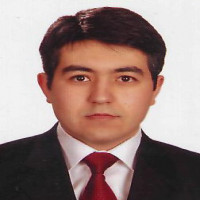
Marmara Üniversitesi Ekonometri Bölümü'nden lisans, Süleyman Demirel Üniversitesi Ekonometri Anabilim Dalı'ndan yüksek lisans, Akdeniz Üniversitesi Ekonometri Anabilim Dalı'ndan doktora derecelerini almıştır. Ekonometri alanı doçenti olan Demir, Süleyman Demirel Üniversitesi Ekonometri Bölümü öğretim üyesidir.
Issue Reviewers


 Web
Web



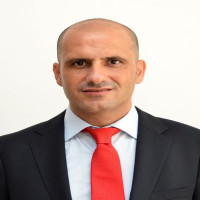

Pamukkale University, Türkiye




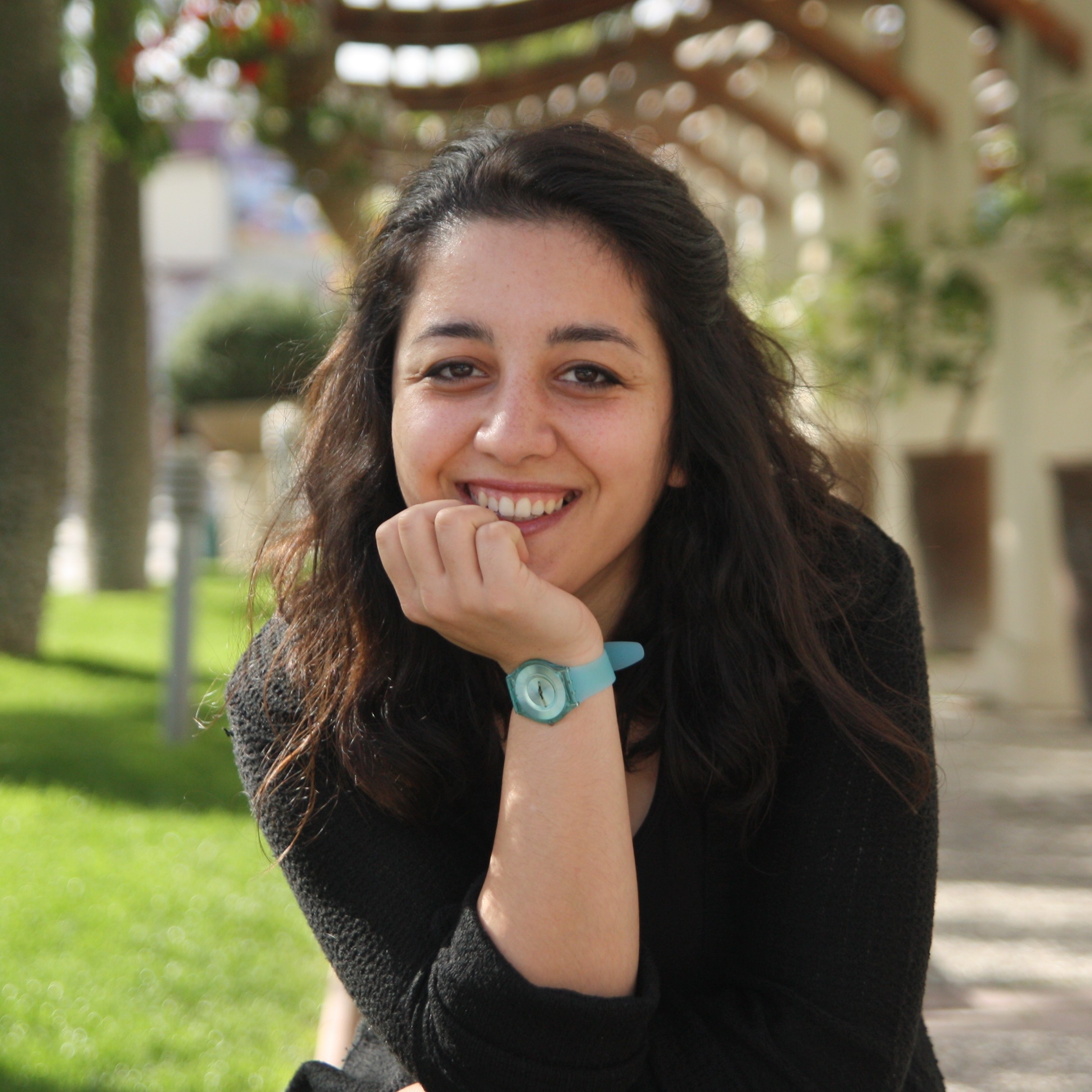
Dilek Çetin has been an Associate Professor at Süleyman Demirel University since 2017. She received a B.Sc. from the Department of Economics at the Faculty of Political Sciences at Ankara University in 1998 and received a M.Sc. degree in Economics from Akdeniz University. In 2012, she received a Ph.D. degree in Economics from Middle East Technical University. Her dissertation was on knowledge spillovers and clusters with a spatial econometric application on Organized Industrial Districts. She was awarded the Ph.D. encouragement prize from the Turkish Economic Association. Her studies focus on regional economics, and research and innovation policies. In addition to these subjects she studies trade, entrepreneurship and gender issues. Econometric methods such as spatial econometrics, microeconometrics and panel data econometrics are used in her studies. She was a post-doctoral researcher for fifteen months at the Institute for Prospective Technological Studies (IPTS) in Seville, Spain, which is one of the seven institutes of the Joint Research Centre of Directorate-General of the European Commission.
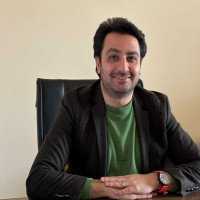
1987 yılında Ankara'da doğdu. Lisans eğitimini 2005-2009 yılları arasında Zonguldak Bülent Ecevit Üniversitesi İktisadi ve İdari Bilimler Fakültesi Maliye Bölümünde tamamladı. Akademik hayatına Aralık 2009'da Akdeniz Üniversitesi Sosyal Bilimler Enstitüsü Maliye Anabilim Dalında Araştırma Görevlisi olarak başladı. Daha sonra sırasıyla, Hatay Mustafa Kemal Üniversitesi İktisadi ve İdari Bilimler Fakültesi Maliye Bölümü Maliye Teorisi Anabilim Dalı ile Hacettepe Üniversitesi Sosyal Bilimler Enstitüsü Maliye Anabilim Dalında Araştırma Görevlisi olarak çalıştı. "Gelir Eşitsizliği ve Ekonomik Büyüme İlişkisi: Ampirik Bir İnceleme" başlıklı (bütünleşik) doktora teziyle Kasım 2019'da Hacettepe Üniversitesi Sosyal Bilimler Enstitüsü Maliye Anabilim Dalından doktor unvanı aldı. 2020-2022 Ocak döneminde Hatay Mustafa Kemal Üniversitesi İktisadi ve İdari Bilimler Fakültesi Maliye Bölümü Maliye Teorisi Anabilim Dalında Araştırma Görevlisi Doktor olarak çalıştıktan sonra, 26 Ocak 2022 tarihinde Kırşehir Ahi Evran Üniversitesi Sosyal Bilimler Meslek Yüksekokulu Muhasebe ve Vergi Uygulamaları programına Doktor Öğretim Üyesi olarak atandı. Hâlen bu pozisyonda çalışmakta olup 07 Eylül 2023 tarihinde Maliye bilim dalında Doçent unvanı aldı. Web of Science ve Scopus kapsamında yer alan indekslerde taranan dergilerde olmak üzere uluslararası ve ulusal hakemli dergilerde yayınlanmış makaleleri, ulusal ve uluslararası yayınevleri tarafından basılan kitaplarda kitap bölümleri, ulusal ve uluslararası toplantılarda sunulmuş bildirileri olup akademik çalışmalarına devam etmektedir.
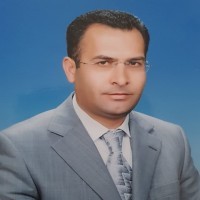






Rusça, İngilizce, Almanca, Azerice, Kürtçe
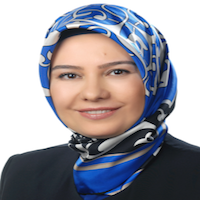
Doç. Dr. HİCRAN HAMZA ÇELİKYAY
1996 yılında Boğaziçi Üniversitesi Bilgisayar Programcılığı bölümünden mezun oldu. 2000-2009 yılları arasında İstanbul Büyükşehir Belediyesi’nde Coğrafi Bilgi Sistemi uzmanı olarak görev yapmıştır. 2010 yılında Bahçeşehir Üniversitesi Kentsel Sistemler ve Ulaştırma Yönetimi yüksek lisans programını yüksek onur derecesiyle ve 2017 yılında Marmara Üniversitesi Yerel Yönetimler Anabilim Dalı Mahalli İdareler ve Yerinden Yönetim Bilim Dalı’nda doktora programını yüksek onur derecesiyle mezun olmuştur. 2014- 2015 yıllarında Siyaset, Ekonomi Toplum Araştırmaları Vakfı’nda (SETA) araştırmacı olarak ve 2016-2017 yıllarında Yeşilay Genel Merkezi Bilimsel Araştırmalar Birim Yöneticisi olarak görev yapmıştır.
2018 yılında Düzce Üniversitesi Akçakoca Bey Siyasal Bilgiler Fakültesi Siyaset Bilimi ve Kamu Yönetimi bölümünde öğretim üyesi olarak göreve başlamıştır. Kamu Politikası Anabilim Dalı başkanıdır. 15.11.2021- 02.02.2022 tarihlerinde Amerika Birleşik Devletleri Southern Tarım ve Teknik Üniversitesi’nde “Akıllı Şehirlerde IoT Teknolojileri: Gizlilik ve Güvenlik Esasları” konusunda araştırma yapmıştır. 11.08.2022 tarihinde Yerel Yönetimler, Kent ve Çevre Politikaları Bilim alanında Doçent ünvanı almaya hak kazanmıştır.
Çalışma alanları arasında Yerel Yönetimler, Kent ve Çevre Politikaları, Kamu Politikaları, Metropoliten Yönetim, Kentsel Sistemler, Akıllı Şehirler, Kent Mülteciliği ve Göç Politikaları bulunmaktadır.
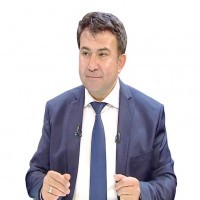






Lise: Isparta Süleyman Demirel Fen Lisesi (2005)
Lisans: Boğaziçi Üniv. İşletme Fak. (2010)
Yüksek Lisans: ODTÜ - Enformatik Enst. Bilişim Sistemleri ABD (2015)
Doktora: ODTÜ - Enformatik Enst. Bilişim Sistemleri ABD (2020)
 Web
Web






Aim & Scope
Aim
Süleyman Demirel University Visionary Journal is a refereed e-journal that begun to be issued in 2009 within the body of Süleyman Demirel University. In order to pioneer scientific endeavors related to all the fields of economic and administrative sciences the aim of the journal is to form an international scientific platform where the knowledge, opinion and proposals of the scientists are shared, and that supports free scientific thoughts. In this context, the major vision of Visionary Journal is to be an international journal that would inspire and direct social, economic and political developments according to the needs and expectations of the society by producing universal knowledge creation.Scope
Süleyman Demirel University Visionary Journal accepts research articles and review articles on all the subjects of the fields of economics and administrative sciences that are written in Turkish or English. The journal is published four times in a year, namely in February, May, August and November. Evaluation fee and application fee are not charged from the articles sent to the journal. The articles submitted for publication in the Journal should be prepared in accordance with the rules of research and publication ethics. In terms of publication ethics Visionary Journal pursues the principles, standards and recommendations of the publication ethics determined by COPE (Committee on Publication Ethics). The articles that are sent to the Journal are going to be scanned thought the iThenticate or the Turnitin plagiarism program. Visionary Journal is a journal that adopts open access policy. All the papers published in the Journal are licensed by Creative Commons Attribution 4.0 International license (CC BY 4.0). Under this license, the copyright of the articles published in the journal belongs to the authors. The opinions in articles published in the journal are not the views of the journal. All responsibility belongs to the authors. The journal does not pay any royalties to authors.Author Guidelines
- The papers should be prepared in A4 paper size with “MS Office - Word 2010” or with a higher version and by utilising the article template of the Journal. The length of the paper should be at least 6,000 words and be no longer than 30 pages with the journal template. The articles must be less than 30 pages with the template. Page margins should be as follows: Top: 5 cm, Bottom: 2.5 cm, Left: 2.5 cm and Right: 2.5 cm.
- The author(s) information, article additional information and author declarations should be added to the parts declared in the Journal article template in accordance with the Journal rules.
- Excluding the title page and expended abstract page, the article should be written with “Times New Roman”, 10pt size and single spacing. There should be one space after points and commas. No indents should be used for the paragraphs and 6pt spaces should be left before and after the paragraphs. Between the paragraphs no extra blank lines should be used.
- In the title page of the article; single spacing and 3nk spacing before and after the paragraph should be used. Turkish and English titles should be 11pt size. Turkish and English abstracts should be 9pt size, between 120 and 200 words and single paragraph. There should be 3 to 5 keywords in Turkish and English. There should be max. 5 JEL (Journal of Economic Literature) codes. For those articles whose language is English, first English versions of title, abstract, keywords and JEL codes should be given and then the Turkish versions should be included.
- In the article, an extended abstract that is not more than 1 page in accordance with Journal page format and that involves min 700, max 1200 words should be included. The extended abstract should be prepared in English for the articles in Turkish, and in Turkish for the articles in English. The extended abstract should be composed of four sub-headings: purpose and scope, design/methodology/approach, findings, and conclusion and discussion. Each sub-heading should be one paragraph, 9pt size, single spacing, 3nk spacing before and after the paragraph and without any extra spacing between titles.
- The headings and subheadings should be appeared in 10 font size, bold and left justified and also numbered decimally such as 1., 1.1., 1.1.1., 1.1.2., 1.1.2.1. The numbering should be initiated from the “Introduction” part and should be continued till the “Conclusion” part. No titles for introduction and result part should be used. All the letters in main headings should be capital; only the first letters of the words in the sub-headings should be capital. No spacing should be made before and after the main and sub-headings. Only in the main headings 12nk spacing before the paragraph, and 6nk spacing after the paragraph should be applied.
- All the tables and figures in the article should be given centered and in their proper places. All the tables and figures should be numbered in bold (Table 1., Figure 2., etc.) and given titles in normal fonts. The titles should be above the Tables and Figures, should be centered, 10 pt., and only the initial letters should be capital, with a line spacing of 6nk before and after the paragraph. The text inside the Tables and Figures should be written in Times New Roman with 8-9 font sizes and with single spacing. All the visuals such as graphs, charts, maps, drawings and photographs should be specified as Figures. For the Tables only horizontal lines should be preferred, vertical lines should not be used. All the Tables and Figures should fit the aforementioned rules and should be legible. The sources in Tables and Figures should be given under the Table and Figure with 8 font size and 3nkt distance must be set before and after the paragraph. No blank line should be given before and after the Tables and Figures.
- In those articles written in Turkish comma should be preferred as the decimal point, while point should be preferred in those articles written in English. For thousand separators, point should be used in Turkish articles while comma should be used in English articles. The numbers between 0 and 9 should be written with letters while 10 and larger numbers should be written numerically.
- The equations, models and formulas in the article should be left justified, all of them should be numbered and the numbers should be written in parentheses and right justified. No blank line should be given before and after the equations, models and formulas.
- The bulleted texts in the article, should be left justified and 3nk distance must be set before and after the paragraph.
- If the quotation from a source is less than 40 words, the expressions should be in quotation marks and the study quoted should be cited intext. If the quotation is more than 40 words, the quotation should be given in a new line; 1.25 cm tabbed from left and right, 3nk distance must be set before and after the paragraph and the study quoted should be cited.
- If the article include any “appendix”, titles (Appendix 1., Appendix 2., etc.) should be given to them and they should be given after the References part.
- Intext citations, footnotes and reference lists in the papers should be prepared according to American Psychological Association (APA 7) style. The intext references should be given with author-date-page method. The explanations should be given at the button of the page as a footnote, as justified, with 8 font size and Times New Roman, single line spacing and 3nk distance must be set before and after the paragraph.
- Intext citations should include the surname of the author(s), year of the source, and page number, respectively. In the articles written by 2 authors, between the names of the authors “and” should be preferred in articles written in Turkish while “&” should be preferred in English articles. When referring an articles that are written by 3 or more authors, the surname of the first authors should be written first, and then “vd.” should be used in Turkish articles; “et al.” should be used in English articles.
• Works by a single author: (Dulupçu, 2001, p. 28).
• Works by 2 authors: (Acar & Tetik, 2018, p. 60).
• Works by 3 or more authors: (Çarıkçı et al., 2009, p. 55).
• Citing more than one source: (Schumpeter, 1934, p. 66; Wood, 2005, p. 36; Acar & Tetik, 2018, p. 60).
• Citing whole source: (Drucker, 1995).
• Reference to secondary sources: (Freud, 1901, as cited in Bonomi, 1998) - If a group including author abbreviations is used, while no abbreviation is used for the first reference, for the following references abbreviations are used. For those groups having no abbreviation, there is no difference between the first and the following references.
• First reference: (Süleyman Demirel University [SDÜ], 2022).
• Following references to a group including author name abbreviation: (SDÜ, 2022). - If the reference is taken from a web site and the author is known, reference should be made like periodic publications. If the date of the downloaded source is not given, access date should be used. If the date of the downloaded source is not given, date of access should be used. Also if no publisher name is available, use the name of website and data of Access.
• If the author’s name and publication year is known: (Bebbington & Song, 2004).
• If the author’s name and publication year is not known: (Rekabet Kurumu, 2008). - If you are citing more than one work by the same author in the same year, put the letters a, b, c next to the year.
• (Kirzner, 1973a, p. 30).
• (Kirzner, 1973b, p. 45). - In narrative references in which the name of the author is written in the sentence, if the study has 2 authors “ve” should be used in Turkish articles; “and” should be used in English articles. In the studies written by 3 or more authors, first the surname of the first author should be written, then “vd.” and “et al.” should be used in Turkish and English articles, respectively.
• According to Moran (1994, p. 36), ……
• Acar and Tetik (2018) ……
• Çarıkçı et al. (2009) …… - In the articles, all kind of sources should be included in the References part. All the sources, without discriminating according to the type (thesis, book, article, report etc.), should be sorted alphabetically according to the surname of the authors. The studies of a particular author should be sorted in the References part from the oldest to the newest. Sources should be left justified in the first line, and 1.25 cm tabbed from left in the following lines. For that purpose, in the paragraph preferences “first line” should be adjusted to “hanging” and the value should be adjusted to 1.25 cm. In the References part, the first letter of the name of all publications (article title, book title, chapter title, thesis title etc.) except Journal title should be capital, and the rest of the title should be lower case, ,if they are not proper name or abbreviation. For the title of a journal, the fist letters of all words should be capital. In those studies, written by 2 or more authors, “ve” should be used before the last author in Turkish articles while “comma” and “&” should be used in English articles. The reference page should be prepared according to example shown below.
Books:
Surname, First letter of the name of the author(s). (Year). Name of the book (Number of editions). Publisher.
Koçel, T. (2020). İşletme Yöneticiliği (18th ed.). Beta Basım Yayım.
Acar, D., & Tetik, N. (2018). Genel muhasebe (16th ed.). Detay Yayıncılık.
Korkmaz, A., Dulupçu, M. A., Gövdere, B., & Songur, H. (2013). İnsani ücret. İGİAD Yayınları.
Translated Books:
Surname, First letter of the name of the author(s). (Year). Name of the book (Number of editions). (First letter of the translator. Surname of the translator, Trans.), Publisher, (The publishing date of the original work).
Piketty, T. (2015). Yirmi birinci yüzyılda kapital (2nd ed.). (H. Koçak, Trans.), Türkiye İş Bankası Kültür Yayınları (Original work published 2013).
Edited Books:
Surname, First letter of the name of the author(s). (Year). Section title. In First letter of the editor. Surname of the editor (Ed.), Title of the book (Number of editions, Pages of the section), Publisher.
Eke, E. (2019). Türkiye’de dijital bağımlılığa yönelik politikalar üzerine bir betimleme. In H. H. Aygül, & E. Eke (Ed.), Dijital çocukluk ve dijital ebeveynler: Dijital nesillerin teknoloji bağımlılığı (p. 207-252). Nobel Akademik Yayıncılık.
Articles:
Surname, First letter of the name of the author(s). (Year). Title of the article. Journal title, Vol(No), Pages. http://doi.org/xx.xxxxxxxxxx
Özkul, G. (2007). Kapitalist sistemin sürükleyici aktörleri: Ekonomik teoride girişimciler. Süleyman Demirel Üniversitesi İktisadi ve İdari Bilimler Fakültesi Dergisi, 12(3), 343-366.
Oruç, K. O., & Çolak, M. (2019). Bulanık analitik hiyerarşi prosesi yöntemi ile yem seçimi. Süleyman Demirel Üniversitesi Vizyoner Dergisi, 10(25) , 495-510. https://doi.org/10.21076/vizyoner.611033
Beyaz, R., Güngör, A. Y., & Kılıçarslan, Ş. (2021). The effects of banks’ internal marketing and market orientation approaches on performance. Süleyman Demirel Üniversitesi Vizyoner Dergisi, 12(31), 812-825. https://doi.org/10.21076/vizyoner.833838
Thesis:
Surname, First letter of the name of the author(s). (Year). Thesis title [Master’s Thesis/ Ph.D. Dissertation]. Name of University / Institution
Sezgin, A. (2014). Turizm sektöründe konaklama tesisi fiyatlandırmasının mekânsal ve niteliksel belirleyicileri: Antalya Körfezi örneği [Ph.D. Dissertation]. Süleyman Demirel Üniversitesi.
Symposiums/Congresses:
Surname, First letter of the name of the author(s). (Year). Title of the paper. Symposiums/Congresses Name (Pages). The city where the Symposium / Congress is organised, Country.
Karaatlı, M., Demirci, N., Aksoy, E., & Ömürbek, N. (2014). Borsa performanslarının çok kriterli karar verme yöntemleri ile karşılaştırılması. 15. Uluslararası Ekonometri, Yöneylem Araştırması ve İstatistik Sempozyumu (p. 673-689). Isparta, Turkey.
Research Reports:
Surname, First letter of the name of the author(s). (Year). Title of the paper (Report No. xxx). Publisher. Internet address
Eliasson, G., Fölster, S., Lindberg, T., Pousette, T., & Taymaz, E. (1990). The knowledge based information economy (IUI Working Paper No. 256). Research Institute of Industrial Economics. https://www.econstor.eu/bitstream/10419/95060/1/wp256.pdf
Media Sources (Film/Video et al.):
Surname of the Producer / Speaker, First letter of her/his name. (Year). The name of the film/speak [Film / Video / Audible]. Production company. Internet Address (if any)
Anadol, R. (2020, July). Makine zekası çağında sanat [Video]. TED Conferences. https://www.ted.com/talks/refik_anadol_art_in_the_age_of_machine_intelligence?language=tr#t-931
Forman. M. (Yönetmen). (1975). One flew over the cuckoo’s nest [Film]. United Artists.
Law/Regulation/International Convention/Court Orders:
Name of Law/Regulation/International Convention/Court. (Release Date). Internet Address.
Çocuk Hakları Sözleşmesi. (1995, January 27). https://www.resmigazete.gov.tr/arsiv/22184.pdf
Lisansüstü Eğitim ve Öğretim Yönetmeliği. (2016, April 20). http://www.resmigazete.gov.tr/eskiler/2016/04/20160420-16.htm
Internet Sources:
Surname, First letter of the name of the author(s). (Date of publication / Date of access). Title. Retrieved ….. from URL
Bebbington, J., & Song, E. (2004). The adoption of IFRS in the EU and New Zealand. Retrieved July 14, 2008 from http://www.europe.canterbury.ac.nz/
Rekabet Kurumu. (2010). Rekabet hukukunun esasları. Retrieved March 17, 2010 from http://www.rekabet.gov.tr/index.php?Sayfa=sayfaicerik&icId=53
Süleyman Demirel Üniversitesi. (2020). Misyon & vizyon. Retrieved January 10, 2020 from https://w3.sdu.edu.tr/sayfa/5528/misyon-vizyon
Gökçe, D. (2019, July 19). Çin'de 1992'den bu yana en düşük büyüme. Akşam. Retrieved January 15, 2020 from https://www.aksam.com.tr/yazarlar/deniz-gokce/cinde-1992den-bu-c2yana-en-dusuk-buyume/haber-990522 - For the cases not mentioned in spelling, scientific publication rules will be taken into consideration.
Ethical Principles and Publication Policy
ETHICAL PRINCIPLES
In terms of publication ethics Süleyman Demirel University Visionary Journal pursues the principles, standards and recommendations of the publication ethics determined by COPE (Committee on Publication Ethics). Accordingly, all the articles that do not comply with the accepted standards of ethics are rejected. The rule also applies for those articles that contains discrepancies which are detected after the publication. In the scope of publication ethics, in summary all stakeholders are expected to bear the following ethical responsibilities, and any ethical case would be evaluated according to all guidelines and policies created by COPE (https://publicationethics.org/guidance/Guidelines), such as 'ethics toolkit for a successful editorial office,' 'principles of transparency and best practice in scholarly publishing,' 'journals’ best practices for ensuring consent for publishing medical case reports: guidance from COPE,' 'ethical guidelines for peer reviewers,' etc.
Ethical Responsibilities of Authors:
- Authors should send those articles which have not been published elsewhere or which have not been sent anywhere.
- Authors should give references to all the citations in their articles.
- Authors are accepted to declare that the article belongs to themselves, they do not plagiarise, all the responsibilities due to plagiarism belong to themselves and the journal does not have any responsibility in such cases.
- Authors should guarantee that they give scientific contribution to the article and it should be accepted that all the authors of the article have equal responsibility.
- Corresponding author should guarantee that all the co-authors mentioned in the article have an agreement on the publication of the article and on being named as co-authors. All the writers who give crucial contributions to the article should be named as co-authors. Others should be given place in the acknowledgement.
- Authors are responsible for declaring the supporting institutions, financial sources or conflicts of interest.
- In case of necessity authors should give access to the data sets utilised in the articles.
- The authors should prepare the articles to be published in the Journal in accordance with research and publication ethics. For the research made in the article and for clinical and experimental studies on human and animal that necessitate ethics committee approval separate ethics committee approvals should be taken and these approvals should be mentioned in the article and should be documented.
Ethical Responsibilities of Reviewers:
- Any reviewer who is selected for reviewing the article but whose qualifications do not match with the subject of the article and/or to whom the time limitation of the review process is not appropriate should inform the editor and ask for her/his removal from the review process.
- Reviewers are responsible for the concealment of the articles they received and for not using the information attained from the reviewing process for personal interests.
- Reviewers should not share their evaluations reports or information about the article with others and should not directly communicate with the authors without the permission of the editor.
- Reviewers should be intentive about potential ethical incidences in the article and should present them to the editor. This includes similarities and overlappings with the studies of the reviewer published elsewhere.
- Reviewing should be done objectively. Personal criticisms should be avoided and the evaluations should be constructive, honest and polite.
- Reviewers who may have potential conflict of interest with (at least) one of the authors due to a competitive, collaborative of other types of relationships or connections should inform the editor before accepting the reviewing process.
Ethical Responsibilities of Editorial Board:
- Adhering to the principles of transparency in scholarly publishing the editorial board should strive to provide open and transparent communication to reviewers, authors, academics, and readers.
- The editorial board should ensure the confidentiality of personal information of authors and reviewers and facilitate unbiased evaluations within the specified timelines, in accordance with policies on blind peer review and evaluation processes.
- The editorial board should meticulously assess the potential conflicts of interest or collaborations between authors and reviewers during the evaluation process.
- The editorial board should prioritize the protection of human and animal rights in submitted articles, emphasize the necessity of obtaining clear and documented consent from all participants mentioned in the articles, and reject articles lacking ethical committee approval and experimental research permits for participants.
- The decision of the selection of articles to be published in the Journal is under the responsibility of the editorial board. The editorial board should carry out the evaluation independent of race, gender, sexual orientation, religious belief, ethnic origin, citizenship or political philosophy. The decision to be made should be based on the accuracy, validity and importance of the article, and its relevance with the scope of the Journal. Legal necessities should also be consulted in cases of slander, copyright infringement and plagiarism.
- The editor or any member of the editorial board should not reveal any information about the article except for the related authors, reviewers, potential reviewers, other editorial consultants and publishers.
- The information in any article presented but not published should not be used in any research of the editor or of the member of the editorial board without express written permission of the authors.
Publisher's Ethical Responsibilities:
- Süleyman Demirel University, the publisher of Süleyman Demirel University Visionary Journal, is a non-profit state university and operates with awareness of its ethical responsibilities regarding Süleyman Demirel University Visionary Journal.
- From the perspective of Süleyman Demirel University, the journal's editorial board is responsible for all processes related to the submitted works. Within this framework, they hold decision-making status regardless of economic or political gains.
- Süleyman Demirel University promises the creation of an independent and transparent editorial board decision-making process.
- Süleyman Demirel University bears the responsibility to take measures against any form of scientific misconduct, citation manipulation, and plagiarism related to the editorial board.
Relations with the Reader:
- Editors should make decisions by considering the knowledge, skills and experience expectations of all readers, researchers and practitioners.
- It should be careful that the published studies contribute to the reader, researcher, practitioner and scientific literature and that they are original.
- Editors are obliged to consider the feedback from readers, researchers and practitioners, and to provide explanatory and informative feedback.
Relations with the Authors:
- Editors should make a positive or negative decision based on the importance, original value, validity, clarity of the narrative, and the journal's goals and objectives.
- Studies that are suitable for the scope of publication should be included in the preliminary evaluation stage unless there are other serious problems.
- Editors should not ignore positive referee suggestions, unless there are contradictions to the academic writing and publication rules about the study.
- New editors should not change the decisions made by the previous editor(s) for studies unless there is a valid problem.
- “Blind Refereeing and Evaluation Process” must be published and the editors must prevent deviations from the defined processes.
- Editors should publish an “Author's Guide” that includes every subject expected from them by the authors in detail. These guides should be updated periodically.
- Authors should be informed and returned in an explanatory and informative way.
Relations with the Referees:
- Editors should determine referees according to the subject of the study.
- It is responsible for providing the information and guides that the referees will need during the evaluation phase.
- It has to consider whether there is a conflict of interest between the authors and the referees.
- In the context of blind refereeing, the identity of the referees should be kept confidential.
- Encourage reviewers to evaluate the work in an impartial, scientific and objective language.
- Referees should be evaluated with criteria such as timely return and performance.
- It should determine practices and policies that increase the performance of referees.
- Take the necessary steps to dynamically update the referee pool.
- It should prevent rude and unscientific evaluations.
- Take steps to ensure that the referee pool is broad.
Relations with the Editorial Board:
- Editors must ensure that all members of the editorial board advance the processes in accordance with editorial policies and guidelines.
- The editorial board should inform its members about the publishing policies and keep them informed of the developments.
- New editorial board members should be trained on editorial policies and should provide the information they need.
- It should ensure that the members of the editorial board evaluate the work impartially and independently.
- New editorial board members should be determined as contributing and suitable.
- The members of the editorial board should send studies suitable for their field of expertise for evaluation.
- Must interact regularly with the editorial board.
- Regular meetings should be held with the editorial board for the development of publication policies and the journal.
Relationships with the Journal's Owner and Publisher:
- The relationship between the editors and publishers is based on the principle of the independence of editors.
Unethical Conduct Reporting:
- If you encounter any unethical behaviour or content beyond the ethical responsibilities mentioned above in Süleyman Demirel University Visionary Journal, please report it via email to vizyoner@sdu.edu.tr.
PUBLICATION POLICY
Scope:
- Süleyman Demirel University Visionary Journal is a peer reviewed e-journal and published four times a year in February, May, August and November.
- Research and review articles on all subjects related to economics and administrative sciences may be submitted to the Journal. The rate of review articles to the total number of articles could not outnumber 25%. The type of the article is not determined according to the declaration of the authors but according to the decision of the board of editors following their inspection.
- The papers presented in the congresses or symposiums and published as full text in proceedings book could not be sent to the Journal. Only those papers that are not published as full text, providing that the related information is given could be sent to the Journal.
- A single author cannot publish two articles in succeeding two volumes or in one year. Therefore, those authors who send more than one article to the Journal are accepted to approve the rule.
- The maximum percentage of articles published in the journal from the same institution can be 25%. If the number of accepted articles from the same institution exceeds this ratio, the articles are accepted for publication based on the factors such as submission date, type, subject, and language of publication.
- Applications for articles that do not comply with ethical principles and publishing policy would not be accepted. The review processes of those articles who are found to be deficient later would be terminated and the articles would be rejected regardless of the stage of evaluation process they are in.
- The opinions in the articles published in the Journal are not the opinions of the Journal and all the responsibility belongs to the authors.
Price Policy
- No fee is charged from the articles sent to the journal for evaluation or for application.
Plagiarism Policy:
- The articles submitted for publication in the journal are checked through iThenticate or Turnitin plagiarism detection programs.
- In order for the article to proceed to the evaluation process, the similarity index ratio must be less than 20%. The similarity index ratio from a single source can be a maximum of 5%.
- The plagiarism evaluations of the articles are going to be made by the Journal; hence the author(s) do(es) not need to attach plagiarism report.
- Articles with a similarity index ratio exceeding 35% are directly rejected. For articles with a similarity index ratio between 20% and 35%, the responsible author is asked to make revisions to meet the required condition.
- The authors who submit their papers are accepted to have declared that they do not plagiarize; they accept any sanction caused by any plagiarism; and they admit that the Journal have no responsibility on such situations.
Special Issue Publishing Policy:
- In addition to its regular issues released at regular intervals, the journal may publish special issues consisting of articles covering a specific theme or comprising conference/symposium proceedings and similar event reports.
- Special issues cannot exceed more than 1/3 of the regular period. Special issues containing conference abstracts are not included in this coverage.
- Guest editors may be accepted for special issues.
- The ethical principles, publishing policy, and writing rules of the journal also apply to special issues. However, in special issues, the restrictions on compilation articles, the limitation on publishing more than one article by an author in two consecutive issues and multiple issues within the same year, and the limitation on the maximum of 25% of published articles from the same institution are not enforced.
Application Process:
- The articles should be written either in Turkish or in English.
- The articles should be prepared by using the article template to be attained form the web site of the Journal.
- The articles should be prepared in accordance with the spelling rules and should be uploaded to the DergiPark system.
- Together with the article(s) the Article Application Form that is signed by all the authors should be uploaded to the system. The authors should add their titles, institutions where they work/study, contact information and Orcid ID information to the system.
- Those authors who cannot upload their papers through the system may take technical support by e-mailing to vizyoner@sdu.edu.tr.
Ethical Declarations:
- The articles sent to the Journal in order to be published should be prepared by the author(s) in accordance with research and publication ethics.
- Authors must adhere to the publication ethics principles, standards, and recommendations established by the Committee on Publication Ethics (COPE) regarding publication ethics.
- It is strictly prohibited to write any part or the entirety of the articles submitted to the journal using Artificial Intelligence (AI) tools. AI tools may be used for purposes such as generating figures or graphics, improving writing and grammar, and enhancing the overall readability of the article. In such cases, authors are required to provide a clear and comprehensive explanation regarding the application of AI tools in their work. The journal adheres to COPE's following statement regarding the use of artificial intelligence in scientific research: “The use of artificial intelligence (AI) tools such as ChatGPT or Large Language Models in research publications is expanding rapidly. COPE joins organisations, such as WAME and the JAMA Network among others, to state that AI tools cannot be listed as an author of a paper. AI tools cannot meet the requirements for authorship as they cannot take responsibility for the submitted work. As non-legal entities, they cannot assert the presence or absence of conflicts of interest nor manage copyright and license agreements. Authors who use AI tools in the writing of a manuscript, production of images or graphical elements of the paper, or in the collection and analysis of data, must be transparent in disclosing in the Materials and Methods (or similar section) of the paper how the AI tool was used and which tool was used. Authors are fully responsible for the content of their manuscript, even those parts produced by an AI tool, and are thus liable for any breach of publication ethics.”
- A document of the approval of ethical committee is required from any type of studies that utilise qualitative or quantitative approaches and that necessitate data collection through questionnaires, interviews, focus group studies, observations, experiments, meeting techniques and the date of the study does not change this requirement.
- For the research made in the article and for clinical and experimental studies on human and animal that necessitate ethics committee approval separate ethics committee approvals should be taken and these approvals should be mentioned in the article and should be documented. In those articles necessitating ethics approval, approval-related information (name of the committee, date and number) should be given in the method part and also in the first/last page of the article. Therefore, in the cases that necessitate ethics committee approval, those articles that do not send these documents would not be evaluated and would be rejected.
- In the articles submitted to the Journal, the declarations of contribution rate and if any support and thanksgiving, and conflict should be included.
Review Process:
- An article sent to the Journal follows three stages: pre-control, evaluation and publication stage.
- The articles sent to the Journal for publication are initially checked in the pre-control stage. The stage is completed at the latest in 30 days following the submission date of the article. In this stage, the article is checked for its compliance with our publication principles, spelling rules, the rules of publication ethics and being scientific. At this stage, the compliance of the article with ethical principles, publishing policy, and writing rules is being checked. Within the scope of the pre-control three decision may be made: send to the reviewer (evaluation) process, for the article to be sent to the reviewer some alterations should be made, and insufficient for sending to the reviewer and for publishing. If the second decision – for the article to be sent to the reviewer some alterations should be made – is taken, the author(s) has/have 30 days for making the alterations and resend the article. Otherwise, the evaluation process of the article would be terminated, and the article would be rejected.
- Articles submitted for publication in the journal undergo plagiarism checks using iThenticate or Turnitin plagiarism detection programs during the initial screening stage. In order for the article to proceed to the evaluation process, the similarity index ratio must be less than 20%.
- Following the pre-control stage, the articles pass to the evaluation stage. In the beginning of the evaluation stage, the articles are inspected by the editorial board or section editor for the quality, originality and scientific contribution and within 10 days at most, the article is sent to the reviewers or is rejected without sending to the reviewers.
- After the decision that the article may be sent to the reviewers for the evaluation stage, the article is sent at least two reviewers (double blind reviewers) for a control in terms of content and format. No information is given to the authors about the identities of the reviewers or to the reviewers about the owner(s) of the article. The reviewers are requested to make a decision whether they are going to evaluate the article or not within 10 days and if they accept to evaluate the article to finish their evaluation within 30 days and send their evaluation reports. Those reviewers who do not send the reports within the duration are warned and additional time of 10 days may be given for twice at most. In case of not sending the reports event within the additional duration, the article is sent to another new reviewer. If the reviewers need a second or third time evaluation following the first one, the aforementioned durations are initiated from the beginning.
- In accordance with the evaluation reports from the reviewers, the paper may be published, may be re-sent to the author(s) for correction, or may be rejected. In case of a correction all correction(s) should be made within at the latest 1 months and sent to the Journal. Within the process, in addition to the revised version of the paper, a revision report should be sent. Otherwise, the evaluation process of the article would be terminated, and the article would be rejected.
- If one of the reviews is positive while the other is negative, the editorial board may send the article to the third reviewer or may reject the article in accordance with the reviewer report. Therefore, in order for an article to be published, it should take positive decisions from at least two separate reviewers.
- Those articles that are found to be sufficient in the evaluation stage are sent to the publication stage. In the publication stage, the articles are included in the publication stage according to the decision of editorial board by taking the date of arrival, type of article, subject of the article and publication language. In this stage, the requests of the authors for their articles to be published earlier are refused whatever the reason of the authors. In this respect, Süleyman Demirel University Visionary Journal do not accept any article for publishing it in a particular volume and the authors may submit articles to the Journal at any time they desire.
- In the publication stage, when the publication turn comes, the typesetting and layout processes are initiated. After the completion of typesetting and layout processes, the article is sent to the author(s) once more for a last-check. After the return of the author, the articles are checked by the editor for the last time and the publication process of the article is initiated after giving a DOI number to the article. If the author(s) do(es) not return in the determined time duration, the article may be shifted to the following volume or may be published with its last format.
Correction and Retraction Policy:
- Authors may withdraw their manuscripts at any stage until the completion of the review process and initiation of the publication process.
- Authors or the editorial board may request retraction or correction of an article for various reasons after publication. These requests are processed in accordance with COPE guidelines.
- If authors or the editorial board identify minor errors in the published article, they may request a correction when the corrections do not affect the findings, interpretations, or conclusions. When significant errors and violations that invalidate the findings and conclusions are identified, retracting the article may be considered.
- If there is a possibility of research or publication misconduct by the authors, and if there is evidence suggesting that the findings are unreliable and that the authors' institutions have not investigated the matter, or if a possible investigation appears unjust or inconclusive, the editorial board may issue an expression of concern.
Open Access and Copyright Policy:
- Süleyman Demirel University Visionary Journal adopts the principle that offering scientific research to the public for free would enhance the global sharing of knowledge and provides instant open access to its content.
- Süleyman Demirel University Visionary Journal is a journal that adopts an Open Access policy and accepts the Budapest Open Access Initiative (BOAI) declaration.
- Süleyman Demirel University Visionary Journal accepts that peer-reviewed scientific research, in line with the Budapest Open Access Initiative (BOAI) definition, should be freely accessible, readable, downloadable, copyable, distributable, printable, scannable, linkable to full texts, indexable, transferable to software as data, and available for any legal purpose via the internet without financial, legal, or technical barriers. The authors and copyright owners accept that all the users have the right to access the studies without any fee. The authors whose articles are published by the Journal accept that their studies can be cited under the provisions of the protection of copyrights and Commons Attribution License.
- All the articles to be published in Süleyman Demirel University Visionary Journal are licenced with Creative Commons Atıf 4.0 International License (CC BY 4.0). Under this license, the copyright of the articles published in the journal belongs to the authors. This license grants authors and users the right to copy, distribute, share, display, and use the article for any purpose, including commercial purposes, as long as proper reference is made.
- The Journal does not pay any royalties to the author(s) of the articles published.
Price Policy
Evaluation fee and application fee are not charged from the articles sent to the journal.
Indexes
Citation Indexes

Other Indexes


Journal Boards
Derginin Sahibi
Baş Editör
Editörler
Erdal Eke, Süleyman Demirel Üniversitesi İktisadi ve İdari Bilimler Fakültesi Sağlık Yönetimi Bölümünde görev yapmaktadır. Başlıca çalışma alanları sağlık politikaları, sağlık sistemleri, sağlık reformları, örgütsel reform, yönetimde dijitalleşme olup, bu alanlarda yayınları bulunmaktadır.
e-posta: erdaleke@sdu.edu.tr
Alan Editörleri
Erdal Eke, Süleyman Demirel Üniversitesi İktisadi ve İdari Bilimler Fakültesi Sağlık Yönetimi Bölümünde görev yapmaktadır. Başlıca çalışma alanları sağlık politikaları, sağlık sistemleri, sağlık reformları, örgütsel reform, yönetimde dijitalleşme olup, bu alanlarda yayınları bulunmaktadır.
e-posta: erdaleke@sdu.edu.tr
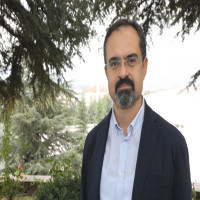
Marmara Üniversitesi Ekonometri Bölümü'nden lisans, Süleyman Demirel Üniversitesi Ekonometri Anabilim Dalı'ndan yüksek lisans, Akdeniz Üniversitesi Ekonometri Anabilim Dalı'ndan doktora derecelerini almıştır. Ekonometri alanı doçenti olan Demir, Süleyman Demirel Üniversitesi Ekonometri Bölümü öğretim üyesidir.
Yabancı Dil Editörü
Yayın Kurulu
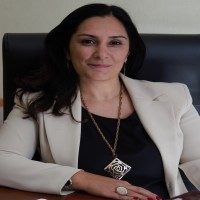

Prof. Dr. Serkan Benk, 1974 yılında Adıyaman'da doğdu. İlk ve orta öğrenimini Malatya’da tamamladı. Lisans eğitimini 1995-1999 yılları arasında Karadeniz Teknik Üniversitesi İktisadi ve İdari Bilimler Fakültesi Maliye Bölümünde tamamladı. Akademik hayatına 2000 yılında Karadeniz Teknik Üniversitesi’nde Araştırma Görevlisi olarak başladı. “Globalleşmenin Vergi Sistemleri Üzerindeki Etkileri” başlıklı teziyle 31 Aralık 2002 tarihinde Karadeniz Teknik Üniversitesi Sosyal Bilimler Enstitüsü Maliye Anabilim Dalından yüksek lisans derecesini, “Kentiçi Ulaşım Sonucu Oluşan Negatif Dışsallıklar ve Önleme Yolları” başlıklı teziyle de 3 Temmuz 2007 tarihinde Bursa Uludağ Üniversitesi Sosyal Bilimler Enstitüsü Maliye Anabilim Dalından doktora derecesini aldı. Ayrıca Prof. Benk’in, doktora tezi İktisadi Araştırmalar Vakfınca düzenlenen “2007 Yılı Ünal AYSAL Ödüllü Tez Yarışması’nda” doktora tezleri kategorisinde ödüle layık görülmüştür. Serkan Benk 2013 yılında Doçent, 2018 yılında ise profesör unvanını almıştır. Önemli bir kısmı Web of Science kapsamında yer alan indekslerde taranan dergilerde olmak üzere uluslararası ve ulusal hakemli dergilerde yayınlanmış makaleleri, dünyanın önde gelen uluslararası yayınevleri tarafından basılmış kitaplarda editörlükleri, kitap bölümleri, ulusal ve uluslararası toplantılarda sunulmuş bildirileri olup, çalışmaları çok sayıda atıf almıştır. Prof. Dr. Serkan Benk 2012 yılından itibaren İnönü Üniversitesi İktisadi ve İdari Bilimler Fakültesi Maliye Bölümü’nde görev yapmaktadır.

Erdal Eke, Süleyman Demirel Üniversitesi İktisadi ve İdari Bilimler Fakültesi Sağlık Yönetimi Bölümünde görev yapmaktadır. Başlıca çalışma alanları sağlık politikaları, sağlık sistemleri, sağlık reformları, örgütsel reform, yönetimde dijitalleşme olup, bu alanlarda yayınları bulunmaktadır.
e-posta: erdaleke@sdu.edu.tr

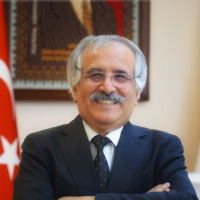

Prof. Chang is Professor for the Medical Informatics School, Chung Shan Medical
University; Department of Information Management, Ming Chuan University, and
president of Medical Decision Science Association of Taiwan. He recently joined the
International Advisory Board of Karadeniz Technical University and Süleyman
Demirel University to support their internationalization mission in 2023.
His research contributions are focuses on clinical studies of specific diseases,
including predicting cancer recurrence and Second Primary Cancer, diagnosing
glaucoma and early chronic kidney disease, and analyzing posttraumatic growth and
health behavior in clinical psychology. For practice issue, his team apply several
innovative information technologies and collaborate across disciplines and countries
around the world. He has published more than 150 peer-reviewed articles in reputed
international journals and conferences.
Prof. Chang have co-founded three international conferences, two AI forums, and
the Medical Decision Science Association of Taiwan with his team members. There are
the International Conference on Medical and Health Informatics (ICMHI) in 2017 [1],
the International Conference on Healthcare Service Management (ICHSM) in 2018 [2],
the Health Big Data, Analytics and Artificial Intelligence Forum (HBAAI) in 2017 [3],
the Joint Executive Board on Medical Informatics Taiwan (JEBMI) in 2018 [4] and the
Medical Decision Science Association of Taiwan (MEDSAT) in 2022 [5], the
International Symposium on Medical Decision Science (ISMDS) in 2023 [6], 2024 [7]
and the Medical Decision Science Association of Mongolia (MEDSAM) [8].
He is the founding Editor-in-Chief of the Decision Science in Medicine. He also an
editor for some interdisciplinary journals, including those in the fields of medicine,
computer science, and management science, include Intl Journal of Medical Sciences,
Open Medicine, Therapeutics & Clinical Risk Management, Intl Journal of
Environmental Research and Public Health, Frontiers in Genetics, Journal of Universal
Computer Science, Intl Journal of Computers and Applications, Journal of Quality,
Journal of Computing Science and Engineering, Intl Journal of Business and Systems
Research, ACM, Intl Journal of Management, Economics and Social Sciences and
Journal of Electronic Science and Technology etc. Details at
https://www.mdsat.org.tw/chichang.pdf

João Leitão is an economist and associate professor (with habilitation/ Agregação) of economics at the UBI – University of Beira Interior, Covilhã, Portugal and a researcher at the NECE – Research Centre for Business Sciences. He is an external researcher at the CEGIST – Centre for Management Studies of the Instituto Superior Técnico (IST), and associate researcher of the ICS – Instituto de Ciências Sociais, University of Lisbon. He is a visiting professor at the Università degli Studi di Bergamo, Italy. He was a visiting scholar at the Friedrich-Schiller-Universität, Jena, Germany. He was an external research fellow at the Max Planck Institute of Economics, Jena, Germany.
He is the President of the APDR - Associação Portuguesa para o Desenvolvimento Regional. He is a member of the ERSAC and the RIS Policy Council, EIT Food. He was the European Council for Small Business and Entrepreneurship director for the Policy area.
He is a member of the Council of the College of Economics and Business Management of the Portuguese Order of Economists (2025-2028).
He is the Director of the UBIExecutive Business School. He was the UBI's Head of University Management & Administration (2009-2012). He also served as the Polytechnic Institute of Portalegre (2000) administrator.
He coordinates the ESG – MBA (UBI) and the Acceleration Programme in Entrepreneurship and Innovation (UBI). He coordinated the Master in Economics (UBI), the Master in Business Administration (UBI), the Executive Master on Entrepreneurship and Innovation in the Bio-Sector (UBI, Universidad de Granada, and Università Politecnica delle Marche), the Master in Entrepreneurship and Management of SMEs (IPPortalegre), and the Master in Engineering and Industrial Management (IST, University of Lisbon).
He was a manager of the LIDL&Ca (1997). He is the CFO of a knowledge-based startup devoted to neuroscience and degenerative diseases. He joined the council of the ‘Observatório: Serviços, Competitividade Urbana e Coesão Territorial’, of the Confederação do Comércio e Serviços de Portugal. He is a member of the Strategic Council of the Ordem dos Economistas. He is an external expert evaluator of the European Commission (Horizon, H2020-MSCA-COFUND and COST), the United Nations Economic Commission for Europe, the Ministero dell'Istruzione e del Merito, the Fundação para a Ciência e Tecnologia, the Asociación Colombiana para el Avance de la Ciencia, the Agência Nacional de Inovação, and the Tribunal Administrativo de Castelo Branco.
He participated in drafting the Local Development Strategy (LDS) for RUDE - Associação de Desenvolvimento Rural (2001), the National Sports Charter (2012), and the Serra da Estrela Revitalization Plan (2023-2024). Evaluated the Strategy of ADERES - Associação de Desenvolvimento Rural Estrela-Sul (2019). He coordinated the preparation of the Strategic Plan of Comurbeiras - Intermunicipal Community (2008-2009), the Strategic Plan of the Intermunicipal Community of Beiras and Serra da Estrela (2021-2022), and the Strategy of ADERES - Estrela-Sul Rural Development Association (2024).

Danışma Kurulu

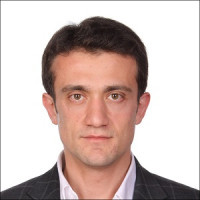

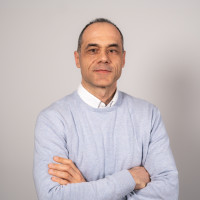
Dragan Pamucar is a Full Professor at the University of Belgrade, Faculty of Organizational Sciences. Dr. Pamucar received a PhD in Applied Mathematics specializing in Multi-criteria modeling and soft computing techniques from the University of Defence in Belgrade, Serbia, in 2013 and an MSc degree from the Faculty of Transport and Traffic Engineering in Belgrade in 2009. His research interests include computational intelligence, multi-criteria decision-making problems, neuro-fuzzy systems, fuzzy, rough, intuitionistic fuzzy set theory, and neutrosophic theory. Application areas include a wide range of logistics and engineering problems. Dr. Pamucar has five books and over 220 research papers published in SCI indexed International Journals, including Experts Systems with Applications, Applied Soft Computing, Soft Computing, computational Intelligence, Computers and Industrial Engineering, Engineering Applications of Artificial Intelligence, IEEE Transactions on Intelligent Transportation Systems, IEEE Transactions of Fuzzy Systems, IEEE Transactions on Transportation Electrification, Information Sciences and research and so on, and many more. According to Scopus and Stanford University, he is among the World's top 2% of scientists as of 2020 and 2021. According to WoS and Clarivate, he is among the top 1% of highly cited researchers in 2022 and 2023.
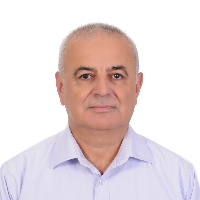
Post-Doctoral Research Fellowship / Researcher, Public and Nonprofit Management University of Central Florida, Center for Public and Nonprofit Management, Orlando, Florida, USA, 2009-2010
Doctorate (Ph.D.) in Urban and Public Affairs, School of Urban and Public Affairs (SUPA), University of Texas at Arlington (UTA), Arlington, Texas, USA, 1994-1998
Doctorate (return after a long break) (Ph.D.) in Public Administration (PA), Dokuz Eylül Üniversitesi / University, Graduate Institute of Social Sciences, Buca, İzmir, Türkiye, 1992-1993, 2022-continues. Dissertation writing stage, expected completion date: November 2025
Master 2: MPA, Master of Public Administration / MPA in PA, University of Texas at Arlington, School of Urban and Public Affairs, Texas, USA, 1994-1996
Master 1: M.A. with Thesis Dokuz Eylül Üniversitesi / University, Institute of Social Sciences, Buca, İzmir, Türkiye, 1990-1992
Undergraduate 3: Russian Language and Literature, Russian Language Preparation School, Ankara Üniversitesi / University, Distance Education (Uzaktan Eğitim). Açık ve Uzaktan Eğitim Fakültesi, Ankara. 2022-2023.
Undergraduate, English Language and Literature Pamukkale Üniversitesi / University, Faculty of Humanities and Social Sciences (İnsan ve Toplum Bilimleri Fakültesi), Pamukkale, Denizli, Türkiye, 2018-2023
Undergraduate, 4 year degree, B.A. in Public Administration Dokuz Eylül Üniversitesi / University, Faculty of Economics and Administrative Sciences (İktisadi ve İdari Bilimler Fakültesi) Alsancak/Konak and Buca, İzmir 1983-1987.
2-year College Degree: Justice (Adalet) (AÖF), Anadolu Üniversitesi, Open Education Faculty, Tepebaşı, Eskişehir, Türkiye. 2015-2018
High School (3 years), Literature (Edebiyat) Branch, İzmir Karataş Lisesi, Karataş Semti, Konak, İzmir, Türkiye. 1980-1983
Middle School, (3 years), İzmir Güzelbahçe Ortaokulu, Güzelbahçe [Konak], İzmir, Türkiye, 1977-1980
Elementary School (5 years) İzmir Vali Kazım Dirik İlkokulu, Güzelbahçe [Konak], İzmir 1973-1977
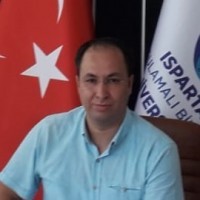
• Prof. Malakeh Z Malak. She has PhD degree in Community Health Nursing. She is working at the Al-Zaytoonah University of Jordan in Amman City in Jordan where she is working as a researcher instead of an academic position as an professor. She is an Editorial Board Member for many journals including the Journal of Nursing Management, BMC Nursing, BMC Pychology, the Journal of Modern Nursing Practice and Research, the Journal of Nursing Care & Reports, The JYR (The Journal for Young Researchers), the International Journal of Clinical Nursing & Care, Journal of Obstetrics, Gynecology and Women's Health, Journal of Advances in Midwifery and Nursing Practices, Syntax Journal of Health Care and Nursing, Women, Mother, and Child Healthcare Innovations journal, Applied Psychiatry, Journal of Applied Life Sciences International, SM Addiction Research & Therapy, Journal of Biogeneric Science and Research, Global Journal of Health Science and Nursing, Integrative Journal of Global Health, Journal of Pharmaceutical, Medical and Health Sciences (UPI-JPMHS), and Asian Journal of Research and Reports in Hepatology She is a reviewer of many Journals. She published many articles and she is working on other studies. She is a member of the Council of Asian Science Editors (CASE), the International Health Literacy Association (AHLA), and the American Psychological Association International Affiliate Membership. She is a supervisor on doctorate and master students. She is an active member of community services and national organizations. She obtained many awards and certificates as the best women researcher Award in International Scientist Awards on Engineering, Science and Medicine on 11 & 12-Apr-2020. Also, she has supervised on many doctorate dissertations and master theses in Jordan and outside Jordan. She published more than 100 papers, one textbook, and five chapters in books. Also, she participated in many conferences and workshops for professional development.

http://www.ersanoz.com/paylasim/ersan-oz-ozgecmis.pdf
Prof. Dr. Ersan ÖZ, 4 Eylül 1975 tarihinde Manisa/Akhisar’da doğdu. İlk-orta ve lise öğrenimini Gölmarmarada tamamlayan ÖZ, 1997 yılında Karadeniz Teknik Üniversitesi İktisadi ve İdari Bilimler Fakültesi Maliye Bölümünden mezun oldu. Doktorasını 2000-2004 yılları arasında Dokuz Eylül Üniversitesi Sosyal Bilimler Enstitüsü Sosyal Bilimler Enstitüsü Maliye Programında “Vergilendirmede Kanunilik İlkesine Göre Türk Vergi Sisteminin Değerlendirilmesi” teziyle tamamladı. 2006’da yardımcı doçent, 2009 da doçent, 2014 de Profesör ünvanını aldı. Ulusal ve Uluslararası 100 makalesi, 7 kitabı, 30 tebliği bulunan ÖZ, 100'den fazla konferans vermiştir.
Akademik çalışma amaçlı Polonya, Amerika Birleşik Devletleri, İngiltere, Almanya, Hollanda, İtalya, İspanya, Bosna Hersek, Birleşik Arap Emirlikleri, Çek Cumhuriyeti, Azerbaycan, Kazakistan, Kırgızistan, Portekiz, Ürdün, Fransa ve Makedonya gibi ülkelerde bulunan Prof. ÖZ’ün çalışma alanı ulusal ve uluslararası vergi sistemleri, vergi hukuku ve vergi yargısı konularında yoğunlaşmaktadır. Prof. ÖZ, evlidir, iki çocuk sahibidir ve İngilizce bilmektedir.

Dizgi
Kapak Tasarım
