Volume: 25 Issue: 4 , 12/15/25

Year: 2025

Research Article

Review Article

Purpose

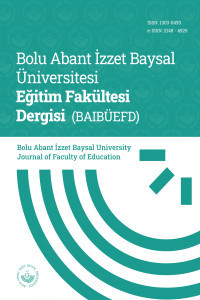
Bolu Abant Izzet Baysal University Faculty of Education Journal (BAIBUEFD) aims to publish scientific research in the field of education, contributing to the educational literature both in Turkey and globally.

Scope

The scope of Bolu Abant Izzet Baysal University Faculty of Education Journal (BAIBUEFD) encompasses quantitative, qualitative, and mixed-method critical, evaluative, and meta-analysis studies. The journal includes original ideas and model proposals in scientific articles related to the field of education.

Bolu Abant Izzet Baysal University Faculty of Education Journal (BAIBUEFD) is a peer-reviewed, scientific journal published quarterly (March-June-September-December).
The copyright of the works published in Bolu Abant Izzet Baysal University Faculty of Education Journal belongs to the authors.


Bolu Abant Izzet Baysal University Faculty of Education Journal is an open-access journal. Articles published in the journal can be accessed without embargo in the institutional archive of the university, subject-specific archives, or other desired archives as designated by the author. Each published article is assigned a DOI (Digital Object Identifier) as a permanent article identifier.

Subject Category

Education and Educational Research
Keywords: Education, History of Education, Philosophy of Education, Sociology of Education, School, Classroom, Teacher, Student, Communication, Motivation, Mathematics Education, Science Education, Social Studies Education, Turkish Language Education, Life Skills Education, Music Education, Art Education, Physical Education and Game Instruction, Game Instruction, Educational Programs and Instruction, Educational Psychology, Special Education, Guidance, International Education, School Management, Measurement and Evaluation, Special Education, Democracy Education, Teacher Training, Comparative Education, Preschool Education, Primary School, Secondary School, High School, University
Publication Period: Bolu Abant Izzet Baysal University Faculty of Education Journal is a peer-reviewed, scientific journal published quarterly (March-June-September-December).
Target Audience: The target audience for Bolu Abant Izzet Baysal University Faculty of Education Journal includes academics, researchers, undergraduate, master's, doctoral students, and interested parties.
Language of Publication: The journal publishes articles in both Turkish and English.

Copyright

The copyright of the works published in Bolu Abant Izzet Baysal University Faculty of Education Journal belongs to the authors. Authors grant permission for the intellectual work they submit to be published by the Journal of Human and Social Sciences Research under the Creative Commons Attribution-NonCommercial 4.0 International (CC BY-NC 4.0) license.

1. Title

The title should reflect the content of the article, written in Palatino Linotype, 10-point font, with the initial letters capitalized and in bold.

2. Abstract

 Positioned at the beginning of the article, the abstract should consist of a minimum of 150 and a maximum of 200 words, summarizing the topic in Turkish (Öz) and English (Abstract). Below the abstract, leave a blank line and provide 3 to 5 keywords in both languages. The abstract text should be written in 7-point font, with no paragraph indentation and a single line spacing.

3. Main Text
                             I. INTRODUCTION
                             II. METHOD
                            III. FINDINGS
                            IV. DISCUSSION and CONCLUSION

4. Text Formatting

The text should be written in Turkish, following Turkish writing rules, using Palatino Linotype font, 10-point size, with 0 nk before and 6 nk after, and single line spacing. No paragraphs should be made. Page measurements are as follows:
• Top: 1.25,
• Left: 4,
• Bottom: 3,
• Right: 2.25

5. Section Headings

Main, sub, and sub-sub headings can be used. Headings should be formatted as follows:
2. METHOD (Palatino Linotype, 12-point, bold, left-aligned)
2.1. Research Model (Palatino Linotype, 10-point, bold, left-aligned)
2.3. Data Collection Tools and Process
2.3.1. Survey Form (Palatino Linotype, 10-point, bold, italic, left-aligned)


6. Table and Figure Titles


Figure
Figure 1. Communication Models (Palatino Linotype, 10-point, only 'Figure' bold, center)

Tables
Table 1. (Palatino Linotype, 10-point, bold, left-aligned)
The First Letter of Each Word in the Table Title is Capitalized (Palatino Linotype, 10-point, italic, left-aligned)
If your tables extend to a new page, use "Table X. Continued" as the title line and information row for the table on the new page.
Table 1. Continued (Palatino Linotype, 10-point, bold, left-aligned)
Images: Should be of high resolution, and naming conventions must adhere to figure rules.


7. References:

The reference section should start on a new page and follow APA 7 style. Below is a template with examples.
To access our writing guidelines and journal template, please click here. Please download the template and organize your article following these rules.

A. Ethical Principles

Bolu Abant Izzet Baysal University Faculty of Education Journal (e-ISSN: 1303-0493) adheres to national and international standards in research and publication ethics.
It complies with the Press Law, the Law on Intellectual and Artistic Works, and the Higher Education Institutions Scientific Research and Publication Ethics Directive.
Bolu Abant Izzet Baysal University Faculty of Education Journal has adopted the International Ethical Publishing Principles published by the Committee on Publication Ethics (COPE), Directory of Open Access Journals (DOAJ), Open Access Scholarly Publishers Association (OASPA), and World Association of Medical Editors (WAME).

Furthermore, it commits to the decisions of the Turkey Editors Workshop.
• Press Law
• Law on Intellectual and Artistic Works
• Higher Education Institutions Scientific Research and Publication Ethics Directive
• Transparency and Best Practices Principles in Academic Publishing
• Turkey Editors Workshop Decisions

Publication Process and Ethical Responsibilities
Bolu Abant Izzet Baysal University Faculty of Education Journal examines submitted works for plagiarism:

Authors are required to provide a plagiarism report for articles uploaded to the journal system. The plagiarism report is uploaded to the journal system along with the manuscript. The editorial board may obtain a second plagiarism report using the iThenticate software for selected articles.

High similarity rates may lead to the rejection of a manuscript, both before acceptance and even after acceptance. An expectation is set for this rate to be 20% or less.
The publication processes implemented in Bolu Abant Izzet Baysal University Faculty of Education Journal form the basis for the unbiased and reputable development and distribution of knowledge. The applied processes directly reflect the quality of the work of authors and supporting institutions. Peer-reviewed studies are concrete and supportive of the scientific method. In this regard, adherence to ethical principles by all stakeholders (authors, readers, researchers, publishers, reviewers, and editors) in the process is crucial.

Bolu Abant Izzet Baysal University Faculty of Education Journal expects all stakeholders to carry the following ethical responsibilities within the scope of publication ethics:
The ethical duties and responsibilities listed below have been prepared taking into account the guidelines and policies published by the Committee on Publication Ethics (COPE) (See COPE Guidelines) and COPE Workflow Diagrams.

If instances such as manipulation, distortion of data used in articles, or the use of fabricated data are detected, the situation will be formally reported to the institution where the author works, and the article will be rejected.

Bolu Abant Izzet Baysal University Faculty of Education Journal has the right to request output files related to the analysis results from authors based on feedback provided by editors and/or reviewers.

If the work prepared for publication is derived from book chapters, unpublished conference papers, or postgraduate theses, this should be explicitly stated in Turkish and English on the first page of the article.

For articles produced from conference papers, the author must submit the article with a signed commitment statement stating, "This study has not been published anywhere before and will not be published." Duplicating/republication/scientific deception/multiple publications are considered offenses. According to the TUBITAK Publication Ethics Board, republication is sending or publishing the same research results to more than one journal. If an article has been previously evaluated and published, publications other than that are considered republication.

Publication Ethics Statement Correction, Retraction, Expression of Concern

Editors/Section Editors of Bolu Abant Izzet Baysal University Faculty of Education Journal may consider publishing corrections if minor errors that do not affect the findings, interpretations, and conclusions are identified in a published article.

When significant errors or violations that invalidate the findings and conclusions are identified, editors should consider retracting the article.
If there is a possibility of research or publication misconduct by the authors, and there is evidence that the findings are unreliable, or the author's institution has not investigated the matter, editors should consider expressing concern.
COPE and ICJME guidelines are considered regarding correction, retraction, or expression of concern.

Plagiarism Action Plan and Journal Measures
The journal respects intellectual property and aims to protect and encourage the original work of its authors.
Articles containing plagiarism are contrary to standards of quality, research, and innovation. Therefore, all authors submitting articles to the journal are expected to adhere to ethical standards and avoid plagiarism in any form.
If suspicion of plagiarism arises in a submitted or published article involving an author, the Ethics Editor of the journal first examines the work. Subsequently, the work is reviewed by the Editorial Board.
The Journal then contacts the author(s) within two weeks to submit their explanations.
If the Journal does not receive any response from the author within the specified period, it contacts the university to which the author is affiliated to request an investigation into the allegation.
For published articles found to contain plagiarism, the Journal will take the following serious measures:
1. The Journal will immediately contact the author's affiliated university to take definitive action against the relevant author.
2. The Journal will remove the PDF copy of the published article from the website and disable all links to the full-text article. The statement "Plagiarized Article" will be added to the title of the published article.
3. The Journal will disable the author's account and reject all future submissions from the author for a period of three years.
Publication of Studies Based on Surveys and Interviews

Bolu Abant Izzet Baysal University Faculty of Education Journal, aiming to ensure ethical assurance in scientific periodical publishing, adopts the "Code of Conduct and Best Practice Guidelines for Journal Editors" and "Code of Conduct for Journal Publishers" principles of the Committee on Publication Ethics (COPE).
In this context, authors are requested to adhere to the following points in the studies submitted to the journal:

1. For research in all scientific fields requiring ethical committee approval, ethical committee approval must be obtained. This approval should be stated on the last page of the article under the relevant heading in the method section and documented by uploading the ethical approval document to the dergipark system along with the article.

2. In research requiring ethical committee approval, information about the approval (committee name, date, and number) should be included in the method section, and additionally after the references section in the case of case presentations, information should be provided that the informed voluntary consent form has been signed.
Special Issue Publication Policy

Upon the request of the Editorial Board, a special issue may be published once a year in our journal. Articles submitted for inclusion in the special issue undergo an editorial pre-review. Subsequently, they are examined for compliance with the journal's writing rules and undergo a similarity check to prevent plagiarism. After these stages, they enter the peer review process using a double-blind model.

Unethical Actions in Scientific Research and Publication

Plagiarism: Presenting partially or entirely someone else's ideas, methods, data, practices, writings, figures, or works as one's own without proper citation according to scientific rules.
Fabrication: Producing data not based on research, organizing or altering a submitted or published work based on unreal data, reporting or publishing them, presenting a non-conducted research as if it were conducted.

Distortion: Tampering with research records and obtained data, misrepresenting the use of methods, devices, and materials not used in the research, not considering data inconsistent with the research hypothesis, manipulating data and/or results to fit the relevant theory or assumptions, distorting or shaping research results in line with the interests of supporting individuals and organizations.

Duplicate Publication: Presenting the same results of a research in multiple works as separate works in evaluations for associate professorship exams and academic promotions.
Slicing: Presenting the results of a research as separate works by dividing them inappropriately, without proper reference, and publishing numerous articles without proper citation, disrupting the integrity of the research, in evaluations for associate professorship exams and academic promotions.
Unfair Authorship: Including individuals who have not actively contributed as authors, excluding individuals with active contributions as authors, changing the authorship order without proper and appropriate justification, removing the names of those with active contributions from the work during or after publication, including one's name as an author without contributing.

Other Types of Ethical Violations
1. Failure to Acknowledge Support: Not acknowledging individuals, institutions, or organizations providing support in research outcomes in published works.
2. Unauthorized Use of Unsubmitted or Unapproved Theses or Studies: Using as a source unpublished or unapproved theses or studies without the owner's permission.
3. Ethical Violations in Biomedical Research and Clinical Studies: Not adhering to ethical rules in research involving humans and animals, and not respecting patient rights in publications.
4. Violating Legislation and International Agreements: Not adhering to relevant legislation or international agreements that Turkey is a party to in research and experiments.
5. Misuse of Research Resources: Misusing funds, spaces, facilities, and devices allocated for scientific research.
6. False Accusations: Making baseless, groundless, and intentional accusations of ethical violations.
7. Publication of Survey and Attitude Research without Consent: Publishing data obtained from surveys and attitude research without obtaining explicit consent from participants or, if the research is to be conducted in an institution, without obtaining permission from the institution.
8. Harming Animal Health and Ecological Balance: Harming animal health and ecological balance in research and experiments.
9. Failure to Obtain Necessary Permissions: Not obtaining the necessary permissions in research and experiments.
10. Failure to Inform and Warn Concerned Parties: Not informing and warning relevant parties about potential harmful practices related to scientific research.
11. Misuse of Obtained Data and Information: Not using data and information obtained from other individuals and institutions within the permitted scope and manner, not respecting the confidentiality of this information, and not ensuring its protection.
12. False or Misleading Statements in Academic Appointments and Promotions: Making false or misleading statements about scientific research and publications in academic appointments and promotions (YÖK Scientific Research and Publication Ethics Directive, Article 4).
Responsibilities of Stakeholders:

Readers and stakeholders can report any significant errors or violations of scientific research and publication ethics they observe in the articles published in Bolu Abant Izzet Baysal University Faculty of Education Journal by sending an email to aibuefdergi@gmail.com. We welcome such reports, as they provide an opportunity for improvement, and we aim to provide a quick and constructive response.

Responsibilities of Editors
Editors and section editors of Bolu Abant Izzet Baysal University Faculty of Education Journal will ensure the following ethical duties and responsibilities based on the Code of Conduct and Best Practice Guidelines for Journal Editors by COPE, COPE Best Practice Guidelines for Journal Editors, and COPE's Ethical Flowcharts in cases of potential misuse or violation of publication ethics:

Impartiality and Publisher Independence: Editors evaluate submitted article proposals considering their relevance to the journal's scope and the importance and originality of their research, without taking into account the race, gender, sexual orientation, ethnic origin, nationality, or political views of the submitting authors. Editorial decisions are independent of the publisher.

Independence: The relationship between editors (Editor and Associate Editors) and the publisher is based on editorial independence. According to a written agreement between editors and the publisher, all decisions made by editors are independent of the publisher and the journal owner. Editors must reject incomplete or flawed studies that do not comply with the journal's policy and publication rules without any external influence.

Confidentiality: Editors do not share information about a submitted article with anyone other than the responsible author, reviewers, and the editorial board. Articles reviewed by at least two reviewers are evaluated according to the double-blind peer-review system, and reviewers are kept confidential.

Disclosure and Conflicts of Interest: Editors and members of the editorial board do not use unpublished information from a submitted article for their own research purposes without the clear written permission of the authors. Editors should not have conflicts of interest regarding accepted or rejected articles.
Decision to Publish: Editors ensure that all articles accepted for publication

Ethical Concerns
Editors will take precautions when ethical concerns arise regarding a submitted manuscript or a published article. They continue their processes without compromising intellectual property rights and ethical standards. Any unethical publishing behavior, even if discovered years after publication, will be investigated.
Editors follow COPE Flowcharts in case of ethical concerns. In case ethical issues are significant, corrections, retractions, or concerns related to the issue may be published in the journal.

Collaboration with Journal Boards
Editors ensure that all members of the advisory committee proceed with the processes in accordance with the publication policies and guidelines. They inform the advisory board members about publication policies.

Editors ensure the independent evaluation of the advisory board members' work. They can contribute to the appointment of new advisory board members and make decisions appropriately. They regularly interact with the advisory board to discuss journal policies and development.

Author Responsibilities
Reporting Standards
Authors of original research must ensure the accurate presentation of their study and results and allow for an objective discussion of the study's significance. The manuscript proposal should include sufficient detail and references.

Data Access and Retention
Authors should retain the raw data of their studies and provide it for editorial review when requested.

Originality and Plagiarism
Authors must submit entirely original works, and if they have used others' work or words, it should be appropriately cited. Plagiarism in any form constitutes unethical publishing behavior and is unacceptable. Therefore, the journal requires a similarity report from all authors submitting an article.

Multiple, Redundant, or Concurrent Submission/Publication
Authors should not submit a manuscript that has been published elsewhere for evaluation. Submitting a manuscript to multiple journals simultaneously is unethical publishing behavior and is unacceptable.

Authorship of the Manuscript
Only those who meet authorship criteria should be listed as authors. The criteria include contributing to the design, implementation, data collection, or analysis stages; preparing or significantly contributing to the article; or providing critical revision. The corresponding author should ensure the inclusion of all authors according to the definition above and declare that all authors have seen and approved the final version of the article.

Declaration and Conflict of Interest
Authors should disclose conflicts of interest at the earliest stage, usually during manuscript submission by providing a disclosure form and including a statement of declaration in the article. All funding sources for the study should be declared (including grant/award number or other license numbers if applicable).

Peer Review Process
Authors are obligated to participate in the peer review process and fully cooperate with editors' requests for raw data, explanations, ethical approval evidence, and copyright permissions. In case of a decision of "major revision," authors should review and resubmit the paper by the specified date according to the systematic comments of the reviewers.

Critical Errors in Published Works
Authors are obligated to inform journal editors or publishers immediately if they find significant errors or inaccuracies in their published works. They should collaborate with editors or publishers to correct or retract the article as necessary.


Responsibilities of Reviewers

Contribution to Editorial Decisions
Reviewers assist editors in making editorial decisions and help authors improve their manuscripts through editorial communication. They should highlight any missing references, works, sources, citations, rules, or similar in the reviewed article.


Timeliness: Any reviewer who feels unqualified to review the manuscript or knows that the review process cannot be completed on time should immediately inform the editors, allowing a new reviewer to be assigned.

Confidentiality:All manuscript proposals sent for review are confidential documents and should be treated as such. They should not be shown to or discussed with others unless authorized by the editor.

Standards of Neutrality: Comments on the manuscript should be made in a neutral way, and suggestions for improvement should be provided for the authors to use constructively. Personal criticisms of authors are inappropriate.

Acceptance of Sources: Reviewers should identify relevant published works not cited by the authors. Reviewers should also notify the editor of any significant similarity between the reviewed paper and any other article (published or unpublished).

Conflicts of Interest: Conflicts of interest should be reported to the editor. Reviewers should not review manuscripts in which they have a conflict of interest with any author, company, or institution associated with the manuscript.

Blind Review Processes: Editors are responsible for implementing the policies of "Blind Review and Evaluation Process" stated in the journal publication policies. In this context, editors ensure that the review process of each study is completed fairly, impartially, and on time.

Quality Assurance: Editors are responsible for the publication of each article in the journal in accordance with the journal publication policies and international standards.

Protection of Personal Data: Editors are responsible for ensuring the protection of personal data related to subjects or visuals in the reviewed studies. Unless explicit consent is documented for the individuals involved in the study, they are responsible for rejecting the study. Additionally, editors are responsible for protecting the personal data of authors, reviewers, and readers.

Prevention of Possible Abuse and Misuse of Duty
Editors are responsible for preventing possible abuse and misuse of the review process. In case of detecting and evaluating complaints related to this issue, editors must conduct a meticulous and objective investigation. Sharing the findings regarding the issue is also among the editor's responsibilities.

Ensuring Academic Publication Integrity
Editors should promptly correct judgments containing errors, inconsistencies, or misleading directions in studies. They must take measures to ensure the accuracy of the content of all published articles and to prevent the infringement of the intellectual property rights of other publications.

Protection of Intellectual Property Rights
Editors are responsible for protecting the intellectual property rights of all published articles and defending the rights of the journal and author(s) in case of possible violations. Editors must also take necessary measures to ensure that the contents of all published articles do not violate the intellectual property rights of other publications.

Constructiveness and Openness
Editors should consider convincing criticisms of published works and demonstrate a constructive attitude towards these criticisms. Authors of criticized works should be given the right to reply. Editors should not ignore or exclude studies containing negative results.

Complaints
Editors are obliged to carefully examine complaints from authors, reviewers, or readers and respond in an enlightening and explanatory manner.

Conflict of Interests
Editors ensure that conflicts of interest among authors, reviewers, and other editors are taken into account, guaranteeing the independent and unbiased completion of the publication process. In studies with multiple authors, at the end of the completed study, a contribution ratio statement, if any, support and acknowledgment statement, and a conflict of interest statement should be included in the submitted system. Also, after the review process is completed, authors are asked to fill out and upload the conflict of interest declaration form.
If any of our editorial board members publish an article in our journal, all their duties in that issue will be suspended. Violation of the blind review system is strictly prohibited. Such publications cannot exceed 1/3 of the total articles in the issue.


B. Publication Policy
1. Bolu Abant Izzet Baysal University Journal of Faculty of Education is a peer-reviewed journal published online four times a year (March, June, September, and December), except for special issues.
2. Manuscripts should be uploaded to Bolu Abant Izzet Baysal University Journal of Faculty of Education via http://dergipark.gov.tr/. Uploading the manuscript by the author is considered as the application for publication.
3. All legal responsibilities related to articles published in Bolu Abant Izzet Baysal University Journal of Faculty of Education belong to the authors. No copyright fee is paid to the authors for the articles.
4. Bolu Abant Izzet Baysal University Journal of Faculty of Education reserves the right to make correction suggestions, publish, or not publish submitted manuscripts.
5. The publication language is either English or Turkish. For articles written in Turkish, an English abstract (750-1000 words) is required. For articles written in English, a Turkish abstract (750-1000 words) is required.
6. The manuscript uploaded to the Dergipark system should include Turkish and English abstracts of at least 150 and at most 200 words at the beginning. Additionally, 3-5 keywords should be included in both Turkish and English.
7. To ensure that authors' accepted articles can receive citations internationally, an "EXTENDED ABSTRACT" of at least 750 and at most 1000 words in English, titled under "EXTENDED ABSTRACT," is required after the abstract section. The extended abstract should be prepared after the peer-review process and can be uploaded during the language check stage.
8. The author's information (name-surname) should not be included below the title of the article. Information about who submitted the article to the journal can already be seen by the system administrator. This information will be added after the acceptance of the articles.
9. Manuscripts should be submitted through the Article Submission system at http://dergipark.gov.tr. If there are multiple researchers in the article, they should be added to the "Add Author" section of the system's second stage. After uploading the article to the system, revisions may be requested based on reports from reviewers.
10. Stages after uploading the manuscript to the system: a. The editor performs preliminary checks. The preparation of the manuscript according to the journal format is examined in preliminary checks. If there are no problems in the preliminary checks, an area editor is assigned. b. The area editor decides whether the manuscript contributes to the field and whether the field is appropriate. The area editor can reject the manuscript at this stage. c. For accepted manuscripts, the peer-review process begins at this stage. Two reviewers are assigned to the manuscript. It is ensured that one of the reviewers is an expert from a different university if possible. The other reviewer is selected from an expert at Bolu Abant Izzet Baysal University's Faculty of Education. If there is no expert in the field, a second reviewer from another university can be selected. If the author of the article is from Bolu Abant Izzet Baysal University's Faculty of Education, attention is paid to having both reviewers from different universities. d. In the peer-review evaluations, if both reviewers provide "Major" or "Minor" revisions, the reports are sent to the author, and revisions are requested based on the reports. The editor and the area editor decide whether the "Minor Revisions" made by the author are appropriate. For "Major Revisions," after the revision, the article is sent back to the reviewers who suggested "Major Revisions." The article is accepted or rejected based on the second evaluations of the reviewers. e. If one reviewer suggests "Accept (minor/major revision)" and the other suggests "Reject," the editor/area editor may reject the article or send it to a third reviewer. f. After the peer-review process, language checks (Turkish-English) of the article begin. Revisions are requested from the author based on the recommendations of language editors. After the revision, the article may be accepted or rejected for publication. g. Articles accepted for publication are sent back to the authors for final processes such as providing author information. At this stage, authors are asked to obtain a plagiarism report for the final time. The similarity percentage for articles to be published in the journal is 25%. h. Articles uploaded to the journal system cannot be published before 10 weeks from the date of the initial upload.
11. Accepted articles may be published as Early View. Our journal aims to provide open access and free access to research results for the entire research community.

Bolu Abant Izzet Baysal University Journal of Faculty of Education is a free-of-charge journal.
No fees are requested from the authors.

Baş Editör

Kaya Yıldız
Prof. Dr. Kaya YILDIZ ABANT İZZET BAYSAL ÜNİVERSİTESİ
Education, Education Management, Supervision in Education, Inspection and Planning, Leadership in Education

Alan Editörleri

Duygu Saniye Öztürk
Prof. Dr. Duygu Saniye ÖZTÜRK ABANT İZZET BAYSAL ÜNİVERSİTESİ
Early Childhood Education, Basic Training, Curriculum Development in Education, Curriculum and Instration
Alperen Yandı
Asst. Prof. Dr. Alperen YANDI BOLU ABANT İZZET BAYSAL ÜNİVERSİTESİ
Cross-Cultural Scale Adaptation, Scale Development, Measurement Theories and Applications in Education and Psychology
Türker Sezer
Assoc. Prof. Dr. Türker SEZER ABANT İZZET BAYSAL ÜNİVERSİTESİ
Early Childhood Education
Melih Derya Gürer
Assoc. Prof. Dr. Melih Derya GÜRER BOLU ABANT İZZET BAYSAL ÜNİVERSİTESİ
Educational Technology and Computing, Instructional Technologies
Halit Karatay
Prof. Dr. Halit KARATAY BOLU ABANT İZZET BAYSAL ÜNİVERSİTESİ
Turkish and Social Sciences Education
Default avatar
Prof. Dr. Adnan ALTUN BOLU ABANT İZZET BAYSAL ÜNİVERSİTESİ

İlk ve orta öğrenimini Bolu’da tamamlayan Altun, Abant İzzet Baysal Üniversitesi, Eğitim Fakültesi, Sosyal Bilgiler Eğitimi Anabilim Dalı’nda 2002 yılında lisans 2004 yılında da yüksek lisans mezunu oldu. 2002 yılında mezun olduğu bölümde Araştırma Görevlisi olarak çalışmaya başladı. Doktora eğitimini Gazi Üniversitesi, Eğitim Bilimleri Enstitüsü, Sosyal Bilgiler Öğretmenliği programında tamamlayan Altun; alan eğitimi bağlamında medya okuryazarlığı, dijital sosyal bilimler, sosyal bilgiler ve tarih konularında çalışmaktadır. Evli ve üç evlâdı olan Altun, Bolu Abant İzzet Baysal Üniversitesi, Eğitim Fakültesi, Sosyal Bilgiler Eğitimi Anabilim Dalı’nda Prof. Dr. olarak görev yapmaktadır.

Digital History, Social Studies Education, History Education, Media Literacy
Alpaslan Karabulut
Assoc. Prof. Dr. Alpaslan KARABULUT BOLU ABANT İZZET BAYSAL ÜNİVERSİTESİ, EĞİTİM FAKÜLTESİ, ÖZEL EĞİTİM BÖLÜMÜ
Education, Special Education and Disabled Education, Mental Disability Education
Default avatar
Prof. Dr. Yusuf CERİT BOLU ABANT İZZET BAYSAL ÜNİVERSİTESİ
Education
Default avatar
Prof. Dr. Hakan YAMAN BOLU ABANT İZZET BAYSAL ÜNİVERSİTESİ
Mathematics Education
Default avatar
Prof. Dr. Fatih AYDIN BOLU ABANT İZZET BAYSAL ÜNİVERSİTESİ, EĞİTİM FAKÜLTESİ
Science Education, Instructional Technologies, Education
Default avatar
Assoc. Prof. Dr. Sedat AKAYOGLU BOLU ABANT IZZET BAYSAL UNIVERSITY
Education
Cihan Şule Külük
Assoc. Prof. Dr. Cihan Şule KÜLÜK BOLU ABANT İZZET BAYSAL ÜNİVERSİTESİ
Museum Education, Fine Arts Education
Zeki Arsal
Prof. Dr. Zeki ARSAL BOLU ABANT İZZET BAYSAL ÜNİVERSİTESİ
Teacher Education and Professional Development of Educators, Multicultural Education, Curriculum Evaluation in Education, Curriculum Development in Education
Yavuz Durak
Assoc. Prof. Dr. Yavuz DURAK BOLU ABANT İZZET BAYSAL ÜNİVERSİTESİ

1972 Yılında Kırklareli'nde doğdu. İlk müzik eğitimine babası Saim DURAK ile başladı. 1989 yılında G.Ü. Eğitim Fakültesi Müzik eğitimi bölümüne girdi.Yrd. Doç. İpek KIVRAK ile piyano, Prof. Ertuğrul BAYRAKTAR ile Türk müziği armonisi çalıştı. 1992 de Polonya’da düzenlenen 18. Gençler Müzik Festivaline katılan Gazi Üniversitesi orkestrası ve korosunda yer aldı ve programdaki eserlerin piyano eşliklerini yaptı. 1993 yılında mezun oldu ve aynı yıl G.Ü.Fen Bilimleri Enstitüsü Müzik eğitimi anabilim dalında Yüksek lisans eğitimine başladı.Eğitimi süresince Prof. Ertuğrul BAYRAKTAR ve Prof. Veli MUHATOV ile eğitim müziği besteleme teknikleri, Yrd.Doç. İpek KIVRAK ile piyano programını yürüttü.1993-1997 yılları arasında G.Ü. ve A.A.G.S.L de piyano öğretmenliği yaptı.1996 yılında aranjesini yaptığı masal adlı eser TRT Eurovision şarkı yarışmasında finale kaldı.Aynı yıl altın mikrofon şarkı yarışmasında birinci olan eserin aranjesini yaptı ve grup içinde görev aldı.1997 yılında Yüksek Lisans programından mezun oldu ve Abant İzzet Baysal Üniversitesi Güzel sanatlar eğitimi bölümünde Öğretim Görevlisi olarak göreve başladı. 2000 yılında "çocuksu dünya" 2002 yılında "köyüm" ve "dünya" adlı parçaları TRT popüler çocuk şarkıları yarışmasında mansiyon ödülü aldı.2001 yılında "masal" adlı şarkısı kültür bakanlığı çocuk şarkıları yarışmasında başarı ödülü kazandı.2002 yılında aynı yarışmada "doğaya şarkı" adlı şarkısı 3. lük "Atam" adlı şarkısıda başarı ödülüne layık görüldü.Aynı yıl İzmir Büyükşehir belediyesinin düzenlediği şarkı yarışmasındada "vazgeçilmezsin İzmir" adlı şarkısı seçici kurul özel ödülüne layık görüldü.2004 TRT Popüler çocuk şarkıları yarışmasında Mavi Gezegen adlı şarkısı birincilik ödülüne layık görüldü. Aynı yıl TRT çocuk korolarının kuruluşunun 25. yılı sebebiyle 25. yıl şarkısı beste siparişi TRT tarafından kendisine verildi. 2005 yılında Abant İzzet Baysal Üniversitesi Eğitim Fakültesi Marşı Yarışmasında “Biz Eğitimciyiz” İsimli eseri Birincilik ödülü aldı. Aynı üniversitenin üniversite marşı siparişi de kendisine verildi. 2007 TRT Popüler çocuk şarkıları yarışmasında TİK-TAK adlı şarkısı Birinci oldu. Aynı yıl erasmus programı kapsamında Litvanya Vilnius College of Higher Education da sekiz saat piyano eğitimi üzerine ders verdi ve performans sunumu gerçekleştirdi. 2010 TBD-Halıcı-Midi bilgisayarla müzik yarışmasında da DEEP REFLECTİONS adlı çalışması birinci,2011 de ise PAST TO THE FUTURE adlı çalışması ikinci,2013 yılında ABSOLUTE RHYTHM adlı çalışması üçüncü ,2015 yılında THE MUSİC START WHEN THE WORDS END adlı çalışması birinci, 2017 yılında ise SLOW MOTİON adlı çalışması ile üçüncü olmuştur ve artık bu yarışmanın jüri üyesidir. “Yeni Nesil Çocuk Şarkıları”, “Piyano İçin Dağarcık”, “Piyano İçin Sanat Müziği Şarkıları”, “Kıbrıs Konulu Çocuk Şarkıları”, Bolu Konulu Çocuk Şarkıları”, “Mustafa Kemai’iz Biz” ve Burkard Piyano Metodu” isimli kitapları vardır, TRT Çoksesli müzikler değerlendirme kurulu üyesi olan Yavuz DURAK 2017-2018 yıllarında Hacettepe Üniversitesi Eğitim Fakültesinde misafir öğretim üyesi olarak görev yapmıştır. Yavuz DURAK, Halen A.İ.B.Ü Eğitim Fak. GSE Bölümü nde Öğretim üyesi olarak görev yapmaktadır.
Fine Arts Education
Azmi Çağlar
Asst. Prof. Dr. Azmi ÇAĞLAR ABANT İZZET BAYSAL ÜNİVERSİTESİ

Azmi Çağlar 1990 Bolu-Yeniçağa doğumludur. İlk ve orta öğretimini Bolu-Yeniçağa’da tamamlamıştır. Lisans öğrenim hayatını Kuzey Kıbrıs Türk Cumhuriyeti’nde bulunan Doğu Akdeniz Üniversitesi Eğitim Fakültesi Rehberlik ve Psikolojik Danışmanlık programından 2012 yılında mezun olarak tamamlamıştır. 2016 yılında İstanbul Sabahattin Zaim Üniversitesi Sosyal Bilimler Enstitüsü Rehberlik ve Psikolojik Danışmanlık bilim dalında başladığı yüksek lisans eğitimini 2018 yılında tamamlamıştır. 2019 yılında ise Yıldız Teknik Üniversitesi Sosyal Bilimler Enstitüsü Rehberlik ve Psikolojik Danışmanlık alanında doktora eğitimine başlayan Çağlar, 2023 yılında mezun olarak rehberlik ve psikolojik danışma alanında bilim doktoru olmuştur. 2012 yılında Milli Eğitim Bakanlığı’na bağlı olarak yapmaya başladığı okul psikolojik danışmanlığı görevini 2023 yılına kadar sürdürmüştür. Şu an Abant İzzet Baysal Üniversitesi Eğitim Fakültesi Eğitim Bilimleri Bölümü Rehberlik ve Psikolojik Danışmanlık Anabilim Dalında öğretim üyesi olarak görev yapmaktadır.

Psychological Counseling and Guidance, School Counseling, Psychological Counseling and Guidance (Other), Trauma Psychology

Yayın Kurulu

Recai Akkaya
Prof. Dr. Recai AKKAYA BOLU ABANT İZZET BAYSAL ÜNİVERSİTESİ, EĞİTİM FAKÜLTESİ
Mathematics Education, Education
Şenyurt Yenipınar
Assoc. Prof. Dr. Şenyurt YENİPINAR Aksaray Üniversitesi Eğitim Fakültesi

Şenyurt YENİPINAR 1972 yılında Aksaray’da doğdu. İlk ve ortaöğretimini Aksaray’da; lisans eğitimini 1994 yılında Bolu Abant İzzet Baysal Üniversitesi, Eğitim Fakültesi, sınıf öğretmenliği bölümünde tamamladı. Aynı yıl müdür yetkili öğretmen olarak Gümüşhane/Kelkit/Yeniköy ilkokuluna müdür yetkili öğretmen olarak atandı. Bu sırada lisansüstü eğitime devam ederek 1998 yılında Aynı üniversitenin Sosyal Bilimler Enstitüsü, Eğitim Yönetimi ve Denetimi Alanında yüksek lisans ve 2014 yılında doktora eğitimini tamamladı. Bu yıllar arasında Bolu, Düzce, Aksaray, Adıyaman, İstanbul ve Konya illerinde öğretmenlik, okul yöneticiliği ve müfettişlik yaptı. 2016 yılında Aksaray Üniversitesi, Eğitim Fakültesi, Eğitim Bilimleri Bölümü, Eğitim Yönetimi Anabilim Dalında öğretim üyesi olarak çalışmaya başladı. Halen bu kurumda çalışmalarına öğretim üyesi olarak devam etmekle birlikte Eğitim Yönetimi Anabilim Dalı Başkanlığı ve Sosyal Bilimler Enstitüsü Müdür yardımcılığı görevlerini de sürdürmektedir. Okul etkililiği, eğitimde stratejik yönetim, okullarda zümre çalışmaları, öğretimsel hesapverebilirlik ve liderlik konularında çalışmaları bulunmaktadır.

Leadership in Education, Supervision in Education, Education Management, Education
Bayram Bilir
Asst. Prof. Dr. Bayram BİLİR Samarkand State Institute of Foreign Languages
South-East (Latest Uyghur/Uzbek) Turkic Dialects and Literatures, Old Turkic Language (Orhon, Uyghur, Karahan), Modern Turkish Literature in Turkiye Field
Computing Applications in Social Sciences and Education, Education, Basic Training, Classroom Education, Basic Training (Other)
Taner Atmaca
Assoc. Prof. Dr. Taner ATMACA DÜZCE ÜNİVERSİTESİ
Education Management, Educational Sociology
Alperen Yandı
Asst. Prof. Dr. Alperen YANDI BOLU ABANT İZZET BAYSAL ÜNİVERSİTESİ
Cross-Cultural Scale Adaptation, Scale Development, Measurement Theories and Applications in Education and Psychology
Tanat Nurgaziyev
Dr. Tanat NURGAZİYEV Abai Kazak Milli Pedogoji Üniversitesi

Abay Milli Pedagoji Üniversitesi, Latın Araştırma Merkezi

https://orcid.org/0000-0003-0470-7962 

Dialectology, Comparative Language Studies, Turkish Folk Literature, Language Sociology
Language Acquisition
Default avatar
Prof. Dr. Akmatali ALİMBEKOV KYRGYZ - TURKISH MANAS UNIVERSITY
Other Fields of Education (Other)
Taleh Xelilov
Assoc. Prof. Dr. Taleh XELİLOV Nakhchivan State University
Supervision in Education, Inspection and Planning

Danışma Kurulu

Default avatar
Dr. Dinara ASHİMOVA Abay Kazak Milli Pedagoji üniversitesi
Education
Comparative and Cross-Cultural Education, Curriculum Development in Education
Bahri Aydın
Prof. Dr. Bahri AYDIN BOLU ABANT İZZET BAYSAL ÜNİVERSİTESİ
Education Management
Süleyman Göksoy
Prof. Dr. Süleyman GÖKSOY DÜZCE ÜNİVERSİTESİ
Education, Education Management, Social and Humanities Education (Excluding Economics, Business and Management)
Fahri Kılıç
Prof. Dr. Fahri KILIÇ BOLU ABANT İZZET BAYSAL ÜNİVERSİTESİ
History Education, History of The Republic of Turkiye
Selahattin Avşaroğlu
Prof. Dr. Selahattin AVŞAROĞLU NECMETTİN ERBAKAN ÜNİVERSİTESİ
Psychological Counseling and Guidance, Family Counseling, School Counseling, Psychological Counseling Education
Aliya Kuralbayeva
Assoc. Prof. Dr. Aliya KURALBAYEVA HOCA AHMET YESEVİ ULUSLARARASI TÜRK-KAZAK ÜNİVERSİTESİ
Psychological Counseling and Guidance (Other)
Faiq Elekberli
Assoc. Prof. Dr. Faiq ELEKBERLİ Azerbaycan Milli Bilimler Akademisi

Dos., Dr. Faiq Qəzənfər oğlu Ələkbərli

Həyat və yaradıcılğı:

Faiq Qəzənfər oğlu Ələkbərli 12 aprel 1977-ci ildə Gədəbəy rayonunun Dəyirmandağ kəndində anadan olub. 1994-1998-ci illərdə M.Ə.Rəsulzadə adına Bakı Dövlət Universitetinin Sosial elmlər və psixologiya fakültəsində fəlsəfə ixtisası üzrə bakalavraturada təhsil alıb. 1999-2001-ci illərdə BDU-nun magistraturasında elmi təhsilini davam etdirərək fəlsəfə tarixi üzrə magistr elmi dərəcəsi əldə edib.
2001-2004-cü illərdə AMEA Fəlsəfə və Hüquq İnstitutunun aspirantı olub. 2005-ci ilə “XX əsrdə Azərbaycanın ictimai-siyasi və fəlsəfi fikir tarixində Məhəmməd Əmin Rəsulzadənin yeri və rolu” mövzusunda dissertasiya işini müdafiə edərək fəlsəfə üzrə fəlsəfə doktoru alimlik dərəcəsi alıb. AAK tərəfindən 2013-cü ildə dosent (prof.assisent) elmi adına layiq görülüb.
1997-2004-cü illlərdə “Çağ”, “Millət”, “525-ci qəzet”, “Üç nöqtə” və digər qəzetlərdə jurnalist kimi fəaliyyət göstərib. Hazırda bir sıra qəzet və saytlarda elmi-publisistik, fəlsəfi-ideoloji məqalələr yazır. Azərbaycançılıq, türkçülük, islamçılıq, modernləşmə, milli ideologiya, milli ideya, milli kimlik, milli şüur, Türk fəlsəfəsi, Azərbaycan Türk fəlsəfəsi və digər sahələr üzrə araşdırmaları vardır.
Hazırda AMEA Fəlsəfə və Sosiologiya İnstitutunun “Türk xalqlarının fəlsəfi fikir tarixi və müasir fəlsəfəsi” şöbəsinin müdiridir. Eyni zamanda, 2003-cü ildən bir sıra ali məktəblərdə (Azərbaycan Dövlət Pedaqoji Universiteti, Bakı Dövlət Universiteti, Azərbaycan Əmək və Sosial Münasibətlər Akademiyası və b.) müəllim kimi pedaqoji fəaliyyət də göstərməkdədir. Eyni zamanda, 2016-ci ildən etibarən Bütöv Azərbaycan Ocaqlarının (BAO) Türk dünyasıyla əlaqələr üzrə müavin vəzifəsini icra edir.
Türk-İslam mədəniyyəti, Türk fəlsəfəsi, Azərbaycan Türk fəlsəfəsi, Azərbaycan milli ideyası, M.Ə.Rəsulzadənin mədəni-fəlsəfi irsi ilə bağlı yazılarına görə bir neçə mükafatlara layiq görülüb.
Evlidir: iki övladı var
On kitab-monoqrafiya (onlardan beşi həmmüəllifliklə), 250-dən çox elmi məqalənin müəllifidir ki, bəzi kitabları Türkiyə, Özbəkistan və Qırğızıstanda da nəşr olunub.

Kitablar və monoqrafiyalar:
1. Məhəmməd Əmin Rəsulzadənin dünyagörüşü. Bakı, “Elm”, 2007, 269 s.
2. Milli ideologiya probleminə tarixi-fəlsəfi baxış" (I cild). Bakı, “Təknur”, 2011, 408 s.
3. Milli ideologiya probleminə tarixi-fəlsəfi baxış" (I cild). Bakı, “Elm və Təhsil”, 2014, 408 s. (2-ci nəşr)
4. Milli ideologiya probleminə tarixi-fəlsəfi baxış" (II cild), Bakı, “Elm və Təhsil”, 2014, 500 s.
5. Muhammed Emin Resulzadenin Dünya Görüşü. Konya, Buğra Yayın Evi, 2014, 256 s.
6. Turan sivilizasiyasına giriş: Turan məfkurəsi və Tanrıçılıq. Bakı, Xan nəşriyyatı, 2017, 512 s.
7. Azərbaycan Türk fəlsəfi və ictimai fikir tarixi (XIX-XX əsrlər). I cild. Bakı, Elm və təhsil, 2018, 504 s.
8. Turan Uyğarlığına Giriş: Turan Mefkuresi ve Tanrıcılık. Ankara, Astana yayınları, 2020, 356 s.
9. Azərbaycan Türk fəlsəfi və ictimai fikir tarixi (XIX-XX əsrlər). I cild. Bakı, Elm və təhsil, 2020, 504 s. (2-ci nəşr)
10. Azərbaycan Türk fəlsəfəsi və ictimai fikir tarixi (XIX-XX əsrlər). II cild. Bakı, Elm və təhsil, 2020, 864 s.
11. Azərbaycan Türk fəlsəfəsi və ictimai fikir tarixi (XIX-XX əsrlər). III cild. Bakı, Elm və təhsil, 2021, 684 s.
12. Azerbaycan Türk Felsefesi ve İçtimai Fikir Tarihi (XIX-XX. Yüzyıllar). I Cilt. Ankara, Astana yayınları, 2021, 393 s.
13. Turan sivilizasiyasına giriş: Turan məfkurəsi və Tanrıçılıq. Bakı, Elm və təhsil, 2021, 492 s.
14. Məhəmməd Əmin Rəsulzadənin sosial-fəlsəfi görüşləri: milli həmrəylik və azərbaycançılıq. Bakı, “Elm və təhsil”, 2022, 414 səh.
15. Bir Vatandan Bir Vatana: Elmas Yıldırım. İstanbul, Türk Edebiyatı Vakfi yayınları, 2022, 88 seh. (həmmüəllif)
16. Karabağdan Doğan Güneş ve Ay: Hurşidbanu Natevan ve Fatma Kemine. İstanbul, Türk Edebiyatı Vakfi yayınları, 2022, 72 seh. (həmmüəllif)
17. Türk Ruhunun Söz Bayrağı: Ahmed Cavad. İstanbul, Türk Edebiyatı Vakfi yayınları, 2022, 96 seh. (həmmüəllif)
18. Türk Ruhining Soz Bayroği: Ahmad Javod. Daşkent-Ozbekistan, 2022, 92 s. (həmmüəllif)
19. Qoraboğda porlagan quyosh: Xurshidbonu Notavon. Daşkent-Ozbekistan, 2022, 54 s. (həmmüəllif)
20. Yürüyordu Çırpınan Bir Yürekle. Abdulla Şaik ve Şiirileri. İstanbul, Ötüken, 2022, 192 s. (həmmüəllif)
21. Karabaxtın Künü – Xurşidbanu Natevan. Bişkek, 2022, 42 s. (həmmüəllif)
22. Bağımsızlığa Adanmış Ömür Yusuf Vezir Çemenzeminli.İstanbul, Türk Edebiyatı Vakfi yayınları, 2023. 68 s. (həmmüəllif)
23. Azərbaycan Türk fəlsəfi və ictimai fikir tarixi (XIX-XX əsrlər). Üç cilddə, I cild. Bakı, “Elm və təhsil”,2023, 784 s.
24. Azərbaycan Türk fəlsəfi və ictimai fikir tarixi (XIX-XX əsrlər). Üç cilddə, II cild (Birinci kitab). Bakı, “Elm və təhsil”,2023, 800 s.
25. Azərbaycan Türk fəlsəfi və ictimai fikir tarixi (XIX-XX əsrlər). Üç cilddə, II cild (2 kitab).Bakı, “Elm və təhsil”, 2024
26. Azərbaycan Türk fəlsəfi və ictimai fikir tarixi (XIX-XX əsrlər). Üç cilddə, III cild. Bakı, “Elm və təhsil”, 2024

History of Philosophy, Enlightenment
Default avatar
Asst. Prof. Dr. Nuri AKGÜN BOLU ABANT İZZET BAYSAL ÜNİVERSİTESİ
Leadership in Education, Education Management
Soner Durmuş
Prof. Dr. Soner DURMUŞ BOLU ABANT İZZET BAYSAL ÜNİVERSİTESİ, EĞİTİM FAKÜLTESİ
Mathematics Education
Kadir Vefa Tezel
Assoc. Prof. Dr. Kadir Vefa TEZEL BOLU ABANT İZZET BAYSAL ÜNİVERSİTESİ
Turkish Education
Default avatar
Prof. Dr. E. Özlem YİĞİT ABANT IZZET BAYSAL UNIVERSITY
Accreditation of Undergraduate and Graduate Education Programs, Recognition and Equivalency in Higher Education, Social Studies Education

İstatistik Editörü

İbrahim Uysal
Assoc. Prof. Dr. İbrahim UYSAL BOLU ABANT İZZET BAYSAL ÜNİVERSİTESİ
Doç. Dr. İbrahim Uysal, Bolu Abant İzzet Baysal Üniversitesi Eğitim Fakültesi’nde öğretim üyesidir. Lisans eğitimini İlköğretim Matematik Öğretmenliği alanında, yüksek lisans ve doktora eğitimini ise Eğitimde Ölçme ve Değerlendirme alanında tamamlamıştır. Lisans düzeyinde Eğitimde Ölçme ve Değerlendirme, Eğitimde Araştırma Yöntemleri ve Eğitimde Proje Hazırlama; lisansüstü düzeyde ise Eğitim İstatistiği, Bilişsel Özelliklerin Ölçülmesi ve Ölçme ve Değerlendirmede Kuram ve Uygulamalar derslerini yürütmektedir. Araştırma ilgi alanları arasında test eşitleme, uyarlamalı karşılaştırmalı yargı, makine öğrenmesi, ölçek geliştirme ve uyarlama ile ulusal ve uluslararası ölçme uygulamaları yer almaktadır.
Open and Distance Learning, Measurement Theories and Applications in Education and Psychology, Scale Development, Cross-Cultural Scale Adaptation

Dr. Öğr. Üyesi Levent ERTUNA Sakarya Üniversitesi Eğitimde ölçme ve değerlendirme anabilim dalı öğretim üyesidir. Eğitimde ölçme ve değerlendirme alanında doktora derecesine sahiptir. Temel akademik ilgi alanları arasında Madde Tepki Kuramı ve uygulamaları (özellikle bireyselleştirilmiş bilgisayarlı testler), ölçme aracı geliştirme, eğitim programlarının ve sistemlerinin değerlendirilmesi, PISA gibi uluslararası geniş ölçekli sınavlar bulunmaktadır. uluslararası sınavlardır. Lisans seviyesinde “Eğitimde ölçme ve değerlendirme”, “Eğitimde araştırma yöntemleri”; lisansüstü seviyesinde “Bilimsel araştırma yöntemleri”, “İstatistik ve veri analizi” dersleri yürütmektedir. Eğitim ve psikoloji alanlarındaki birçok ulusal projede bursiyer ve araştırmacı olarak görev almaktadır. 

Education, Open and Distance Learning, Scale Development, Computer Based Exam Applications

Türkçe Dil Editörleri

Default avatar
Assoc. Prof. Dr. Nurettin KARTALLIOĞLU BOLU ABANT IZZET BAYSAL UNIVERSITY
Turkish Education, Education
Default avatar
Asst. Prof. Dr. Gökçen TEKİN ABANT İZZET BAYSAL ÜNİVERSİTESİ
Turkish Education
Default avatar
Asst. Prof. Dr. Ömer SAVAŞ ABANT İZZET BAYSAL ÜNİVERSİTESİ

Sivas Prof. Dr. Necati Erşen Anadolu Öğretmen Lisesini 2005 yılında bitirdim. Türkçe eğitimi alanındaki lisans öğrenimini 2009 yılında Cumhuriyet Üniversitesinde tamamladım. 2010'da ise, açıktan okuduğum Anadolu Üniversitesi İktisat Fakültesi Kamu Yönetimi Lisans Programı'ndan mezun oldum. 2009-2010 öğretim yılında Bursa Osmangazi'de bulunan Mustafa-Münevver Olağaner İlköğretim Okulunda yaklaşık yedi ay boyunca ücretli Türkçe öğretmenliği yaptım. 2011'de Bolu Abant İzzet Baysal Üniversitesi Eğitim Fakültesi Türkçe Eğitimi Bölümü'ne araştırma görevlisi olarak atanarak akademisyenlik hayatıma başladım. Bu nedenle, 2009 yılında Uludağ Üniversitesinde başladığım yüksek lisans öğrenimime çalıştığım kurumda devam ederek buradan 2014 yılında mezun oldum. 2023 yılında Bolu Abant İzzet Baysal Üniversitesi Lisansüstü Eğitim Enstitüsü bünyesindeki Türkçe Eğitimi Programı'ndan doktora derecemi aldım. 2023 yılından beri Bolu Abant İzzet Baysal Üniversitesi Eğitim Fakültesi Türkçe ve Sosyal Bilimler Eğitimi Bölümü Türkçe Eğitimi Ana Bilim Dalı'nda doktor öğretim üyesi olarak çalışıyorum.

Turkish Education
Seda Kaya
Asst. Prof. Dr. Seda KAYA BOLU ABANT İZZET BAYSAL ÜNİVERSİTESİ
Turkish and Social Sciences Education, Language Studies (Other)

Adı Soyadı : Atilla DİLEKÇİ
Görevi yeri: Aksaray Üniversitesi Eğitim Fakültesi
İletişim : dilekciatilla@gmail.com 

Education, Turkish Education
Salih Kürşad Dolunay
Assoc. Prof. Dr. Salih Kürşad DOLUNAY BOLU ABANT İZZET BAYSAL ÜNİVERSİTESİ
Turkish Education
Hüseyin Karabuğa
Dr. Instructor Hüseyin KARABUĞA Bolu Abant İzzet Baysal Üniversitesi
Turkish Education, Turkish and Social Sciences Education, Phonetics and Speech Science
Gülce Doğan
Dr. Instructor Gülce DOĞAN BOLU ABANT İZZET BAYSAL ÜNİVERSİTESİ
Turkish Education

İngilizce Dil Editörleri

Ali Yılmaz
Instructor Ali YILMAZ BOLU ABANT İZZET BAYSAL ÜNİVERSİTESİ, YABANCI DİLLER YÜKSEKOKULU, YABANCI DİLLER BÖLÜMÜ, YABANCI DİLLER ANABİLİM DALI
English As A Second Language, Early English Languages
Veli Başaranol
Dr. Instructor Veli BAŞARANOL BOLU ABANT IZZET BAYSAL UNIVERSITY
Psychological Foundations of Education, English As A Second Language, Curriculum Development in Education, Curriculum Evaluation in Education
Seda Coşar Çelik
Asst. Prof. Dr. Seda COŞAR ÇELİK BOLU ABANT İZZET BAYSAL ÜNİVERSİTESİ
North American Language, Literature and Culture, British and Irish Language, Literature and Culture, Language Studies
Default avatar
Res. Assist. Esra METİN BOLU ABANT IZZET BAYSAL UNIVERSITY
English As A Second Language
Default avatar
Assoc. Prof. Dr. Sedat AKAYOGLU BOLU ABANT IZZET BAYSAL UNIVERSITY
Education

Teknik Editörler

Yunus Özyurt
Asst. Prof. Dr. Yunus ÖZYURT BOLU ABANT İZZET BAYSAL ÜNİVERSİTESİ, EĞİTİM FAKÜLTESİ
Science Education, Education
Çiğdem Türker Yıldırım
Asst. Prof. Dr. Çiğdem TÜRKER YILDIRIM BOLU ABANT İZZET BAYSAL ÜNİVERSİTESİ, EĞİTİM FAKÜLTESİ
Special Education and Disability (Other), Autism and Spectrum Disorder Education, Mental Disability Education
Çağrı Demirtaş
Dr. Çağrı DEMİRTAŞ Aydın Adnan Menderes Üniversitesi
Social Studies Education

İletişim ve Sekreterya

Default avatar
Gülay GÜLAY ABANT İZZET BAYSAL ÜNİVERSİTESİ
Other Fields of Education (Other)